
Reviewed · GUIDED
Split and Trogir Half Day Guided tour
Diocletian’s Palace is not a museum behind ropes. It is a living part of Split, with homes, cafés, churches, wedding celebrations, and busy lanes built into a Roman emperor’s retirement residence. This tour then adds Trogir, a compact island town with its own medieval streets and Venetian defenses.
I like the efficient pairing of two important Dalmatian towns, and I like the chance to hear local stories from guides such as Antonia, Ivana, Mia, and Ante. The small-group setup can make the history easier to follow, though the advertised maximum is 50 people and the day involves a lot of walking, mostly on old stone streets.
Key points
- Two historic towns in five to six hours: Cover Split’s palace quarter and Trogir without arranging separate transport.
- Roman life in the present day: Diocletian’s Palace is still part of the city, not an isolated ruin.
- Guides add local character: Antonia, Ivana, Mia, Ante, and others are praised for clear storytelling, humor, and love of Croatia.
- Trogir brings a different mood: Its central square, cathedral, memorial church, and Venetian fortress make a fine contrast with Split.
- Transport keeps the day simple: An air-conditioned vehicle takes you between Split and Trogir and returns you to the Golden Gate meeting point.
- Plan for extra costs: Food, drinks, and entry to Saint Lawrence’s Cathedral and Kula Karmelengo are not included.
Two Dalmatian old towns in one well-packed day
At $60.49 per person, this tour is priced as an efficient introduction to two of Croatia’s best-known historic centers. You get a professional guide, transport in an air-conditioned vehicle, guided time in Split and Trogir, and free time in Trogir.
That is good value if you want orientation and context more than a slow, independent day. You could spend several hours wandering Split alone, then arrange a separate trip to Trogir. This option handles the movement between the two and gives you a clear route through the main sights.
The tradeoff is pace. Five to six hours is enough to see the headline locations, but not enough for long visits inside every monument. Entry fees are separate, and the schedule can feel tight if the group starts late, traffic slows the drive, or cruise-ship crowds fill the old town.
The tour has a 4.8 rating from 157 reviews, with 94 percent of customers recommending it. The strongest pattern is the guiding. Antonia is praised for bringing history and architecture to life, Ivana for energy and local pride, Mia for care and adaptability, and Ante for his good humor and strong command of the past.
A few more Split days out worth weighing up
- From Split: Plitvice Lakes National Park Guided Tour
★ 5.0 · 3,002 reviews - From Split: Plitvice Lakes Guided Tour with Entry Tickets
★ 4.9 · 2,468 reviews - From Split: Plitvice Lakes National Park Guided Tour
★ 5.0 · 2,355 reviews
Starting at the Golden Gate and entering Roman Split
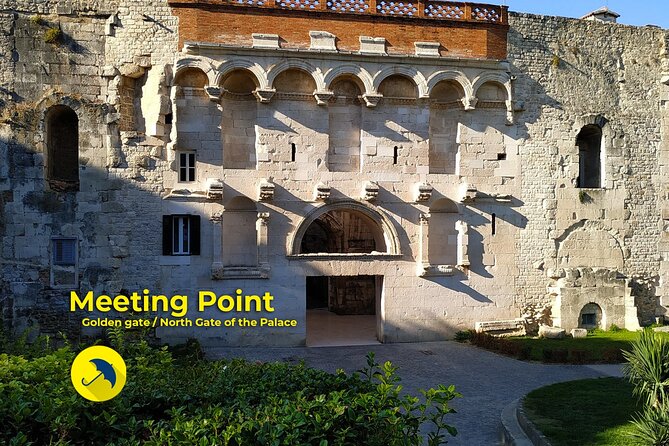
The meeting point is the Golden Gate on Dioklecijanova 7, right in the old center of Split. This is a practical place to begin because the gate leads directly into Diocletian’s Palace and puts you at the heart of the walking route.
The first stop is the palace substructures, often called the basements. These lower rooms are especially memorable for anyone who knows them from Game of Thrones, but their real value is architectural. They show how the palace was built and help you understand the layout above.
You have about 10 minutes here. That is enough for an introduction, but not a long exploration. Admission is listed as free for this stop, while other historic interiors may charge separately.
From there, you move to the Peristyle, the palace’s ancient main square. Allow about 20 minutes. This is one of the places where Split’s layers become easy to read: Roman columns and stonework sit beside later buildings, modern cafés, and daily city life.
A good guide makes this square more than a backdrop for photographs. You learn how the emperor’s residence worked, where formal power was displayed, and how the original complex changed over many centuries. The tour’s best feature is this explanation of transformation. You may have already walked through Split and seen the stones, but the guide gives those stones a purpose.
From the Vestibule to the Riva promenade
The Vestibule was an ancient entrance to Diocletian’s residential area. The visit lasts about 10 minutes, so expect a focused explanation rather than a long stop. It is useful because it connects the grand public areas of the palace with the more private imperial spaces.
The Golden Gate follows, with about 20 minutes. It was the palace’s northern entrance and is also the tour’s meeting point. Its scale makes more sense once you understand that Diocletian was creating a fortified residence, not merely a country house.
The route then moves toward Riva Harbor, Split’s famous waterfront promenade. You get roughly 10 minutes to walk along the harbor and take in the views. This is a welcome change from the enclosed stone lanes, though it is a short stop rather than free time for a full waterfront stroll.
Fruit’s Square, or Trg Brace Radic, receives about 20 minutes. It is one of Split’s most interesting squares and a good place to see how the old town grew around the Roman core. The name may sound playful, but the square is a serious lesson in how markets, homes, public buildings, and older fortifications fit together.
The Split portion is dense. You see several major areas in a short time, so comfortable shoes matter more than stylish ones. The streets are old and uneven, and the walking continues after the vehicle ride to Trogir.
The short ride to Trogir and its central square
After Split, an air-conditioned vehicle takes you to Trogir. The tour includes round-trip transport, so you do not need to work out the local connection or find your way back after exploring.
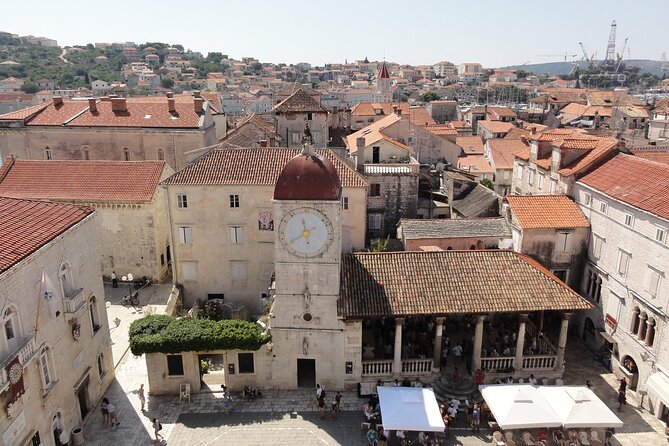
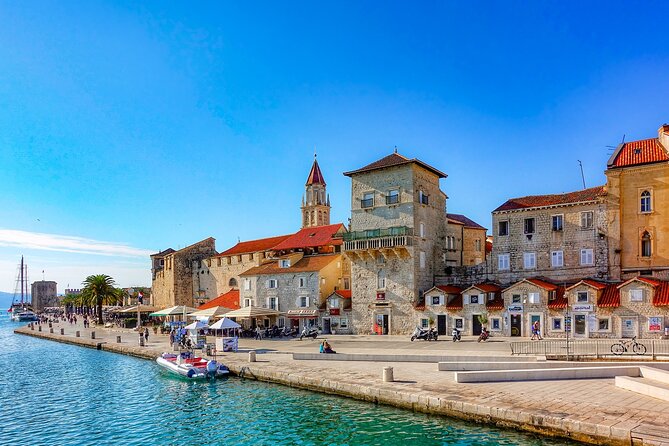
Trogir offers a different experience from Split. Split’s palace is large and closely tied to a modern city. Trogir’s old center feels more compact, with its main sights gathered around a central square and a network of narrow lanes. The town is photogenic, but the real pleasure is seeing how its civic, religious, and defensive buildings sit close together.
The first listed Trogir stop is the city hall, described as a building with an interesting history. You have about 10 minutes here. It is a brief introduction to Trogir’s civic life before the route continues to the central square.
The central square receives about 20 minutes. This is the town’s visual anchor, with several sights to examine and discuss. Your guide can give you the basic framework, then you can use the free time later to revisit anything that caught your eye.
This is also the point where a timing issue can matter. One tour group had to shorten its Trogir visit because of a late start and fixed return needs. If you are visiting from a cruise ship, pay close attention to the return time you need. A group tour must work for everyone, not just the people who want one more coffee or photograph.
Same coastline, a completely different kind of day:
- Split: Krka Waterfalls Trip with Boat Cruise and Swimming
★ 4.8 · 10,519 reviews - From Split: Krka Waterfalls, Food & Wine Tasting Tour
★ 5.0 · 9,326 reviews - Blue cave, Mamma Mia and Hvar, 5 islands speedboat tour
★ 5.0 · 7,150 reviews - From Split: Krka Waterfalls, Food & Wine Tasting Tour
★ 4.9 · 6,598 reviews
Saint Lawrence’s Cathedral and St. Sebastian
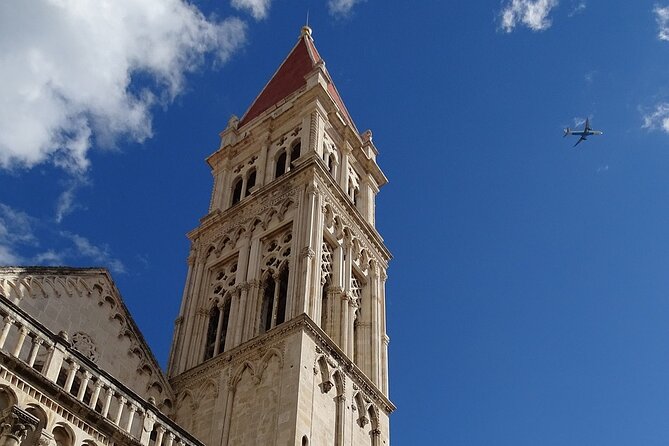
Saint Lawrence’s Cathedral is dedicated to Trogir’s patron saint and receives about 15 minutes on the route. The admission ticket is not included, so you should be prepared to pay separately if entry is part of the visit.
Fifteen minutes is enough for a guided look at the building’s importance and main features, but it is not a full architectural study. If cathedral interiors are a priority for you, confirm the current entry arrangements and allow for the fact that the group schedule may limit your time.
St. Sebastian is listed as a 10-minute stop. It was once a church and is now a memorial place. This short visit adds a different layer to the town, showing that Trogir’s historic buildings have not all kept their original function.
The best part of this section is the range. In a compact area, you move from civic buildings to religious architecture and memorial space. The drawback is that the short stops can feel like an overview. This tour is designed to help you understand Trogir and choose what deserves a later, longer visit.
Kula Karmelengo and your time to wander
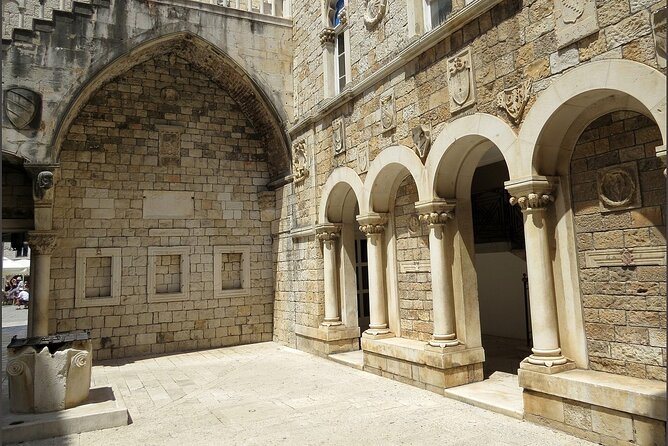
Kula Karmelengo is a Venetian fortress built for defense. The tour allows about 10 minutes here, and admission is not included. Its presence helps explain Trogir’s strategic position and the importance of fortified coastal towns in Dalmatia.
You should not expect a long fortress visit within this schedule. Instead, treat it as a strong final history point before your own time in Trogir. The tour includes free time in the town, which is important because the guided route moves quickly.
Use that time for a relaxed walk, a drink, photographs, or a second look at the central square. Several people who enjoyed the tour still wanted more time in Trogir. That tells you something useful: the town is not filler added to the itinerary. It may be the place where you most wish the clock would slow down.
Food and drinks are not included. That keeps the price clear, but you will need to budget for your own break. The precise amount of free time can vary with traffic, group size, and the return schedule.
What the guides add to the day
The guide can make or break a history-heavy tour. Here, the strongest praise goes to the human side of the experience.
Antonia is described as especially strong on Split’s history and architecture, with a clear passion for her city. Ivana is praised for energetic storytelling and for pointing out how the palace changed over 1,700 years. Mia is noted for adjusting to weather and finding shelter while continuing the explanation.
Ante is described as a local history student who brought both information and enthusiasm. Frane is praised for a strong voice in English and for adding personal Croatian views. Slavico is remembered for combining historical detail with humor.
These details matter because old towns can blur together when you only hear dates and names. A guide who explains how local people see their city gives the tour more texture. You also have a better chance of asking practical questions about Split, Trogir, and the wider Dalmatian coast.
English is the operating language. One experience involved a guide whose English was limited, so clear communication may not be equally strong on every departure. Most of the guide feedback is very positive, but group assignments can vary.
Small-group comfort, walking, and weather
The tour advertises a maximum of 50 people, but some departures are divided into smaller groups. One group was split into two sections of nine, and several people liked the more intimate feel. You should not assume every departure will be that small, but the possibility is a plus.
The vehicle ride is described as comfortable, and the air conditioning is useful in summer. Still, most of the important sightseeing takes place on foot. The route is not described as steep, but old-town paving can be tiring, especially in heat.
Wear shoes with good grip, carry water, and bring sun protection in warm weather. The tour runs in all weather conditions, so a light rain layer is sensible outside summer. If poor weather forces cancellation, you are offered another date or a full refund.
Children must be accompanied by an adult. Service animals are allowed, and most people can participate, but the amount of walking makes this a poor match for anyone who tires quickly on hard surfaces. A private tour would offer more control over start time and pace, but this is a group experience.
Booking, cancellation, and who gets the best value
Confirmation is issued when you book, and the tour is offered in English. It is often reserved well ahead, with an average booking time of 71 days, so advance planning makes sense during busy periods.
You can cancel for a full refund up to 24 hours before the start time. Cancellations or changes inside that window are not refunded or accepted. The tour returns to the Golden Gate meeting point, which is useful if you are staying in central Split, though you should allow time to get back to a cruise ship or other fixed departure.
I would choose this tour if you want a strong first look at Split, have limited time, and want Trogir included without arranging transport. It also suits travelers who learn best through stories and place-based explanation rather than a guidebook.
I would think twice if you want long interior visits, a leisurely meal, or several hours to wander Trogir. The price is fair for the transport, guiding, and two-town coverage, but the value depends on accepting a brisk schedule.
Should you book the Split and Trogir tour?
Book it if your priority is coverage with context. You will see the palace’s major spaces, walk the Riva, visit key corners of Trogir, and hear local history from guides who are often praised for warmth, humor, and clear storytelling.
Skip it if you dislike fixed schedules or have trouble walking for several hours. Also check your return needs carefully if you are visiting from a cruise ship. For most first-time visitors with one day to spare, this is a practical way to connect Split and Trogir without wasting time on logistics.
FAQ
How long does the Split and Trogir tour last?
The experience lasts approximately five to six hours.
Where does the tour begin?
It begins at the Golden Gate, Dioklecijanova 7, in Split, Croatia.
Where does the tour end?
The tour ends back at the Golden Gate meeting point.
Is transportation included?
Yes. Round-trip transportation in an air-conditioned vehicle is included.
What language is the tour offered in?
The tour operates in English.
Are admission tickets included?
No. Food, drinks, and entrance tickets to historical monuments are not included. Saint Lawrence’s Cathedral and Kula Karmelengo are specifically listed with admission not included.
How much does the tour cost?
The listed price is $60.49 per person. Group discounts are available.
Can I cancel for a full refund?
Yes. You can cancel at least 24 hours before the local start time for a full refund. Cancellations or changes made less than 24 hours before the start time are not refunded or accepted.
Just added around Split
- From Makarska : Wine Tasting Grabovac Tour★ 4.5 · 30 reviews
- Essential Diocletian’s Palace Tour for First-Time Visitors★ 4.8 · 19 reviews
- Unique vintage Tomos moped tour Split – Back to the ’80s★ 4.8 · 17 reviews
- Walking Tour Split★ 4.7 · 61 reviews
- Trogir; Private walking tour of higlights of Trogir★ 4.7 · 3 reviews
- Trogir: White Lagoon, Maslinica & Blue Lagoon Speedboat Tour★ 4.8 · 11 reviews
- Trogir: Old Town Guided Walking Tour★ 4.6 · 76 reviews
- Trogir 1.5-Hour City Tour★ 4.4 · 37 reviews
Guided, compared.
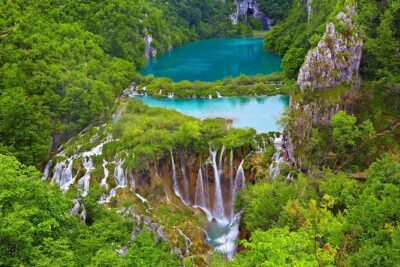
From Split: Plitvice Lakes National Park Guided Tour
Read our review →
From Split: Plitvice Lakes Guided Tour with Entry Tickets
Read our review →From Split: Plitvice Lakes National Park Guided Tour
Read our review →
Plitvice Lakes National Park Guided Day Tour from Split
Read our review →
Krka National Park Tour with tour Guide & Wine tasting from Split & Trogir
Read our review →
Split: Self-Guided Plitvice Lakes Day Tour with Boat Ride
Read our review →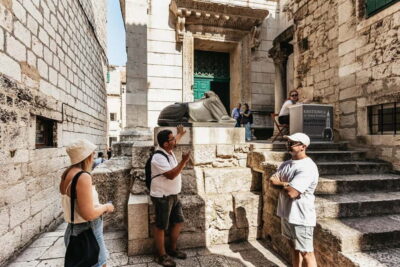
Split: Diocletian Palace & Old Town Guided Walking Tour
Read our review →