
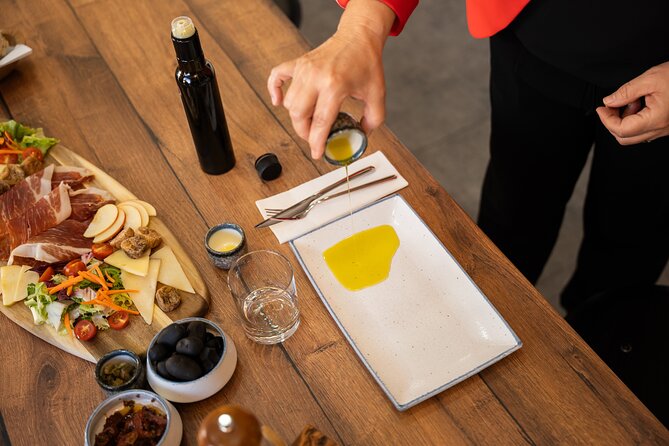
Reviewed · SPLIT WINE TASTING TOURS
Educational wine tasting in Split
Croatian wine can be hard to decode from a restaurant list alone. This one-hour tasting gives you a useful introduction, with local bottles explained by hosts such as Sven and Kristina, plus generous pours and food that shows how wine works at the table.
I like the focus on Croatian producers rather than familiar international labels, and I like the setting just outside Split’s old walls. The main drawback is the short format: serious wine fans may want more time, while the $57.93 price feels high if you are mainly looking for a quick drink and a snack.
Key points to know before booking
- Taste Croatian wines by region: Learn how grape types, soil, weather, and local production shape each glass.
- Expect generous pours: Past tastings have included three glasses, while some sessions offered six wines, so the exact lineup can vary.
- Pair wine with local bites: Cheese, prosciutto, olives, tapenade, sun-dried tomatoes, and other snacks are included.
- Meet near Split’s old walls: The starting point is Trg Gaje Bulata 6, a central location close to public transportation.
- Small groups keep it personal: The maximum group size is 18, with some sessions feeling much smaller.
- Plan ahead in high season: This experience is often booked about 22 days in advance.
What the Split&Sip tasting is really about
This is not simply a flight of wine set down in front of you. The point is to give you a way to understand Croatian wine, then help you notice those differences in the glass.
Your host may explain how grape variety, growing region, soil, and weather affect aroma and taste. That practical framework is useful long after the tasting ends. Instead of asking only if you like a wine, you begin to ask why it tastes the way it does.
The experience takes place in English and lasts about an hour. That makes it an easy fit for a first evening in Split, a break between sightseeing stops, or a compact activity before dinner. It also means you should not expect a full winery visit, vineyard tour, or long meal. This is a focused tasting in town.
Sven is often praised for his clear explanations and easy conversation. Kristina has also led sessions, with an approach that combines wine instruction and generous servings. Since the host can vary, the tone may not be identical each time, but the central idea remains the same: Croatian wine, explained in plain language, with local food on the side.
More wine tastings around Split:
- From Split: Krka Waterfalls, Food & Wine Tasting Tour
★ 5.0 · 9,326 reviews - From Split: Krka Waterfalls, Food & Wine Tasting Tour
★ 4.9 · 6,598 reviews - Krka National Park Tour with tour Guide & Wine tasting from Split & Trogir
★ 5.0 · 1,625 reviews
Starting near Trg Gaje Bulata 6
The meeting point is Trg Gaje Bulata 6, 21000 Split, near the old city walls. You return to the same place at the end, so you do not need to arrange a ride or figure out a second meeting point.
This location matters for a simple reason: it puts the tasting into your walking day. You can reach it by public transportation, and it is close enough to central Split that it can fit before or after a stroll through the old center.
Give yourself a little time to find the exact entrance. A city-center address can be easy to reach but less obvious once you are standing among shops, streets, and old stone buildings. The experience provider is Split&Sip, and the setting is described as a wine shop just outside the walls, rather than a vineyard or formal restaurant.
That setting gives the tasting a more local feel than a hotel bar. You are in a place built around wine, with bottles and regional products close at hand. If a particular bottle wins you over, the shop setting may also make it easier to ask about taking wine home, though the supplied details do not promise bottle sales or shipping.
The first pour: learning how to taste
The tasting begins with instruction rather than a rushed series of glasses. You may be shown how to look at the wine, smell it, taste it, and think about what changes when you pair it with food.
This is especially helpful if you are new to wine. You do not need a trained palate, and you are not expected to identify obscure aromas on command. The hosts explain the process in a friendly way, making it easier to take part without feeling tested.
For experienced wine drinkers, the value comes from the Croatian focus. Familiar tasting methods become a tool for comparing grapes and regions that may not appear often on wine lists outside the country.
One useful lesson is the effect of weather and time. A warm growing season can affect ripeness, while aging and production choices can alter texture, aroma, and finish. The exact teaching points depend on the wines poured, but the aim is to connect what is in your glass with how and where it was made.
The tasting is also conversational. The best sessions do not force you to sit silently while someone recites tasting notes. You can ask questions, compare impressions, and talk through what you are noticing. That makes the hour feel more like a guided workshop than a sales pitch.
Croatian wines with a regional story
The heart of the experience is the selection of Croatian wines. The bottles are chosen from vineyards around the country, with attention to how different parts of Croatia produce different styles.
You may hear about local grape varieties, regional soil, and the effect of coastal or inland conditions. The purpose is not to memorize every name. It is to give you a map in your head, so later, when you see a Croatian wine in a shop or restaurant, you have some idea of what to expect.
The number of wines may vary. One format has included three generous glasses, while another tasting included six different wines and ran longer than the planned hour. That variation is worth noting if you are booking for a strict schedule. You should allow extra breathing room rather than planning a train, ferry, or dinner reservation immediately afterward.
Generous pours are a repeated feature of the experience. That is good value for people who want to really taste each wine, but it also makes the alcohol level worth considering. Eat something beforehand if you tend to feel wine quickly, and avoid treating this as a quick stop before a physically demanding activity.
The educational angle is strongest when you stay engaged. Ask why one wine is paired with a particular cheese, or how a region differs from another. You will get more from the hour if you treat it as a conversation rather than a passive tasting.
More wine tours in Split:
- Split: Krka Waterfalls With Boat Cruise, Wine and Olive Oil
★ 4.3 · 1,507 reviews - Split/Trogir: Krka National Park Day Trip with Wine Tasting
★ 4.7 · 925 reviews - Private Full-Day Krka Waterfalls Tour with Wine Tasting
★ 5.0 · 263 reviews - Blue Lagoon Tour from Split with Bottled Water and Wine Included
★ 5.0 · 222 reviews
The food pairing: small bites with a real purpose
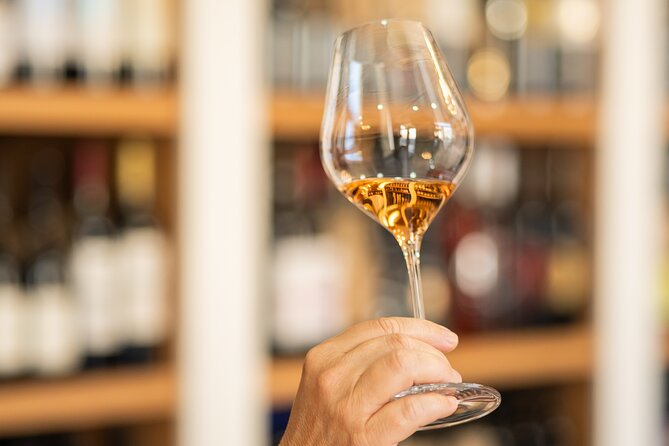
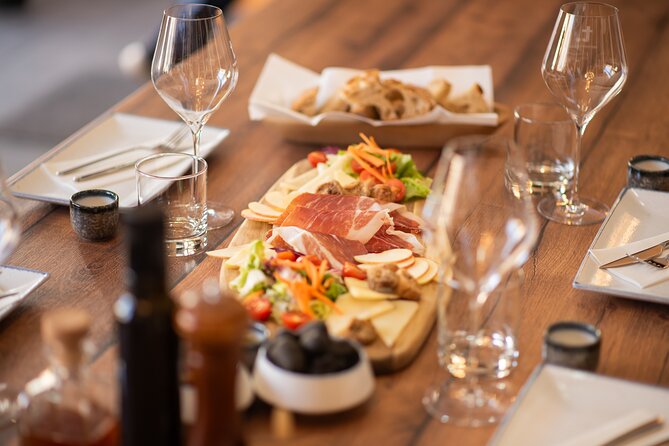
The food is simple, local, and useful. Expect cheeses, local prosciutto, sun-dried tomatoes, olives, tapenade, and other snacks arranged to go with the wines.
This is not advertised as a full meal, so do not book it in place of dinner. It is better understood as a substantial tasting board that gives you something to eat while you sample. The portions have been described as generous, and the food helps soften the sharp edges of some wines.
Pairing suggestions are part of the lesson. You may be encouraged to try a cheese with a white wine, or combine a particular bite with another pour. One suggested combination included cheese and fig jam with a white wine. Those small comparisons can change how you think about a bottle.
The board also adds a sense of place. Prosciutto, olives, tomatoes, and tapenade are not random bar snacks. They point toward the food traditions of the region and show how wine is enjoyed alongside salty, oily, sweet, and savory flavors.
If you do not care much for wine, the food and presentation may still make the activity worthwhile, but the wine remains the main event. This is not a general Croatian food tour with a few sips added.
A relaxed hour, with room for questions
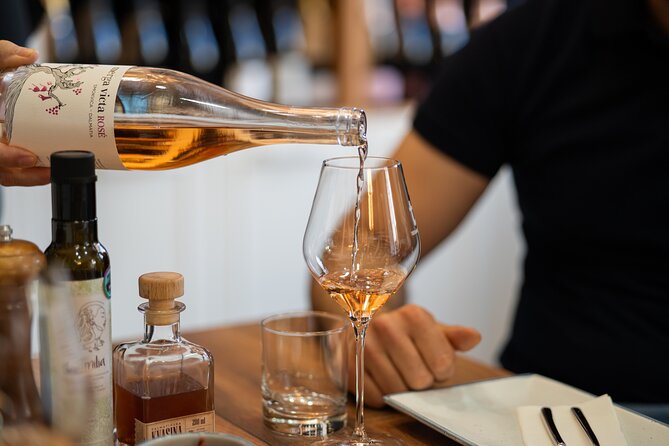
The mood is informal and welcoming. Hosts are described as passionate about wine, but the presentation is not framed as stiff or academic. You can expect stories about Croatian production and agriculture alongside tasting advice.
That balance is one of the experience’s best features. Wine talks can become a parade of technical terms. Here, the useful details are tied to things you can taste: how a grape behaves, how soil affects a wine, or why a salty snack changes the finish.
The group limit is 18 people. That is small enough for a personal session in many cases, though 18 is still large enough that you may not receive one-on-one attention throughout. Some bookings may be much smaller, and a few sessions have effectively felt private, but that cannot be guaranteed.
You may meet other people at the table, which can be part of the fun. The food gives everyone an easy way to start talking, and the shared tasting creates a natural social rhythm. If you prefer a quiet private tasting, check the group arrangement before booking.
The hour can also stretch. Hosts have sometimes continued beyond the scheduled time when the conversation and tasting moved slowly. That sounds pleasant, but build in a little flexibility. Split runs on a relaxed clock, yet your own ferry, reservation, or evening plan may not.
Is $57.93 a fair price?
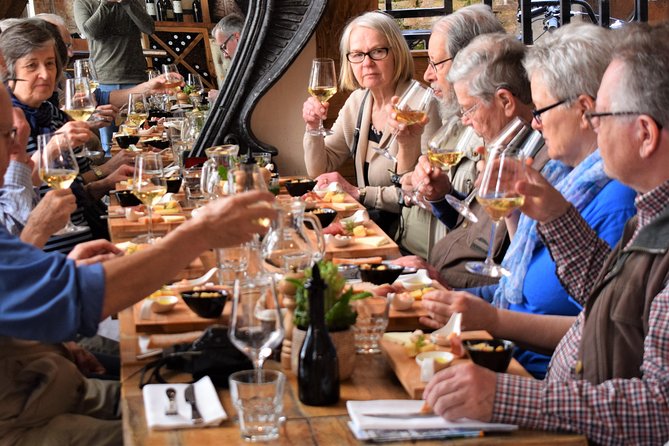
At $57.93 per person, this is not the cheapest way to drink Croatian wine in Split. You can certainly buy a bottle or glass for less. The question is what you want from the money.
The price includes guided instruction, several pours, and a food board with local products. You are also paying for the host’s ability to select wines, explain them, and show you how to compare them. For someone who wants to understand Croatian wine rather than simply consume it, that added context gives the experience a reasonable value.
The value is strongest for first-time visitors to Croatia, curious wine drinkers, and people who enjoy food pairing. It is also a smart early-trip activity because it can shape what you order during the rest of your stay.
The value is weaker if you already know Croatian wine well and mainly want a large meal. In that case, a restaurant visit or a bottle shop stop may suit you better. You should also compare the price with your interest level. If you only want one or two tastes, the full experience may feel like more than you need.
The generous pours help balance the cost, but they are not a reason to rush. You are paying for explanation and comparison, not just volume.
Who will enjoy this most?
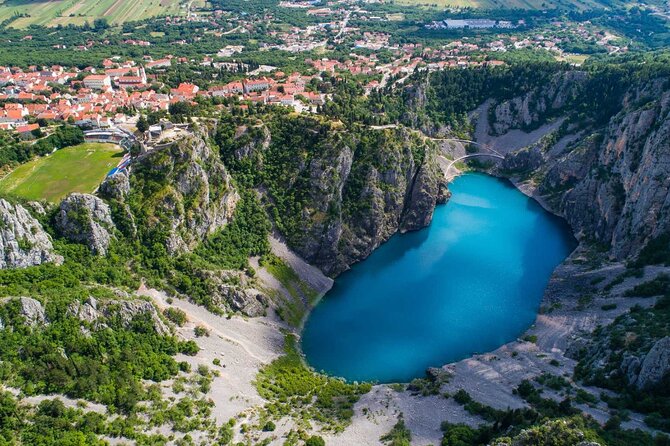
I would recommend this to you if you want an accessible introduction to Croatian wine and like learning through food. Beginners should feel comfortable because the host explains basic tasting methods without assuming prior training.
Wine fans will appreciate the chance to focus on Croatian varieties and regions. You may already know how to taste wine, but the local context gives you something new to work with.
Couples and small groups are a natural fit, especially if one person is a wine enthusiast and the other is less certain. The relaxed presentation and snacks make it less intimidating than a formal tasting. Even someone who does not care much for wine may enjoy the local food and discussion, though the wine still occupies most of the hour.
It may not suit children, people avoiding alcohol, or anyone seeking a full meal. The supplied information does not describe nonalcoholic alternatives, so ask before booking if that matters to you.
Most people can participate, and service animals are allowed. The experience is near public transportation, which helps if you are staying outside the center.
Practical timing and cancellation advice
The experience is offered in English and lasts about one hour, but allow extra time in case the tasting runs over. The end point is the same as the start, so you finish at Trg Gaje Bulata 6.
Booking ahead is wise. The experience is booked, on average, 22 days in advance, which suggests that popular dates can fill before you arrive. This matters most during busy periods in Split, when short activities with strong ratings tend to disappear from the schedule.
You receive confirmation at booking. Free cancellation is available if you cancel at least 24 hours before the start time. Within 24 hours, the payment is not refunded, and late changes are not accepted. Cutoff times use Split’s local time, so check the clock carefully if you are changing plans from another time zone.
My call: book it if you want more than a drink
I would book this experience early in a Split visit, especially if Croatian wine is new to you. The combination of regional explanation, generous pours, and local cheese and cured meat gives you a useful introduction in a compact format.
Book it if you value a host who can explain why a wine tastes the way it does. Sven and Kristina are both associated with clear, warm presentations, and the tasting has enough flexibility for real questions rather than a fixed script.
Skip it if you want a full dinner, a vineyard visit, or a very private tasting guaranteed in advance. Also skip it if your schedule is packed tightly around the one-hour slot.
For most curious drinkers, the best reason to go is simple: after this tasting, a Croatian wine list should look less like a puzzle. You will have a few regions, flavors, and pairing ideas in mind, and that can make the rest of your time in Split taste better.
FAQ
Where does the wine tasting begin?
It begins at Trg Gaje Bulata 6, 21000 Split, Croatia, near Split’s old city walls.
Where does the experience end?
The activity ends back at the meeting point.
How long does the tasting last?
The scheduled duration is approximately one hour, though some sessions may continue longer.
What food is included?
The tasting includes local cheeses, local prosciutto, sun-dried tomatoes, olives, tapenade, and other snacks.
Is the tasting offered in English?
Yes. The experience is offered in English.
What is the cancellation policy?
You can cancel for a full refund up to 24 hours before the experience begins. Cancellations or changes made less than 24 hours before the start time are not accepted for a refund.
More Food and Drink Tours in Split
- Split: Blue Lagoon and 3 Island Cruise with Food and Drinks
★ 4.8 · 1,969 reviews - Full-Day Catamaran Cruise to Hvar & Pakleni Islands with Food and free Drinks
★ 5.0 · 670 reviews - Dubrovnik Guided Group Tour with Ston Oyster tasting from Split & Trogir
★ 5.0 · 538 reviews - Split Food Tour: Discover Split One Bite At A Time
★ 5.0 · 433 reviews
Just added around Split
- From Makarska : Wine Tasting Grabovac Tour★ 4.5 · 30 reviews
- Walking Tour Split★ 4.7 · 61 reviews
- Essential Diocletian’s Palace Tour for First-Time Visitors★ 4.8 · 19 reviews
- Unique vintage Tomos moped tour Split – Back to the ’80s★ 4.8 · 17 reviews
- Trogir; Private walking tour of higlights of Trogir★ 4.7 · 3 reviews
- Trogir: White Lagoon, Maslinica & Blue Lagoon Speedboat Tour★ 4.8 · 11 reviews
- Trogir 1.5-Hour City Tour★ 4.4 · 37 reviews
- Split: Trogir Open Top Bus Trip + Free Split Walking Tour★ 4.1 · 17 reviews
Split Wine Tasting Tours, compared.
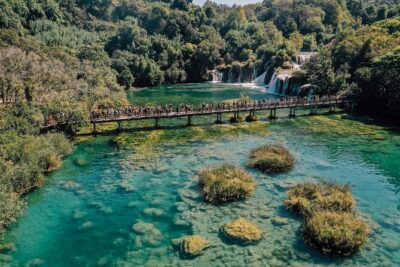
From Split: Krka Waterfalls, Food & Wine Tasting Tour
Read our review →From Split: Krka Waterfalls, Food & Wine Tasting Tour
Read our review →
Krka National Park Tour with tour Guide & Wine tasting from Split & Trogir
Read our review →
Split: Krka Waterfalls With Boat Cruise, Wine and Olive Oil
Read our review →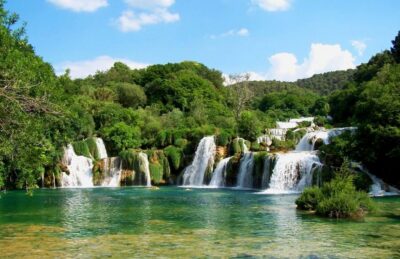
Split/Trogir: Krka National Park Day Trip with Wine Tasting
Read our review →
Blue Lagoon Tour from Split with Bottled Water and Wine Included
Read our review →
Krka Waterfalls and wine tasting Tour from Split or Trogir
Read our review →Browse the lists this tour appears in