Reviewed · PRIVATE
Private Walks & Storytelling – the best small group tour in Split
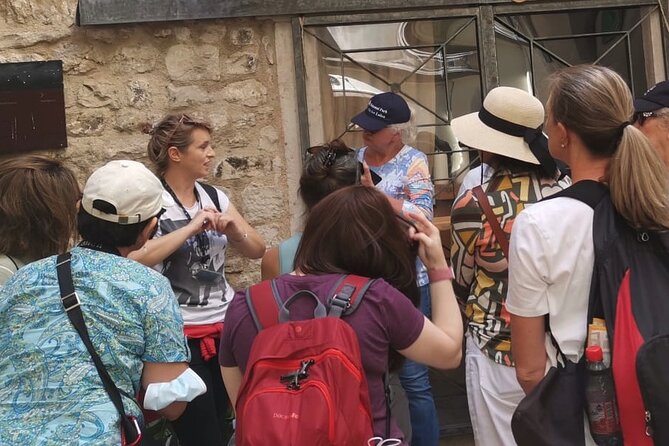
The best part of this Split walk is the way it connects Roman stones with ordinary life. You begin on the Riva, where coffee, conversation, and people-watching matter as much as the sea, then move through Diocletian’s Palace with Mirjana, a Split-born guide who knows how to explain both ancient history and modern local customs. I like the private format, and I like that you can shape the walk around your interests.
The tour also adds small local touches that many city walks skip, including a chocolate tasting at Nadalina and a wish at the statue of Grgur Ninski. The main consideration is time: at roughly one to one hour and 40 minutes, you will get a strong introduction, not a full exploration of every corner or museum in Split. Entry to the Cathedral of Saint Domnius and the Temple of Jupiter is not included.
Key points at a glance
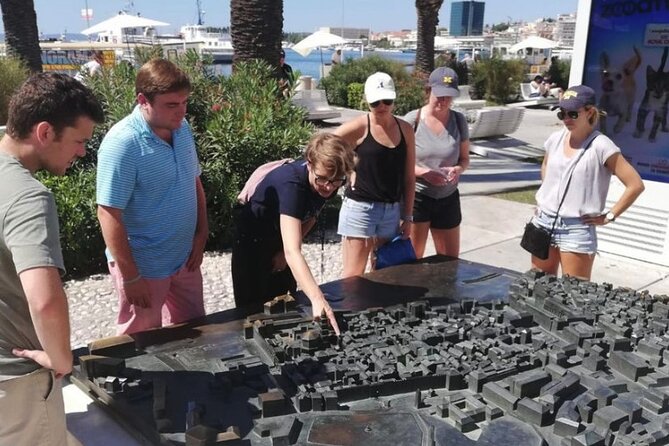
- A private walk for up to 10 people: You get a guide focused on your group rather than a large crowd.
- Local stories alongside Roman history: Mirjana explains how people still live among the walls of Diocletian’s Palace.
- A flexible route: You can discuss your interests and preferred ending with the guide.
- Nadalina chocolate tasting: A short stop adds a local food angle to the history walk.
- A useful first-day introduction: The route covers the Riva, Palace, old town, Golden Gate, and key squares.
- Strong guest satisfaction: The experience has a five-star rating from 205 reviews, with 100 percent recommending it.
Why this walk gives you a better first look at Split
Split is easiest to understand when you see the old city as a living neighborhood, not a sealed archaeological site. Diocletian’s Palace is the heart of town, but people still pass through its lanes, hang laundry between old walls, meet for coffee, and run everyday errands among Roman columns.
That is the central idea of this walk. You are not simply moving from one monument to the next while memorizing dates. You are learning how the city grew around an imperial palace and how the old and new parts of Split continue to share the same streets.
The guide is Mirjana, a licensed tourist guide, storyteller, and certified history interpreter who was born and raised in Split. Her role matters here because local context is a major part of the experience. You can ask about food, daily life, current cultural issues, places to visit, and where to eat after the walk.
The private setup is especially useful for families, couples, and small groups with different interests. One group can ask about Roman history while another wants restaurant advice or local customs. A past group with teenagers and adults found that Mirjana adjusted her approach to keep different ages involved, which is a good sign for families.
A few more Split days out worth weighing up
- SPLIT-PRIVATE Walking Tour of Diocletian’s Palace & Old Town
★ 5.0 · 467 reviews - Private Krka Waterfalls tour with 30min Boat Cruse
★ 4.0 · 458 reviews - Split by Private Electric Rickshaw – Palace & Hidden Gems
★ 5.0 · 412 reviews
Starting on the Riva, where Split slows down

The walk begins at the Brass Gate, Porta Aenea, near the Riva harbor. This is a smart starting point because the waterfront gives you an immediate feel for Split before you enter the tighter lanes of the old town.
The Riva is not just a pretty promenade. It is part of the city’s daily social life. People sit in the sun, drink coffee, talk, and watch the sea. Mirjana uses this setting to explain the local habit of taking things slowly, often summed up by pomalo, or take it easy.
You spend about 15 minutes here before moving toward the Palace. The brief stop can include a bite and stories that are not usually found in a guidebook. This is one of the more personal parts of the route, though the exact food or bite is not specified, so you should not book it expecting a full meal.
I like beginning here because it gives you a social key for the rest of the walk. Once you notice how much Split values time spent sitting, talking, and watching, the city’s pace makes more sense.
Beneath Diocletian’s Palace in the substructures
From the waterfront, you enter the substructures of Diocletian’s Palace. The visit lasts about 10 minutes and has no separate admission charge listed for this tour.
These lower rooms help you understand the Palace above. The stonework, storage areas, and underground layout show how much labor went into supporting the imperial complex. Mirjana focuses on the people behind the construction, including work, trade, and the effort required to shape and maintain such a place.
This is a short visit, so do not expect an extended archaeological examination. Its value comes from seeing the lower level as a foundation for the streets and buildings above. Afterward, the Roman walls around you are easier to read as part of a working city rather than just an impressive backdrop.
Peristyle and the Cathedral of Saint Domnius
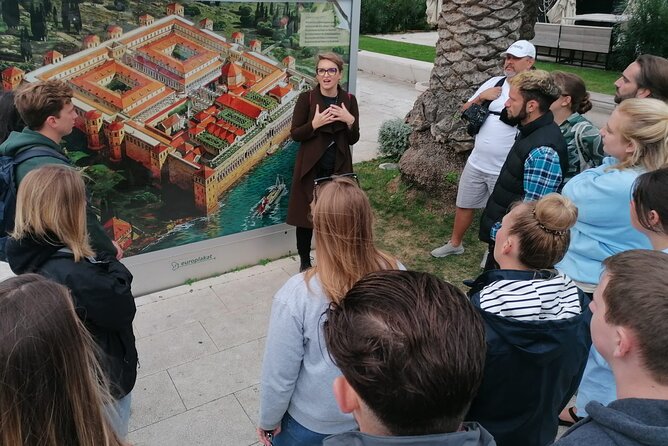
The route then reaches the Peristyle, the grand open square at the center of the Palace. You spend about 15 minutes here, hearing stories about the emperor, traditional Split, and the local habit of pomalo.
The Peristyle is one of the places where the scale of Diocletian’s project becomes clear. It also shows how old architecture can continue to shape public life. Mirjana’s approach links the imperial past with the slower rhythms of present-day Split, which makes the square easier to understand than a bare list of Roman facts.
From the Peristyle, you see the tall bell tower of the Cathedral of Saint Domnius. The cathedral is one of the oldest and smallest cathedrals in the world, according to the tour description, and it is tucked close to the Palace structures.
The cathedral visit lasts about 10 minutes, but admission is not included. That is an important cost detail. If you want to go inside, ask Mirjana about the current entry arrangements when you meet, and plan for a separate ticket.
The walk gives you a look at the cathedral and its setting even if you decide not to enter. The close quarters around the Peristyle mean that you can appreciate the building from outside without spending much extra time.
Same coastline, a completely different kind of day:
- Split: Krka Waterfalls Trip with Boat Cruise and Swimming
★ 4.8 · 10,519 reviews - From Split: Krka Waterfalls, Food & Wine Tasting Tour
★ 5.0 · 9,326 reviews - Blue cave, Mamma Mia and Hvar, 5 islands speedboat tour
★ 5.0 · 7,150 reviews - From Split: Krka Waterfalls, Food & Wine Tasting Tour
★ 4.9 · 6,598 reviews
Jupiter’s Temple and the narrowest street
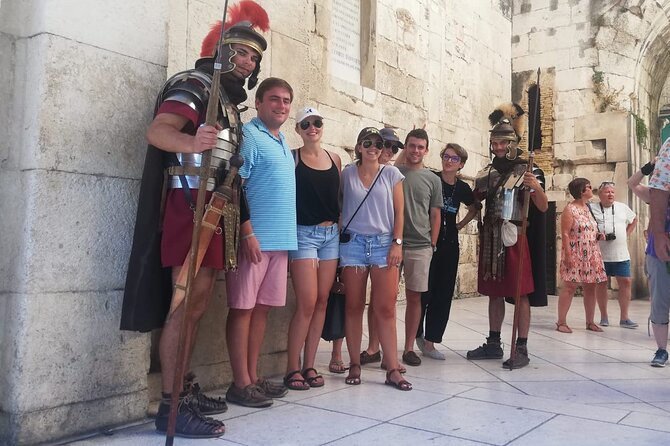
The Temple of Jupiter is another short stop, about 10 minutes, with admission not included. Its original purpose was tied to the Roman emperor’s divine connection with Jupiter, the god of the sky and thunder and king of the gods.
In the Middle Ages, the temple became a baptistery dedicated to Saint John the Baptist. That change gives you a clear example of how Split reused older buildings instead of treating them as untouchable relics.
On the way, you pass through Pusti me da prodjem, or Let Me Pass Street. This tiny lane sits between the ancient temple and a medieval building that is now a hotel. Local people regard it as the narrowest street in town.
The stop takes only about two minutes, but it is exactly the sort of small detail that gives a walking tour personality. It also offers a quick change of scale. After the formal Roman spaces, you are suddenly squeezing through a lane shaped by medieval and modern life.
Narodni Trg and Split’s newer old town
The route continues west to Narodni Trg, or People’s Square. This area developed as Split expanded beyond the ancient walls and is sometimes called the new old town.
You spend about five minutes here. That may sound brief, but the point is to notice the shift in the city’s design and influences. The square and surrounding streets show how Split grew beyond the Palace while keeping close ties to its earlier core.
This is a useful part of the walk for anyone who might otherwise spend the entire visit inside Diocletian’s Palace. Split is larger than the Roman complex, and Narodni Trg helps you see how northern and southern European influences came together as the city expanded.
A chocolate stop at Nadalina
Near the end of the route, you stop at Nadalina, a local chocolate maker. The visit lasts about eight minutes and includes samples of locally flavored chocolate.
This is a small stop, but I think it adds welcome variety. After Roman gates, temples, and walls, you get a taste of present-day food production and a chance to connect history with something immediate and memorable.
The stop is not designed as a long food tour. You should think of it as a sample and a short local recommendation rather than a full tasting session. Still, it gives Mirjana a chance to talk about food production, and it may help you choose what to look for during the rest of your stay.
The chocolate stop also makes the tour more appealing for families. Children and teenagers may not remember every Roman detail, but a local sample gives the walk a practical and enjoyable pause.
The Golden Gate and Split’s military design
The Golden Gate, or Porta Aurea, is one of the four main Roman entrances to Diocletian’s Palace. The gate faces north toward Salona, the capital of the Roman province of Dalmatia and the place associated with Diocletian’s birth.
Here, Mirjana explains the Palace’s military strategy and points out less obvious buildings nearby. The stop lasts about 10 minutes and has no separate admission charge listed.
The Golden Gate is a strong final history stop because it helps you picture the Palace as a defended complex rather than only an imperial residence. The position of the entrances, the walls, and the roads beyond them all fit into a larger Roman plan.
You will also be close to modern Split, where traffic, shops, and daily movement continue around the old structure. That contrast is part of what makes the city interesting. The Roman gate has not been isolated from life. It remains part of the route people use today.
Ending with Grgur Ninski and a local wish
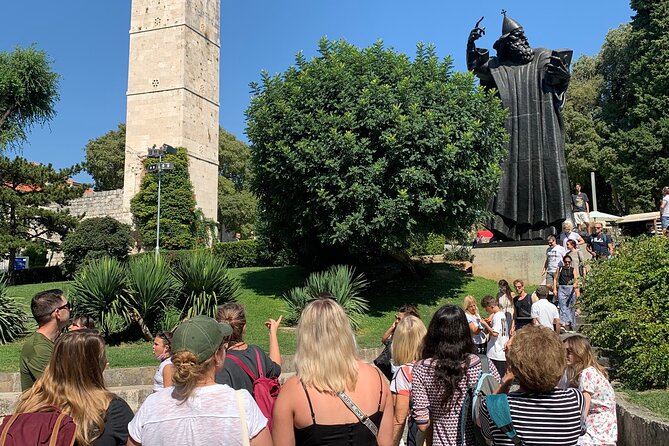
The walk ends near the northern Palace wall, beside the statue of Grgur Ninski. You spend about 15 minutes here, surrounded by a fourth-century wall, twentieth-century art, and present-day city life.
The statue is tied to a local tradition of making a wish. This provides a relaxed ending after the historical material and gives you a simple way to take part in something associated with Split.
The stated end point is on Ulica Stari pazar, but the tour can finish somewhere else if you discuss it with Mirjana at the beginning. That flexibility can help if you want to continue toward a restaurant, return to your hotel, or connect with another part of central Split.
The final stop also leaves you near the north side of the Palace rather than sending you back to the waterfront. Pay attention to the ending when planning your next activity.
What the private price means for your group
The cost is $238.34 per group of up to 10 people. For one or two people, that is a fairly serious price for a walk lasting about one hour to one hour and 40 minutes. For a larger group, the value improves quickly because the cost is shared rather than charged per person.
At the full group size, you are paying for a private guide, a flexible format, local recommendations, a chocolate sample, and a route that covers both the Palace and the surrounding old town. You are also avoiding the fixed pace and crowd size of a standard group tour.
The price makes the most sense for families or friends who want the guide’s attention and plan to use local advice during the rest of their stay. It is less compelling if you only want a quick orientation and are happy to read signs or follow a self-guided route.
The walk is offered in English and accepts a maximum of 10 people. It is available daily from 8:00 a.m. to 9:00 p.m. The broad hours make it easier to fit around a ferry arrival, an evening stroll, or a hot midday schedule.
This experience is often booked about 52 days ahead, so popular dates may not remain open close to your arrival. Confirmation is provided at booking, and service animals are allowed. Most people can participate, but the route includes city streets, narrow lanes, and historic surfaces, so anyone concerned about mobility should ask for details before booking.
Who should book this Split walk
I would choose this tour for a first visit to Split, especially if you want context before exploring on your own. It is also a good fit for a small family group because Mirjana can adjust the conversation for adults, teenagers, and different levels of interest.
You will get the most from it if you ask questions. Tell Mirjana at the start if you care most about Roman history, folklore, food, modern Split, restaurants, or a particular neighborhood. The tour is designed to be customizable, and the guide can also discuss recommendations for what to see and where to go afterward.
Couples and friend groups may appreciate the relaxed tone and the option to stop for coffee or food advice. A previous group even spent time having coffee with Mirjana, showing how the experience can become more conversational when the timing allows.
This is not the right choice if you want a long museum visit, a formal archaeological lecture, or guaranteed entry into every monument. The Cathedral of Saint Domnius and Temple of Jupiter require separate admission, and the scheduled time at each stop is short.
The cancellation policy is straightforward: you can receive a full refund if you cancel at least 24 hours before the start time. Poor weather or failure to meet the minimum group size can lead to a new date, another experience, or a full refund.
Should you book Private Walks and Storytelling?
Book it if you want to understand how Split works as a living city, not just photograph Roman ruins. Mirjana’s local background, storytelling, flexibility, and practical advice are the strongest reasons to choose it.
The $238.34 price is easiest to justify when shared among several people. For a solo visitor or couple, compare it with less expensive group walks. For a family or group of friends, the private format can be a good deal, especially if you value personal questions and an adjustable route.
I would schedule it near the start of your stay. You can then use Mirjana’s suggestions for food, coffee, sights, and the rest of your time in Split. If you want a friendly introduction with local character, a little chocolate, and a clear path through the Palace, this walk is a sound choice.
FAQ
Where does the tour start?
The tour starts at Brass Gate, also called Porta Aenea, at Obala Hrvatskog narodnog preporoda 22 in Split.
Where does the tour end?
The stated ending point is Ulica Stari pazar 9, but you can request a different ending at the beginning of the tour.
How long does the experience last?
The walk lasts approximately one hour to one hour and 40 minutes.
How many people can join?
The tour is private and allows a maximum of 10 people.
Is the tour offered in English?
Yes. The experience is offered in English.
Are entry fees included?
Some parts of the route include admission, while others do not. Entry to the Cathedral of Saint Domnius and the Temple of Jupiter is not included. The tour price also does not include all fees and taxes.
Can I cancel for a full refund?
Yes, if you cancel at least 24 hours before the experience start time. Cancellations or changes made less than 24 hours before the start time are not accepted for a refund.
Just added around Split
- From Makarska : Wine Tasting Grabovac Tour★ 4.5 · 30 reviews
- Essential Diocletian’s Palace Tour for First-Time Visitors★ 4.8 · 19 reviews
- Unique vintage Tomos moped tour Split – Back to the ’80s★ 4.8 · 17 reviews
- Walking Tour Split★ 4.7 · 61 reviews
- Trogir; Private walking tour of higlights of Trogir★ 4.7 · 3 reviews
- Trogir: White Lagoon, Maslinica & Blue Lagoon Speedboat Tour★ 4.8 · 11 reviews
- Trogir 1.5-Hour City Tour★ 4.4 · 37 reviews
- Split: Trogir Open Top Bus Trip + Free Split Walking Tour★ 4.1 · 17 reviews
Private, compared.
SPLIT-PRIVATE Walking Tour of Diocletian’s Palace & Old Town
Read our review →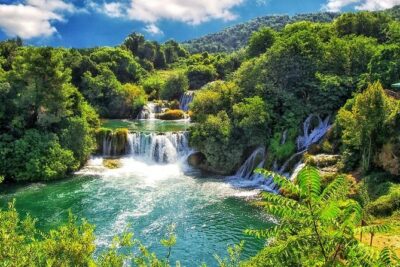
Private Krka Waterfalls tour with 30min Boat Cruse
Read our review →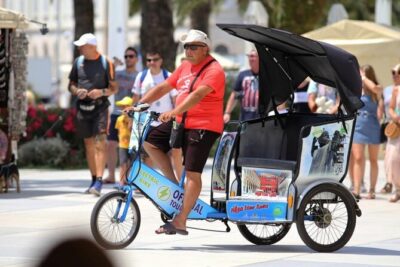
Split by Private Electric Rickshaw – Palace & Hidden Gems
Read our review →
Private Blue cave, Mamma Mia and Hvar, 5 islands tour from Split
Read our review →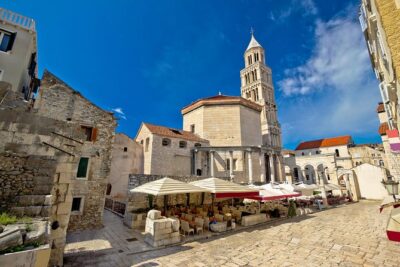


Private Boat Tour by local expert – Create Your Itinerary
Read our review →