
Reviewed · SPLIT
Secret Split: Socialist Architecture & brutalism – Urban Utopia
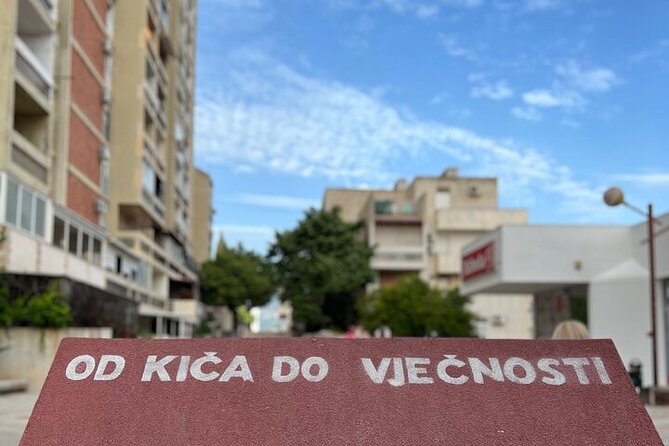
Split 3 was a bold attempt to build an entire modern city around people rather than cars, shops, or grand monuments. This private walk takes you beyond Split’s Roman center into raw concrete buildings, pedestrian paths, open courtyards, and a socialist plan once shown at New York’s Museum of Modern Art.
I like the focus on urban planning and daily life, not just striking buildings. I also like the chance to meet a local artist or activist, which gives the walk a living connection to the neighborhood. The main drawback is that this is a specialized tour: if you mainly want beaches, Roman ruins, or postcard views, the subject may feel too narrow.
Key points to know before booking
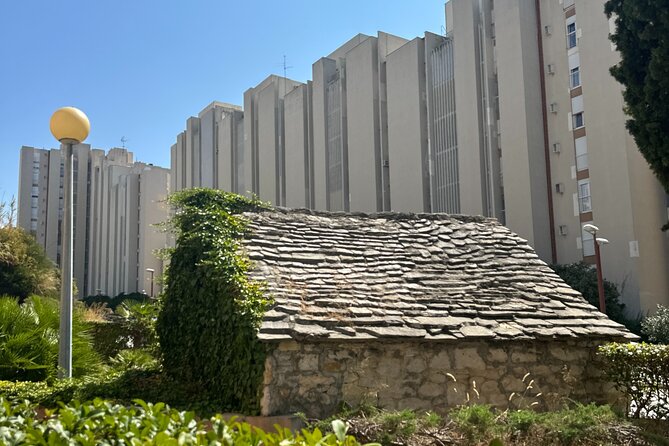
- Split 3 was featured at MoMA: The neighborhood became part of the 2018 exhibition Toward a Concrete Utopia.
- You walk through a residential district: This is not a central sightseeing route. It takes you into the part of Split built after World War II.
- The tour is private: Only your group participates, allowing the guide to shape the discussion around your questions.
- Guide Mirjana brings a personal connection: She is described as passionate about Split and leads the experience as a licensed guide and certified heritage interpreter.
- The route takes about one to three hours: The listed stops add up to roughly 98 minutes, before walking between them and allowing time for discussion.
- It is about people as much as concrete: You learn how architects tried to create a fully pedestrian neighborhood designed for children, neighbors, and ordinary routines.
Why Split 3 matters beyond its concrete walls
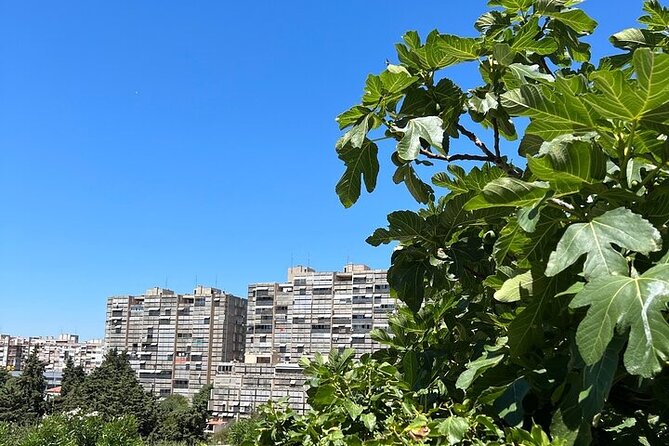
Most first-time visits to Split revolve around the Roman palace, the waterfront, and the old stone lanes. Those places deserve their attention, but they explain only one chapter of the city. Split 3 shows what happened much later, when Yugoslavia was planning new housing for a rapidly growing population.
The project was conceived in the 1970s as an answer to demographic pressure. Architects were not simply adding apartment blocks wherever land was available. They were trying to create a complete district with homes, public space, pedestrian routes, and room for community life.
That goal gives the tour its real interest. You are not looking at concrete as a style exercise. You are looking at a social idea made physical.
Split 3 was never fully completed as originally planned. Even so, its ideas were important enough to enter international discussions about 20th-century architecture and city planning. Its inclusion in MoMA’s 2018 exhibition Toward a Concrete Utopia helped place this part of Split on the world architecture map.
You do not need to be an architect to follow the story. The useful question is simple: what kind of city do you create when you believe good planning can improve daily life?
Other Split days people book alongside this one:
- Split: Krka Waterfalls Trip with Boat Cruise and Swimming
★ 4.8 · 10,519 reviews - From Split: Krka Waterfalls, Food & Wine Tasting Tour
★ 5.0 · 9,326 reviews - Blue cave, Mamma Mia and Hvar, 5 islands speedboat tour
★ 5.0 · 7,150 reviews
Starting on Papandopulova ulica
The walk begins at Ul. Šime Ljubića 3 and moves into the Split 3 area, including Papandopulova ulica. The first section lasts about 38 minutes and introduces the architecture that gained international attention through the MoMA exhibition.
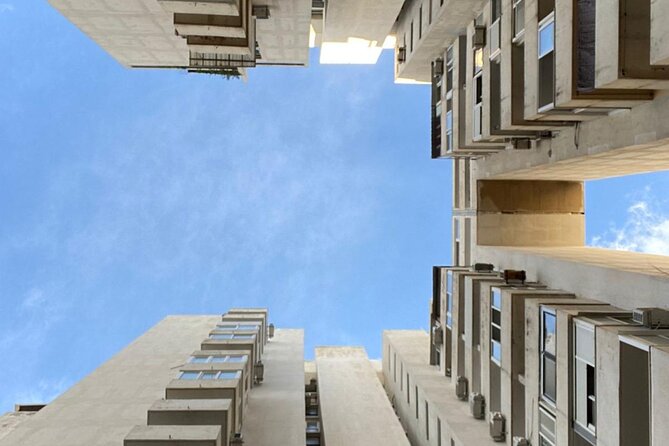
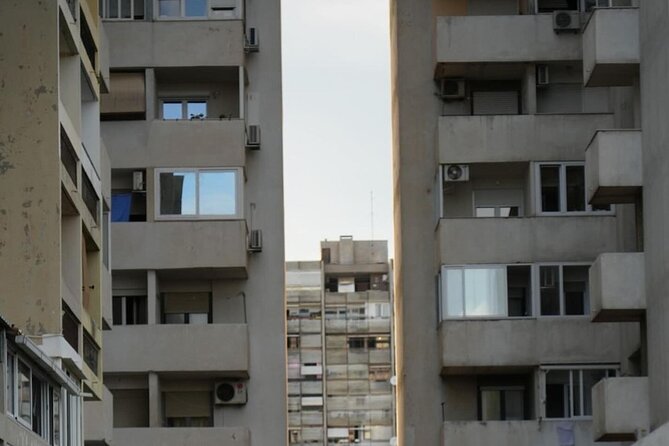
Expect to spend time looking closely at the buildings rather than rushing past them. The appeal is found in geometry, scale, raw surfaces, open space, and the relationship between homes and paths. These are not isolated monuments. They are working residential buildings, which makes the setting more revealing than a preserved architectural model.
The buildings were designed in the 1970s, during a period when large housing projects were being used to address rapid population growth. The plan aimed to make the neighborhood more than a collection of apartments. It sought to organize a complete daily environment.
That distinction matters. Brutalism is often reduced to a taste test: you either like bare concrete or you do not. Here, the guide places the material inside a larger argument about housing, public space, and shared life. Concrete becomes part of a social program.
The area can also challenge your expectations. Some buildings may look severe, weathered, or unfinished compared with the polished stone of central Split. That is part of the point, but it may not appeal to anyone seeking classic beauty or easy photographs.
The unfinished urban experiment
The second section, listed at about 25 minutes, looks at the wider Split 3 project and the planning choices behind it. The project was never fully realized, so the walk also considers the gap between an ideal plan and the city that actually gets built.
That gap is one of the strongest reasons to take the tour. Urban plans often look perfect on paper. They show clear routes, balanced neighborhoods, and carefully placed public spaces. Real cities are less tidy. Population changes, political decisions, construction limits, and changing ideas about how people should live all affect the result.
Split 3 lets you examine that process at street level. You can consider which parts of the original vision survived and which did not. You can also ask how a planned neighborhood changes once people use it for decades.
The route is especially useful if you are interested in socialist architecture or the history of Yugoslav planning. You will hear about the architects who shaped the district, their beliefs about housing and community, and the larger social aims behind the design.
The tour does not treat the past as a perfect golden age. That balance is important. The walk is not presented as nostalgia for socialism, nor as a simple attack on it. Instead, it looks at a real experiment, its ambitions, and its limits.
Pedestrian space, children, and ordinary routines
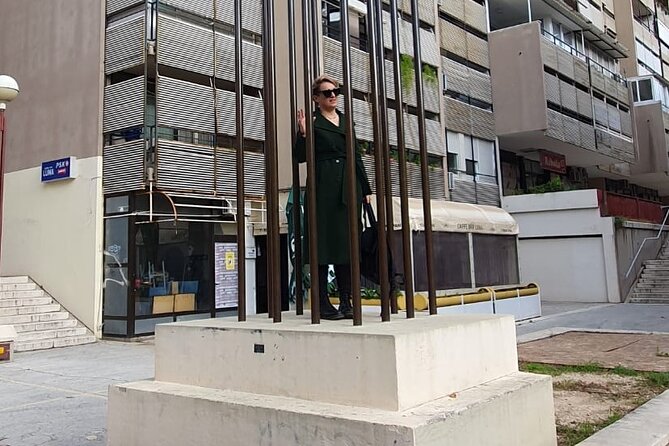
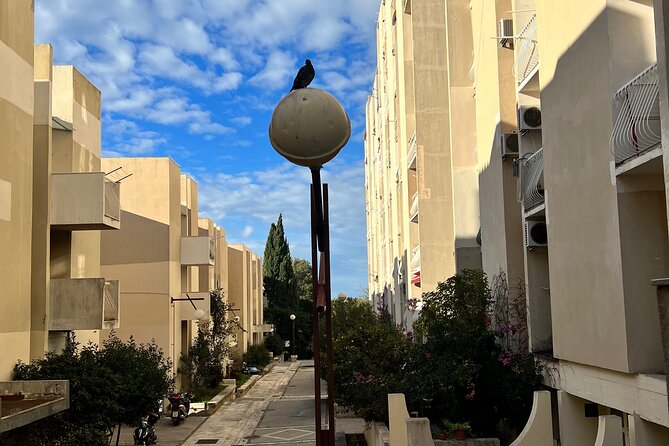
One of Split 3’s most interesting features is its pedestrian design. The neighborhood was planned as a city within a city, with spaces intended for people rather than constant car traffic.
That idea changes how you read the area. Instead of judging an apartment block on its own, you look at how buildings connect with paths, open areas, and shared places. You begin to ask where children might play, how neighbors might meet, and how a person gets through the neighborhood on foot.
This is where the tour moves beyond architecture photography. You are considering the practical side of design. Does the space encourage contact between neighbors? Does it give children room to move safely? Does it make everyday errands easier? Does the plan still work as the city changes?
The answers are not always simple. A planned pedestrian zone can create calm and shared space, but large concrete housing can also feel impersonal to someone used to narrow streets and old stone houses. The guide’s role is to help you see both sides.
I particularly like this focus because it gives the tour a useful connection to modern city life. Many cities are now rethinking cars, public space, housing density, and the cost of land. Split 3 offers an earlier attempt to solve some of those same problems.
Same coastline, a completely different kind of day:
- From Split: Krka Waterfalls, Food & Wine Tasting Tour
★ 4.9 · 6,598 reviews - Split/Trogir: Blue Cave, Mamma Mia, Hvar and 5 Island Tour
★ 4.6 · 6,320 reviews - Blue Lagoon & 3 Islands Cruise with Lunch from Split
★ 4.5 · 5,756 reviews - Split: Old Town and Diocletian Palace Walking Tour
★ 4.9 · 4,727 reviews
Art and activism in modern Split
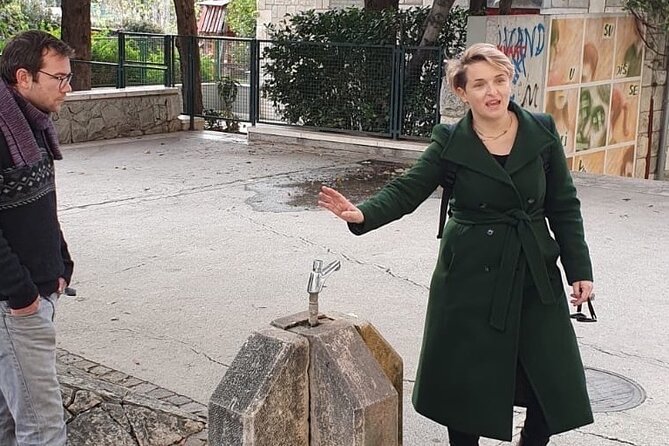
The third section lasts about 35 minutes and turns toward art activism in Split. The experience includes meeting a local artist or activist, adding a present-day voice to the historical and architectural discussion.
This part keeps the tour from becoming a lecture about old plans. You get a sense of how art and public communication can respond to the city as it exists now. The stated focus is critical communication, so expect the conversation to address how people express ideas about their surroundings and society.
The meeting is valuable because it links architecture with civic life. Buildings and streets are not neutral backdrops. They affect how people gather, speak, organize, and understand the place where they live.
The details of the artist or activist are not specified in advance, so you should not book this expecting a particular performance or workshop. Think of it as a local encounter within the walk, not a separate cultural show.
For me, this is an important part of the experience. A tour about socialist planning could easily remain fixed in the 1970s. The art and activism section brings the conversation into the present and asks what the neighborhood means to people now.
What the guide adds to the experience
The tour is led by a licensed tourist guide and certified heritage interpreter. Mirjana is identified as the guide, and the available description presents her as deeply passionate about Split and its story.
That matters on a route like this. The buildings do not explain themselves as clearly as the Roman palace does. Without context, you might see large concrete forms and open spaces but miss the reasons they were arranged that way.
A private format also helps. Only your group takes part, so you can stop to ask about an architectural detail, the original plan, socialist urban ideas, or the way the district functions today. A private walk is often more useful for a subject that depends on discussion rather than a fixed list of sights.
The tradeoff is price. At $113.90 per person, this costs more than a standard shared city walk. The value depends on your interest and group size. If you are traveling with several people who care about architecture, planning, history, or modern Split, the private format can make sense. If you are alone and only want a quick introduction to the city, the cost may be harder to justify.
The tour receives a five-star rating from 17 submitted ratings, with 100 percent recommending it. The strongest praise focuses on the personalized format, Mirjana’s passion for Split, and the depth of the subject. That matches the kind of experience this is: focused, conversational, and built around local interpretation rather than a checklist.
Timing, walking, and practical details
The activity lasts approximately one to three hours. The three listed sections take about 38, 25, and 35 minutes, totaling roughly 98 minutes. Walking between points and discussion can bring the actual time closer to the upper end of the estimate.
The meeting point is Ul. Šime Ljubića 3 in Split. The walk ends back at the meeting point, which makes it easier to plan the rest of your day. The stated operating schedule is Monday through Thursday from 8 a.m. to 7 p.m., for the period from May 25, 2022, through September 7, 2026.
A mobile ticket is available, and booking confirmation is provided at the time of booking. The tour is near public transportation, and service animals are allowed. Most people can participate, but the information provided does not give a detailed description of walking surfaces, stairs, or seating, so ask the provider if you have specific mobility needs.
Tips are not included. Free cancellation is available if you cancel at least 24 hours before the start time. Cancellations or changes made within 24 hours are not accepted for a refund.
Who will enjoy this walk most
I would choose this experience if you already plan to see Split’s Roman center and want a second view of the city. It is also a strong choice for architecture students, design fans, urban planners, photographers interested in concrete forms, and anyone curious about socialist Yugoslavia.
You do not need technical training. The tour is useful if you enjoy asking why a neighborhood looks and works the way it does. It can also suit families interested in how cities are designed for children and pedestrians, although the subject is more analytical than a typical family sightseeing walk.
You may want to skip it if your time in Split is very limited or if your priorities are ancient monuments, food, beaches, and sea views. The route is not centered on the old town, and the buildings are not designed to charm everyone at first sight.
Bring an open mind. Brutalist architecture can look harsh when you first see it, especially beside Split’s old stone streets. The guide’s job is not to force you to like every building. It is to show what the buildings were trying to do.
Is Secret Split worth booking?
Book it if you want to understand how modern Split was planned, not just admire its ancient center. The combination of Split 3, the MoMA connection, pedestrian design, socialist ideals, and a local artist or activist gives the walk a clear identity.
The price is easiest to justify for a private group with a strong interest in architecture, history, or urban life. Mirjana’s personal connection and the discussion-based format add value that a self-guided look at the buildings would not provide.
Skip it if you want a broad introduction to all of Split or prefer traditional sightseeing. But if you are ready to trade Roman columns for concrete geometry and ask how a city should serve its residents, this is one of the more distinctive ways to spend a few hours in Split.
FAQ
Where does the Split 3 architecture tour begin?
The tour begins at Ul. Šime Ljubića 3, 21000 Split, Croatia.
Where does the tour end?
The activity ends back at the meeting point.
How long does the experience last?
The tour lasts approximately one to three hours. The three listed sections take about 38 minutes, 25 minutes, and 35 minutes, not counting movement between locations and discussion time.
Is this a private tour?
Yes. Only your group participates in the activity.
Who leads the tour?
The experience is led by a licensed tourist guide and certified heritage interpreter. Mirjana is identified as the guide.
What will I see on the route?
You will visit residential areas of Split, including Papandopulova ulica and parts of Split 3. The tour covers socialist architecture, urban planning, pedestrian areas, art, and activism.
Is the tour connected to the Museum of Modern Art?
Yes. The Split 3 architecture featured in MoMA’s 2018 exhibition Toward a Concrete Utopia.
Can I cancel for a full refund?
Yes, if you cancel at least 24 hours before the experience start time. Cancellations or changes made less than 24 hours before the start time are not refunded or accepted.
Just added around Split
- From Makarska : Wine Tasting Grabovac Tour★ 4.5 · 30 reviews
- Essential Diocletian’s Palace Tour for First-Time Visitors★ 4.8 · 19 reviews
- Unique vintage Tomos moped tour Split – Back to the ’80s★ 4.8 · 17 reviews
- Walking Tour Split★ 4.7 · 61 reviews
- Trogir; Private walking tour of higlights of Trogir★ 4.7 · 3 reviews
- Trogir: White Lagoon, Maslinica & Blue Lagoon Speedboat Tour★ 4.8 · 11 reviews
- Trogir: Old Town Guided Walking Tour★ 4.6 · 76 reviews
- Trogir 1.5-Hour City Tour★ 4.4 · 37 reviews