
Reviewed · DIOCLETIAN'S PALACE TOURS
YOUR BEST PRIVATE TOUR – amazing Split and Diocletian’s palace
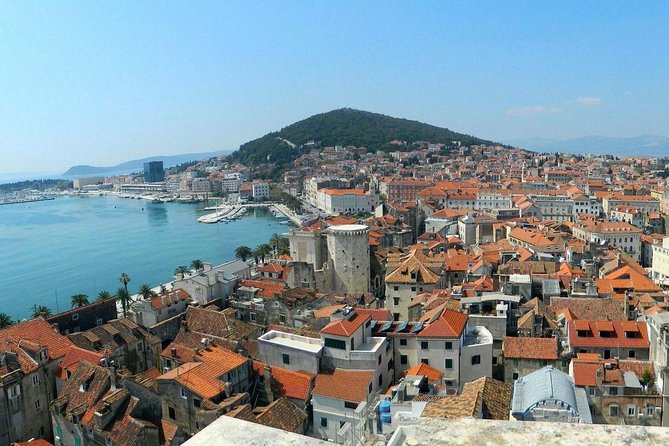
Diocletian’s Palace is not a fenced-off ruin. It is the heart of Split, where Roman walls frame medieval homes, cafés, shops, church bells, and everyday life. This private walking tour helps you read those layers instead of simply wandering past them. The best part is the palace basement, where the ancient plan is unusually easy to understand.
I like the flexible format and the strong local guidance. Guides such as Matt, Stella, Gita, and Mirjana have been praised for explaining both Roman history and present-day Split, while also suggesting restaurants, shops, and places to visit afterward. I also like the small local chocolate stop, a welcome change from a walk made entirely of dates and emperors.
The main thing to consider is the price: $124.34 per person is a serious outlay for roughly two hours, especially since entrance fees are not included. A morning start is wise, since Split can become hot and crowded, but the short length means you will get a focused introduction rather than a full day of sightseeing.
Key points to know before booking
- The private format lets you shape the walk: Ask your guide to spend more time on Roman remains, Jewish Split, local life, food, or architecture.
- Diocletian’s Palace is still a living city: You will walk through streets used by residents, not just through an archaeological site.
- The palace substructures are the history lesson’s anchor: They show the original plan and explain how an imperial residence became medieval Split.
- Guides add useful local advice: Several guides, including Matt, Gita, and Mirjana, are praised for restaurant, shopping, and sightseeing suggestions.
- The tour covers plenty in about two hours: Riva, the palace, Peristyle, Vestibule, gates, squares, synagogue, chocolate shop, and Prokurative all fit into the route.
- Budget for the basement entrance fee: The substructures are the one clearly identified paid stop, and that cost is separate.
Why Diocletian’s Palace works best with a guide
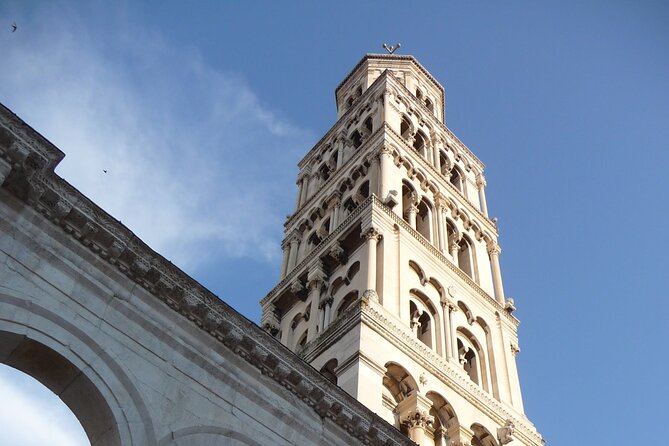
Split’s old town can look confusing at first. Roman columns sit beside medieval stonework. Laundry hangs above streets that follow an emperor’s original plan. A church occupies what was once Diocletian’s mausoleum. Without context, you may notice the mixture but miss the story.
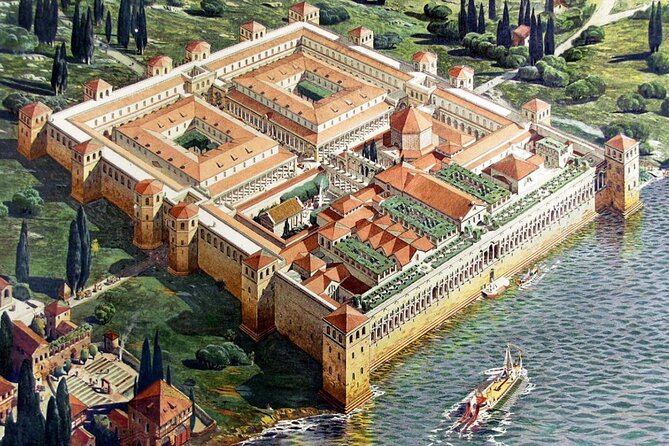
A private guide gives you a way to connect the pieces. The palace began in the fourth century as Emperor Diocletian’s retirement residence. In the seventh century, after the nearby Roman settlement of Salona was attacked and abandoned, people moved into the palace for safety. Over time, the imperial residence became the medieval town of Split.
That transformation is the central idea of the walk. You are not simply seeing a Roman monument. You are seeing how a palace became a city and how later residents adapted its rooms, gates, courtyards, and walls.
The private setup matters here. You can ask why a gate was built a certain way, how Roman streets were arranged, or what daily life is like inside the old town now. The guide can also adjust the pace for children, cruise passengers, or a group with a particular interest in architecture.
More ways to see Diocletian's Palace:
- Split: Old Town and Diocletian Palace Walking Tour
★ 4.9 · 4,727 reviews - Walking Tour of Split and Diocletian’s Palace
★ 5.0 · 2,588 reviews - Split & Diocletian’s Palace Walking Tour
★ 5.0 · 1,125 reviews
Starting on the Riva, Split’s outdoor living room
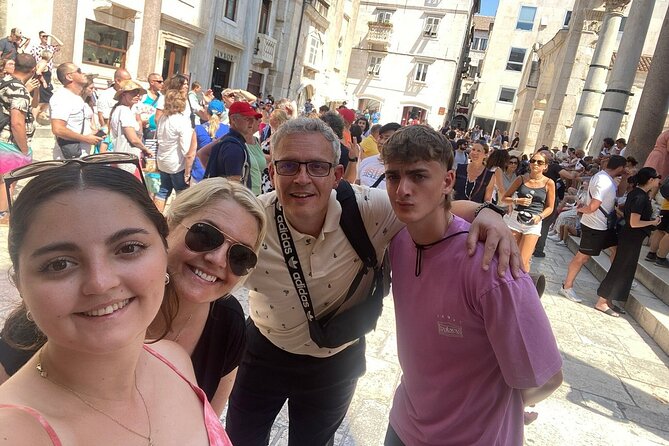
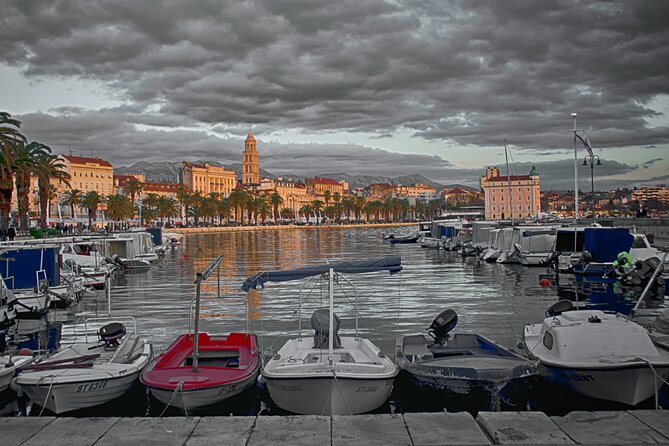
The meeting point is on the Riva, Split’s broad waterfront promenade, near the bronze model of the historic city. If you are coming from a cruise ship, pickup is available at the port’s dock exit gate. Hotel pickup is possible only if you are staying within Split’s old town.
The Riva is a sensible starting point. It gives you room to meet your guide, get oriented, and look back toward the palace’s southern wall. Your guide introduces Croatia, Split, and the plan for the walk before leading you toward the palace entrance.
The opening section takes about ten minutes. That may sound brief, but it prevents the common mistake of entering the palace with no idea what you are looking at. I would use this moment to mention your interests. If you want more Roman detail, ask for it early. If your priority is food, local life, or medieval Split, say so before the route begins.
Entering through the Bronze Gate and palace basements
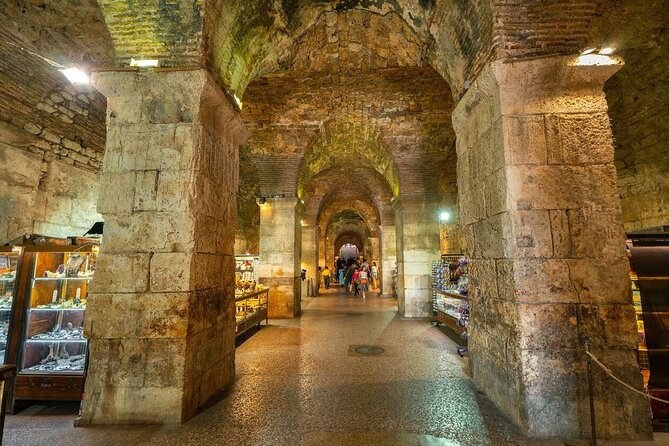
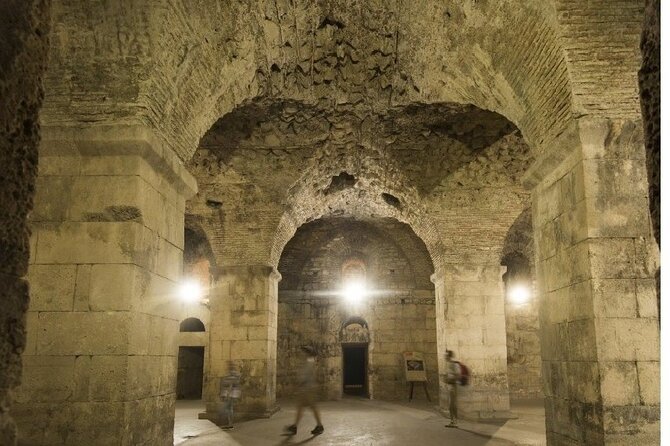
The palace substructures are the strongest part of the experience. You enter through the Bronze Gate from the Riva and go below street level into remarkably preserved spaces dating from the palace’s original construction.
The basements are not just dark corridors. Their layout mirrors much of the upper palace, so they help you understand how the imperial complex was organized. Your guide explains how Diocletian rose to power, ruled the Roman Empire, and eventually retired to this site on the Dalmatian coast.
You also hear about the building materials and construction. Brač stone, from the nearby island of Brač, was used in the palace. The guide connects this material to the scale and durability of the complex, then explains why Salona mattered to the area’s development.
Allow about 30 minutes for this section. Entrance is not included, so keep extra money available. Since the basements are the main paid sight, ask your guide or booking provider for the current admission cost before you arrive.
For many people, this is the part that justifies hiring a guide. It is easy to walk through the substructures and see old stone. It is much more useful to understand that you are looking at the lower level of a planned imperial residence, later absorbed into a living medieval town.
The Peristyle, where Roman power meets modern Split
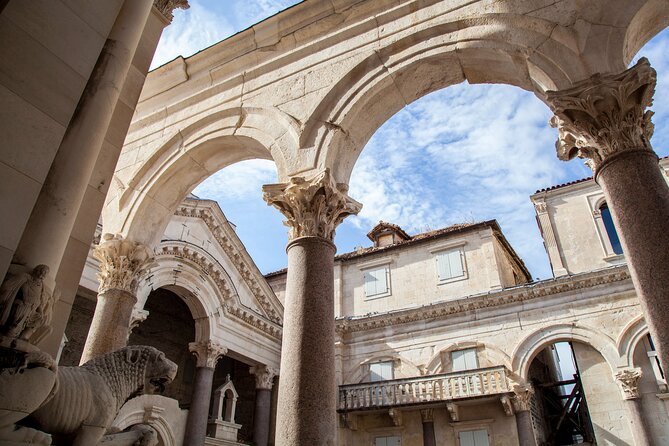
From the basements, the route moves into the Peristyle, the palace’s central square. This is the visual heart of the walk, with columns, steps, ancient stone, and buildings from several periods packed into one compact space.
The square brings together far more than Roman remains. Egyptian influences, Roman architecture, medieval additions, the cathedral bell tower, noble residences, and later changes all share the same setting. Your guide’s job here is to separate the periods without making the place feel like a classroom.
Plan on roughly 15 minutes in the Peristyle, though a private group can ask for more. This is a good place to pause for photographs, but do not spend all your time looking through a phone. Look up at the surrounding buildings and notice how the square has been adapted rather than preserved as a single frozen monument.
A few more Split days out worth weighing up
- SPLIT-PRIVATE Walking Tour of Diocletian’s Palace & Old Town
★ 5.0 · 467 reviews - Private Krka Waterfalls tour with 30min Boat Cruse
★ 4.0 · 458 reviews - Split by Private Electric Rickshaw – Palace & Hidden Gems
★ 5.0 · 412 reviews - Private Blue cave, Mamma Mia and Hvar, 5 islands tour from Split
★ 5.0 · 387 reviews
The Vestibule and the eastern Silver Gate
The circular Vestibule once served as an entrance to Diocletian’s private rooms. It is a small stop, about seven minutes, but its shape makes it memorable. The guide may also point out the space’s connection with Dalmatian klape singing, a local choral tradition sometimes heard here.
The eastern Silver Gate takes only a couple of minutes. It marks the start of the main Decumanus street, one of the Roman roads crossing the palace. Short stops like this may seem minor, but they help you understand that the palace was planned as a complete Roman complex, not a collection of unrelated ruins.
The route is compact, and the quick transitions are useful if you are visiting Split during a cruise stop. Still, people who prefer long, leisurely pauses at every monument may find the schedule brisk.
Chocolate, sculpture, and the medieval Jewish quarter
The stop at Nadalina chocolate adds a pleasant local note. You are offered a couple of sweets with Mediterranean fruit or herbal flavors. The shop is closed on Sundays, so this visit is skipped then.
This is not a major historical sight, but it gives the walk some balance. Split is more than emperors, stone, and church architecture. A taste of a local product helps connect the old town to present-day Croatian life.
Next comes the large statue of Grgur Ninski, a tenth-century Croatian archbishop created by sculptor Ivan Meštrović. The stop lasts about five minutes. Your guide can place the figure within Croatian cultural history, and you may notice the shiny toe polished by people touching it for luck.
The route then reaches the sixteenth-century medieval Jewish Ghetto. This is one of the more distinctive stops because it adds a community history that is easy to miss when your attention is fixed on Roman monuments. You can also ask about Split’s synagogue, described as the third-oldest operating synagogue in Europe.
The synagogue visit itself may depend on access and timing, so treat it as an opportunity rather than a guaranteed interior tour. The scheduled stop is about 15 minutes, enough to discuss the area and its place in Split’s story.
The Golden Gate and Roman street plan
The Golden Gate was the palace’s main northern entrance. Here, the guide explains the Roman Cardo and Decumanus streets, the road toward Salona, and the gate’s defensive design.
The idea of a people trap makes this stop especially interesting. The gate was not merely an opening in the wall. Its design helped control movement and protect the palace. This is a good moment to look at the structure as an engineered entrance rather than just a handsome photo stop.
The Golden Gate also shows how the palace connected to the wider region. Diocletian’s residence was not isolated from the Roman world. Roads linked it with Salona and the settlements beyond Split.
Medieval squares and the city beyond the palace
Narodni Trg, or People’s Square, was the main square of medieval Split. The old City Hall and surrounding palaces show how the town expanded beyond the most obvious Roman core.
Fruit Square, known locally as Trg Braće Radić, was once a market. A statue of Marko Marulić, a fifteenth-century poet and humanist often called the father of Croatian literature, occupies the center.
These two squares are valuable because they shift the focus from imperial Rome to everyday urban life. You begin to see Split as a medieval trading town and cultural center, not only as Diocletian’s former home.
The final quick stop is Prokurative, an open square lined with Neo-Renaissance buildings. It is often compared with Venice’s St. Mark’s Square because of its architectural arrangement. Cultural events and outdoor performances are held here, so the square can provide a useful final glimpse of Split’s modern public life.
What the guides add to the experience
The guide is the biggest variable in any private tour, but the available guide team includes several names with strong praise attached to them. Matt is noted for explaining the layers built over the palace and for giving food and activity suggestions. Stella is praised for making the subject appealing to a middle-school student, which is a good sign for families.
Gita is known for local knowledge, restaurant suggestions, and shopping advice. Mirjana is described as clear in communication, engaging, and strong at explaining both Split and Croatia. Other guides named include Gythe, Natasa, Boran, Lily, Peter, Milos, and Vicencia.
You cannot necessarily choose a particular guide unless the company confirms it. Still, you can make the experience better by sharing your interests before the walk begins. Tell the guide if you want Roman military history, religious buildings, Croatian culture, food, local neighborhoods, or practical advice for the rest of your stay.
The tour is offered in English. One past booking also used a French-speaking guide, but French is not listed as a standard language for this experience, so ask before booking if that matters to you.
Price, length, and practical value
At $124.34 per person, this is not a budget walk. The value improves for a private group because the guide can shape the visit around your own questions and interests instead of following a fixed speech for strangers.
You are paying for a licensed guide, a custom-made program, and private organization. The price does not include entrance fees, including the palace substructures. Group discounts may be available, so compare the total cost for your party rather than judging the per-person figure alone.
The advertised length is about one hour and 50 minutes to two hours and 10 minutes. That is enough for a useful introduction, but not enough for every church, museum, tower, and viewpoint in central Split. Think of it as a well-organized first walk that gives you the tools to explore independently afterward.
The tour is best booked in the morning. You will have a better chance of seeing the main spaces before crowds build, and you will avoid some of Split’s strongest heat. One person specifically found the heat difficult and suggested an evening route, so summer visitors should take the timing seriously.
Wear comfortable shoes. The tour is on foot through old streets and stone surfaces, and you will spend much of the time outdoors or moving between enclosed spaces.
Who should book this private Split walk?
I would choose this tour if you want a clear first introduction to Split and do not want to spend your arrival day sorting out Roman streets on your own. It suits couples, families, and small groups who value questions, personal pacing, and food recommendations.
It is also a strong choice for cruise passengers. The port pickup option and compact route let you cover the old town without wasting time finding the palace. Just confirm the timing carefully and remember that the experience returns to the meeting point.
You may want another option if you have already spent several days studying Diocletian’s Palace or if you want a long museum visit. The route covers many sights quickly, and the private price is high for anyone seeking only a brief orientation.
Free cancellation is available up to 24 hours before the start time. Changes or cancellations inside that window are not accepted for a refund.
Should you book it?
Book this private walk if you want the palace explained as a living city, not just photographed as an ancient monument. The basements, Peristyle, gates, medieval squares, Jewish quarter, and local chocolate stop create a well-rounded introduction, while guides such as Matt, Stella, Gita, and Mirjana add food tips and local perspective.
I would book it for a first morning in Split, especially with a family, cruise stop, or group of friends. I would hesitate only if the $124.34 price feels high for two hours, or if you prefer to explore slowly without a set route. For most first-time visitors who want context and a private conversation, the cost can be worthwhile, provided you budget separately for entrance fees.
FAQ
How long does the private Split tour last?
The tour lasts approximately one hour and 50 minutes to two hours and 10 minutes.
What sights are included?
The route can include the Riva, Diocletian’s Palace, the palace substructures, the Peristyle, the Vestibule, the Silver Gate, Nadalina chocolate, the Grgur Ninski statue, the Split Synagogue area, the Golden Gate, Narodni Trg, Fruit Square, and Prokurative.
Is this a private tour?
Yes. Only your group participates, and the program can be adjusted to your preferences.
Are entrance fees included?
No. Entrance fees are not included. The palace substructures are specifically listed as a paid stop.
Is hotel pickup available?
Pickup is available from accommodations in Split’s old town only. If you are staying outside the old town, you meet at the bronze model of Split’s historic core on the Riva.
Can cruise passengers be picked up?
Yes. If you arrive by cruise ship, the guide can meet you at the port’s cruise ship dock exit gate.
Is the tour offered in English?
Yes. English is the listed language for the experience.
Can children join the tour?
Yes. Children must be accompanied by an adult, and children under 11 years old tour free of charge.
Can I cancel for a full refund?
Yes, if you cancel at least 24 hours before the experience starts. Cancellations or changes made less than 24 hours before the start time are not accepted for a refund.
Just added around Split
- From Makarska : Wine Tasting Grabovac Tour★ 4.5 · 30 reviews
- Walking Tour Split★ 4.7 · 61 reviews
- Essential Diocletian’s Palace Tour for First-Time Visitors★ 4.8 · 19 reviews
- Unique vintage Tomos moped tour Split – Back to the ’80s★ 4.8 · 17 reviews
- Trogir; Private walking tour of higlights of Trogir★ 4.7 · 3 reviews
- Trogir: White Lagoon, Maslinica & Blue Lagoon Speedboat Tour★ 4.8 · 11 reviews
- Trogir 1.5-Hour City Tour★ 4.4 · 37 reviews
- Split: Trogir Open Top Bus Trip + Free Split Walking Tour★ 4.1 · 17 reviews
Diocletian's Palace Tours, compared.
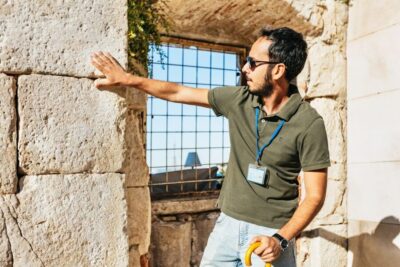
Split: Old Town and Diocletian Palace Walking Tour
Read our review →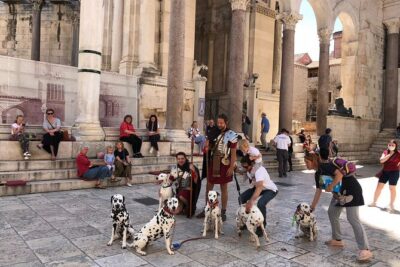
Walking Tour of Split and Diocletian’s Palace
Read our review →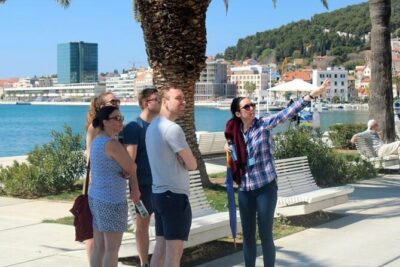
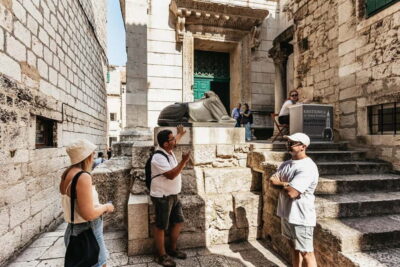
Split: Diocletian Palace & Old Town Guided Walking Tour
Read our review →
Split: Game of Thrones Tour with Diocletian’s Palace Cellar
Read our review →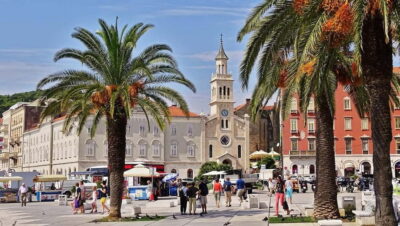
Diocletian’s Palace and Old Town SMALL GROUP Walking Tour
Read our review →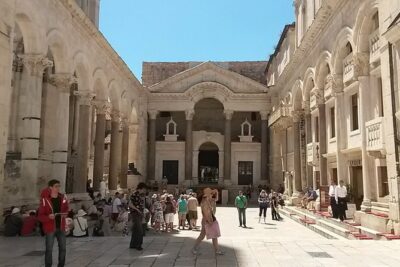
SPLIT-PRIVATE Walking Tour of Diocletian’s Palace & Old Town
Read our review →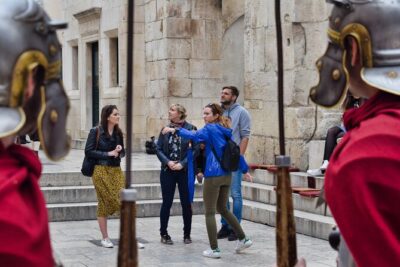
Browse the lists this tour appears in