
Reviewed · DIOCLETIAN'S PALACE TOURS
Diocletian’s Palace Small Group Tour in Split
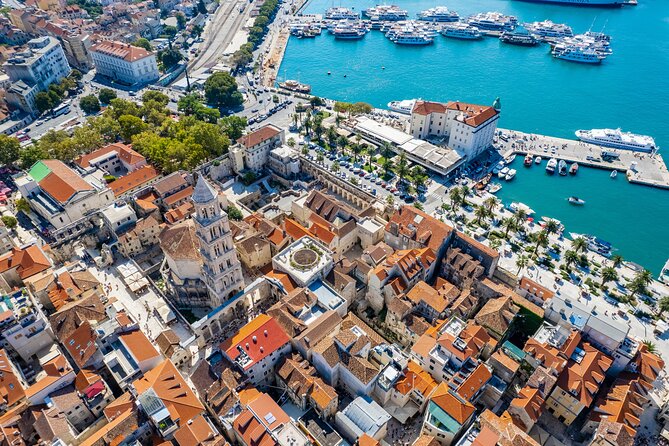
Diocletian’s Palace is not a single grand building you walk into and leave behind. It is Split’s old town, a living Roman complex where laundry, cafés, shops, homes, ancient stone, and modern life share the same narrow lanes. This walking tour gives you a useful map of that maze in about two hours.
I like the focus on the palace’s key spaces, especially the Peristyle and the remarkably preserved cellars. I also like the local angle: guides such as Luka, Sandra, and Jelena have been praised for clear history, friendly conversation, restaurant and shop tips, and a sense of humor. The main consideration is time. Two hours gives you a strong introduction, not a full study of every corner.
Key points to know before booking
- A walking tour through a living Roman palace: You explore streets that still form the center of Split, rather than visiting an isolated museum.
- Five important palace sights: The route covers the main palace area, Peristyle, Vestibule, cellars, and Golden Gate.
- Local guidance adds useful context: Guides explain both Roman history and details of everyday life in Split.
- Several departure times: You can choose a time that fits a day of sightseeing, though an early morning start may be more comfortable in August.
- About two hours on foot: Expect a moderate amount of walking over old city surfaces, with no food, drinks, or cathedral admission included.
- A generally strong guest record: The tour is rated 4.8 out of 5 from 12 reviews, with 92 percent recommending it.
Why Diocletian’s Palace is worth a walking tour
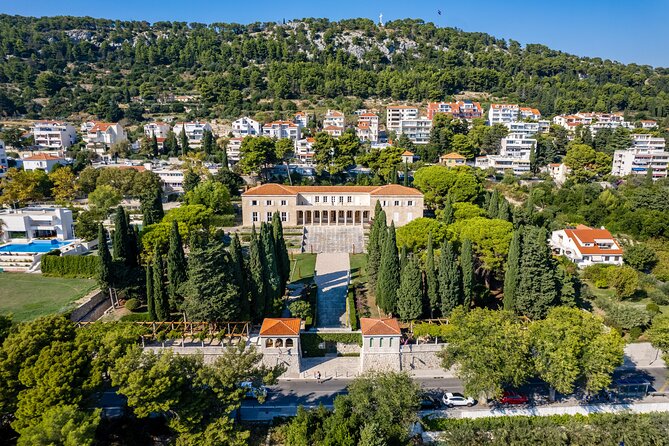
The word palace can give you the wrong picture. Emperor Diocletian built this enormous fortified residence around the turn of the fourth century AD as a retirement home, but only part of it served his personal needs. The rest housed a military garrison.
Today, the complex makes up roughly half of Split’s old town. You do not simply admire it from outside. You walk through its gates, squares, vaulted passages, and irregular lanes while the modern city carries on around you.
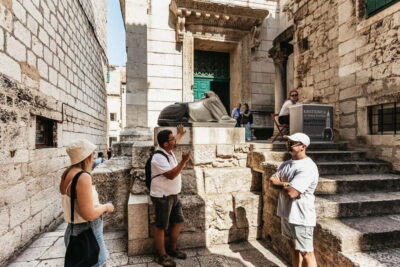
That is the magic of this experience. A stone wall may belong to the Roman period, while the building attached to it is much newer. An Egyptian sphinx can sit close to a twentieth-century structure. The result is not a tidy archaeological site. It is a layered city that rewards a guide who can explain what you are looking at.
I would choose this tour early in a stay in Split. The route helps you understand the old town’s layout, and the guide can give you useful pointers for the rest of your visit. It is also a good first step if you want the story behind the stones before exploring on your own.
More ways to see Diocletian's Palace:
- Split: Old Town and Diocletian Palace Walking Tour
★ 4.9 · 4,727 reviews - Walking Tour of Split and Diocletian’s Palace
★ 5.0 · 2,588 reviews - Split & Diocletian’s Palace Walking Tour
★ 5.0 · 1,125 reviews
Starting at South Tours Travel Agency
The tour begins at South Tours Travel Agency on Mrčelina 1 in Split. It ends back at the same meeting point, so you will need to allow time to return there after the final stop.
Several departure times are offered during the day. That flexibility matters if you are fitting the tour around a ferry, a meal, or another city visit. If you are visiting during a hot part of the year, I would favor the earliest practical departure. One August review specifically found an early morning start pleasant.
The tour is offered in English and uses a mobile ticket. Confirmation arrives when you book. The group size can reach 99 people, so you should not assume that every departure will be a tiny walking party. One group was about 20 people, while another booking became a private tour with Jelena. Group size may therefore vary.
You need a moderate level of physical fitness. This is a walking experience through an old city, not a seated presentation. Wear shoes you can use comfortably for two hours, and keep in mind that the route includes historic streets and palace spaces rather than smooth modern pathways.
Entering the 1,700-year-old palace
The main palace visit takes about two hours and includes the wider maze of streets that now forms Split’s city center. This is the part of the tour where the guide’s storytelling matters most.
A good guide can explain how a Roman imperial residence became an active town. You will see the palace not as a frozen ruin, but as the framework for daily Mediterranean life. The tour description points to everything from ancient Egyptian sphinxes to twentieth-century buildings, giving you a sense of the unusual mix that makes the center so memorable.
This broad palace walk is also where you get local details. One guide was praised for explaining how locals live, while another offered tips about shops. That kind of information can be more useful than another list of dates. It helps you notice the small signs of a working city and gives you ideas for what to explore after the tour.
The possible weakness is that the old town can feel confusing at first. A two-hour walk gives you orientation, but you may not remember every lane or Roman term. That is not a problem if you treat the tour as a foundation and return later to revisit the places that caught your attention.
The Peristyle, the palace’s dramatic central square
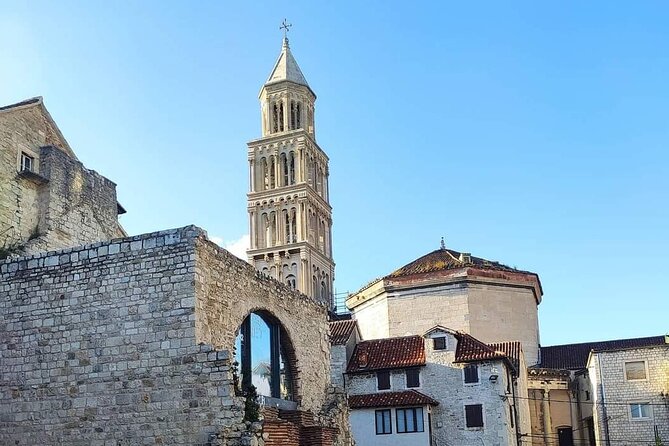
The Peristyle receives about ten minutes on the planned route. It was the central square of the palace, created for ceremonies connected to Diocletian’s image as the living son of Jupiter.
This is one of the places where the scale and purpose of the palace come into focus. The square was not simply an open courtyard. It was a stage for imperial power, surrounded by temples and monumental architecture.
Its acoustics also helped give the Peristyle a later life as a setting for opera, ancient literature, and other performances. The square still functions as a public stage for city life, which makes it especially effective on a walking tour. You can connect its Roman purpose with the way people use it now.
Ten minutes is enough for an explanation and a look around, but not enough for a long architectural study. If you enjoy photography or want quiet time in the square, plan to return after the tour.
Same coastline, a completely different kind of day:
- Split: Krka Waterfalls Trip with Boat Cruise and Swimming
★ 4.8 · 10,519 reviews - From Split: Krka Waterfalls, Food & Wine Tasting Tour
★ 5.0 · 9,326 reviews - Blue cave, Mamma Mia and Hvar, 5 islands speedboat tour
★ 5.0 · 7,150 reviews - From Split: Krka Waterfalls, Food & Wine Tasting Tour
★ 4.9 · 6,598 reviews
The Vestibule and its unusual shape
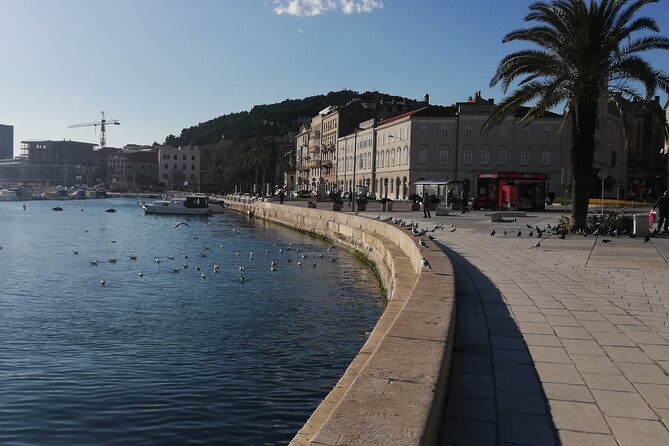
The Vestibule is another short stop, listed at about ten minutes. From the outside, it has a rectangular form. Inside, its ground plan is circular, creating a strong contrast between the plain exterior shape and the monumental interior space.
This is the sort of detail that is easy to miss when you wander alone. A guide can point out why the room feels different from the passageways around it and explain its place within the old imperial court.
The Vestibule is compact, so the value here comes from the explanation rather than the length of the visit. If your group is large, listen closely and stay near the guide so you do not miss the details.
The Diocletian’s cellars and the palace below
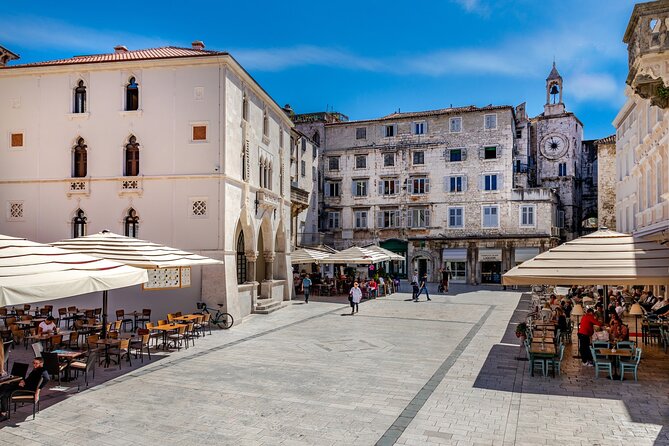
The cellars are among the most important stops on the route. The substructures are unusually well preserved, and their survival helped support the inclusion of Split’s historic center on the UNESCO World Heritage list in 1979.
These underground spaces give you a practical sense of how the palace was built. They also help explain the shape and structure of the upper city. Rather than treating the cellars as a separate attraction, the guide can connect them to the streets and buildings above.
The planned stop lasts about ten minutes. That is enough for an introduction, but it may feel brief if you are fascinated by ancient construction. Admission to the tour itself is included, but the information provided does not include a separate ticket price for the cellars. The cathedral is specifically excluded, so do not expect cathedral entry as part of this walk.
The Golden Gate and Diocletian’s entrance
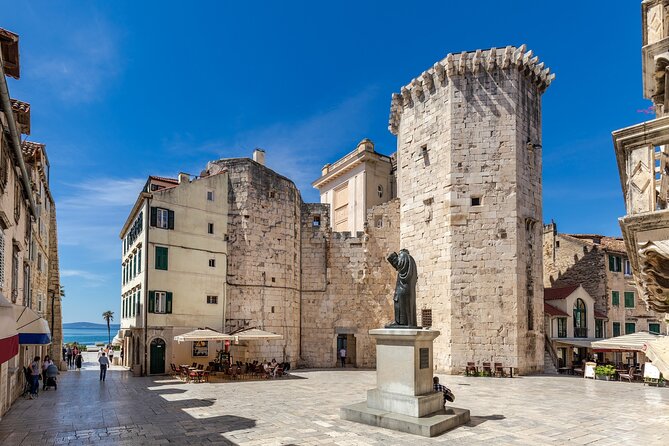
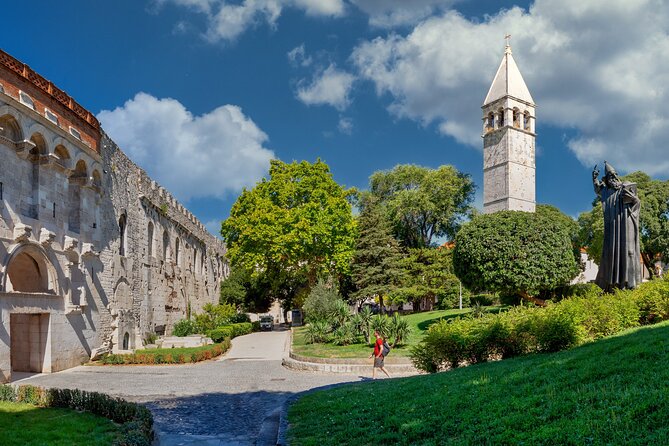
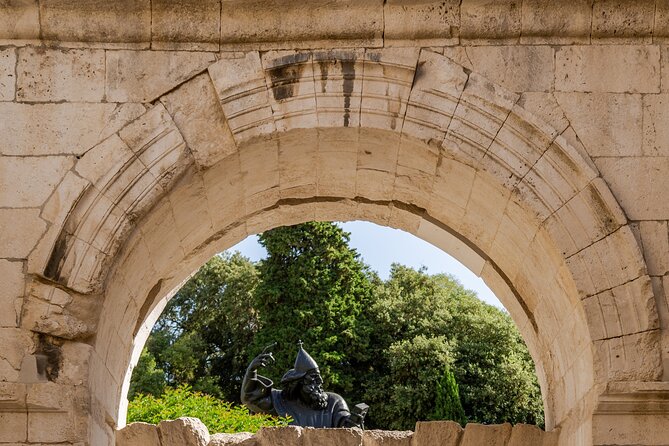
The Golden Gate, or Porta Septemtrionalis, was one of the palace’s major entrances. It was built with double doors and a rectangular defensive design, reflecting the military side of Diocletian’s complex.
The date connected with the gate gives the stop extra life: Diocletian is said to have entered the palace through it on June 1, 305. That detail turns a large stone opening into a scene with a clear historical moment.
The gate is scheduled for about ten minutes. I like ending or nearing the end of a palace walk here because it reinforces the idea that Diocletian’s residence was also a fortified compound. The palace was designed for ceremony, comfort, administration, and defense all at once.
The guides are the heart of the experience

The strongest praise for this tour centers on the guides. Luka was singled out for his energy, recommendations, and clear command of the subject. Sandra was praised for being both exceptionally well informed and friendly. Jelena made a private tour especially enjoyable by answering questions and sharing tips about shops.
Another guide was described as a young woman who knew her history, gave generously of her time, and brought an intelligent, warm manner to the walk. A different guide added a quirky sense of humor, which can make two hours of dates and architecture easier to absorb.
You should not book this expecting one guaranteed guide. Names and personalities can change by departure. Still, the pattern is encouraging: the experience depends on local guides who can explain the palace and add observations about modern Split.
The guide also makes the difference between a simple route and a useful orientation. If you have questions, ask them. The small amount of time at each formal stop means your interaction with the guide is one of the best ways to get more from the tour.
Price, value, and what is not included
The price is $60.21 per person. For about two hours, that is not the cheapest way to walk through Split, especially since entry to the listed palace areas is described as free and food and drinks are not included.
The value comes from the explanation, the route, and the time saved finding the important spaces yourself. If you arrive in Split with no background on the palace, a good guide can give you a working understanding of the old town in one outing. That can make the price reasonable for a first visit.
I would be less inclined to book it if you have already spent several days studying Roman architecture or have a strong plan for exploring the palace independently. In that case, the tour may repeat places you already know.
Cathedral tickets are not included. The tour also does not include meals or drinks, so plan those separately. Since the tour returns to the meeting point, you can arrange lunch or another activity afterward without having to find a distant end point.
Who will get the most from this walk
I recommend this tour to first-time visitors who want a clear introduction to Split without committing to a full-day outing. The two-hour length works well for a cruise stop, a short city break, or the first morning of a longer stay.
It also suits you if you value local conversation as much as formal history. Guides have shared recommendations for shops and details about local life, not only facts about emperors and construction.
Families and older visitors should consider the moderate fitness requirement and the possibility of a larger group. The tour is on foot, and the old town can be easier to enjoy at a comfortable pace than in a rush.
Independent explorers may still find it useful. You can take the tour for orientation, then return to the cellars, Peristyle, or Golden Gate later with more time for photographs and quiet observation.
Booking, cancellation, and timing advice
The experience is often booked about 45 days ahead, so it is sensible to reserve early if your dates are fixed. Confirmation is provided at booking, and you can use a mobile ticket.
Free cancellation is available if you cancel at least 24 hours before the local start time. Cancellations or changes made less than 24 hours before the start are not refunded or accepted.
I would choose an early departure in August when possible. You get a better chance of a more comfortable walk, and the old town’s atmosphere can be calmer in the morning. Still, the several departure options make the tour easy to fit around other plans.
Should you book the Diocletian’s Palace tour?
Book it if you want a concise, guided introduction to Split’s Roman core, especially if you appreciate local tips and an engaging guide. The palace is too layered to understand fully from a quick self-guided stroll, and the route covers the essential spaces without taking your whole day.
Skip it if you prefer to explore alone, already know the palace well, or want admission to the cathedral included. Also check the expected group size if a small, quiet walk is important to you.
At $60.21, the main purchase is not entry to a monument. It is the guide’s time and interpretation. For a first visit, that can be a fair trade, particularly when you receive a guide with the warmth and local sense shown by Luka, Sandra, or Jelena.
FAQ
How long does the Diocletian’s Palace tour last?
The tour lasts approximately two hours.
Where does the tour begin?
It begins at South Tours Travel Agency, Mrčelina 1, 21000 Split, Croatia.
Where does the tour end?
The activity ends back at the meeting point.
What language is the tour offered in?
The tour is offered in English.
What sights are included?
The route includes Diocletian’s Palace, the Peristyle, the Vestibule, Diocletian’s cellars, and the Golden Gate.
Is entry included?
The provided information lists admission for the palace route and stops as free. Cathedral tickets are not included.
Are food and drinks included?
No. Food and drinks are not included.
How much does the tour cost?
The listed price is $60.21 per person.
How large can the group be?
The activity can have a maximum of 99 participants. Actual group size may vary by departure.
Can I cancel for a refund?
Yes. You can cancel at least 24 hours before the local start time for a full refund. Cancellations or changes made less than 24 hours before the start are not accepted or refunded.
Just added around Split
- From Makarska : Wine Tasting Grabovac Tour★ 4.5 · 30 reviews
- Essential Diocletian’s Palace Tour for First-Time Visitors★ 4.8 · 19 reviews
- Unique vintage Tomos moped tour Split – Back to the ’80s★ 4.8 · 17 reviews
- Walking Tour Split★ 4.7 · 61 reviews
- Trogir; Private walking tour of higlights of Trogir★ 4.7 · 3 reviews
- Trogir: White Lagoon, Maslinica & Blue Lagoon Speedboat Tour★ 4.8 · 11 reviews
- Trogir 1.5-Hour City Tour★ 4.4 · 37 reviews
- Split: Trogir Open Top Bus Trip + Free Split Walking Tour★ 4.1 · 17 reviews
Diocletian's Palace Tours, compared.

Split: Old Town and Diocletian Palace Walking Tour
Read our review →
Walking Tour of Split and Diocletian’s Palace
Read our review →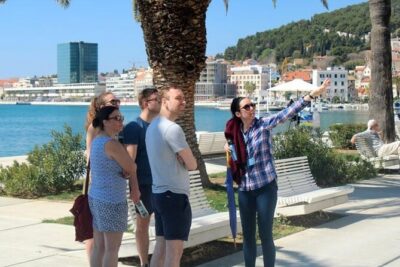
Split: Diocletian Palace & Old Town Guided Walking Tour
Read our review →
Split: Game of Thrones Tour with Diocletian’s Palace Cellar
Read our review →
Diocletian’s Palace and Old Town SMALL GROUP Walking Tour
Read our review →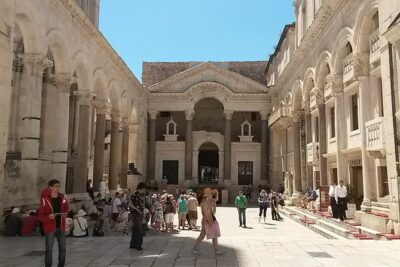
SPLIT-PRIVATE Walking Tour of Diocletian’s Palace & Old Town
Read our review →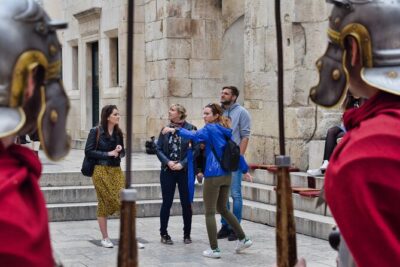
Browse the lists this tour appears in