
Reviewed · GUIDED
Experience Trogir with a Local Guide
Trogir’s best stories are tucked into its narrow lanes, old gates, and busy central square. This private walking tour brings them together with a local guide, Sandra, who connects grand events to everyday life, from medieval bells to the practical reason French rulers tore down parts of the walls.
I like the local, personal angle and the well-planned route. You see the North Gate, South Gate, Karmelengo Fortress, Batarija, the promenade, central square, and Saint Lawrence’s Cathedral without wasting time on transport. I also like Sandra’s balanced storytelling, especially her explanation of how French changes improved hygiene in a town where waste once went out of upper windows.
The main drawback is value for solo visitors: $82.80 per person is a serious price for a walk lasting about 80 minutes to two hours, and cathedral entry costs another €6. For a private group that wants context and conversation, the price is easier to justify.
Key points about the Trogir walking tour

- A private walk with Sandra: Only your group takes part, allowing room for questions and a more personal pace.
- A full circuit of old Trogir: The route links both medieval gates, the waterfront promenade, central square, fortress area, and cathedral.
- Local stories beyond dates: Expect tales about bells, patron saints, noble families, French rule, sewage, football, and daily life.
- Optional landmark entries: Karmelengo Fortress is seen from outside, while cathedral entry costs €6 per person.
- Good for history and photography: The South Gate, narrow streets, cathedral portal, promenade, and fortress all provide strong visual moments.
- Easy practical setup: The meeting point is at Ul. Gradska vrata 6, the tour is offered in English, and pushchairs and service animals are allowed.
Starting at Trogir’s North Gate
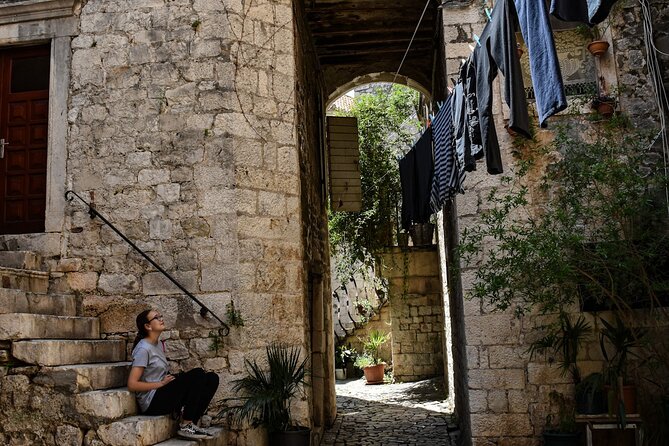
The walk begins at Ul. Gradska vrata 6, by the North Gate, the old main entrance into Trogir. This is a useful place to start because the gate immediately explains how the medieval town worked. Trogir was enclosed by walls, and entry was controlled rather than casual. The town’s shape makes more sense once you understand that defense came first.
From here, you move into narrow streets that trace the life of the settlement back to the 3rd century BC. Sandra covers the town’s name, its first settlers, and the way people live in Trogir today. That mix matters. You are not getting only a parade of rulers and dates. You are hearing how an old town still functions as a real community.
One particularly good thread is the role of bells and the patron saint. Bells once helped organize daily life, and the patron saint has long held an important place in local identity. The details give you a better sense of how sound, faith, and public life shaped the town before clocks, phones, and modern announcements.
You also stop outside the birthplace of Petar Berislavić, a Croatian nobleman important to the wider story of Croatia as well as Trogir. This is a short stop, but it gives the lanes a human scale. Instead of seeing only stone facades, you connect one building to a person and to the country’s past.
More days out in Trogir:
- Blue cave, Mama Mia and Hvar, 5 island speedboat tour from Trogir
★ 5.0 · 2,861 reviews - Krka Waterfalls tour with Trogir Walking tour and Krka panoramic boat cruise
★ 5.0 · 1,659 reviews - From Trogir: Three Islands Half-Day Speedboat Tour
★ 4.8 · 804 reviews
A former noble palace and Trogir’s social life
The route includes a former noble palace that now serves as a museum. The palace matters because it shows how power once worked inside Trogir. Wealthy families lived in grand buildings close to the civic center, while the town’s public life played out around them.
The museum also has a role in present-day social life. You may not spend a long time inside, but the guide’s explanation helps you see the building as more than a collection of objects. It was once a home for an influential family and now contributes to the town’s public culture.
The supplied route does not list an admission charge for this stop, so you should think of it mainly as an exterior and historical point unless Sandra advises otherwise. The focus is on the story of the building and its place in Trogir rather than a long museum visit.
Karmelengo Fortress and the Ottoman threat
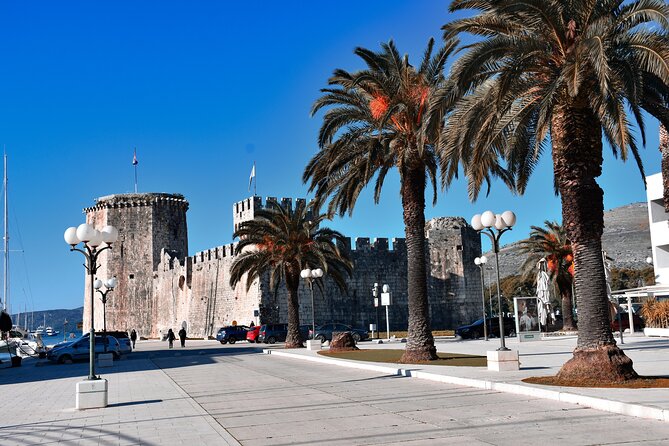
Karmelengo Fortress is one of the route’s strongest visual stops. It was intended as a shelter for the town’s rector during Ottoman invasions, which tells you something about both the political fears and the defensive planning of the period.
You will visit the fortress from the outside. Entry is optional, and admission is not included in the tour price. That is a useful arrangement if your time is short or you want to keep extra costs down. If you enjoy military architecture, you may prefer to pay for entry, but the outside view still gives you the main setting and story.
The fortress was once called the fort of chains. Sandra explains the reason, adding a small but memorable detail to what could otherwise be just another fortified building. Today, Karmelengo also serves as a concert venue during summer. The contrast is appealing: a structure built for danger now provides a setting for music.
I would give this stop extra weight if you enjoy seeing old buildings used in modern ways. You are not only looking at a defensive monument. You are seeing how Trogir has adapted an old fortress to present-day cultural life.
Football inside a UNESCO-protected area
At Igralište Batarija, the tour makes an unusual turn. Trogir has a football field in an area protected by UNESCO, an uncommon pairing that gives the stop its interest.
You also see a gloriette dedicated to the period of French rule and the Tower of St Mark. The guide uses the setting to explain another layer of Trogir’s past, one that reaches beyond Venetian and medieval influences.
This is a short stop, listed at about 10 minutes, so do not expect a long discussion of football or French architecture. Its value is in the surprising connection between an ordinary community sports ground and a protected historic setting. It also gives you a break from palaces and churches.
Sandra’s approach to French rule is particularly useful here. She does not reduce the period to a simple good-versus-bad tale. The French destroyed sections of the city walls, but the reason included public hygiene. With no sewage system, household waste was thrown from windows into the streets. That practical context makes the changes easier to understand, even if the loss of fortifications still shaped the town.
A few more Trogir days out worth weighing up
- Zagreb to Split Group Transfer with Plitvice Lakes guided Tour
★ 4.5 · 242 reviews - Trogir: City Highlights Guided Walking Tour
★ 4.9 · 199 reviews - Trogir walking tour with a local guide
★ 5.0 · 129 reviews - Split to Zagreb Group Transfer with Plitvice Lakes guided tour
★ 4.5 · 119 reviews
The promenade where Trogir slows down
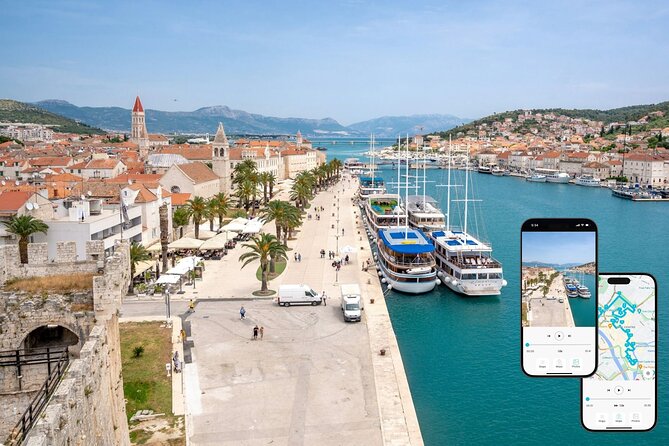
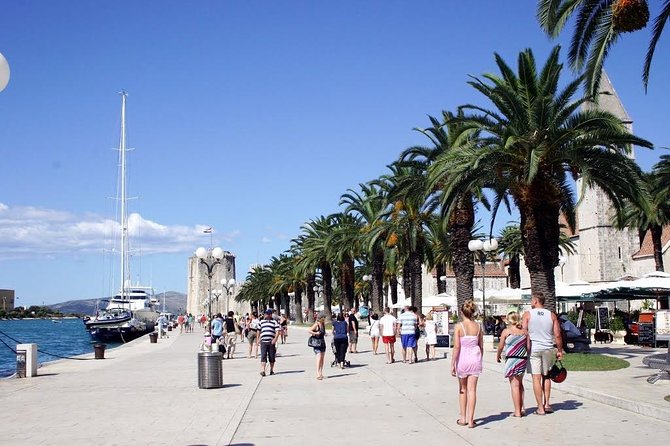
The Trogir promenade is the town’s everyday meeting place. Locals and visitors come here to sit, have coffee, and watch the waterfront activity. After the tight lanes and heavy stone walls, the open promenade offers a change of pace.
This is one of the moments when a local guide adds real value. Sandra can point out how the space fits into modern Trogir rather than treating it only as a photo stop. You get a sense of where people spend time, not just where historic events happened.
The stop lasts about 10 minutes. That is enough to orient yourself and absorb the setting, though you will not have much time for a long coffee during the formal tour. If you want to linger, note the promenade during the walk and return after the tour ends.
Entering through the South Gate
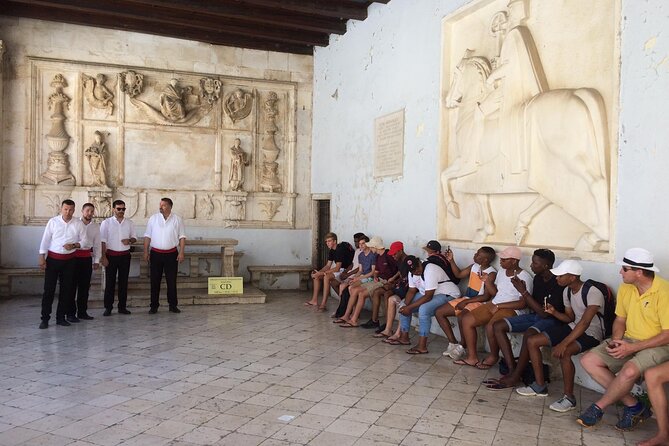
The South Gate still has its original doors, which were closed each evening. That detail makes the old defensive system feel practical rather than decorative. Trogir was not simply surrounded by walls for appearance. Access was managed, and the town could be shut down at night.
Next to the gate is the Small Lodge, where people could find shelter during the night. You also see the Church and Benedictine Monastery of St Nicholas behind the gate. The monastery carries a story about Trogir as the town of the happy moment, adding a lighter note to the town’s religious and civic traditions.
The South Gate is also a strong photo stop. It frames the view, and the colors change with the time of day. The tour takes place between 9 a.m. and 7 p.m. from Monday through Saturday, so the light may differ depending on your start time. Morning and late afternoon will naturally give the gate a different look than midday, though the exact conditions depend on the season.
Central Square and the buildings of power
Trogir’s central square brings the town’s major institutions into one compact space. Here you see the court, Rector’s Palace, noble palaces, and cathedral. This is where the political, legal, religious, and social parts of old Trogir met.
Sandra covers Venetian lions, court cases, a theatre that once stood at the center of town, and the families who held wealth and influence. These details help you read the square as a working civic space. Look up and around rather than focusing only on the cathedral. The surrounding facades tell you how power was displayed through architecture.
I especially like that the tour includes the old theatre. It is easy to assume that historic squares were used only for church services, government, or markets. A theatre points to another side of town life, with entertainment and public gathering sharing the same central ground.
The stop is scheduled for about 20 minutes. That is enough for an introduction and a good look at the buildings, but not enough to study every facade. If one palace catches your eye, make a note and return later at your own pace.
Saint Lawrence’s Cathedral and Radovan’s portal
Saint Lawrence’s Cathedral is the final major stop and the town’s most important building. The tour stands outside the cathedral, where Sandra explains its role in Trogir’s past and present.
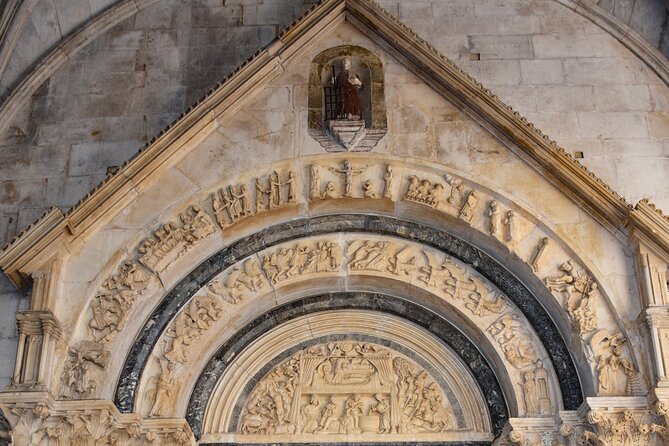
The highlight is Radovan’s Portal, a highly detailed entrance that rewards a close look. You will also see the cathedral’s bell tower and hear about a drawing on the cathedral wall that continues to fascinate people. The description does not specify the drawing’s exact subject, so ask Sandra about it at the stop. That question may lead to one of the more memorable details of the visit.
Cathedral entry is optional and costs €6 per person. Inside, you can visit the Chapel of St John and the baptistery, then climb the bell tower for a view over Trogir. The extra visit is most worthwhile if you want interior art, religious architecture, and a view from above. If you are content with the exterior, the guided explanation still covers the essential setting without adding to your cost.
Because the cathedral is the final stop, you can make your decision there. You do not have to commit to paying for entry before the walk begins. Keep in mind that the total tour duration already ranges from about 1 hour 20 minutes to two hours, so the interior visit and bell tower climb may extend your time in the old town.
What the private format adds
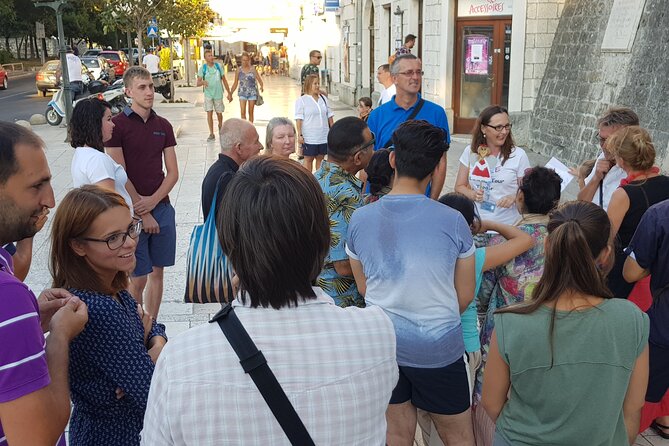
This is a private activity, so only your group takes part. That makes the experience different from a large group walk where the guide must keep one pace and repeat the same speech for everyone.
You can ask about a particular building, local customs, French rule, the town’s patron saint, or the meaning of the bells. You can also spend more time at a stop that interests you and less time at one that does not. The tour is offered in English.
The personal connection may be one of the strongest reasons to book. Sandra is described as being greeted by local children and people around town, and she offers recommendations based on local familiarity. That does not guarantee a particular encounter on your day, but it suggests that she is part of the community rather than simply delivering a memorized route.
Her storytelling also benefits from balance. The explanation of the French demolition of the walls is a good example. You hear both the damage to the old defenses and the public health problem that made reform necessary. That kind of practical context is more useful than a simple list of dates.
Is $82.80 a fair price?
At $82.80 per person, the cost is high for a short walking tour if you are alone or traveling as a pair. You should also budget €6 per person if you choose to enter the cathedral. Karmelengo Fortress entry is optional and not included, with no admission amount specified here.
The price makes more sense for a private group that values direct access to a local guide. You are paying for a dedicated walk, the chance to ask questions, and a route that covers many of Trogir’s key places in a short period. Group discounts are available, so larger parties should check the final rate before booking.
I would not choose this solely for the number of sights. You can walk past many of them on your own. I would choose it for the interpretation: why the gates mattered, how bells shaped life, why the French changed the walls, and how old palaces and public spaces still fit into modern Trogir.
The tour runs Monday through Saturday, from 9 a.m. to 7 p.m., during the stated operating period. Confirmation is provided at booking. The meeting point is near public transportation, and the activity is pushchair accessible. Most people can participate, and service animals are allowed.
Free cancellation is available up to 24 hours before the start time for a full refund. Changes or cancellations made less than 24 hours before the start time are not accepted for a refund, with cutoffs based on local time.
Who should book this Trogir walk?
I would recommend it to you if you have limited time in Trogir and want the old town explained in a clear sequence. It also suits families or small private groups who prefer questions and conversation over a fixed large-group script.
History fans will enjoy the mix of medieval defenses, noble families, Venetian symbols, French rule, religious buildings, and local customs. Photographers will appreciate the North Gate, South Gate, cathedral facade, promenade, fortress, and changing light around the old entrance.
You may want to skip it if you prefer to wander alone, dislike fixed routes, or mainly want to spend time inside the cathedral and fortress. The tour sees Karmelengo from outside, and cathedral entry is an add-on. At this price, independent walkers should compare the cost with the value they place on Sandra’s local perspective.
FAQ
Where does the tour begin?
The tour begins at Ul. Gradska vrata 6, 21220 Trogir, Croatia, by the North Gate.
Where does the tour end?
The activity ends back at the meeting point.
How long does the experience last?
The tour lasts approximately 1 hour 20 minutes to 2 hours.
Is the tour private?
Yes. Only your group participates in the activity.
Is cathedral admission included?
No. Cathedral entry is optional and costs €6 per person. The visit may include the Chapel of St John, the baptistery, and the bell tower.
When is the tour offered?
It is offered in English from Monday through Saturday, between 9 a.m. and 7 p.m., during the stated operating period.
Should you book Experience Trogir with a Local Guide?
Book this tour if you want Trogir’s stones to make sense quickly and you value a local guide who can connect public monuments with ordinary life. Sandra’s personal ties to the town and balanced account of its past are the main reasons to choose it.
For a solo visitor, the price may be hard to defend. For a private family or group, it can be a useful first walk, especially if you add the cathedral interior and then return to the promenade or narrow lanes on your own. Start with the guide, ask questions, and use the rest of your time to explore the places that catch your eye.
Just added around Trogir
- Trogir; Private walking tour of higlights of Trogir★ 4.7 · 3 reviews
- Trogir: White Lagoon, Maslinica & Blue Lagoon Speedboat Tour★ 4.8 · 11 reviews
- Trogir: Old Town Guided Walking Tour★ 4.6 · 76 reviews
- Trogir 1.5-Hour City Tour★ 4.4 · 37 reviews
- Trogir Old City Walking Tour★ 5.0 · 8 reviews
- Private Transfer from Split Croatia Airport to Hotel★ 5.0 · 4 reviews
- Trogir 1,5-Hour Small Group City Tour★ 4.5 · 10 reviews
- Trogir Boat Tour To Secret Underwater Museum★ 5.0 · 50 reviews
Guided, compared.
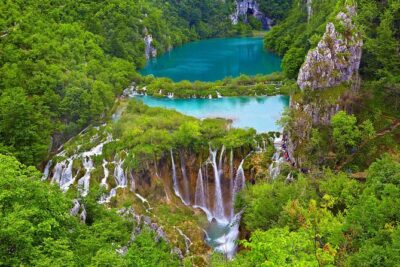
From Split: Plitvice Lakes National Park Guided Tour
Read our review →
From Split: Plitvice Lakes Guided Tour with Entry Tickets
Read our review →From Split: Plitvice Lakes National Park Guided Tour
Read our review →
Plitvice Lakes National Park Guided Day Tour from Split
Read our review →
Krka National Park Tour with tour Guide & Wine tasting from Split & Trogir
Read our review →
Split: Self-Guided Plitvice Lakes Day Tour with Boat Ride
Read our review →
Split: Diocletian Palace & Old Town Guided Walking Tour
Read our review →From Split: Plitvice Lakes National Park Guided Tour
Read our review →Browse the lists this tour appears in