
Reviewed · SPLIT
People of Split – meet the locals
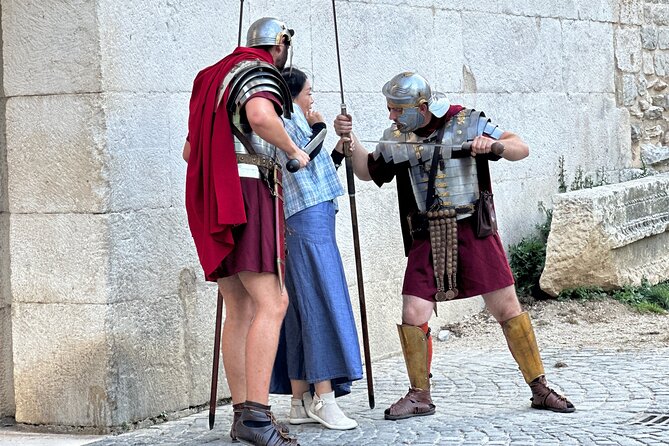
Split’s old center is not a museum behind glass. People live inside Diocletian’s Palace, hang laundry from palace windows, pause in its lanes, and carry on daily life among Roman stones. That is the heart of People of Split, a private walk led by native Split guide Mirjana, whose storytelling connects emperors, local customs, old trades, and Croatia’s more recent past.
I like two things right away: you see the major palace sights without losing sight of ordinary life, and the small group format gives you room to ask questions. You also get practical photo suggestions and snacks, with no admission fees listed for the stops.
The main consideration is the price: $258.88 per group, up to eight people. It is a fairer deal when shared by a full group, but expensive for one or two people compared with a standard group walk. The timing also varies slightly, from about 1 hour 20 minutes to 1 hour 35 minutes.
Key points at a glance
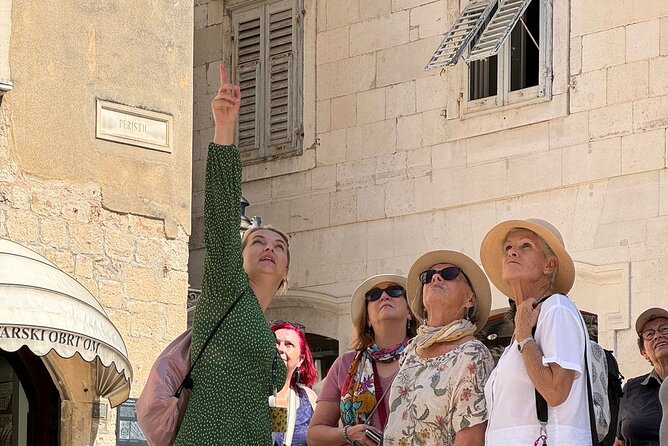
- Meet a native Split guide: Mirjana leads the walk with personal stories about local life, Dalmatia, and Croatia.
- See a living Roman palace: Diocletian’s Palace remains part of the city, with homes, shops, lanes, and daily routines inside its ancient walls.
- Visit the palace substructures: This 1,700-year-old space was also used for filming Game of Thrones.
- Look beyond monuments: The walk includes local produce, traditional crafts, old trades, and the simple art of watching life unfold.
- Get a private experience: Your group alone takes part, with space for questions and a pace suited to your interests.
- Finish near the Golden Gate: The route ends at Dioklecijanova 7, beside the palace’s Golden Gate.
Why this Split walk feels different
Many walks through Split focus on Roman dates, carved stone, and the emperor Diocletian. Those facts matter, but they do not fully explain the city. This experience tries to show how the palace became part of modern Split, rather than stopping at the moment the Romans left.
That approach suits you if you want stories about people as much as buildings. Mirjana is described as a warm, funny storyteller who adapts to the interests of her group. She brings in everyday life, local customs, Dalmatian culture, and the difficult road Croatia traveled through the 1990s.
You should not expect a long archaeological lecture packed with dates. The emphasis is on clear stories, personal connections, and the meaning behind familiar sights. That makes the walk easier to follow, especially if you are seeing Split for the first time or visiting with family members who may not want a formal history lesson.
The private format is important. With up to eight people, you can stop to ask why a street looks the way it does, how local traditions developed, or what a palace feature means today. A larger group walk can offer good information, but it rarely allows the same flexibility.
Other Split days people book alongside this one:
- Split: Krka Waterfalls Trip with Boat Cruise and Swimming
★ 4.8 · 10,519 reviews - From Split: Krka Waterfalls, Food & Wine Tasting Tour
★ 5.0 · 9,326 reviews - Blue cave, Mamma Mia and Hvar, 5 islands speedboat tour
★ 5.0 · 7,150 reviews
Starting at the Split sign by Riva Harbor
The meeting point is in front of the Split sign at Riva Harbor. It is an easy place to identify and a useful starting point because the waterfront immediately shows you how Split works: an ancient center, a busy public promenade, and the sea close at hand.
You begin with a photograph at the sign. That may sound like a small detail, but it gives the walk a friendly opening and a clear marker for the start of your time in the city. The first stop lasts about 15 minutes, and admission is free.
Riva also helps set up the larger story. Split is often presented through its Roman past, yet the waterfront is tied to current city life. You are not being taken straight into a silent ruin. You start in a place where people meet, walk, pause, and use the center as part of their normal day.
If you are arriving by public transport, the meeting area is near public transportation. Still, give yourself enough time to locate the Split sign, since the old center can feel confusing on your first visit.
Beneath Diocletian’s Palace
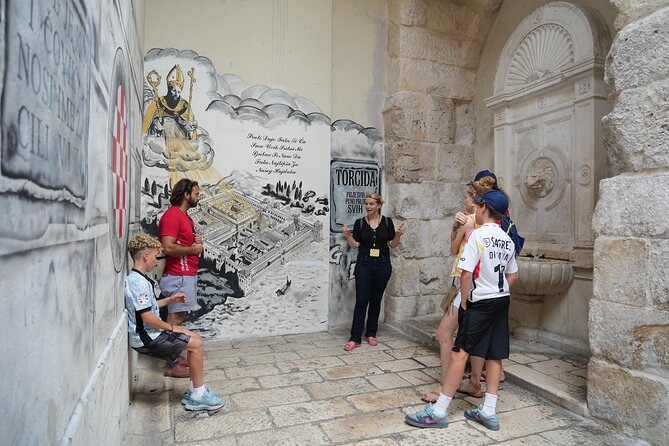
The next stop is the substructure of Diocletian’s Palace, an approximately 1,700-year-old structure that is still in use. This is one of the most useful places on the route because it helps you understand the palace from below.
The substructures supported the rooms above and preserve the scale of the Roman complex. You can connect what you see underground with the streets and buildings at ground level, rather than treating the palace as a collection of unrelated stops.
This is also one of the places connected with Game of Thrones filming. That detail will appeal to fans, but the location has value even if you have never watched the show. The stonework and enclosed spaces offer a strong sense of the age of the site without requiring a separate museum visit.
The scheduled time here is about 10 minutes. That is enough for an introduction and a few questions, but it is not a long archaeological visit. If underground spaces are your main interest, you may want to ask Mirjana for extra context during the walk.
The Peristyle and the palace as a home
The Peristyle is the main historical stop and receives about 35 minutes. Diocletian built the palace in the fourth century as a retirement home, but the site has had many lives since then. Today it forms part of Split’s old center, with homes and businesses occupying spaces within and around the ancient complex.
This is where the tour’s central idea becomes clear. You will hear about Roman power and palace design, but you will also look for the less formal details that show how people use the place now. The guide may point out corners that are easy to miss, suggest good photo positions, and explain myths and legends linked with the square.
The palace is visually impressive, but its value is not only in the columns and stone. It is the contrast between monumental architecture and ordinary routines. A person can live, work, shop, or pass through a place built for an emperor. That mixture gives the old center its particular character.
The walk may include local produce from vendors and encounters with artisans whose skills have continued through generations. The exact vendors and craft demonstrations are not specified, so you should treat these as part of the intended local focus rather than a guaranteed market stop at a particular stall.
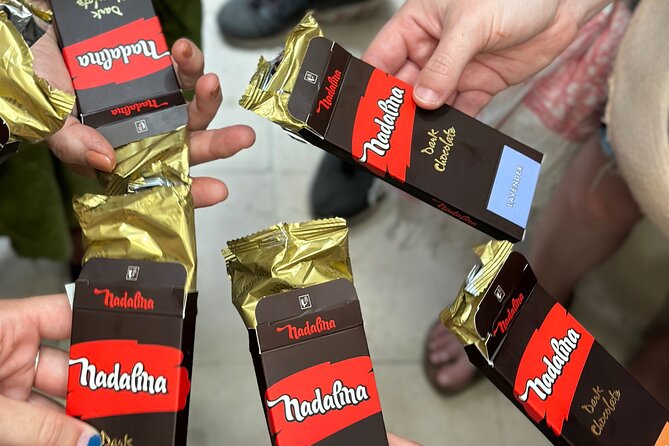
Snacks are included. The details of the snacks are not given, but they add a modest food element to a walk otherwise centered on place and storytelling. Do not book this expecting a full tasting tour. Book it if you like the idea of a small local touch along the way.
Same coastline, a completely different kind of day:
- From Split: Krka Waterfalls, Food & Wine Tasting Tour
★ 4.9 · 6,598 reviews - Split/Trogir: Blue Cave, Mamma Mia, Hvar and 5 Island Tour
★ 4.6 · 6,320 reviews - Blue Lagoon & 3 Islands Cruise with Lunch from Split
★ 4.5 · 5,756 reviews - Split: Old Town and Diocletian Palace Walking Tour
★ 4.9 · 4,727 reviews
Dominisova ulica and the value of slowing down
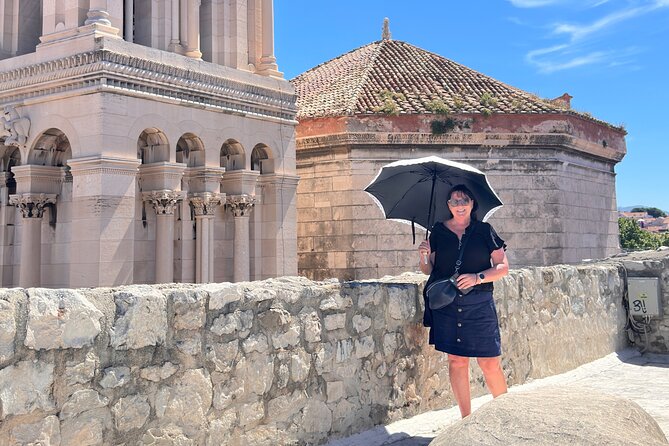
Dominisova ulica receives about 10 minutes, yet it may be one of the most revealing parts of the route. Here, the point is not a single grand monument. You walk, look around, and notice how residents occupy the old center.
Windows open onto the lane. Laundry hangs out to dry. People use the buildings in practical ways that have little to do with formal sightseeing. These details remind you that Split’s ancient core is also a neighborhood.
This is a useful lesson for your own time in the city. You can rush from one famous stone to the next, or you can pause and observe. The tour encourages the second approach, asking you to respect the residents and understand the town through its daily rhythms.
There is a practical limit here. Ten minutes is brief, and the street is part of a walking route rather than a long neighborhood visit. Still, Mirjana’s local perspective can help you notice details you might otherwise pass without a thought.
Rubbing the toe of Gregory of Nin
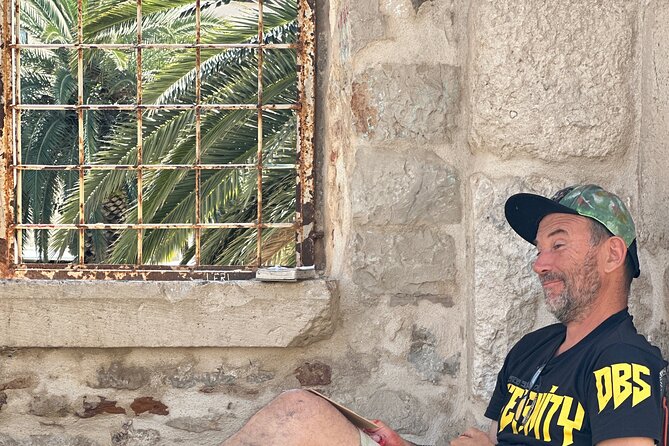
At the statue of Grgur Ninski, or Gregory of Nin, you get one of Split’s most familiar small rituals. You rub the statue’s toe and hear why the figure is important in the city.
The stop lasts about 10 minutes. That gives you time for the tradition, a photograph, and the story behind the statue without turning the visit into a long pause.
This is the sort of moment that works well on a local walk. You are not only looking at a piece of public art. You are taking part in a custom and learning how the statue fits into Split’s identity.
The toe-rubbing tradition is popular, so be prepared for a simple photo opportunity rather than a quiet, solitary encounter. The guide’s explanation is what gives the stop its value.
Pjaca, old trades, and Split’s public life
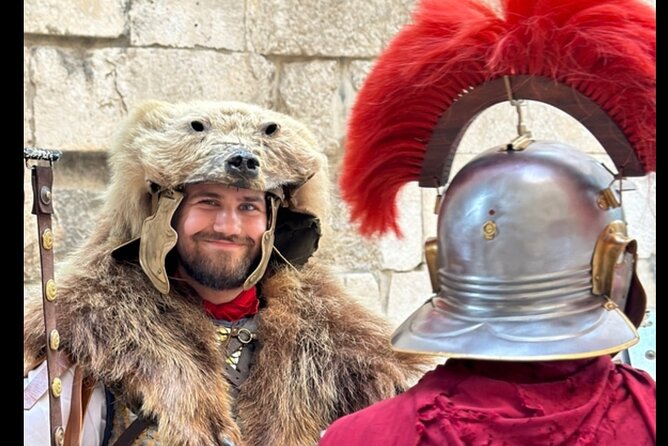
The final major stop is Narodni Trg, commonly called Pjaca. It was the first square built outside the ancient city, and the tour presents it as a place tied to romance, people-watching, activism, and daily walks.
This is another place where the route moves beyond Roman history. You hear different stories from different periods and see how a public square can collect layers of city life. The point is not simply to take a photograph and move on. You are encouraged to imagine how people have used the square over time.
The tour also introduces old trades and traditional craftsmen working in Split. The information provided does not promise a particular workshop or a guaranteed demonstration, so ask the guide what is active on the day of your walk. That flexibility is part of the appeal of focusing on living traditions rather than a fixed display.
Pjaca is a good place to end because it brings together the themes of the walk: history, local work, public space, and the importance of stopping to watch. The tour finishes at the Golden Gate, at Dioklecijanova 7. From there, you are well placed to continue exploring the palace on your own.
Mirjana’s storytelling style
The guide is the key part of this experience. Mirjana has led groups through Split for years and is praised for making the city feel personal rather than remote. Her approach includes Roman times, Dalmatian culture, local customs, and the conflicts that shaped modern Croatia.
Her English is described as very strong, and she is comfortable speaking clearly to a larger private group. She also adapts the walk to what interests you. If you want more palace history, ask for it. If you are curious about everyday life, local traditions, or Croatia’s recent past, say so early.
The strongest praise centers on her storytelling. She uses anecdotes and enthusiasm instead of delivering a list of dates. That is good news if you learn best through people and stories. It may be less suitable if you want a strictly academic tour with detailed architectural analysis at every stop.
The route can also work at night, since the experience has been offered as an evening walk. Night timing changes the feel of the old center, but the available details do not guarantee a specific departure time. Confirm the time when you book.
Is $258.88 good value?
The price is $258.88 per group of up to eight people. At the maximum group size, that works out to about $32.36 per person. For two people, it is $129.44 each, and for one person it is the full group price.
That makes the tour most attractive for a family, a group of friends, or a small private party. You receive a native guide, a private format, local storytelling, photo suggestions, snacks, and a route through several central sights. The stops themselves have no admission charge listed, so you are paying mainly for the guide and the private attention.
I would be more cautious if you are traveling alone or as a couple on a tight budget. A regular shared walking tour could cost less, though it would not offer the same private setting or flexibility. The value depends heavily on how much you care about personal stories and direct conversation with a local guide.
Tips and gratuities are not included. Plan to handle that separately if you feel the guide has given you a good walk.
Timing, comfort, and practical details
The stated duration ranges from about 1 hour 20 minutes to 1 hour 35 minutes. The listed stop times total about 90 minutes, so the difference likely allows for movement between locations, questions, and the natural pace of a private walk.
You will be walking through the old center, including narrow streets and historic spaces. Specific accessibility details are not provided, but most people can participate, service animals are allowed, and the meeting area is near public transportation.
The ticket is mobile, and confirmation is provided when you book. Free cancellation is available if you cancel at least 24 hours before the start time. A cancellation made less than 24 hours ahead, or changes made inside that window, are not accepted for a refund.
Who should book People of Split?
I would choose this tour if you want Split explained through local life as well as ancient monuments. It is particularly suited to first-time visitors who want an orientation walk, families who prefer stories to long lectures, and small groups willing to pay more for a private guide.
It also suits anyone curious about how Croatia’s past reaches beyond the Roman period. Mirjana’s storytelling includes Dalmatia, local customs, traditional work, and the more recent Croatian experience.
I would skip it if your main goal is a detailed archaeological tour, a full food tour, or a long visit inside every major palace space. The route is short, the food element is limited to snacks, and the emphasis is conversation rather than formal site interpretation.
Should you book it?
Book People of Split if you want the old city to feel like a real neighborhood, not just a line of monuments. Mirjana’s personal style, the small private group, and the focus on windows, workshops, public squares, and local routines give the walk a human scale.
For the best value, share the cost with a group of four to eight. If you are visiting alone, compare the private price with other walking options. If your priority is meeting a native guide and hearing Split explained with warmth, humor, and personal context, this is a strong choice.
FAQ
Where does the tour begin?
It begins in front of the Split sign at Riva Harbor, 21000 Split, Croatia.
Where does the tour end?
The tour ends at the Golden Gate at Dioklecijanova 7, 21000 Split, Croatia.
How long does the experience last?
The approximate duration is 1 hour 20 minutes to 1 hour 35 minutes.
Is this a private tour?
Yes. Only your group participates, with a maximum of eight people.
What language is the tour offered in?
The tour is offered in English.
Is admission to the stops included?
The listed stops show free admission. The tour also includes a heritage interpretation guide, a native local guide, photo spot suggestions, and snacks.
Is the tour suitable for most people?
Most people can participate. Service animals are allowed, and the experience is near public transportation.
What is the cancellation policy?
You can cancel for a full refund up to 24 hours before the start time. Cancellations or changes made less than 24 hours before the experience are not accepted for a refund.
Just added around Split
- From Makarska : Wine Tasting Grabovac Tour★ 4.5 · 30 reviews
- Essential Diocletian’s Palace Tour for First-Time Visitors★ 4.8 · 19 reviews
- Unique vintage Tomos moped tour Split – Back to the ’80s★ 4.8 · 17 reviews
- Walking Tour Split★ 4.7 · 61 reviews
- Trogir; Private walking tour of higlights of Trogir★ 4.7 · 3 reviews
- Trogir: White Lagoon, Maslinica & Blue Lagoon Speedboat Tour★ 4.8 · 11 reviews
- Trogir 1.5-Hour City Tour★ 4.4 · 37 reviews
- Split: Trogir Open Top Bus Trip + Free Split Walking Tour★ 4.1 · 17 reviews