
Reviewed · SPLIT OLD TOWN WALKING TOURS
Private History Split Walking Tour in Italian – Small group
Split’s old center is not a museum sealed behind glass. It is a living Roman palace, filled with lanes, homes, shops, cafés, and grand stone spaces. This 90-minute Italian walking tour gives you a clear route through its main sights while explaining how Diocletian rose from obscurity to become one of the ancient world’s most powerful rulers.
I like the private format, since only your group takes part, and I like the range of subjects. You get Roman architecture, medieval Split, Venetian power, Jewish heritage, Croatian language, and the lively Riva promenade in one compact walk. The main drawback is that the tour does not include the museum section of the palace substructures, and high steps may be difficult for some people.
Key points to know before booking
- Diocletian’s Palace is the main event: The route covers the Peristyle, Vestibule, substructures, and Golden Gate.
- Italian-speaking guidance: Guides such as Maria, Doris, and Mia Anica have led tours associated with this experience.
- Private small-group setting: Only your own party participates, making it easier to ask questions and hear the guide.
- A broad look at Split: The walk moves beyond the palace to Riva, Fruit’s Square, and the old synagogue area.
- Most stops are free: The listed stops do not require admission, though the synagogue stop is viewed from outside and gratuities are not included.
- Allow for uneven footing and steps: The route is on foot through an old urban center, and high steps may be a concern.
Why this short Italian tour works well in Split
If you have only one day in Split, this walk gives you a useful first map of the city. The palace is large enough to feel confusing at first, with narrow passages leading into courtyards, cellars, churches, shops, and residential lanes. A guide helps connect those pieces instead of leaving you with a collection of impressive but disconnected stones.
I especially like the way the tour links the palace to the wider city. You are not simply shown Roman remains, then sent on your way. The route continues to the harbor, a Venetian citadel, a Croatian literary landmark, and the former Jewish quarter. That wider view helps you understand Split as a city that kept changing long after Diocletian left the scene.
The Italian language is another practical strength. Guides named Maria, Doris, and Mia Anica are associated with the experience, and the available feedback repeatedly highlights clear Italian, warmth, humor, and strong preparation. Guide assignments can vary, so you should not book on the assumption that one particular guide will lead your walk.
At $69.39 per person, this is not the cheapest way to wander around Split. The value depends on your group size and interest in interpretation. Because it is a private activity, the price can make more sense for a couple, family, or small group that wants an Italian-speaking guide without joining a larger party. If you only want a quick look at the palace, you can walk through many areas independently. You are paying here for context, organization, and the chance to ask questions.
More walks through the old quarter in Split:
- Split: Old Town and Diocletian Palace Walking Tour
★ 4.9 · 4,727 reviews - Walking Tour of Split and Diocletian’s Palace
★ 5.0 · 2,588 reviews - Krka Waterfalls tour with Trogir Walking tour and Krka panoramic boat cruise
★ 5.0 · 1,659 reviews
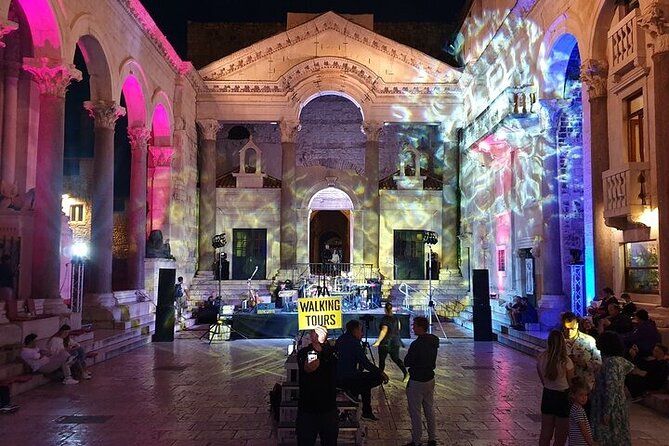
Meeting Diocletian at the Peristyle
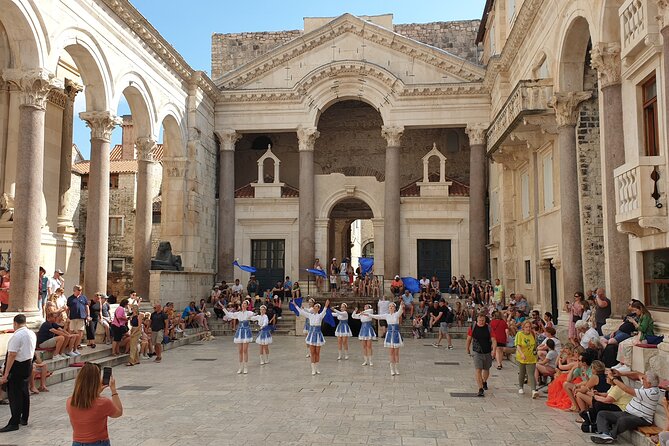
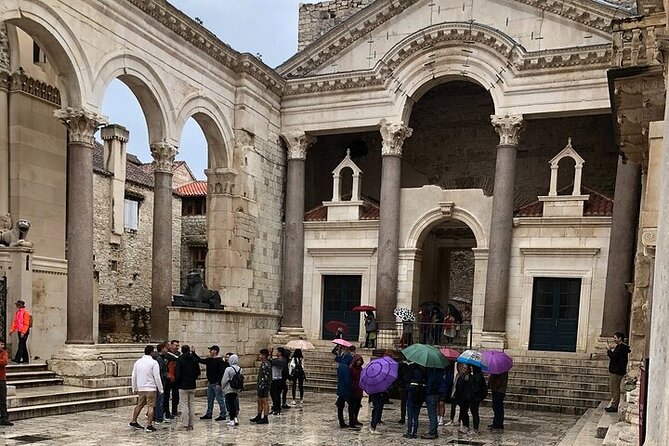
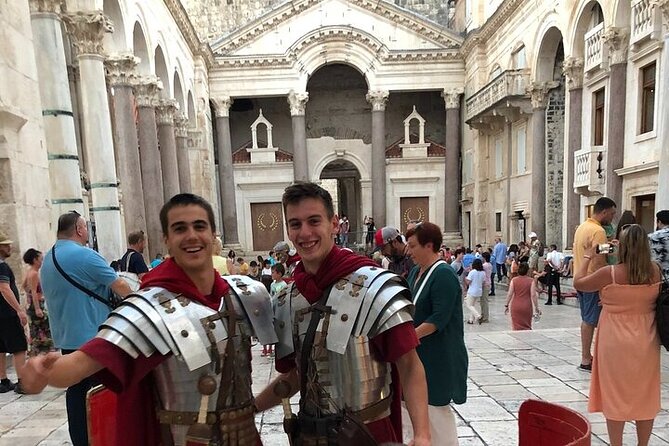
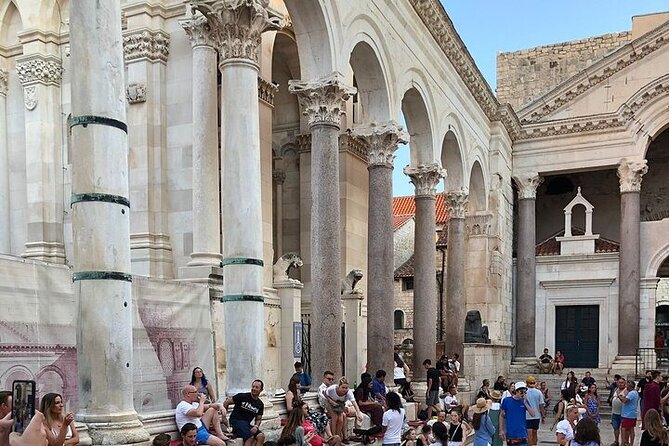
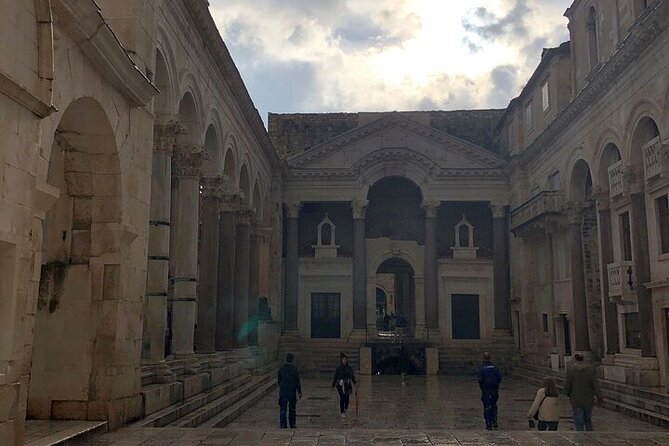
The tour begins at Peristil, the main square inside Diocletian’s Palace. This is the natural starting point because routes from it lead toward many of the palace’s most important sections.
The Peristyle is where the Roman character of the complex feels most concentrated. Your guide uses the square to explain Diocletian himself, including his rise from a relatively obscure background to imperial power. That personal story gives the architecture a human focus. You are not just looking at columns and stone. You are learning why an emperor built this enormous retirement residence and how his rule shaped the site.
The stop lasts about 15 minutes and is free of charge. It is also a good place to ask your first questions, since later parts of the route make more sense once you understand the palace plan.
The square can feel busy at popular times, and the stone surface is not the kind of setting where everyone can stand comfortably in one fixed spot. A private group helps here, since you can stay close to your guide and ask for a short pause if you need one.
The Vestibule and a taste of Dalmatian culture
The Vestibule is a smaller stop, lasting about five minutes, but it adds atmosphere to the tour. This was the entrance area connected with the emperor’s apartments, and your guide explains its original role and later history.
You might also hear traditional Dalmatian singing here. The wording of the experience makes this a possibility rather than a guaranteed performance, so treat it as a welcome extra, not the reason to book the tour.
The Vestibule shows how the palace changed over time. A space created for imperial ceremony became part of the everyday fabric of Split. That contrast is one of the most interesting themes of the walk: Roman buildings were not abandoned after antiquity. They were reused, altered, and absorbed into the modern city.
Beneath the palace in the substructures
The palace substructures are scheduled for about 10 minutes. These underground rooms mirror much of the layout above, which makes them useful for understanding how the complex was built and supported.
Your guide explains their construction and the different functions the spaces served over the centuries. For many people, this is the clearest way to picture the original palace plan. You can see how the lower level relates to the emperor’s residence and the public spaces above it.
There is an important limit. This tour passes through the substructures but does not include the museum section. You can visit that museum afterward on your own. If underground architecture is your main interest, plan extra time and a separate admission for the museum area rather than expecting the 10-minute stop to cover everything.
The substructures also involve stone surfaces and changes in level. If you have trouble with high steps, this is one of the places to consider carefully before booking.
More history walks in Split:
- Walking Tour of Split with a ‘Magister’ of History
★ 5.0 · 1,122 reviews - Split Walking Tour with Professor of History
★ 5.0 · 926 reviews - Split: History and Heritage Walking Tour
★ 4.9 · 650 reviews - Split History and Gastro Small-Group Tour with Food and Drinks
★ 5.0 · 375 reviews
The Golden Gate and Gregory of Nin
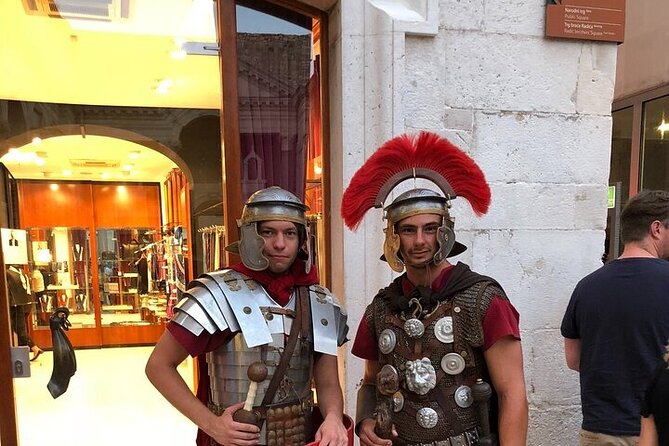
The Golden Gate is the palace’s main entrance and one of the most useful places to hear about Split’s medieval and later identity. The guide explains the gate, then introduces the statue of Gregory of Nin nearby.
Gregory of Nin matters not only as a historical figure but also because of his connection with the Croatian language. The stop gives you a glimpse of how national culture can be tied to a public monument. Your guide explains why he remains important, rather than treating the statue as another quick photo stop.
The visit takes about 10 minutes and is free. It also helps you see the palace as more than a Roman site. Medieval religious and political history, Croatian cultural identity, and modern city life all overlap around these ancient walls.
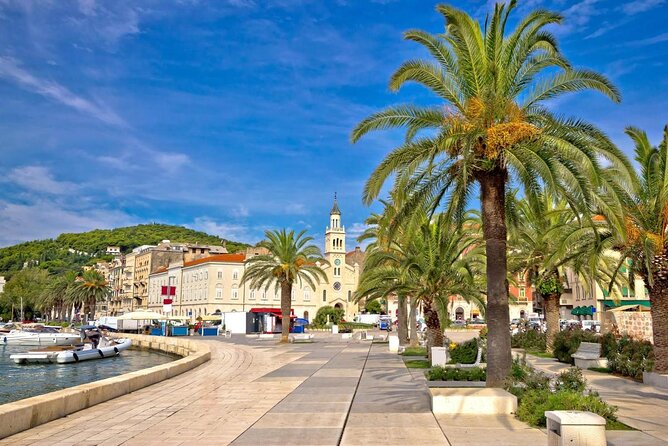
Riva Harbor and Split’s open-air front door
After the enclosed lanes and courtyards, the route reaches Riva Harbor. The stop lasts about 15 minutes, making it one of the longer pauses on the walk.
Here you see a bronze model of Diocletian’s Palace. That model is especially helpful after walking through the site, since it lets you view the whole complex at once. You can connect the Peristyle, gates, substructures, and outer walls in a way that is difficult to do from street level.
The guide also explains the history of the Riva promenade. This gives the waterfront a purpose beyond being a pleasant place for a stroll. Riva is where Split opens toward the sea, and it provides a useful contrast to the palace’s enclosed Roman plan.
I like this part of the route because it gives you breathing room. The first half concentrates on stone corridors and archaeological remains. Riva shows how the same city functions today as a place to walk, meet, and look out toward the harbor.
Fruit’s Square and Venetian Split
Fruit’s Square, or Trg Braće Radić, brings the tour into another period of the city’s past. The guide points out a 15th-century Venetian citadel and explains its place in Split’s development.
This is a good reminder that Split’s story did not stop with Rome. Venice left its mark on the city’s buildings, defenses, trade, and political life. The square gives you a compact way to see that transition without needing a separate architecture lecture.
You also learn about Marko Marulić, often called the father of Croatian literature. His inclusion broadens the tour beyond emperors and fortifications. You get a sense of how language and literature helped shape Croatian identity.
The stop is planned for about 10 minutes and is free. Since the square is part of the working city, you should expect an urban setting rather than a quiet archaeological site.
The old synagogue and Split’s Jewish story
The final listed stop is the 16th-century Split Synagogue area. The guide discusses the history of the Jewish people in the city and the role of the synagogue.
This is a valuable inclusion because many quick palace tours focus only on Roman rulers, churches, and military gates. The synagogue stop adds a social and religious layer to the city’s past. It also encourages you to look for the smaller traces of history in Split’s lanes, not only the monuments that dominate photographs.
The stop is listed at about 10 minutes. You pass by the synagogue rather than receiving an included museum-style visit, and admission is not included. If this subject matters greatly to you, ask the guide what you can see independently after the walk.
Guide style and the private-group advantage
The experience is designed for your own group, not a large mixed crowd. That matters in Split, where narrow lanes and echoing stone spaces can make it hard to hear a guide. A private walk also gives you more freedom to ask about a detail that catches your attention, such as Roman construction, Croatian language, Jewish heritage, or Venetian defenses.
The strongest descriptions of the guides point to three qualities: clear Italian, solid preparation, and an engaging manner. The walk is not meant to be a dry list of dates. Guides have been described as funny, kind, helpful, and able to tell stories and local details in a way that keeps the route moving.
The guide names connected with the experience include Maria, Doris, and Mia Anica. Doris is particularly associated with explanations of Diocletian’s Palace, while Maria is praised for helping Italian-speaking visitors understand the city’s past. Still, guide availability can change, so consider those names examples rather than a guaranteed assignment.
Timing, walking conditions, and practical value
The activity lasts about one hour and 30 minutes. That is long enough to cover the main landmarks without turning the first introduction to Split into an all-day commitment.
You start and finish at Peristil ulica, at Peristil in Split. The route is close to public transportation, and the listed operating window runs daily from 9:00 a.m. to 8:00 p.m. Confirmation is sent within 48 hours of booking, subject to availability.
Most people can take part, and service animals are allowed. The main physical warning concerns high steps. The old center includes uneven stone and changes in level, so wear practical shoes and be realistic about your comfort on stairs.
The tour includes the guide but not gratuities. The listed palace, square, harbor, and gate stops are free, while the synagogue stop does not include admission. The museum portion of the substructures is also outside the route.
The price is strongest when shared by a small private party. For one person, $69.39 buys a focused explanation of Split’s central sights, but it may feel high compared with walking independently. For a family or group of friends, the private structure and group discounts can improve the value, especially if Italian guidance is important.
Free cancellation is available if you cancel at least 24 hours before the start time. A later cancellation or late change is not refunded. The activity also requires a minimum number of participants, and if that minimum is not reached, you are offered another date or experience, or a full refund.
Who should book this Split walk?
I would choose this tour if you want an Italian-speaking introduction to Split and prefer a guide who can connect Roman, medieval, Venetian, literary, and Jewish history in one route. It suits first-time visitors, families, couples, and small groups who want to ask questions without competing with a large crowd.
It also works well early in your stay. Afterward, you can return to the substructures museum, spend more time at Riva, or revisit the lanes that seemed confusing at first.
I would look elsewhere if you want a long archaeological visit, extensive time inside the substructures museum, or a tour built around one narrow subject. The synagogue is a pass-by stop, the Vestibule visit is brief, and the entire walk is designed as a broad city introduction.
FAQ
Is this a private tour?
Yes. Only your group participates in the activity.
Is the tour conducted in Italian?
Yes. It is a private history walking tour in Italian.
How long does the tour last?
The tour lasts approximately one hour and 30 minutes.
Where does the tour start?
It starts at Peristil, on Peristil ulica in Split, Croatia.
Where does the tour end?
The activity ends back at the meeting point.
Does the tour include the museum section of the palace substructures?
No. The route visits the substructures but does not include the museum section. You can visit that part after the tour.
Are admission tickets included?
The listed stops are free, but admission is not included for the Split Synagogue stop. The experience also does not include the separate museum section of the substructures.
Is the tour suitable for people with mobility concerns?
Most people can participate, but the tour is not recommended for those who have problems with high steps.
Can I cancel for a full refund?
Yes, if you cancel at least 24 hours before the experience start time. Cancellations or changes made less than 24 hours before the start are not refunded.
Just added around Split
- From Makarska : Wine Tasting Grabovac Tour★ 4.5 · 30 reviews
- Unique vintage Tomos moped tour Split – Back to the ’80s★ 4.8 · 17 reviews
- Walking Tour Split★ 4.7 · 61 reviews
- Essential Diocletian’s Palace Tour for First-Time Visitors★ 4.8 · 19 reviews
- Trogir; Private walking tour of higlights of Trogir★ 4.7 · 3 reviews
- Trogir: White Lagoon, Maslinica & Blue Lagoon Speedboat Tour★ 4.8 · 11 reviews
- Trogir 1.5-Hour City Tour★ 4.4 · 37 reviews
- Split: Trogir Open Top Bus Trip + Free Split Walking Tour★ 4.1 · 17 reviews
Split Old Town Walking Tours, compared.
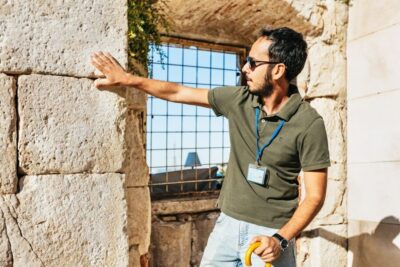
Split: Old Town and Diocletian Palace Walking Tour
Read our review →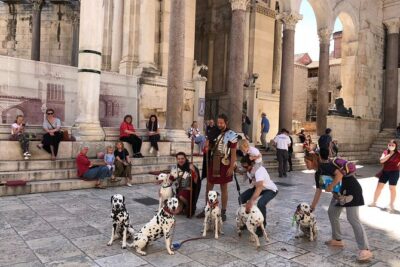
Walking Tour of Split and Diocletian’s Palace
Read our review →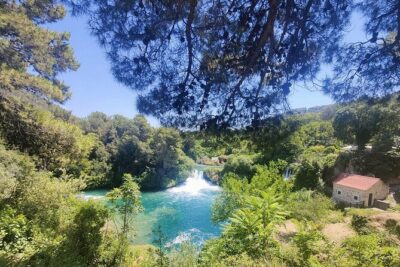
Krka Waterfalls tour with Trogir Walking tour and Krka panoramic boat cruise
Read our review →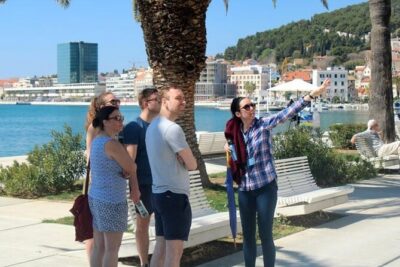
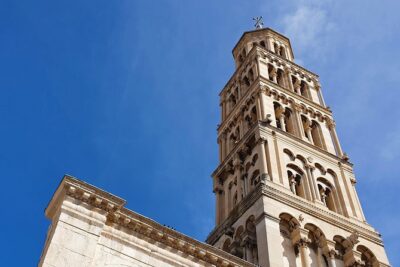
Walking Tour of Split with a ‘Magister’ of History
Read our review →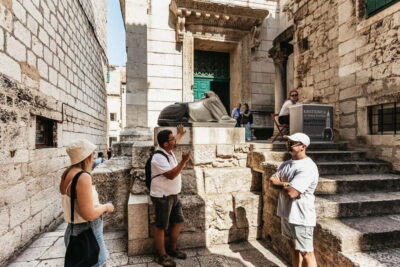
Split: Diocletian Palace & Old Town Guided Walking Tour
Read our review →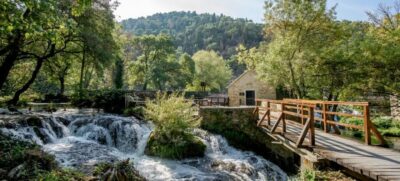
From Split: Krka Waterfalls Cruise & Trogir Walking Tour
Read our review →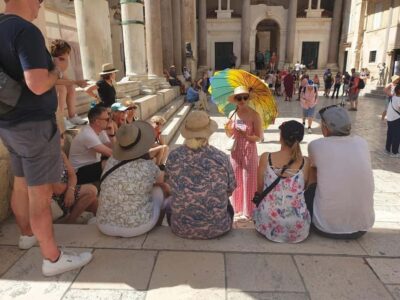
Browse the lists this tour appears in