
Reviewed · SPLIT OLD TOWN WALKING TOURS
Split highlights – Evening walking tour
Split’s best evening walk follows the bones of Diocletian’s Palace, then climbs gently toward a terrace on Marjan Hill for a broad view over the city. You move from Roman gates and a 3,500-year-old sphinx to klapa singing, football talk, and the waterfront.
I like the small maximum of eight people, which should make questions and conversation easier. I also like the way the route ends with a view rather than simply stopping in another square. The main consideration is timing: the palace can still be busy in the evening, and the cathedral admission is not included.
Key points at a glance
- The route links Split’s major sights: You see the Golden Gate, Peristyle, Saint Domnius Cathedral, Vestibule, Pjaca, Prokurative, and the Riva in one walk.
- The final viewpoint adds real value: After the old center, you walk about 15 minutes to Prva Vidilica na Marjanu for a city view.
- The group is capped at eight: This is a more personal format than a large city walk.
- Local guides shape the experience: Bosko Papic, Pavle, and Luka have been singled out for local stories, historical explanations, restaurant advice, and insight into daily life.
- The tour begins at 7 p.m.: That timing suits a first evening in Split and gives you a useful orientation before further exploring on your own.
- The cathedral costs extra: The outside and surrounding area are part of the walk, but entry to Saint Domnius Cathedral is not included.
Why this evening route works so well in Split
Split is easiest to understand when you see how ordinary city life fits inside an ancient palace. This walk gives you that useful overview in a short span, beginning at the Golden Gate and ending with a view back over the center.
The route takes about 1 hour 30 minutes to 2 hours. That is long enough to connect the main sights without taking up an entire evening. You are not simply checking off monuments. You are moving through streets and squares that still serve as meeting places, promenades, and working parts of the city.
I especially like the sequence. The first half is about Diocletian’s Palace and its Roman structure. The middle shifts to public squares and local life. The finish brings you above the old center, where the layout of Split makes more sense.
The 7 p.m. start is useful if you have just arrived. One person described it as a good way to deal with jet lag, and that makes sense. You get your bearings early in your stay, learn where the palace sits in relation to the harbor, and can use the guide’s restaurant suggestions later that night or during the rest of your visit.
Do not expect an empty old town. Evening is cooler and often more pleasant for walking, but the palace can still be busy. That is not a flaw unique to this tour. It is simply part of seeing Split’s most famous center at a popular time.
More walks through the old quarter in Split:
- Split: Old Town and Diocletian Palace Walking Tour
★ 4.9 · 4,727 reviews - Walking Tour of Split and Diocletian’s Palace
★ 5.0 · 2,588 reviews - Krka Waterfalls tour with Trogir Walking tour and Krka panoramic boat cruise
★ 5.0 · 1,659 reviews
Meeting Diocletian at the Golden Gate
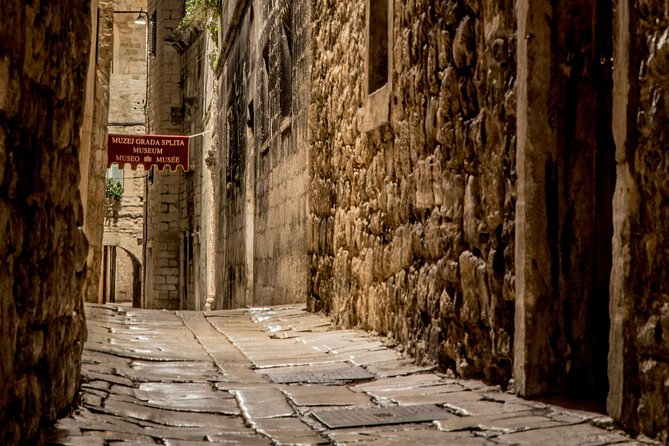
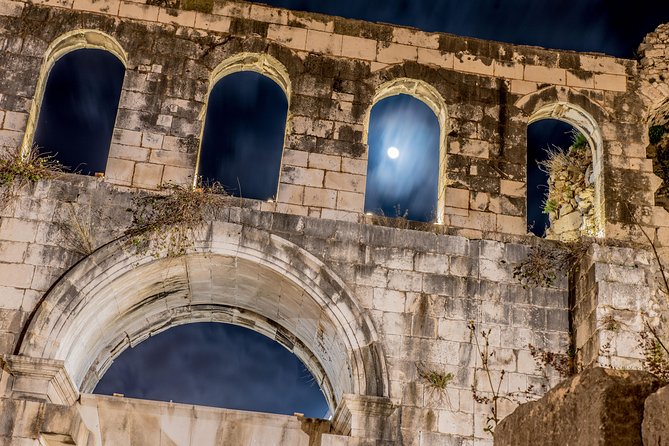
The walk starts at the Golden Gate, at Dioklecijanova 7. This was the main northern entrance to Diocletian’s Palace, and it gives the tour a strong opening because you begin with the emperor’s arrival point rather than a general city square.
The story attached to the gate is simple and memorable: Emperor Diocletian entered the palace gates when he retired and stayed. Your guide uses this first stop to frame the palace as more than a collection of ruins. It was a place built for an emperor, but it later became part of the living city.
Above the gate, you will see the statue of Grgur Ninski, the Croatian bishop. The statue is associated with good luck, and touching the toe is a familiar local custom. The stop lasts about 15 minutes and has no separate admission fee.
This is a good place to ask your first questions. If you are not sure how the palace became part of modern Split, ask your guide to explain the connection early. That context will help you read the later stops instead of seeing them as unrelated monuments.
Peristyle, the palace’s central stage
The Peristyle is the geographical and spiritual center of Diocletian’s Palace. You spend about 20 minutes here, which is sensible because this is the place where the scale and purpose of the palace come together.
The square is framed by major architectural remains and guarded by a sphinx said to be about 3,500 years old. That detail gives the space an unusual mix of Roman imperial power and much older Egyptian symbolism. The result is not a tidy museum courtyard. It is a public place shaped by several periods of history.
I like this stop because it makes the palace’s plan easier to understand. You can connect the gates, imperial rooms, religious buildings, and later city streets from one central point. The guide can also help explain why the Peristyle still feels important today, rather than treating it as a stage set from the past.
The square may be crowded, even in the evening. Keep your group close and listen for the guide’s meeting instructions. With only eight people allowed, you have a better chance of hearing the explanation than you would in a large group, but the space itself is still shared with other people.
Saint Domnius Cathedral and Diocletian’s mausoleum
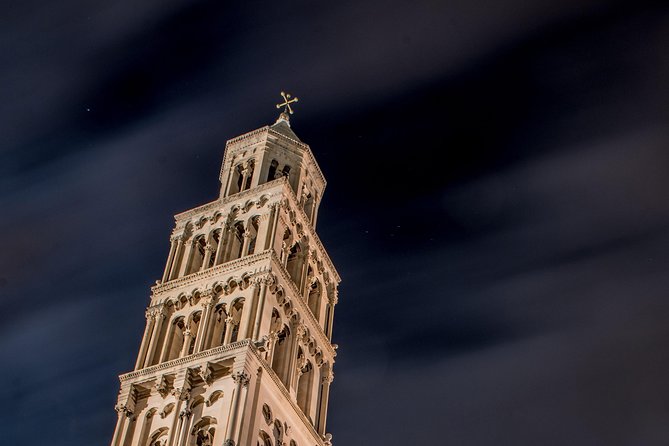
The next stop is Saint Domnius Cathedral, once the mausoleum of Emperor Diocletian. The building is presented as the oldest building in the world in which a cathedral is situated, and its Romanesque bell tower is one of the most recognizable features in this part of Split.
The scheduled visit here lasts about 10 minutes. The tour includes the stop, but cathedral admission is not included, so you should budget separately if you want to go inside. The supplied details do not give an extra admission price, so check the current cost when booking or at the site.
Even without entering, the exterior helps explain the unusual nature of Split. An imperial mausoleum became a Christian cathedral, and the surrounding palace continued as an urban center. This is one of the clearest examples of old buildings being reused rather than preserved as isolated ruins.
The short time here is enough for an introduction, but it will not provide an extended visit inside the cathedral or tower. If those interiors are a priority, ask your guide how to return later and allow extra time after the tour.
A few more Split days out worth weighing up
- Split: Illuminated Evening Guided Kayaking Tour
★ 4.8 · 1,622 reviews - Split: Stand Up Paddleboard Night Glow Tour
★ 4.9 · 916 reviews - Split: Sunset Boat Party with Live DJs and Blue Lagoon Swim
★ 4.5 · 638 reviews - Split: Klis Sunset Sightseeing Bus Tour
★ 4.4 · 494 reviews
The Vestibule and the sound of klapa
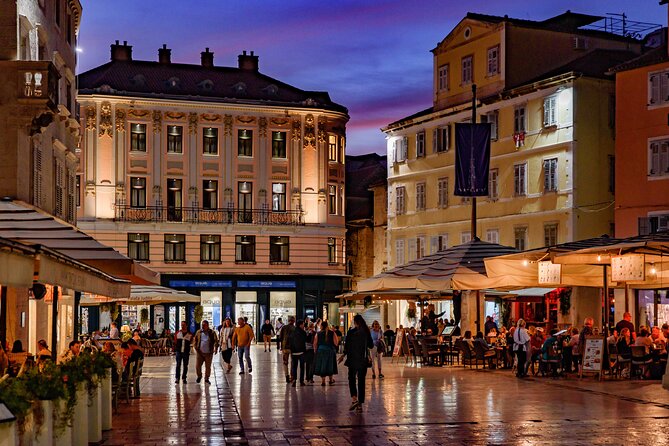
The Vestibule is a round hallway leading toward the emperor’s chambers. It is a compact stop, about 10 minutes, but it adds a sensory detail that many standard history walks miss: you may hear local klapa singing here.
Klapa is a traditional style of Croatian vocal music, usually sung without instrumental accompaniment. The acoustics of the round space help make the moment memorable. The details do not promise a scheduled performance, so think of the singing as something you might encounter rather than a guaranteed concert.
This stop also helps you picture the palace as a residence. The Golden Gate and Peristyle show the public and ceremonial side. The Vestibule points toward the private imperial quarters. The route works best when you pay attention to that shift.
Pjaca and the everyday life of Split
Pjaca is the central stage of city life. The name refers to the square, but the important point is how people use it: to sit, meet, watch, and be seen. Football is part of the local conversation, so your guide may bring in that everyday subject when explaining the square.
You spend about 10 minutes here. It is not a stop built around one grand monument. Its value is social. You get a picture of Split as a working city, not just a place that receives people for sightseeing.
This is also a useful point to ask about food and evening plans. Guides such as Bosko Papic have provided restaurant advice and insight into life in Split, which can be more useful than a list of famous attractions. Your guide may be able to suggest an area or style of place, but personal expenses are not included.
Prokurative and the open side toward the harbor
Prokurative, officially Republic Square, is often compared with Saint Mark’s Square in Venice. The resemblance comes from its formal architecture and open arrangement, but the view and setting are distinctly Split.
The square is open on the south side, giving you a line toward the harbor and the Riva. You spend about 10 minutes here, enough to understand its shape and position before moving down toward the water.
This is one of the route’s useful transitions. The tour moves from the enclosed palace streets to a more open public space. That change helps you see how Split extends from the Roman core toward the waterfront.
The Riva, Split’s public living room
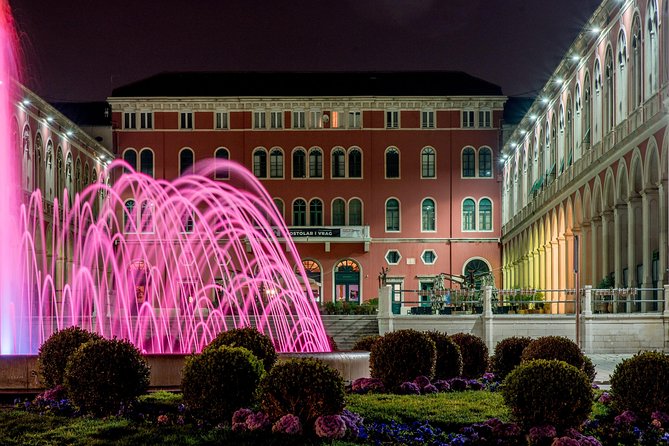
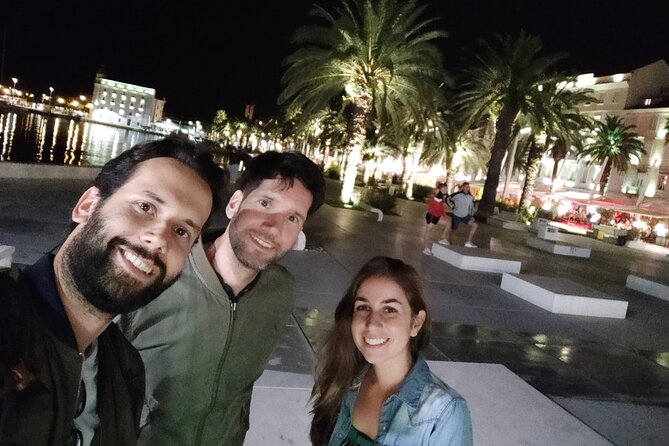
The Riva promenade is the city’s main public meeting place and the final scheduled stop before the walk to the viewpoint. The tour spends about 10 minutes here, in front of the fountain at the beginning of the promenade.
The Riva is often described as Split’s living room, and the comparison works. It is a place for strolling, meeting, watching daily life, and gathering for major events. The harbor gives the walk a different mood after the stone lanes of the palace.
The official end point is Vodoskok, Trg Franje Tuđmana, at the fountain at the beginning of the Riva promenade. From there, the route continues on foot to the final terrace. Make sure you understand this transition, especially if you are meeting someone afterward. The tour does not finish back at the Golden Gate.
The final climb to Prva Vidilica na Marjanu
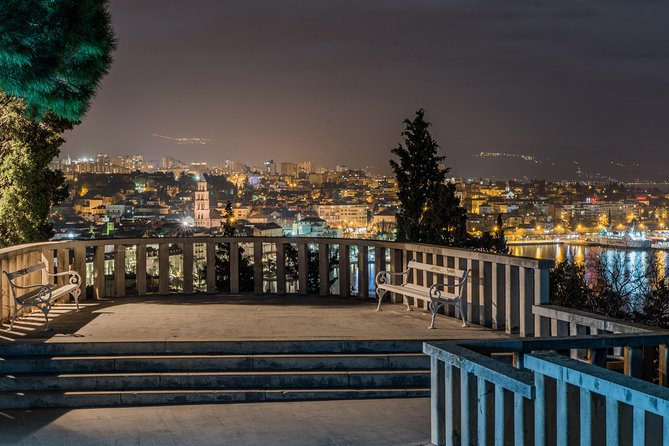
The last stop is Prva Vidilica na Marjanu, reached by about 15 minutes of walking from the old town. It is a terrace with a wide view of Split, making it a much better finish than another enclosed courtyard.
The climb gives the walk a clear payoff. After hearing about the palace’s gates, center, religious buildings, and public squares, you can look down and see how the old city fits beside the harbor. The view also helps you plan later walks, since you gain a simple sense of direction.
The information provided does not describe the path as difficult, but you should expect a walk uphill. Wear shoes suited to city streets and a short climb. The tour is listed as suitable for most people, though anyone concerned about hills should ask about the route before booking.
This viewpoint is also one reason to choose the evening departure. The city view should feel different from the crowded interior of the palace, and the later hour gives the tour a calmer finish. The exact light will depend on the date and weather, so do not book it solely for a particular sunset.
Price, group size, and what you receive
At $39.74 per person, the main value is the guide-led interpretation and the compact route, not admission to paid attractions. The English-speaking licensed local guide connects eight major stops and gives you a practical introduction to Split in under two hours.
That is a fair price if you want help making sense of the palace and prefer to ask questions as you go. It is less attractive if you only want to walk the streets independently, since most stops have no admission fee and the cathedral entry costs extra.
The group maximum of eight is important. A small group makes it easier to hear explanations in the Peristyle, ask about food or local customs, and keep the tour moving through busy streets. It also leaves room for the guide to adjust the conversation. Bosko Papic, Pavle, and Luka have each been praised for bringing personal stories and local perspective to the walk.
The experience is offered in English and comes with a mobile ticket. Public transportation is nearby, service animals are allowed, and most people can participate. Personal purchases and other expenses are not included.
Who should book this walk
I would choose this tour early in a Split stay, especially if you want a clear introduction before exploring on your own. The route covers the places most first-time visitors need to see, while the local guide can add restaurant advice and practical orientation.
It suits you best if you:
- Want Roman and medieval sights explained in plain English
- Prefer a small group rather than a large guided crowd
- Have roughly two hours for an evening introduction
- Like mixing major monuments with ordinary city life
- Want a city view at the end
- Are comfortable walking through streets and up to a viewpoint
You may want another option if you need a fully indoor activity, want extensive time inside the cathedral, or prefer a completely private tour. The palace can remain busy at 7 p.m., and the hilltop finish requires walking beyond the Riva.
The tour requires good weather. If poor weather forces a cancellation, you are offered another date or a full refund. You can cancel for a full refund if you do so at least 24 hours before the start time. Changes or cancellations inside that window are not accepted.
Should you book the Split evening walking tour?
Book it if you want a well-shaped first look at Split, a small group, and a guide who can connect the emperor’s palace with present-day city life. The strongest parts are the route design, the limited group size, the local stories, and the final view from Marjan.
Before booking, remember two things: the cathedral admission is extra, and the evening palace can still be crowded. If those limits suit you, $39.74 buys more than a list of sights. It gives you a working map of Split, a dose of local context, and a good starting point for the rest of your stay.
FAQ
Where does the tour begin?
The tour begins at the Golden Gate, at Dioklecijanova 7 in Split, Croatia.
What time does the tour start?
The scheduled start time is 7:00 p.m.
Where does the tour end?
The listed end point is Vodoskok at Trg Franje Tuđmana, in front of the fountain at the beginning of the Riva promenade.
How long does the tour last?
The tour lasts approximately 1 hour 30 minutes to 2 hours.
What language is the tour offered in?
The tour is offered in English with an English-speaking licensed local guide.
How large is the group?
The activity has a maximum of eight participants.
Is entry to Saint Domnius Cathedral included?
No. Admission to Saint Domnius Cathedral is not included in the tour price.
Is the tour suitable for most people?
Yes. Most people can participate, and service animals are allowed. The route also includes a walk of about 15 minutes to the Marjan viewpoint.
What happens if the weather is poor?
The experience requires good weather. If it is canceled because of poor weather, you can choose another date or receive a full refund.
Just added around Split
- From Makarska : Wine Tasting Grabovac Tour★ 4.5 · 30 reviews
- Essential Diocletian’s Palace Tour for First-Time Visitors★ 4.8 · 19 reviews
- Unique vintage Tomos moped tour Split – Back to the ’80s★ 4.8 · 17 reviews
- Walking Tour Split★ 4.7 · 61 reviews
- Trogir; Private walking tour of higlights of Trogir★ 4.7 · 3 reviews
- Trogir: White Lagoon, Maslinica & Blue Lagoon Speedboat Tour★ 4.8 · 11 reviews
- Trogir 1.5-Hour City Tour★ 4.4 · 37 reviews
- Split: Trogir Open Top Bus Trip + Free Split Walking Tour★ 4.1 · 17 reviews
Split Old Town Walking Tours, compared.
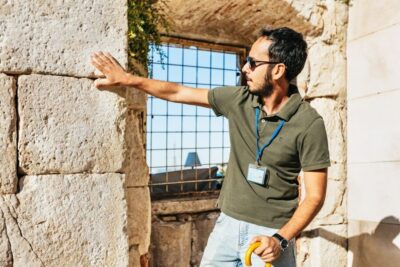
Split: Old Town and Diocletian Palace Walking Tour
Read our review →
Walking Tour of Split and Diocletian’s Palace
Read our review →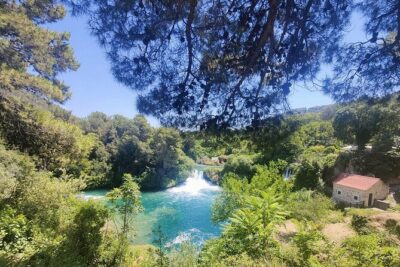
Krka Waterfalls tour with Trogir Walking tour and Krka panoramic boat cruise
Read our review →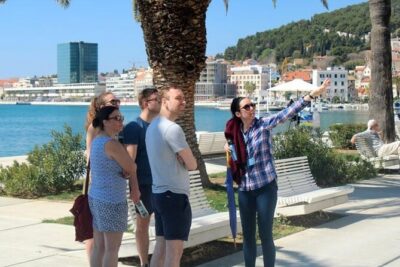
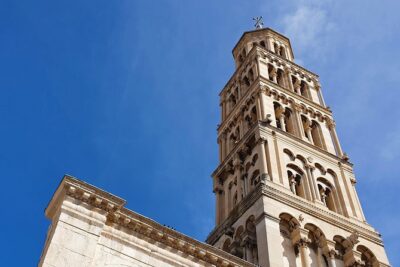
Walking Tour of Split with a ‘Magister’ of History
Read our review →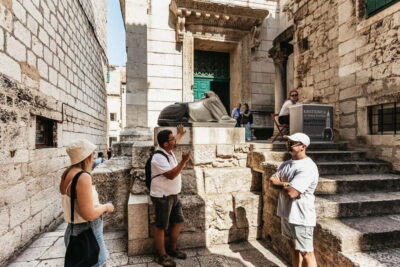
Split: Diocletian Palace & Old Town Guided Walking Tour
Read our review →
From Split: Krka Waterfalls Cruise & Trogir Walking Tour
Read our review →
Browse the lists this tour appears in