Reviewed · TOURS
Storytelling World War II in Split Tour
Split’s ancient center carries a modern wartime story that is easy to miss. On this two-hour tour, licensed guide Ina Nikolic uses archival photographs to show how World War II affected the Riva, markets, palace, squares, and streets you might otherwise see only as pretty sightseeing stops.
I like two things right away: the tour puts local events first, and the old photographs let you compare wartime Split with the city in front of you. I also like the small-group limit of 15 people, which should make it easier to hear the stories and ask questions.
The main drawback is pace. You will spend a fair amount of time standing at each stop rather than walking continuously, so wear comfortable shoes and plan for a thoughtful history talk, not a brisk sightseeing circuit.
Key points to know before booking
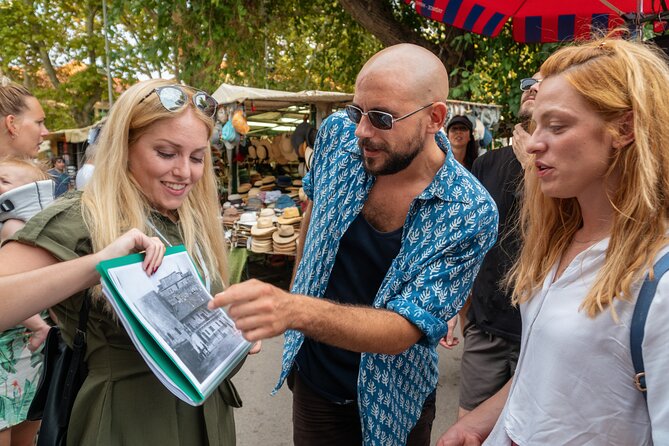
- Archival photographs make the past visible: Ina has permission to use photographs held in the Museum of the City of Split archives, including images that are not on permanent display.
- Seven central stops cover a compact area: The route begins on the Riva and ends at Prokurative, staying in Split’s old historical center.
- Local stories take priority: The focus is on bombings, occupation-era events, prisons, executions, Jewish history, and the effect of the war on everyday Split.
- The tour links several eras: Along with World War II, Ina can connect the story to ancient Split and, according to the tour experience, later events from the wars of the 1990s.
- Small groups help the storytelling: The maximum group size is 15 people, and the activity is offered in English.
- The finish is convenient: You end at Republic Square, near the old center and the waterfront promenade.
Why World War II feels different in Split
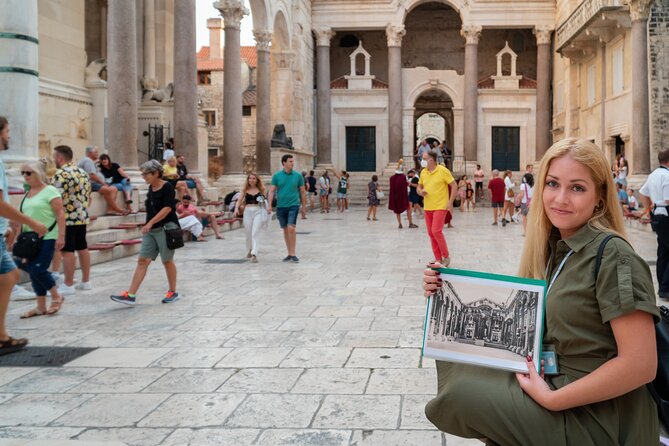
Most first-time visits to Split revolve around Roman walls, the Peristyle, seafood, and the Riva. That is understandable. Diocletian’s Palace dominates the center, and its stones are nearly two thousand years old.
This tour asks you to look again at familiar places through a far more recent lens. The point is not simply to list dates or military movements. It is to show what war meant in streets where people lived, shopped, worshipped, worked, were imprisoned, and sometimes died.
That local focus is the tour’s strongest feature. Ina connects Split to the wider war while keeping the discussion rooted in particular squares and buildings. You learn why a location mattered, not just that something happened there.
The archival images add another layer. You can look at a photograph from the wartime period and then compare it with the street or square around you. This is especially useful in a city where ancient architecture can distract you from the events of the last century.
The tour also includes Jewish history, a subject that can easily receive only a brief mention on general city walks. Here, it forms part of a wider account of what happened to Split’s people during the war. Ina also brings in later history, including the wars of the 1990s, when that helps explain the city’s modern experience.
Other Split days people book alongside this one:
- Split: Krka Waterfalls Trip with Boat Cruise and Swimming
★ 4.8 · 10,519 reviews - From Split: Krka Waterfalls, Food & Wine Tasting Tour
★ 5.0 · 9,326 reviews - Blue cave, Mamma Mia and Hvar, 5 islands speedboat tour
★ 5.0 · 7,150 reviews
Starting on the Riva: the war comes into view
The meeting point is at Obala Hrvatskog narodnog preporoda 27 on Split’s Riva. This broad waterfront promenade is an easy place to find, and it gives Ina room to establish the basic questions: when the war began in Split, where it began, and why.
Beginning here is a smart choice. The Riva is familiar to almost everyone who visits Split, but it is also a useful point for explaining the city’s position and the forces that shaped wartime events. Instead of opening with a long lecture, the tour starts with a physical place that you can see and feel around you.
The first stop lasts about 15 minutes. That is enough time to set the scene without using up the whole tour before reaching the older center.
Ina’s style is built around storytelling. You should expect a spoken account supported by images, rather than a formal museum presentation. Her passion comes through strongly, and she is happy to answer questions. One practical benefit of the small group is that you can ask for clarification when a name, date, or political detail needs more explanation.
Green Market and Split’s most severe bombing
The next stop is the Green Market, the town’s open-air produce market. Here, Ina explains what is described as the most horrific bombing in Split.
A market is an effective place to discuss the human side of war. It is an ordinary public setting, tied to food and daily routines rather than military monuments. The contrast helps you understand that wartime danger was not confined to battlefields or army bases.
Plan to spend about 15 minutes here. You will likely be standing, listening, and looking at photographs while the present-day market continues around you. That contrast is part of the experience, but it also explains the tour’s one clear physical limitation. If you prefer to keep moving, this stop may feel slow.
You should also think about the time of day when booking. No exact schedule is supplied, but the tour has been taken in the evening, and the central route can take on a different mood as daylight changes. The key point is to choose a time when you can comfortably stand outdoors for the duration.
The Silver Gate and the wartime palace
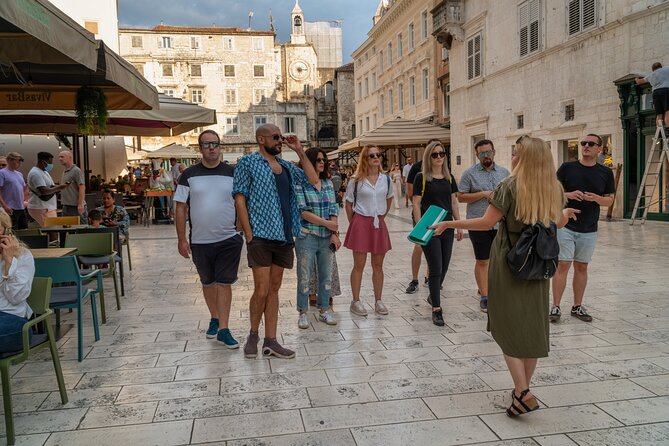
From the market, the route reaches the Eastern Gate, also called the Silver Gate. This is one of the entrances into Diocletian’s Palace and the shortest stop, at about five minutes.
The gate provides a quick transition from the city’s everyday streets into the palace complex. It is not a long lecture stop, but its position helps you understand how the route moves through Split’s historic core.
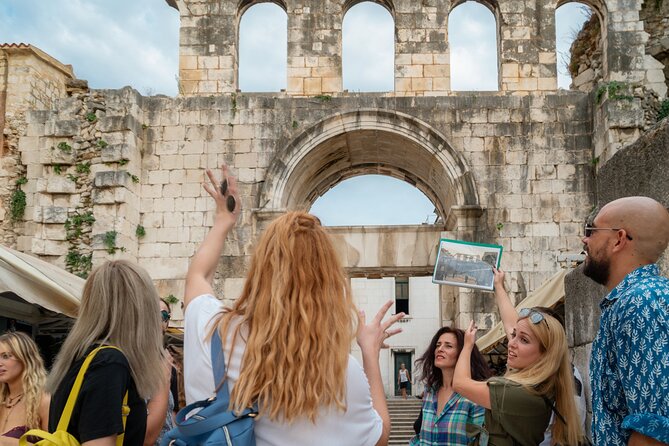
The Peristyle follows, with about 15 minutes devoted to the ancient heart of Diocletian’s Palace. Here, the subject turns to which parts of the palace were attacked during the war.
This is where the tour’s title makes the most sense: modern violence is placed directly onto an ancient setting. The palace is not treated only as a Roman relic. You learn how its structures and open spaces were affected during the twentieth century, and the photographs help you picture changes that are not obvious now.
If you have already taken a standard Diocletian’s Palace walk, this section should still add something new. General sightseeing usually emphasizes Roman construction, medieval adaptation, and architecture. Ina uses the same stones to explain wartime damage and survival.
Same coastline, a completely different kind of day:
- From Split: Krka Waterfalls, Food & Wine Tasting Tour
★ 4.9 · 6,598 reviews - Split/Trogir: Blue Cave, Mamma Mia, Hvar and 5 Island Tour
★ 4.6 · 6,320 reviews - Blue Lagoon & 3 Islands Cruise with Lunch from Split
★ 4.5 · 5,756 reviews - Split: Old Town and Diocletian Palace Walking Tour
★ 4.9 · 4,727 reviews
Narodni Trg and the personal cost of war
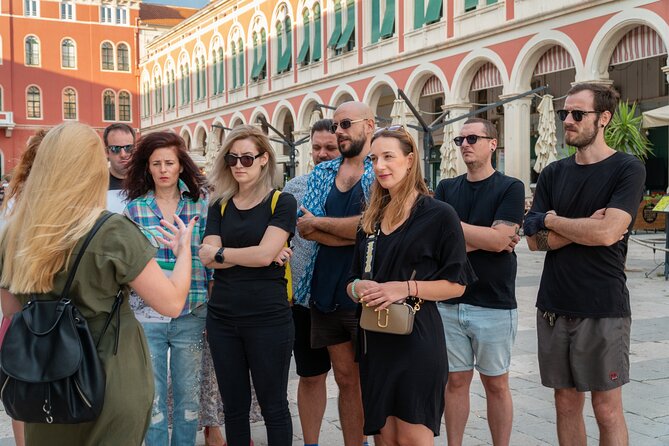
Narodni Trg, the main city square, is the next major stop and lasts about 15 minutes. The focus here is on terrible events that took place during the war.
Squares often carry several layers of civic life. They can be places for trade, public announcements, celebrations, punishment, protest, and fear. Ina uses Narodni Trg to show how a central public space could change meaning under wartime conditions.
This portion should appeal to you if you want more than a military overview. The tour is concerned with people and public life, not only troop movements. The stories make the square feel less like a backdrop and more like evidence.
The photographs are particularly useful here because they let you compare the shape of the square with its earlier appearance. You may recognize the buildings, but the wartime images can alter how you read the space.
Ina’s account also gives room for questions about Jewish history and the wider Croatian experience during World War II. That material is one reason the tour suits serious history readers, but it may be emotionally difficult at times. This is not a light city stroll with a few war facts added on.
Marmontova Ulica and the shape of the route
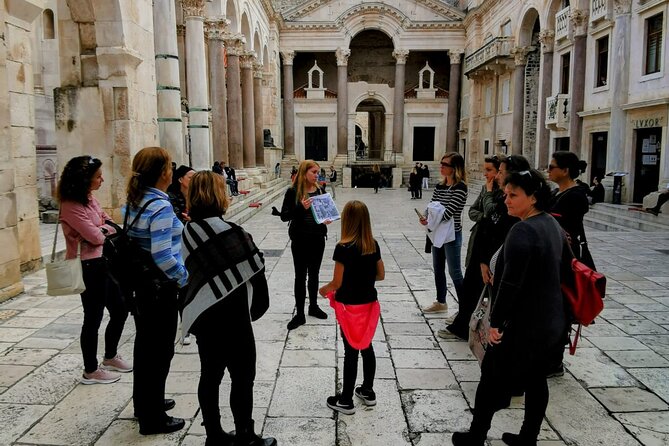
Marmontova Ulica is Split’s main street and another brief stop, lasting about five minutes. It is described as a witness to the horrors of war.
This short pause is useful because it keeps the route tied to normal city movement. You are not being led only to grand monuments or official sites. A main shopping and walking street can also carry wartime memory.
The route is compact, but do not confuse compact with fast. The total experience lasts about two hours, and several stops involve standing still while Ina tells a story or displays an image. One person described the experience as involving a lot of standing compared with walking, while still finding it worthwhile.
That is valuable advice. Bring comfortable shoes, but do not expect a long-distance walking workout. The distance between points is part of the setting, while the substance comes from the talks at each location.
Finishing at Prokurative: prisons and executions
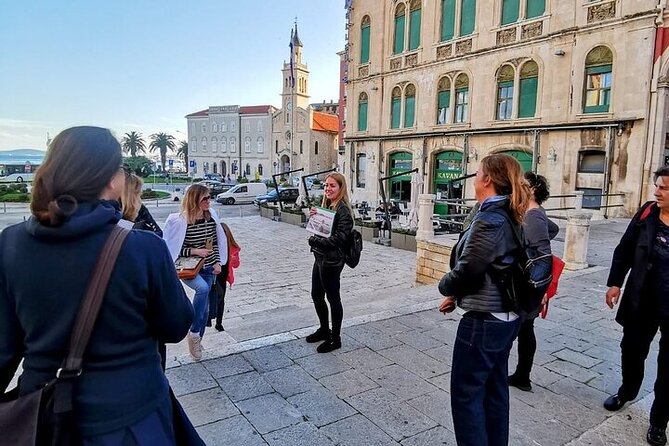
The tour ends at Prokurative, officially Republic Square, after about 15 minutes there. This grand square near the waterfront promenade is the setting for the final discussion of prisons and executions during the war.
Ending here gives the tour a serious final note. The subject moves from bombing and damage to imprisonment and state violence. It also leaves you in a useful part of town, still within Split’s historic center and close to the promenade.
The final location is practical for the rest of your day. You can continue toward the waterfront, return into the palace area, or arrange your own meal nearby. The tour does not return you to the starting point, so remember that the end is at Trg Republike rather than back on the Riva meeting spot.
If you use the offered pickup, the listed pickup point is the Split ferry port at Obala kneza Domagoja. The tour also has a flexible meeting point in central Split for group members, but you should confirm the exact arrangement after booking.
Ina Nikolic’s storytelling style
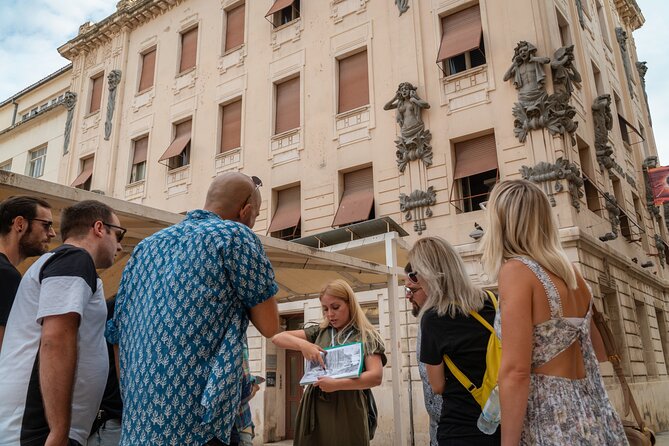
Ina is the key part of this experience. Her approach combines spoken history, old photographs, aerial maps, and explanations of how places looked then and now.
She is especially strong at connecting local events to the broader war. That matters in Split, where a visitor may know the general outline of World War II but have little sense of how it affected this particular city. Ina brings the subject down to street level.
Her storytelling also reaches beyond the strict two-hour subject. She includes ancient history when it helps explain the setting, and she has connected the World War II material with the wars of the 1990s. That wider frame can help you place Split’s twentieth-century experience in context.
The tour has received 21 five-star ratings, with 100 percent of participants recommending it. Those figures fit the experience described here: the highest praise is directed at Ina’s storytelling, her command of Split’s past, the power of the photographs, and the way she answers questions.
You should still book with the right expectations. This is not a museum visit, and the photographs are not a permanent exhibition you browse at your own speed. Ina shows and explains them during the walk. If you prefer silent viewing, a large set of displays, or a tour built around architecture alone, another activity may suit you better.
Is $60.01 a fair price?
At $60.01 per person, this is not the cheapest way to see Split. The price makes more sense if you value a specialist guide, a small group, and access to archival photographs that are not on permanent display.
You are paying for interpretation, not entry tickets. Every listed stop has free admission, and the real value comes from Ina’s preparation and the stories attached to places you can visit on your own.
For a general first introduction to Split, a standard walking tour may cover more architecture and offer a broader city overview. But if you already know the basics of Diocletian’s Palace, this experience can add a different layer to the same streets.
The price is also easier to justify for history-focused visitors, families with older children, and anyone who wants local rather than purely textbook history. A 16-year-old accompanied one participant and enjoyed the tour, which suggests that the storytelling can work for young people who have a genuine interest in the subject.
Group discounts are available, and the maximum group size is 15. That is small enough to support a more personal discussion without making the experience a private tour.
Who should book this Split tour?
I would choose this tour if you want to understand how World War II touched ordinary places in Split. It is a good fit for:
- History enthusiasts who want local detail rather than a general war summary
- Visitors who enjoy photographs, maps, and visual comparisons
- Families with older children or teenagers interested in the subject
- People who have already seen the palace and want a new way to read it
- Anyone curious about Jewish history in Split
- Visitors who prefer an English-language tour with time for questions
I would think twice if you dislike standing, prefer a fast walking pace, or want a tour focused only on Roman architecture. The subject includes bombings, imprisonment, executions, and other painful events, so it also calls for attention and a respectful mood.
Most people can participate, service animals are allowed, and the route is near public transportation. Confirmation is sent within 48 hours, subject to availability. You can cancel for a full refund up to 24 hours before the start time, but changes or cancellations inside that window are not accepted.
Should you book the Storytelling World War II in Split Tour?
Book it if you want the city’s familiar streets to tell a less familiar story. The strongest reasons are Ina Nikolic’s personal storytelling, the archival images from the Museum of the City of Split, and the close look at bombings, Jewish history, prisons, and executions.
The tour offers more than a list of wartime facts. It helps you connect the Riva, Green Market, Diocletian’s Palace, Narodni Trg, Marmontova Ulica, and Prokurative with the people and events that shaped modern Split.
My practical advice is simple: reserve ahead, since it is often booked well in advance, wear shoes suited to standing, and leave room in your schedule for questions. At $60.01, it is best value for a curious history-minded visitor, not for someone seeking a quick orientation walk. If that sounds like your kind of afternoon or evening, this is a worthwhile addition to a Split visit.
FAQ
How long does the World War II in Split tour last?
The tour lasts approximately two hours.
Where does the tour start?
The listed starting address is Obala Hrvatskog narodnog preporoda 27, 21000 Split, on the Riva. Pickup is also offered from Trajektna luka Split at Obala kneza Domagoja.
Where does the tour end?
The tour ends at Republic Square, also called Trg Republike or Prokurative, in Split’s historic center near the promenade.
What language is the tour offered in?
The tour is offered in English.
How large is the group?
The tour has a maximum of 15 participants. Group discounts are available.
Can I cancel for a full refund?
Yes. You can cancel at least 24 hours before the local start time for a full refund. Cancellations or changes made less than 24 hours before the start are not accepted.
Just added around Split
- From Makarska : Wine Tasting Grabovac Tour★ 4.5 · 30 reviews
- Essential Diocletian’s Palace Tour for First-Time Visitors★ 4.8 · 19 reviews
- Unique vintage Tomos moped tour Split – Back to the ’80s★ 4.8 · 17 reviews
- Walking Tour Split★ 4.7 · 61 reviews
- Trogir; Private walking tour of higlights of Trogir★ 4.7 · 3 reviews
- Trogir: White Lagoon, Maslinica & Blue Lagoon Speedboat Tour★ 4.8 · 11 reviews
- Trogir 1.5-Hour City Tour★ 4.4 · 37 reviews
- Split: Trogir Open Top Bus Trip + Free Split Walking Tour★ 4.1 · 17 reviews
Tours, compared.
From Split: Krka Waterfalls, Food & Wine Tasting Tour
Read our review →
Blue cave, Mamma Mia and Hvar, 5 islands speedboat tour
Read our review →From Split: Krka Waterfalls, Food & Wine Tasting Tour
Read our review →
Split/Trogir: Blue Cave, Mamma Mia, Hvar and 5 Island Tour
Read our review →
Split: Old Town and Diocletian Palace Walking Tour
Read our review →
From Split: Krka Waterfalls Tour, Boat Cruise & Swimming
Read our review →
Split: Blue Lagoon and 3 Islands Speedboat Tour
Read our review →