
Reviewed · SPLIT OLD TOWN WALKING TOURS
Split Private Walking Tour for Families with kids from 5-17 years
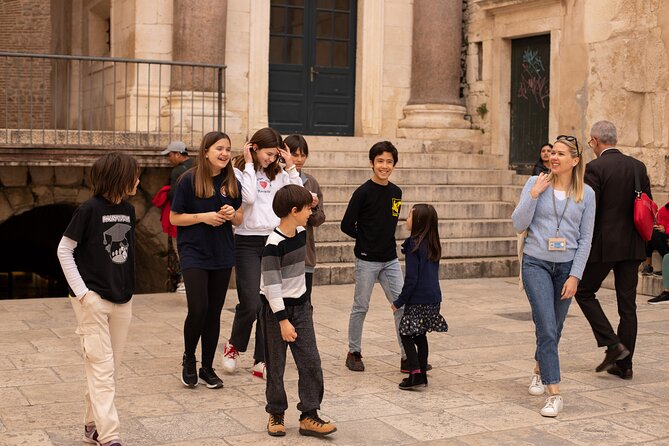
Diocletian’s Palace is not a quiet museum behind glass. It is the living center of Split, with homes, cafés, narrow lanes, shops, and Roman stone all mixed together. This private family walk turns that setting into a game, using puzzles, measuring tasks, treasure hunting, and chocolate tasting to keep children involved while you learn how Emperor Diocletian lived 1,700 years ago.
I like the private format, since your guide can adjust the pace and attention to your own children. I also like the way the tour uses simple physical challenges, such as counting columns, testing the echo in the Vestibule, and measuring Split’s narrowest street. The main thing to consider is the price: at $358.87 for up to six people, it makes the most sense for a family that values a private guide rather than the lowest-cost introduction to the palace.
Key points to know before booking
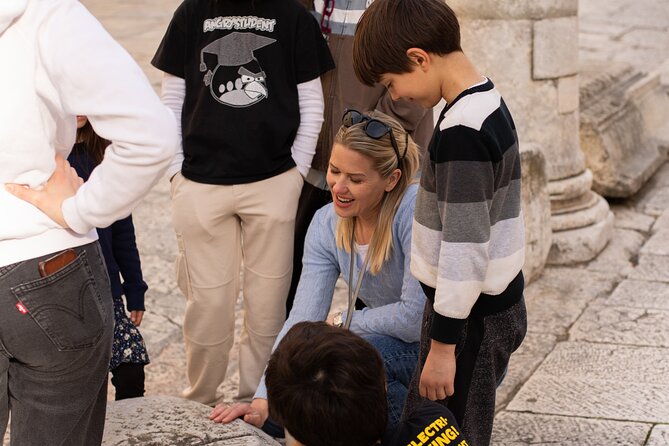
- Roman history becomes a treasure hunt: Children follow tasks and clues instead of listening to a long lecture.
- Dana has a proven family approach: One family specifically praised her for keeping a four-year-old engaged, even though the tour is aimed at children from 5 to 17.
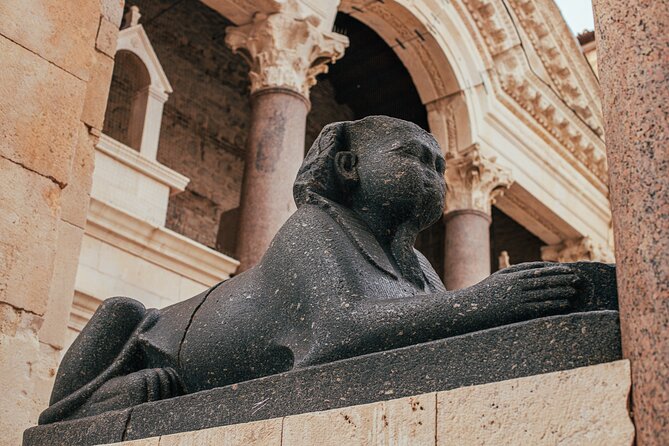
- The route covers the palace’s main sights: Expect the Riva, substructures, cathedral, Peristyle, gates, Temple of Jupiter, squares, and narrow lanes.
- Chocolate tasting is included: Soda and other pop are not included.
- You get the group to yourself: The tour is private, offered in English, and limited to your party of up to six.
- Plan for a 2.5-hour walk: The route is central and sightseeing-focused, with no transport between stops.
Why this Split family tour works better than a standard history walk
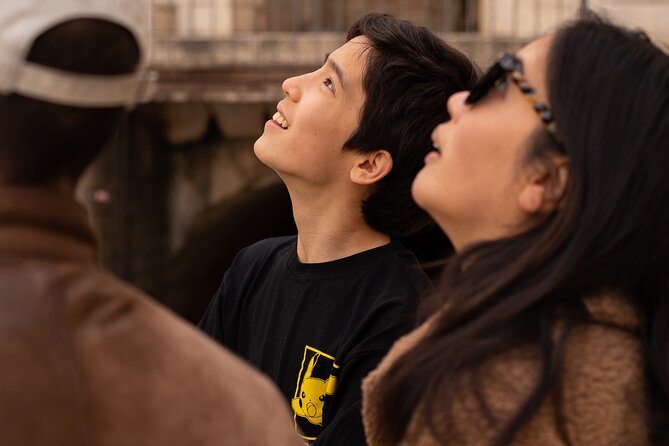
The best idea here is simple: children get something to do. Instead of asking a five-year-old or teenager to remember dates and names, the guide gives them jobs. Count the columns. Listen to the acoustics. Find a symbol. Measure a narrow street. Look for a clue connected to Roman power.
That approach matters in Diocletian’s Palace because the setting can be confusing at first. It is not a single preserved building with one clear entrance and exit. The palace is woven into modern Split, so a good guide helps you see where the imperial residence ended, where the public spaces began, and how later generations changed the site.
You will also have a private English-speaking guide, so the pace can suit your group. If one child is eager to answer every question, the guide can keep the game moving. If another needs a short pause, your group does not have to hold up a large tour.
The tour receives a top rating from 20 ratings, and the strongest family praise centers on engagement. Dana was specifically credited with making the palace enjoyable for a four-year-old and ending with gelato. Gelato is not listed as a standard inclusion, so treat that as a guide choice rather than a guaranteed part of every booking. Still, it gives you a useful picture of the tone: practical, playful, and focused on keeping younger children with you.
More walks through the old quarter in Split:
- Split: Old Town and Diocletian Palace Walking Tour
★ 4.9 · 4,727 reviews - Walking Tour of Split and Diocletian’s Palace
★ 5.0 · 2,588 reviews - Krka Waterfalls tour with Trogir Walking tour and Krka panoramic boat cruise
★ 5.0 · 1,659 reviews
Starting at the palace and meeting the Roman emperor
The meeting point is at Obala Hrvatskog narodnog preporoda 23, near Split’s waterfront. From there, the tour moves into the old center and Diocletian’s Palace, with the main palace portion taking about an hour before the shorter stops continue around the complex.
The guide introduces Emperor Diocletian and the people who lived in his palace about 1,700 years ago. Children are given tasks and pieces of a puzzle, turning the opening section into a story they can follow. The exact activities may vary, but the format is clear: you are not simply walking from one plaque to another.
The palace is a good place for this style of tour because Roman power is easy to explain through physical details. Large walls, gates, columns, and ceremonial spaces show how an emperor controlled movement and presented himself to the public. You can talk about daily life, food, religion, military protection, and status without relying only on abstract dates.
Admission to Diocletian’s Palace is included. The tour itself ends back at the starting point, so you do not need to arrange a separate ride or find your way back through the old center.
The Riva: a useful break beside the sea
The Riva Harbor stop lasts about 10 minutes. This is the tour’s easiest breathing space, with the sea, palm trees, and waterfront air in front of you.
For families, that short pause has real value. Children can look away from stone walls and reset before the next set of clues. You get a quick sense of Split’s modern social center, where the waterfront sits directly beside the old palace.
Do not expect a long harbor cruise or a separate coastal activity. This is a brief scenic stop on a walking route. It works best as a change of mood, not as a major attraction by itself.
Going below ground in the palace substructures
The palace substructures take about 10 minutes. These underground rooms help show how large and carefully planned the imperial complex was.
This is one of the most useful places for explaining the palace’s layout. The lower level reflects the plan of the rooms above, so the guide can connect the cellars to the imperial apartments. Children may find the stone spaces more memorable than a formal explanation of Roman architecture because the scale is easier to feel when you are standing inside it.
The stop is short, which is sensible for a family tour. Underground spaces can become tiring for younger children if the explanation goes on too long. Here, the guide has time to make the point and move the group onward.
More walking tours in Split:
- Split & Diocletian’s Palace Walking Tour
★ 5.0 · 1,125 reviews - Walking Tour of Split with a ‘Magister’ of History
★ 5.0 · 1,122 reviews - Split Walking Tour with Professor of History
★ 5.0 · 926 reviews - Split: Diocletian Palace & Old Town Guided Walking Tour
★ 4.7 · 882 reviews
The cathedral and the Peristyle’s power display
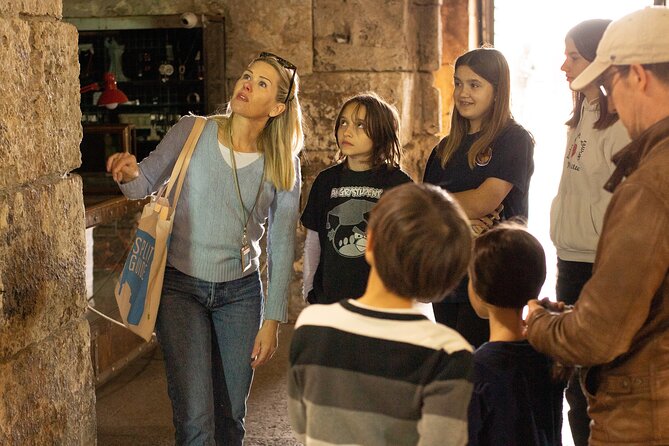
The Cathedral of Saint Domnius gets about five minutes. Its place in the story is especially striking: the building began as Diocletian’s imperial mausoleum. The guide asks children to identify the protector and the famous saint still connected with the cathedral.
That question-and-answer style keeps the stop active, but five minutes is brief. You should see it as an introduction rather than a full cathedral visit. The tour does not promise a long interior exploration.
Next comes the Peristyle, the palace’s main ceremonial square. This is where Diocletian presented himself to the people and claimed a link to Jupiter, the powerful Roman god. The guide asks you to count the columns and imagine the emperor appearing before his subjects.
The Peristyle is one of the best places on the route for showing how architecture supported political power. The columns and open space were not decoration alone. They framed the emperor and made ordinary people look up to him, literally and socially.
Admission to the Peristyle is listed as not included, so check how access is handled when you book. The stop itself is part of the walking route, but any separate entrance charge connected with this area is not covered by the stated inclusions.
Roman gates, military space, and the imperial apartment
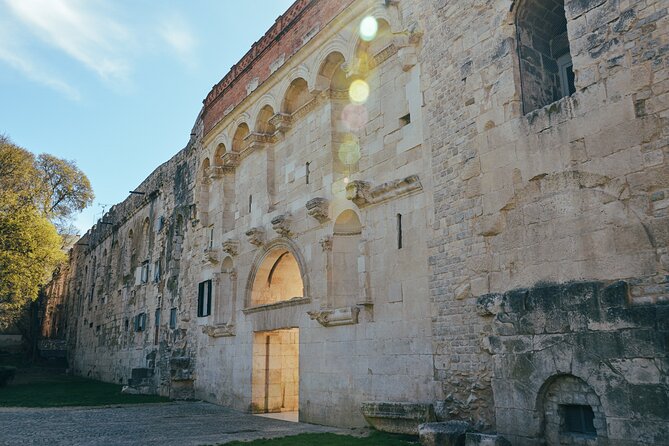
The Eastern, or Silver, Gate takes about five minutes. This was the eastern entrance to the palace, with a double-gate arrangement and the beginning of the main east-west street.
For children, gates are an easy way to make the palace feel like a real fortified place rather than a collection of old stones. The guide can show how people entered, where roads began, and why a double gate offered extra control.
At Triklinij, you hear about eating habits in Diocletian’s time. The stop lasts about 10 minutes and asks you to picture large Roman feasts in the space around you. Food is a useful bridge for families because it connects ancient life to something every child understands.
The Vestibule follows with about five minutes inside an unusual open corridor leading toward the imperial apartment. The guide invites you to test its acoustics. Let your children speak, call, or listen for the sound to carry, while remembering to keep the volume respectful around other people in the palace.
This is a small activity, but it gives the group a physical memory of the site. Children may forget a date, but they are more likely to remember the strange sound of their own voice bouncing through a Roman space.
Jupiter’s temple and the smallest street
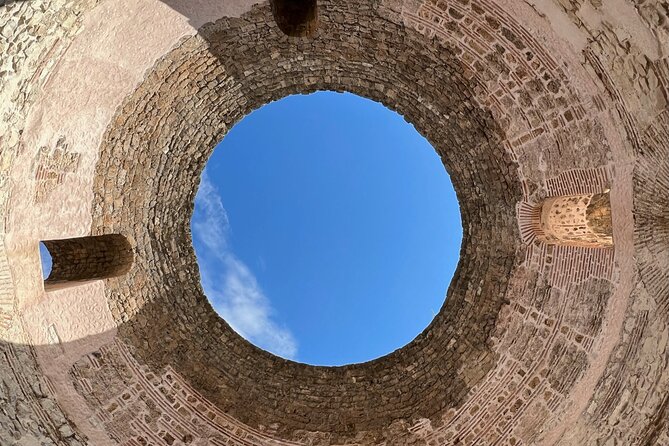
The Temple of Jupiter takes about 10 minutes. It began as a Roman temple and is now a baptistery, giving the guide a chance to show how buildings can change use over time.
That change is one of the clearest lessons in Split. Roman, Christian, medieval, and modern layers sit close together. The tour does not present the palace as frozen in one period. Instead, you see how later residents adapted old rooms for new purposes.
At Kraj Sv. Ivana 1, the guide asks how wide the town’s smallest street is and has you measure it. This is a good task for children who like numbers or hands-on challenges. It also helps you notice how tightly packed the old center can be.
The stop lasts about five minutes, so it is not a major sightseeing point. Its value comes from the question itself. You stop looking at Split as a grand monument and start noticing its everyday details.
Pjaca, the Italian mark, and the Golden Gate
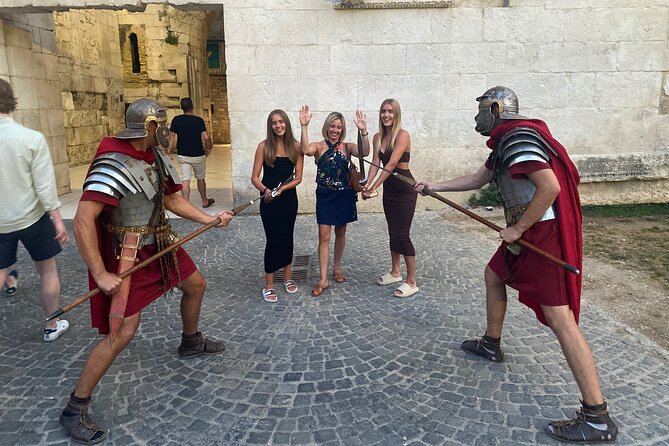
Narodni Trg, known as Pjaca, takes about five minutes. The square brings together buildings from different architectural periods, and the guide points out its unusual clock with 24 digits.
That clock is an easy visual puzzle. Ask your children to work out the time and compare the clock’s design with the timepieces they know. Short challenges like this stop the walking route from feeling like a string of lectures.
Bajamontijeva ulica takes another five minutes. The area once served the army and is now a narrow city street. The guide explains that the arrival of the Italians brought changes to the palace, then asks you to find the Italian symbol and continue to a fountain for another task.
This stop gives you a glimpse of Split as a place shaped by many periods, not only the Roman age. Since the explanation is short, you will not get a full political history of later Split, but you will see how the old palace kept changing.
The final major stop is the Golden Gate, with about 10 minutes devoted to its unusual construction and double-gate design. The gate makes a strong finish because it returns you to the palace’s basic purpose: this was an imperial residence with controlled entrances, grand presentation, and protection.
What the $358.87 price really means
The listed price is $358.87 per group of up to six people. If six people join, that works out to about $59.81 per person. For a family of four, the equivalent cost is about $89.72 per person, although you pay the group price rather than a per-person rate.
That is not a budget walking tour. You are paying for privacy, a dedicated English-speaking guide, family-focused activities, and a route designed around children rather than a general adult audience.
The value improves if your group includes several children or teenagers with different attention spans. A private guide can keep the focus on your family, and the puzzle format gives everyone a reason to participate. The price is harder to justify if your children already enjoy reading plaques and exploring independently, or if you only want a quick look at the Peristyle and Golden Gate.
Chocolate tasting is included, while soda or pop is not. The sweet element helps make the tour feel like an outing rather than a school lesson. If a gelato stop is offered, remember that it was not listed as a fixed inclusion.
Timing, walking comfort, and who should book
The experience lasts about two and a half hours. The listed stops add up to roughly two hours and 20 minutes, leaving time for walking between sites, instructions, questions, and the family tasks.
You should wear comfortable shoes. The route is a walking tour through the palace and central Split, with narrow streets and historic surfaces. The supplied information does not state an exact distance or step-free route, so ask the provider if your group has specific mobility needs.
The tour is designed for children from 5 to 17. A family experience also worked well for a four-year-old with Dana, but that is a helpful example rather than a guarantee that every four-year-old will manage the full walk. For teenagers, the measurement, puzzle, and treasure-hunt elements may be more appealing than a purely childlike game.
The tour is offered in English and is private. Service animals are allowed, the meeting area is near public transportation, and most people can participate. Good weather is required, so poor conditions can lead to a different date or a full refund.
You can cancel for a full refund up to 24 hours before the start time. Changes made inside that 24-hour window are not accepted, and late cancellations are not refunded.
Should you book this family walk in Split?
Book it if you want your children to connect with Diocletian’s Palace through questions, movement, and small discoveries. The private group, English instruction, chocolate tasting, and family tasks give you more control than a standard public history walk.
I would be especially interested in it for a family with children from about 5 to 12, or for a mixed-age group that needs a guide to keep the pace lively. Older teenagers may enjoy it too if they like puzzles and Roman history, though teens looking for a fast, independent tour may find some tasks young.
Skip it if price is your main concern or if you want a long, detailed architectural lecture. At $358.87 for the group, this is a specialized family experience, not the cheapest way to see Split.
FAQ
Where does the Split family walking tour start?
It starts at Obala Hrvatskog narodnog preporoda 23, 21000 Split, Croatia.
Where does the tour finish?
The activity ends back at the meeting point.
How long does the tour last?
The tour lasts approximately 2 hours and 30 minutes.
How many people can join the private tour?
The price covers one private group of up to six people.
What language is the tour offered in?
The tour is offered in English.
What ages is the tour designed for?
It is designed for children from 5 to 17 years old.
Is chocolate tasting included?
Yes. Snacks and chocolate tasting are included. Soda or pop is not included.
Is admission to Diocletian’s Palace included?
Yes, admission to Diocletian’s Palace is included. The Peristyle is listed separately with admission not included.
Can I cancel for a refund?
Yes. You can cancel at least 24 hours before the start time for a full refund. If poor weather cancels the experience, you will be offered another date or a full refund.
Just added around Split
- From Makarska : Wine Tasting Grabovac Tour★ 4.5 · 30 reviews
- Essential Diocletian’s Palace Tour for First-Time Visitors★ 4.8 · 19 reviews
- Unique vintage Tomos moped tour Split – Back to the ’80s★ 4.8 · 17 reviews
- Walking Tour Split★ 4.7 · 61 reviews
- Trogir; Private walking tour of higlights of Trogir★ 4.7 · 3 reviews
- Trogir: White Lagoon, Maslinica & Blue Lagoon Speedboat Tour★ 4.8 · 11 reviews
- Trogir 1.5-Hour City Tour★ 4.4 · 37 reviews
- Split: Trogir Open Top Bus Trip + Free Split Walking Tour★ 4.1 · 17 reviews
Split Old Town Walking Tours, compared.
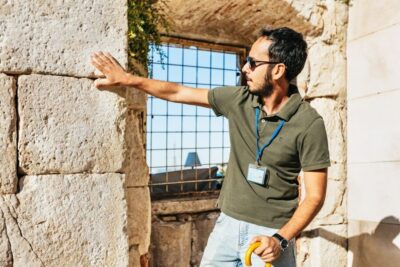
Split: Old Town and Diocletian Palace Walking Tour
Read our review →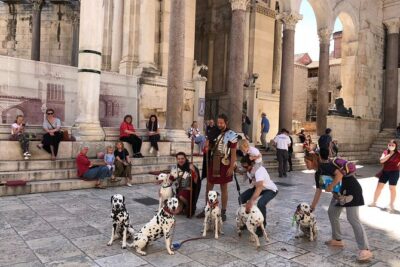
Walking Tour of Split and Diocletian’s Palace
Read our review →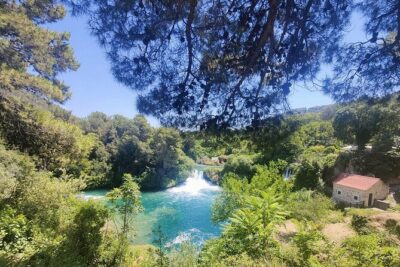
Krka Waterfalls tour with Trogir Walking tour and Krka panoramic boat cruise
Read our review →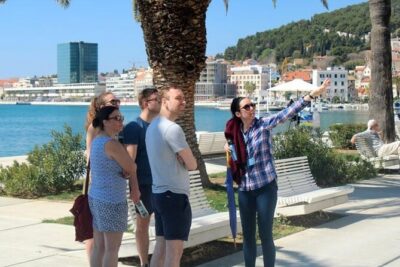
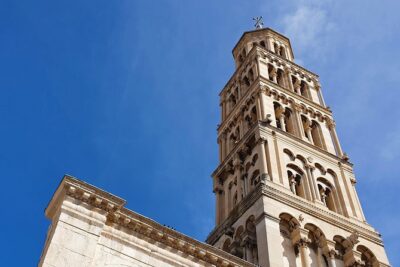
Walking Tour of Split with a ‘Magister’ of History
Read our review →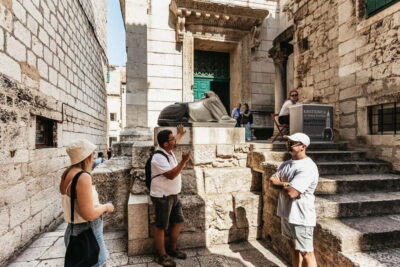
Split: Diocletian Palace & Old Town Guided Walking Tour
Read our review →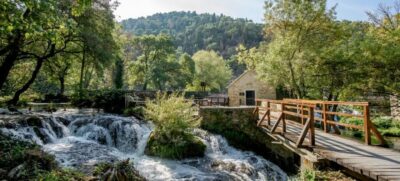
From Split: Krka Waterfalls Cruise & Trogir Walking Tour
Read our review →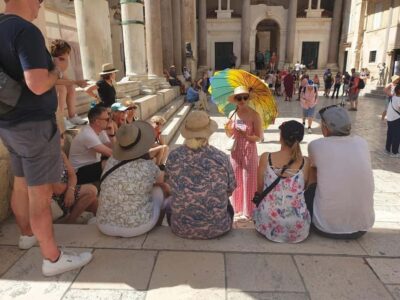
Browse the lists this tour appears in