
Reviewed · SPLIT OLD TOWN WALKING TOURS
Split: Cultural Walking Tour with Anthropologist Guide
Split’s main monuments are only half the story. This walking tour uses the center of Split to discuss the arguments beneath the stone: Croatian identity, religion, politics, war memory, demographics, sexuality, and the way people interpret their own past. It is led by Marin, a cultural anthropologist and teacher who does not avoid uncomfortable subjects.
I like the tour’s serious, open approach and the way it connects ancient sites to modern life. I also like the added audio-visual material, which gives the discussion more weight than a standard walk past old buildings. The main consideration is its subject matter: if you want a light introduction to Split with mostly dates and photo stops, this may feel too political or intense.
Key points to know before you book
- Contested subjects come first: You discuss the arguments and silences surrounding Croatian history, not just the official version.
- Marin brings an academic and teaching background: His work as an anthropologist and school teacher shapes a clear, accessible presentation.
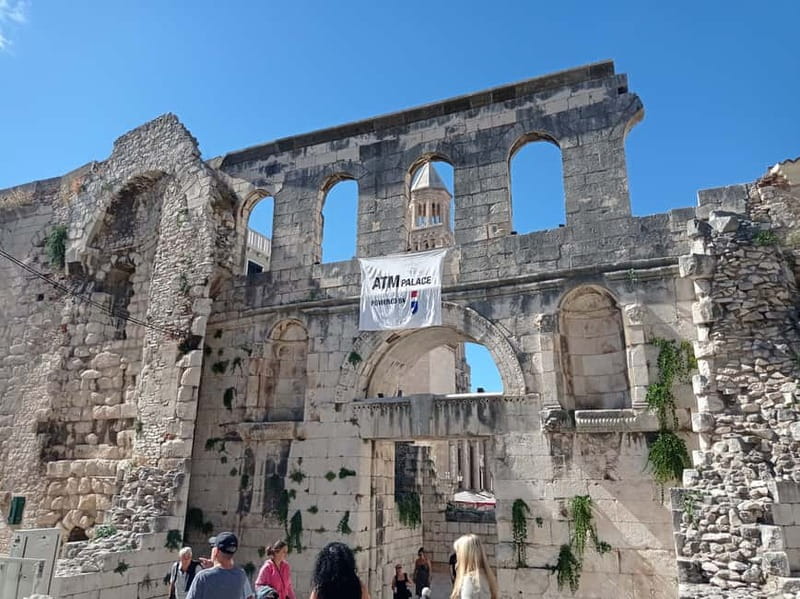
- The route covers Split’s central sights: Golden Gate, Peristil, Diocletian’s Cellars, People’s Square, the Jewish Passage, Fruit Square, Riva, and Republic Square.
- The tour suits curious beginners: You get the major monuments while also learning how history shapes present-day Croatia.
- Extra audio-visual material is included: Expect supporting material for each topic covered.
- It takes two hours and costs $33: That is fair value if you want context and discussion, rather than a quick orientation walk.
Why this Split walk is different
Most introductory walks through Split explain who built Diocletian’s Palace, point out Roman columns, and move on to the next photograph. This experience uses those same places, but asks harder questions. How is Croatian identity formed? Which parts of the past are celebrated, and which are kept quiet? How do religion, politics, economics, and population change affect daily life?
That focus gives the walk a clear purpose. You are not simply collecting monuments. You are learning how the city and country make sense of themselves.
Marin’s background matters here. As a cultural anthropologist and teacher, he is well suited to a tour that needs both research and clear explanation. The format is designed for people who want to understand social processes, but it is not presented as a technical university lecture. A participant over 15 who enjoys history, politics, or current affairs should be able to follow it.
The tour also leaves room for conversation. You can expect Marin to connect what you are seeing to wider subjects rather than deliver a fixed list of dates. That makes this a strong choice on your first day in Split, when a bigger picture can help you understand the rest of your stay.
More walks through the old quarter in Split:
- Split: Old Town and Diocletian Palace Walking Tour
★ 4.9 · 4,727 reviews - Walking Tour of Split and Diocletian’s Palace
★ 5.0 · 2,588 reviews - Krka Waterfalls tour with Trogir Walking tour and Krka panoramic boat cruise
★ 5.0 · 1,659 reviews
Starting at Strossmayer Park
The meeting point is in Park Josipa Jurja Strossmayera, at Ul. kralja Tomislava 12. Look for the fountain in the middle of the park. This is a useful place to begin because you are close to Split’s historic core, yet not already standing inside one of the most crowded monument zones.
The opening should set the tone: this is a walk through a living city, not a museum route. From the park, you move toward the Golden Gate and the remains of Diocletian’s Palace.
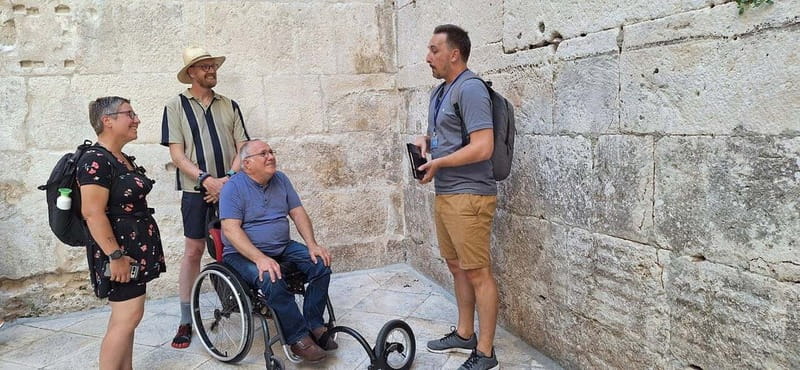
The tour is in English and lasts two hours. Since the experience is wheelchair accessible, the format may work well for visitors who need an accessible city walk, though you should still confirm the exact route conditions when booking if you have specific mobility needs.
Golden Gate: history with an argument attached
The Golden Gate is one of the main entrances to Diocletian’s Palace, and it gives Marin a natural place to explain the imperial past of Split. You spend about 15 minutes here, long enough to discuss the site rather than simply pause for a photograph.
This is also where the tour begins to move away from a classical monument story. The palace is not treated as a sealed Roman relic. You look at how old structures are used by later societies and how modern people decide what should be remembered or displayed.
That approach is useful because Split’s center can seem simple at first glance: Roman walls, medieval lanes, cafés, and shops. The discussion helps you notice that each layer carries a different meaning. You might see the gate differently after hearing how the city’s past is used in modern ideas about heritage and identity.
Peristil and the weight of public symbols
Peristil receives another 15 minutes. This is one of Split’s most striking open spaces, and it is an ideal place to talk about power, religion, public ceremony, and the way symbols survive across centuries.
Rather than treating the square as a perfect Roman postcard, the tour considers how public spaces acquire new meanings. Ancient authority, Christian tradition, tourism, and present-day Croatian identity all meet here.
I like this stop because it turns an architectural highlight into a social question. You are encouraged to consider who controls the story told in a public place, and which parts of that story become normal over time.
The pace should also suit you if you are new to Split. Fifteen minutes is enough for explanation without requiring a long, detailed architectural lecture.
More walking tours in Split:
- Split & Diocletian’s Palace Walking Tour
★ 5.0 · 1,125 reviews - Walking Tour of Split with a ‘Magister’ of History
★ 5.0 · 1,122 reviews - Split Walking Tour with Professor of History
★ 5.0 · 926 reviews - Split: Diocletian Palace & Old Town Guided Walking Tour
★ 4.7 · 882 reviews
Diocletian’s Cellars and the city beneath the city
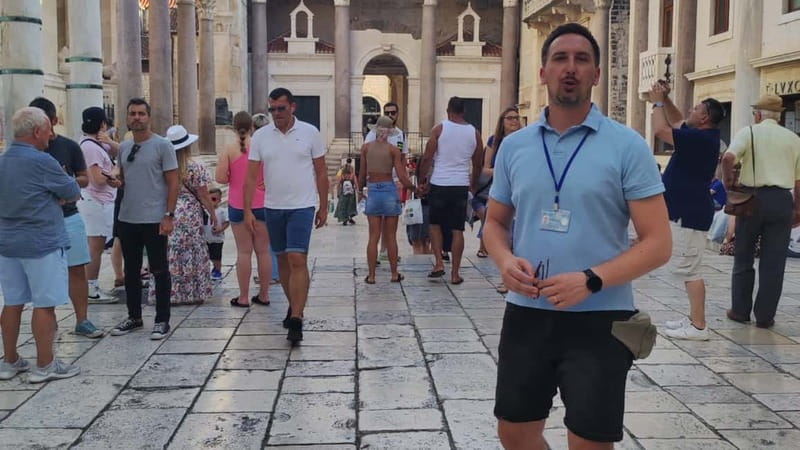
The Cellars get about 10 minutes. This part of the route places the palace’s Roman design in view, but the discussion remains tied to social and economic questions.
The Cellars are a reminder that Split’s famous center is not one period frozen in place. Ancient construction, later occupation, commercial use, preservation, and tourism all affect how the area functions today. The tour uses the site to connect the old city with modern economic and political choices.
If you have already taken a basic palace tour, this stop should still add something because the emphasis is not only on construction or archaeology. You are asked to think about what the city preserves, why it preserves it, and how historic space affects people who live and work nearby.
People’s Square and changing public life
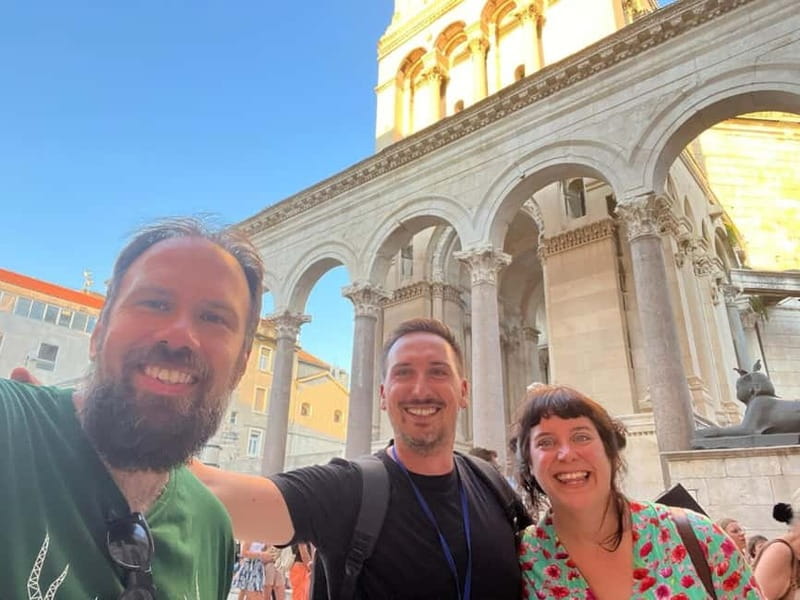
People’s Square receives around 15 minutes. The name itself opens the door to questions about public life, civic identity, and the changing role of central squares.
Here, the discussion can help you place Split’s monuments inside a wider urban setting. The old center is not just a backdrop for visitors. It is a place where ideas about community, authority, commerce, and belonging have shifted over time.
This is one of the stops where the tour’s present-day focus becomes especially useful. You are likely to hear less about isolated facts and more about how social change affects the way Croatians view their city and country.
The Jewish Passage and history that is easier to miss

The walk continues through Židovski prolaz, or the Jewish Passage, for roughly 10 minutes. This is a smaller stop, but it may carry more emotional weight than some of the grander squares.
A route through the Jewish Passage widens the story of Split beyond imperial rulers, Catholic tradition, and national identity. It brings attention to a community and a part of the city’s past that can be easy to overlook when you move from one major monument to the next.
This stop also fits the tour’s interest in historical taboos and less visible parts of local memory. You should expect the discussion to be thoughtful rather than decorative. If you prefer history that includes minority experiences and difficult subjects, this is an important part of the walk.
Fruit Square and the everyday city

Fruit Square, known locally as Voćni trg, receives about 15 minutes. Its name suggests an everyday urban setting, and that helps balance the imperial scale of the palace.
The tour can use this square to show how Split’s center has served ordinary social and economic needs as well as ceremonial ones. You are encouraged to see the old city as a place where people live, trade, gather, and negotiate change.
This is also a good point to consider economics. Historic centers are valuable cultural sites, but they are also working spaces shaped by property, commerce, tourism, and local needs. The tour does not reduce Split to a beautiful old town. It asks how the city’s past affects its present economy.
Riva: a short look at Split’s public face
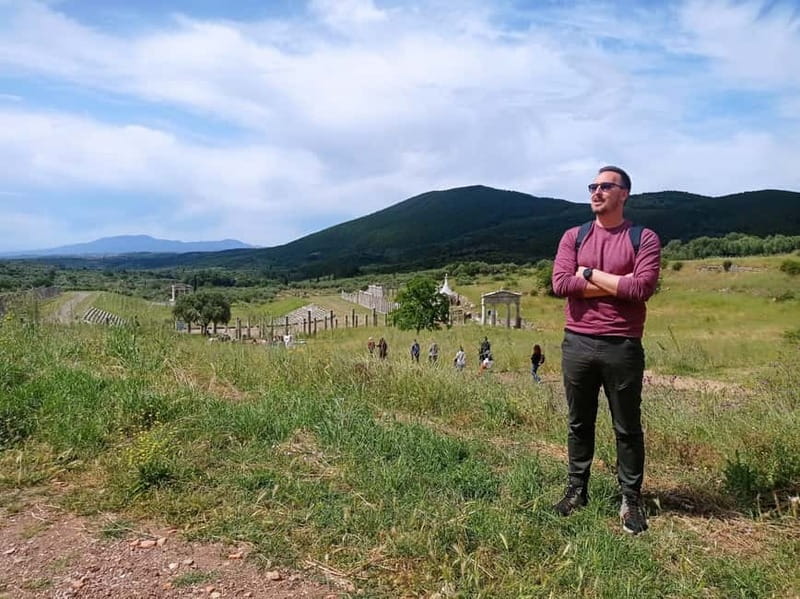
The group passes along Riva for about five minutes. That is brief, so you should not expect a long promenade stop or an extended waterfront talk.
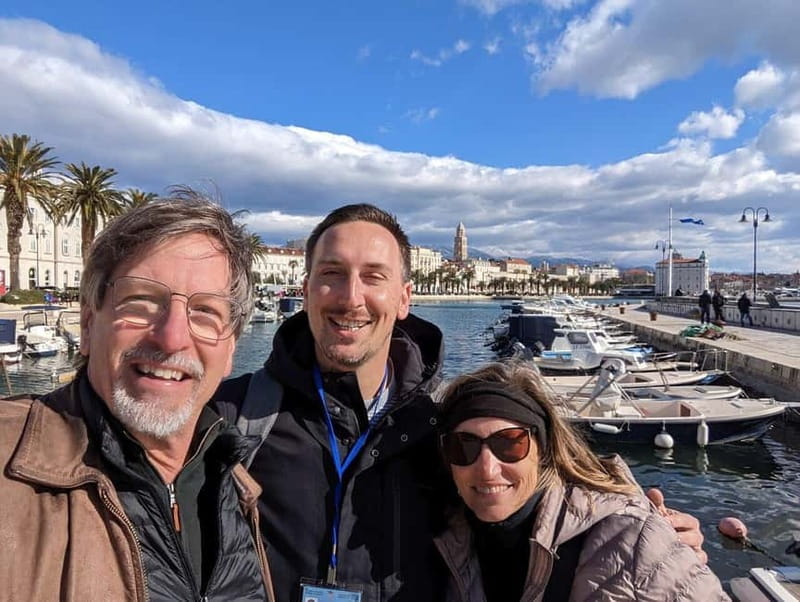
Still, Riva is an important visual change from the enclosed streets of the palace. It gives you a sense of how Split presents itself in public, with the waterfront acting as both a local gathering place and a central part of the city’s image.
The short timing keeps the tour moving. If waterfront views are a main priority, you will want to return to Riva later on your own. Here, it works as a link between the old center and the final stop.
Republic Square and the politics of identity
Republic Square, also called Prokurative, receives about 15 minutes and provides a strong final setting for the tour’s larger themes.
The open square allows Marin to pull together subjects that have appeared throughout the walk: politics, religion, identity, demographic change, economics, and the way people interpret Croatian history. By this stage, the route has moved from Roman imperial power through local memory and public life toward modern debates.
This is likely to be one of the most useful stops if you want to understand how Croatia’s past still shapes its present. The goal is not to hand you one simple answer. Instead, you get a framework for thinking about competing versions of identity and history.
The listed route finishes at Trumbićeva obala. The meeting information also says the activity ends back at the meeting point, so confirm the exact end point when you reserve. Either way, the walk stays within central Split and does not require transport between stops.
What the audio-visual material adds
The tour includes extra audio-visual material for each topic covered. That is a meaningful feature for this kind of experience. Discussions about politics, identity, and contested history can otherwise become abstract. Supporting material can give you a clearer point of reference.
Do not expect a multimedia show at every stop. The material is there to support the guide’s explanation, not replace it. Its value is greatest when Marin is showing how a building, public space, or historical event connects to a larger social question.
The tour also has a record of adapting to different needs. One guest with hearing loss was accommodated, and time was allowed for interpretation. You should still contact the provider in advance about your own requirements, but this indicates a flexible teaching style.
Is $33 a fair price for two hours?
At $33 per person, this costs more than a basic orientation walk in some destinations, but the comparison is not quite fair. You are paying for a specialist guide, a focused subject, audio-visual support, and a route that combines major landmarks with social analysis.
The value is strongest if you would otherwise book both a standard city walk and a separate history or politics talk. This tour combines those interests in one two-hour experience.
The price is less attractive if you want only practical sightseeing information, restaurant tips, or a fast introduction to Roman architecture. In that case, a more conventional city tour may suit you better.
There are no extra costs listed. You can also cancel up to 24 hours before the activity for a full refund, and the reserve-now, pay-later option keeps your plans flexible.
Who should book this experience?
I would choose this walk if you enjoy asking why a place is remembered in one way and not another. It suits people interested in:
- Croatian and Balkan history
- Politics and geopolitics
- Religion and national identity
- Demographic and economic change
- Minority history
- Contemporary social issues
- The relationship between architecture and public memory
It is also a good first-day activity if you want more than a list of monuments. Marin’s teaching background should make the material approachable, while the route still covers the central sights you expect to see in Split.
The tour is probably not the right pick for young children, though the available information specifically suggests it is suitable for people over 15. It may also feel too serious if your ideal holiday walk is mostly about views, legends, and light historical anecdotes.
Final advice: should you book it?
Book this tour if you want Split explained as a real society, with disagreements, difficult memories, and competing ideas about identity. The combination of Marin’s anthropology background, central landmarks, and direct treatment of controversial subjects makes it a strong choice for intellectually curious visitors.
Skip it if you want a gentle monument tour with little discussion of modern politics or contested history. For everyone else, especially those arriving in Croatia for the first time, the $33 price is reasonable for a focused two-hour introduction that can shape how you understand the rest of your stay.
FAQ
How long does the Split cultural walking tour last?
The tour lasts two hours. Starting times vary, so check availability when booking.
What language is the tour in?
The live tour is conducted in English.
Who leads the tour?
The guide is Marin, a cultural anthropologist and school teacher.
Where does the tour start?
Meet at the fountain in the middle of Park Josipa Jurja Strossmayera, at Ul. kralja Tomislava 12, 21000 Split.
Which sights are included?
The route includes the Golden Gate, Peristil, Diocletian’s Cellars, People’s Square, Židovski prolaz, Fruit Square, Riva, and Republic Square.
Is the tour wheelchair accessible?
Yes, the activity is listed as wheelchair accessible. Contact the provider in advance if you need details about particular route conditions.
Just added around Split
- From Makarska : Wine Tasting Grabovac Tour★ 4.5 · 30 reviews
- Essential Diocletian’s Palace Tour for First-Time Visitors★ 4.8 · 19 reviews
- Unique vintage Tomos moped tour Split – Back to the ’80s★ 4.8 · 17 reviews
- Walking Tour Split★ 4.7 · 61 reviews
- Trogir: White Lagoon, Maslinica & Blue Lagoon Speedboat Tour★ 4.8 · 11 reviews
- Trogir; Private walking tour of higlights of Trogir★ 4.7 · 3 reviews
- Trogir 1.5-Hour City Tour★ 4.4 · 37 reviews
- Split: Trogir Open Top Bus Trip + Free Split Walking Tour★ 4.1 · 17 reviews
Split Old Town Walking Tours, compared.
Split: Old Town and Diocletian Palace Walking Tour
Read our review →
Walking Tour of Split and Diocletian’s Palace
Read our review →
Krka Waterfalls tour with Trogir Walking tour and Krka panoramic boat cruise
Read our review →
Walking Tour of Split with a ‘Magister’ of History
Read our review →
Split: Diocletian Palace & Old Town Guided Walking Tour
Read our review →
From Split: Krka Waterfalls Cruise & Trogir Walking Tour
Read our review →
Browse the lists this tour appears in