
Reviewed · DIOCLETIAN'S PALACE TOURS
Split: Diocletian Palace & Old Town Guided Walking Tour
Diocletian’s Palace is not a fenced-off ruin. It is the living center of Split, with homes, cafés, shops, narrow lanes, and Roman stonework sharing the same space. This tour gives you a brisk introduction to that unusual mix, starting on the Riva and moving through the palace’s grand courtyards and ancient gates.
I like the short, focused route, which works well in Split’s heat and leaves you time to explore alone. I also like the guides’ mix of history and local advice. Ina, Natasa, Darko, Tin, and other guides are praised for clear explanations, humor, and patience with questions. The main drawback is the pace: at 50 minutes, you get a useful overview rather than a slow, detailed look at every monument.
Key points at a glance

- A living Roman palace: Diocletian’s Palace forms the core of modern Split, not a separate archaeological park.
- Four original gates: The route includes the Bronze, Silver, Golden, and Iron Gates.
- Strong local guiding: Ina, Natasa, Darko, and Tin are frequently praised for history, humor, and helpful city advice.
- A compact introduction: The tour covers the main sights in about 50 minutes, useful for a first morning or a short port visit.
- Good value at $17: You pay for an expert-led orientation, not transport, meals, or cathedral bell tower admission.
- Uneven footing: Expect cobblestones, ancient surfaces, and 15 to 30 steps, so wear proper walking shoes.
Why Diocletian’s Palace is best understood on foot

The palace was built in the fourth century AD for Roman Emperor Diocletian. It was designed as a fortified imperial residence, but time changed its purpose. The palace later became the framework for a medieval and modern town, and today daily life carries on inside the old walls.
That is the key idea this walk helps you grasp. You are not simply looking at columns and broken stones. You are walking through a city built into an ancient complex. A café may occupy a former palace space. A narrow lane may follow an old Roman passage. Medieval buildings and Venetian-era details sit beside imperial masonry.
I find this easier to understand with a guide than from a map. Without context, the palace can feel like a maze of attractive stone lanes. With a good explanation, the layout begins to make sense. You can see how the emperor’s private quarters, ceremonial spaces, entrances, and later town buildings fit together.
The tour is especially useful at the beginning of a stay. It gives you a mental map of Split, then you can return to the places that caught your attention. Several guides also offer suggestions for what to see and do after the walk, which makes the tour more useful than a simple list of dates.
More ways to see Diocletian's Palace:
- Split: Old Town and Diocletian Palace Walking Tour
★ 4.9 · 4,727 reviews - Walking Tour of Split and Diocletian’s Palace
★ 5.0 · 2,588 reviews - Split & Diocletian’s Palace Walking Tour
★ 5.0 · 1,125 reviews
Starting on the Riva, Split’s waterfront promenade
You meet at Apodos Travel Agency, beside an open-top red sightseeing bus on the Riva. Look for staff in red or white shirts. This is the practical part to take seriously: the bus and staff are the visual marker, and finding the right spot may take a little patience if the bus is delayed or the waterfront is crowded.
The Riva is a good starting point. Palm trees, cafés, the harbor, and the Adriatic set the scene before you step into the dense old center. It also gives your guide a chance to explain how Split faces the water and why the palace was placed here.
Bring water, sunglasses, and a hat on sunny days. On a windy day, long sleeves are useful. Split can be hot and bright, and much of the route runs over stone that reflects the sun.
The duration is listed as 50 minutes, while the palace portion is also described as about an hour. Either way, plan for a compact walk rather than a half-day outing. That is a plus if you have a tight schedule, young children, or limited energy, but it means you should not expect extended time at every stop.
Entering through the Bronze, Silver, Golden, and Iron Gates
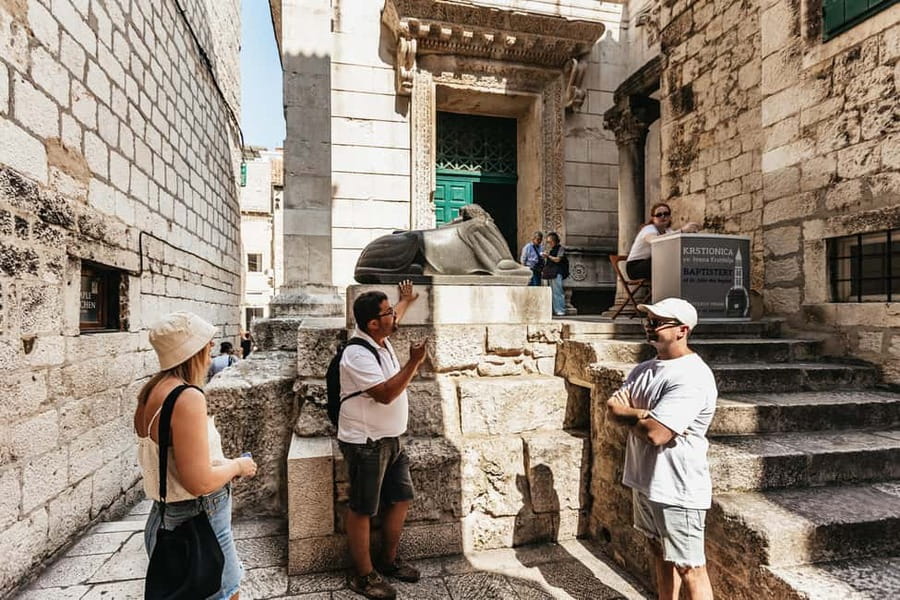
The four gates help you read the palace as a defensive complex. The Bronze Gate faces the water, while the Silver, Golden, and Iron Gates open toward different sides of the old settlement. Walking through several of them gives the route a clear structure.
A guide can explain more than the names alone. The gates show how people entered the imperial compound and how the palace later became part of a working town. They also help you understand the transition from formal Roman planning to the irregular lanes you see today.
The Golden Gate is among the most imposing approaches, while the smaller gates offer a different sense of scale. You will not spend a long time at each entrance, but together they make the palace’s original footprint easier to picture.
This is also where the tour’s pace becomes clear. The group moves through active streets, and you may need to stay close enough to hear. One person specifically wished for a microphone, so if your group is larger or the streets are noisy, position yourself near the guide. The groups can be around 15 people, though numbers vary.
The cellars and the emperor’s private spaces
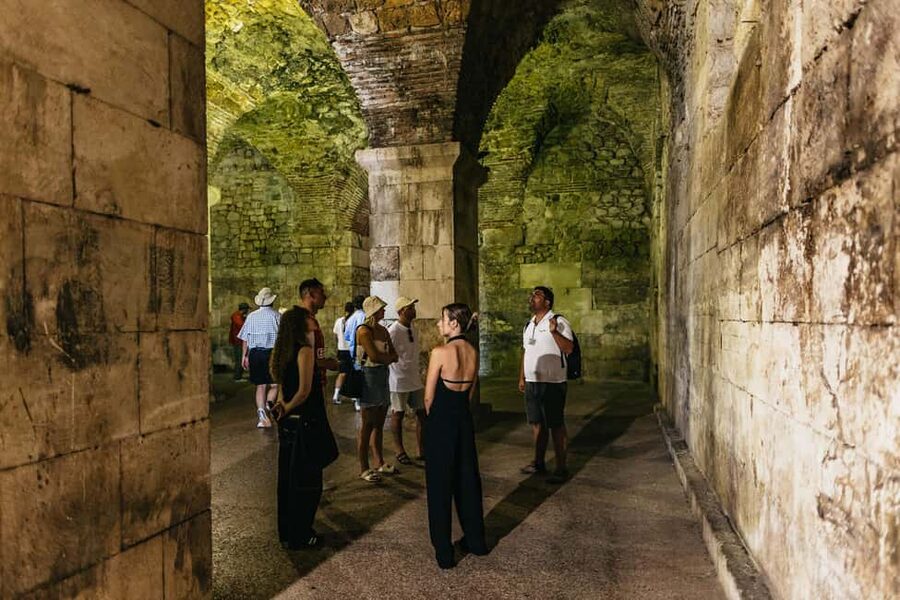
The palace cellars are among the most useful stops because they preserve the plan of the rooms above. They also show how the palace changed over the centuries. You get a sense of the scale of the imperial project without needing a long archaeological lecture.
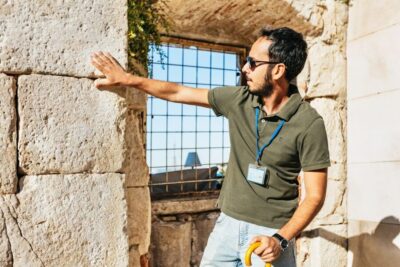
The route also covers Diocletian’s former private chambers and private observatory. These areas add a personal angle to the emperor’s residence. You are not only looking at a military or ceremonial site. You are considering how one ruler planned a home, retreat, and seat of power.
I like this part for another reason: it gives you a break from the modern streets above. The stone, shadows, and enclosed rooms make the old structure easier to imagine. Still, do not expect every chamber to be fully intact or furnished. The appeal is in the surviving architecture and the explanation that connects it to the rest of the palace.
More walks through the old quarter in Split:
- Krka Waterfalls tour with Trogir Walking tour and Krka panoramic boat cruise
★ 5.0 · 1,659 reviews - Walking Tour of Split with a ‘Magister’ of History
★ 5.0 · 1,122 reviews - Split Walking Tour with Professor of History
★ 5.0 · 926 reviews - From Split: Krka Waterfalls Cruise & Trogir Walking Tour
★ 4.7 · 681 reviews
The Peristyle, the palace’s grand meeting point
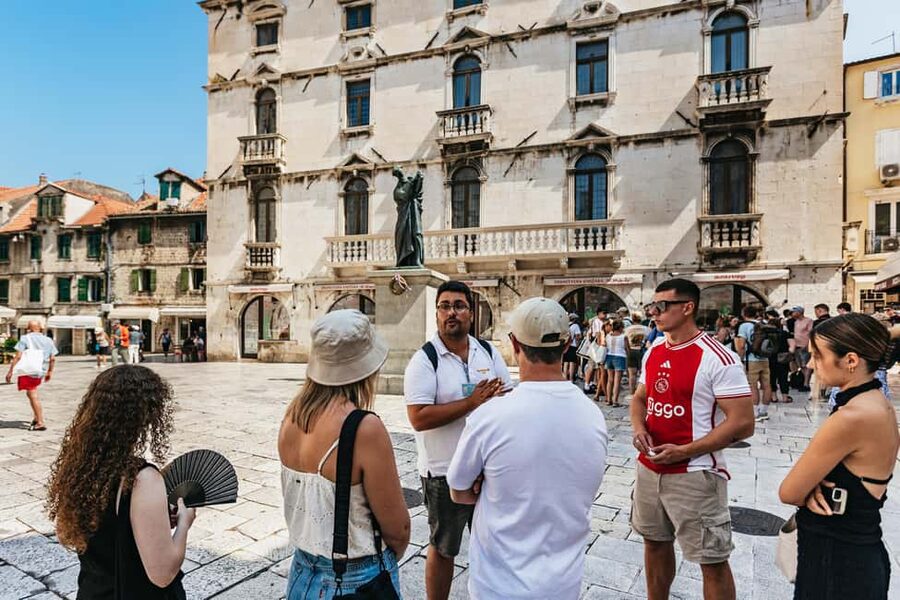
The Peristyle is the visual center of the tour. This open courtyard once formed the ceremonial heart of the complex, and the surrounding stone gives it a sense of order that the later streets sometimes hide.
Your guide explains how the courtyard related to the emperor’s authority and public image. You also learn how the space survived as part of a town rather than being preserved as a silent museum. That distinction matters. People live and work around these ruins, so the palace feels active and occasionally crowded.
The Peristyle is a natural place for photographs, but it is worth listening before reaching for your camera. A few simple points about the courtyard’s role can change how you see the columns and surrounding buildings.
This is also a good place to ask questions. The strongest guides on this tour, particularly Ina and Natasa, are praised for encouraging questions and answering them with clarity. If you want a basic introduction to Roman Split without a long academic lecture, the tone should suit you.
St. Domnius Cathedral and the limits of a short tour
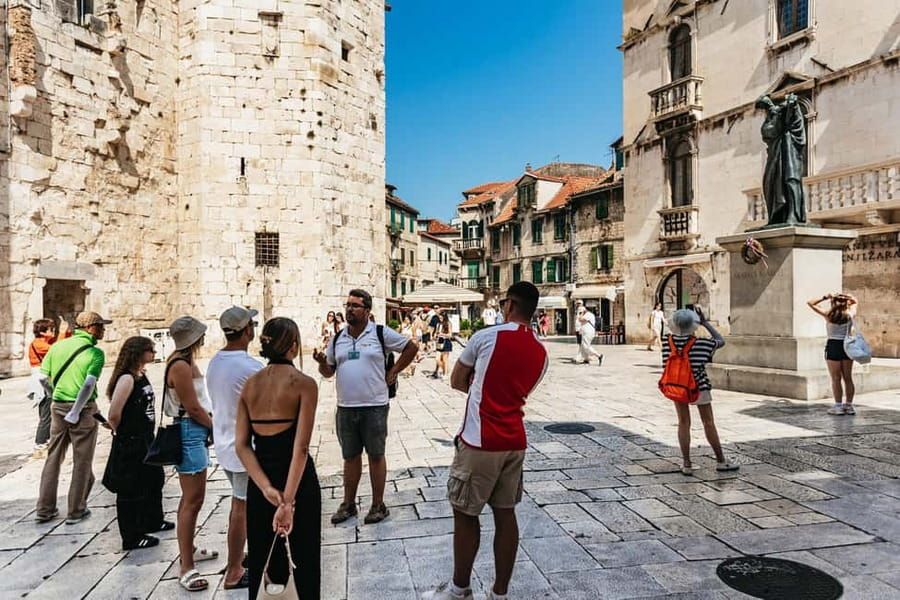
The Cathedral of St. Domnius, or Sv. Duje, began as Diocletian’s mausoleum and later became a cathedral. That change captures Split in one building: Roman imperial power was given a new religious purpose, and the old structure became part of the medieval and later city.
The tour brings you to this important site and explains its earlier role. The listed experience also describes climbing the bell tower for views of Split and the harbor, but the short walking-tour format does not make clear that tower admission or a full climb is included. Treat the tower as an optional possibility to confirm locally, not as the main promise of the $17 walk.
That distinction matters when comparing tours. If you want a long cathedral visit, detailed art discussion, or a guaranteed bell tower climb, you may need extra time and possibly a separate ticket. If you mainly want to understand why the cathedral is tied so closely to the palace, this tour gives you the essential context.
The area around the cathedral can be busy and the old stone surfaces are uneven. Keep your camera secure and watch your footing rather than trying to move quickly between photo stops.
Town Hall and Fruit Square: Split after Rome
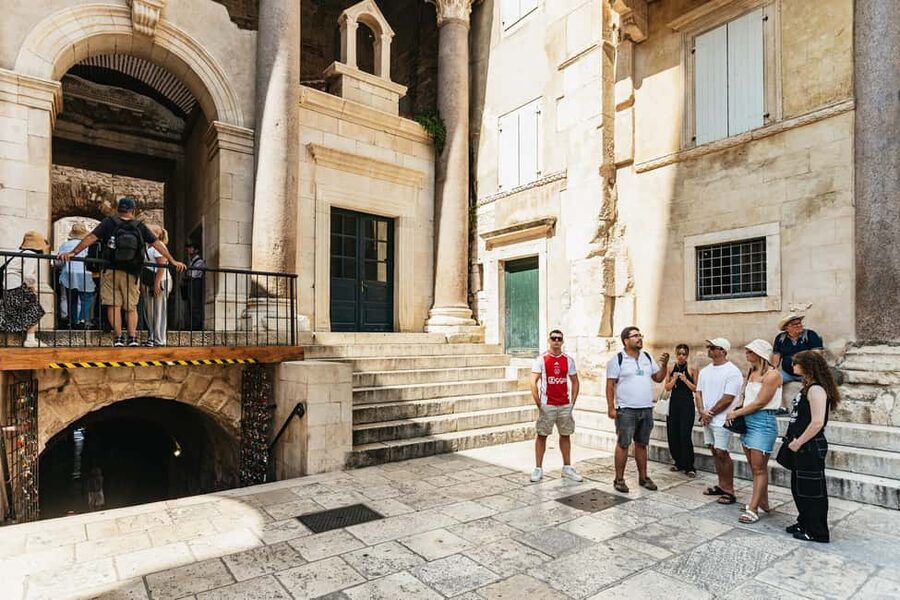
The tour moves beyond the emperor’s rooms to later parts of the old town. The 15th-century Town Hall helps show how Split developed civic life after the Roman period. It is an important reminder that the palace was not frozen in antiquity.
Fruit Square adds a different mood, with baroque monuments and later architectural layers. This part of the walk helps you connect the Roman foundations with the medieval and Venetian influences that shaped the city.
I consider this one of the tour’s best features. A palace-only route can leave you thinking Split is mainly an ancient site. By including Town Hall and Fruit Square, the guide shows you a city that kept adapting. You learn to look for changes in stone, building style, and street layout instead of treating everything as Roman.
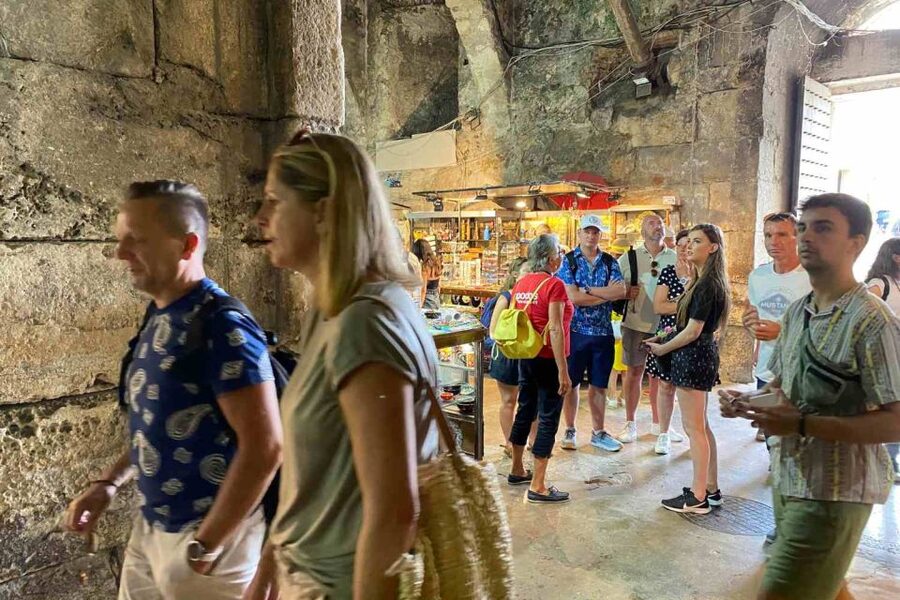
The route also passes small businesses and traditional crafts or food production areas, according to the experience of one guide-led group. These details help you notice how local life continues inside the old center, though the exact businesses you see can vary.
What the guides add to the experience
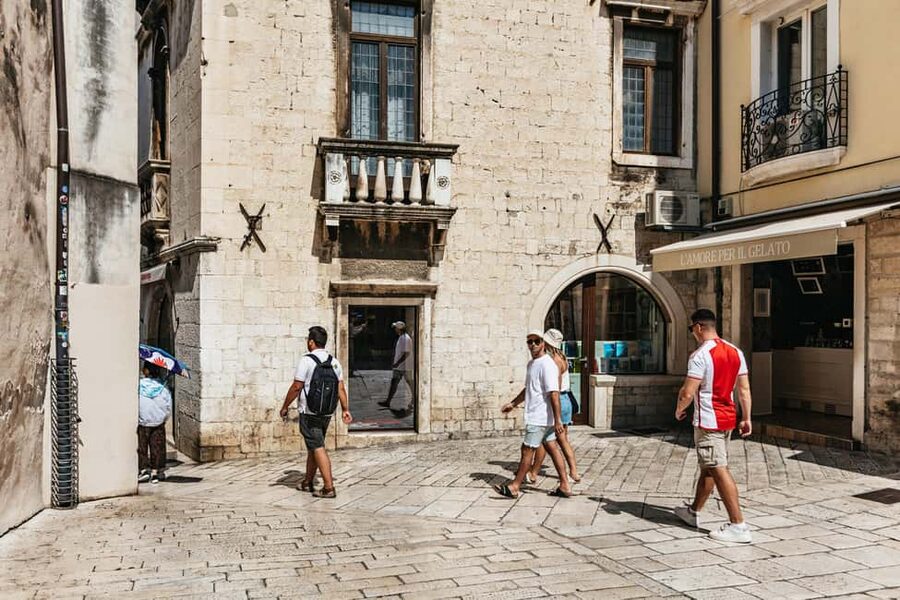
Guide quality is the strongest part of this tour. Ina is repeatedly praised for her clear history and archaeology background, lively delivery, and willingness to stay after the walk for extra questions. Natasa is described as an art historian with a strong command of Split’s past, while Darko is praised for humor and a passion for history. Tin is noted for his confident explanations, excellent English, and care for people at the back of the group.
Those names matter because a short tour depends heavily on presentation. There is not enough time for the guide to recover from a dull or disorganized explanation. Here, the best accounts describe guides who keep the group moving while still making room for questions.
You should expect English, Spanish, or Italian guiding. The tone may differ by guide, but the core route remains focused on Diocletian’s Palace and the old town.
A guide cannot remove every practical limitation. Streets can be noisy, groups may spread out, and one person suggested that a microphone would help. Stay near the front if hearing is a concern, and speak up early if you have a question.
Is $17 good value for 50 minutes?
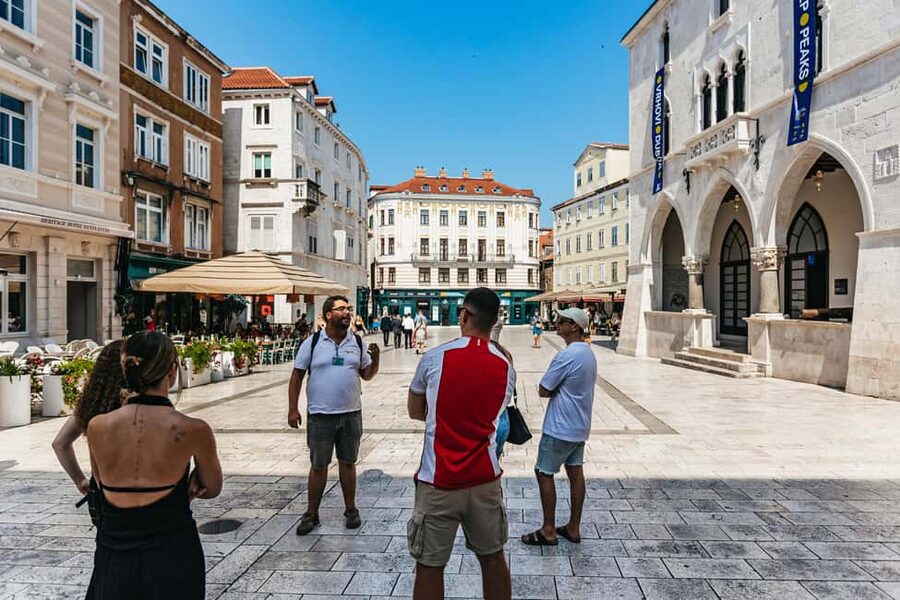
At $17 per person, I see this as a sensible orientation walk, especially if you are new to Split. You are paying for access to a local guide’s explanation of a confusing site, not for transport, lunch, drinks, souvenirs, or a full cathedral package.
The value is strongest when you use the tour as a starting point. Afterward, you can return to the Peristyle, gates, cellars, or Fruit Square at your own pace. You can also use the guide’s suggestions to plan the rest of your time.
The value is weaker if you already know the palace well or want a long archaeological tour. Fifty minutes goes quickly, and the route gives you the main story rather than every architectural detail.
The booking terms are traveler-friendly. You can cancel up to 24 hours ahead for a full refund and reserve now while paying later. The activity is described as wheelchair accessible, but you should still consider the cobblestones, uneven surfaces, and 15 to 30 steps required for participation. Some guides have helped groups find routes with few or no steps, but it is wise to discuss your needs at the meeting point.
Who should book this Split walking tour?
I would choose this for a first visit, a short stay, or a morning when you want to get your bearings fast. It also suits anyone who prefers a clear introduction before exploring independently.
Families may appreciate the compact length. A guide has also managed the route for toddlers, strollers, and wheelchairs, though the old surfaces still require care. History fans should book it if they want a lively overview, but not if they expect a specialist seminar.
Wear comfortable shoes. The route is short, but cobblestones, steps, and uneven Roman surfaces make flimsy footwear a poor choice. Bring water and a camera, and stand close enough to hear.
Should you book it?
Book this tour if you want a well-priced first look at Split, with the main palace spaces explained by an engaging local guide. The route gives you Roman foundations, medieval civic life, Venetian influence, and modern city life in one compact walk.
Skip it if you want a private, slow-paced archaeological study or guaranteed time inside every monument. For most first-time visitors, though, the $17 price and short format make it a practical way to understand why Split’s old town is so unusual.
FAQ
Where does the tour start?
It starts at Apodos Travel Agency on Split’s Riva promenade. Look for an open-top red sightseeing bus and staff wearing red or white shirts.
How long does the tour last?
The listed duration is 50 minutes. The palace portion is also described as about one hour, so allow roughly an hour for the guided walk.
What places are covered?
The route covers Diocletian’s Palace and Split Old Town, including the palace cellars, Peristyle courtyard, former private areas, four gates, the 15th-century Town Hall, and Fruit Square.
Is the Cathedral of St. Domnius included?
The tour visits and explains the cathedral, which was originally Diocletian’s mausoleum. The information provided does not confirm that bell tower admission is included.
Which languages are available?
Guiding is available in English, Spanish, and Italian.
Is the tour wheelchair accessible?
The activity is described as wheelchair accessible. You should still expect cobblestones, uneven surfaces, and 15 to 30 steps. Tell the guide about mobility needs at the start.
What should I bring?
Bring comfortable shoes, water, and a camera. Sunglasses and a hat are useful on sunny days, while long sleeves can help on windy days.
Does the tour include food or drinks?
No. Meals, beverages, personal expenses, and souvenirs are not included.
Is transportation included?
No. You must make your own way to the meeting point and back from the tour’s ending point.
Can I cancel the booking?
You can cancel up to 24 hours in advance for a full refund. You can also reserve now and pay later.
Just added around Split
- From Makarska : Wine Tasting Grabovac Tour★ 4.5 · 30 reviews
- Essential Diocletian’s Palace Tour for First-Time Visitors★ 4.8 · 19 reviews
- Unique vintage Tomos moped tour Split – Back to the ’80s★ 4.8 · 17 reviews
- Walking Tour Split★ 4.7 · 61 reviews
- Trogir; Private walking tour of higlights of Trogir★ 4.7 · 3 reviews
- Trogir: White Lagoon, Maslinica & Blue Lagoon Speedboat Tour★ 4.8 · 11 reviews
- Trogir 1.5-Hour City Tour★ 4.4 · 37 reviews
- Split: Trogir Open Top Bus Trip + Free Split Walking Tour★ 4.1 · 17 reviews
Diocletian's Palace Tours, compared.
Split: Old Town and Diocletian Palace Walking Tour
Read our review →
Walking Tour of Split and Diocletian’s Palace
Read our review →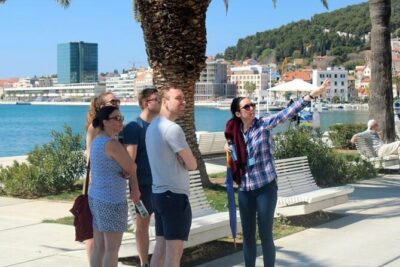

Split: Game of Thrones Tour with Diocletian’s Palace Cellar
Read our review →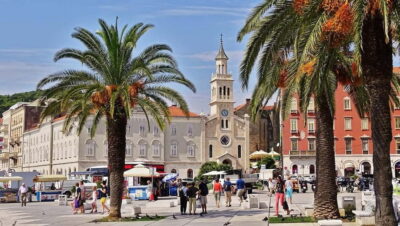
Diocletian’s Palace and Old Town SMALL GROUP Walking Tour
Read our review →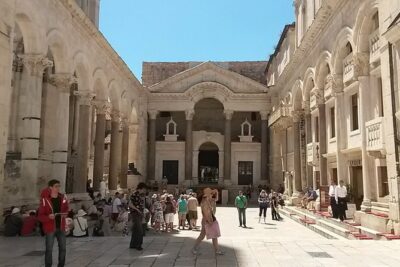
SPLIT-PRIVATE Walking Tour of Diocletian’s Palace & Old Town
Read our review →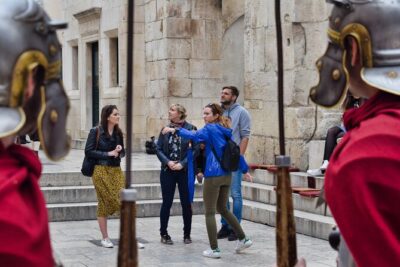

Split: Diocletian’s Palace Virtual Reality Experience
Read our review →Browse the lists this tour appears in