
Reviewed · SPLIT OLD TOWN WALKING TOURS
Split: city center private walking tour 2 h
Split’s old center is not a museum behind ropes. It is a living city built inside and around a 1,700-year-old Roman palace. This private tour takes you from the Riva waterfront through Diocletian’s cellars, Peristil, the cathedral, palace gates, markets, and medieval squares, with the city still carrying on around you.
I like the private format, which lets you ask questions and set the pace, and I like the chance to see both major monuments and everyday Split at the Green Market and fish market. The guides, including Zrinka, Zinka, and Yvonna on past departures, have earned especially warm praise for their clear explanations, humor, local advice, and French-language skills.
The main consideration is time. Two hours goes quickly, and one past booking felt the route did not include enough wandering through streets and alleyways. Entrance fees are also extra, so your final cost will be higher if you visit the cellars or cathedral interiors.
Key points to know before booking
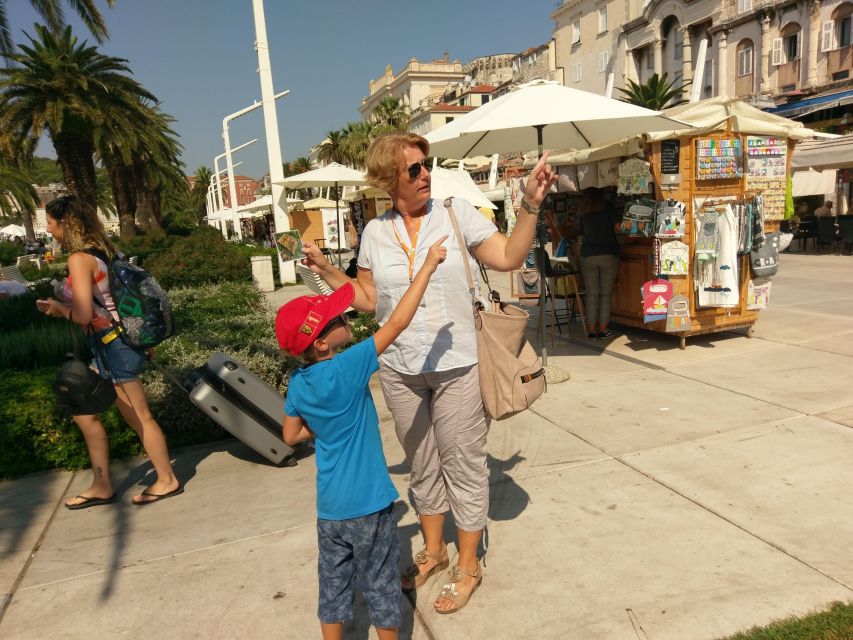
- The Roman palace is still the city center: You walk through Diocletian’s Palace as part of modern Split, not through an isolated archaeological site.
- The cellars connect history with popular culture: Their original purpose was to support the emperor’s residential rooms above, and they were also used for Game of Thrones filming.
- A private guide can shape the walk: Your guide can adjust the tempo and focus to suit your interests.
- The route includes daily life: Green Market, fish market, Fruit Square, and Riva add local color beyond the Roman monuments.
- The guide team receives strong praise: Zrinka, Zinka, and Yvonna are specifically named in past comments for friendly, clear, and engaging tours.
- Plan for walking on old surfaces: Comfortable shoes matter, and cathedral visitors must cover shoulders and knees.
Why Split’s center works best on foot
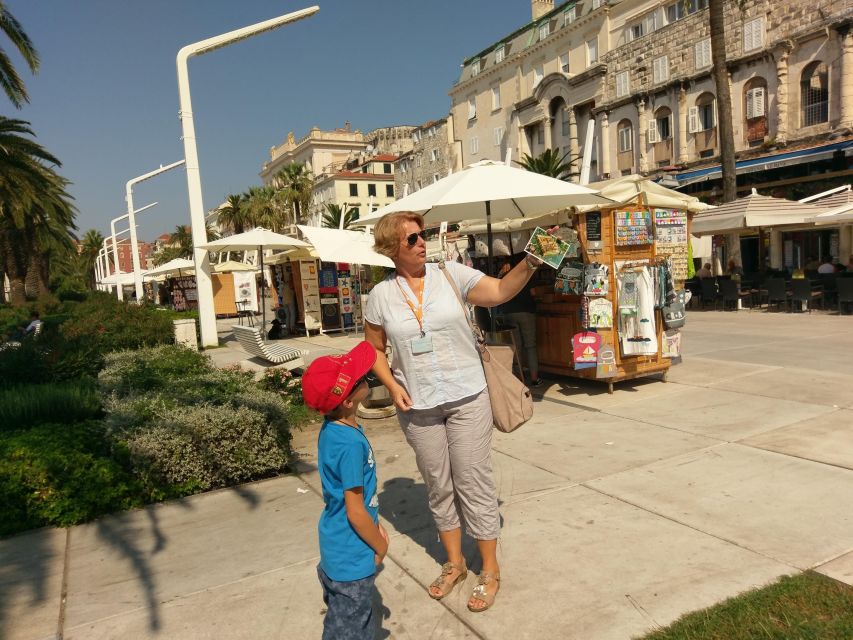
Split can seem confusing at first because its most important sights are woven into ordinary streets. A café may sit against a Roman wall. A narrow lane may pass beneath a palace arch. The remains of an imperial residence are not set apart from present-day life. This is the central idea that makes the walk worthwhile.
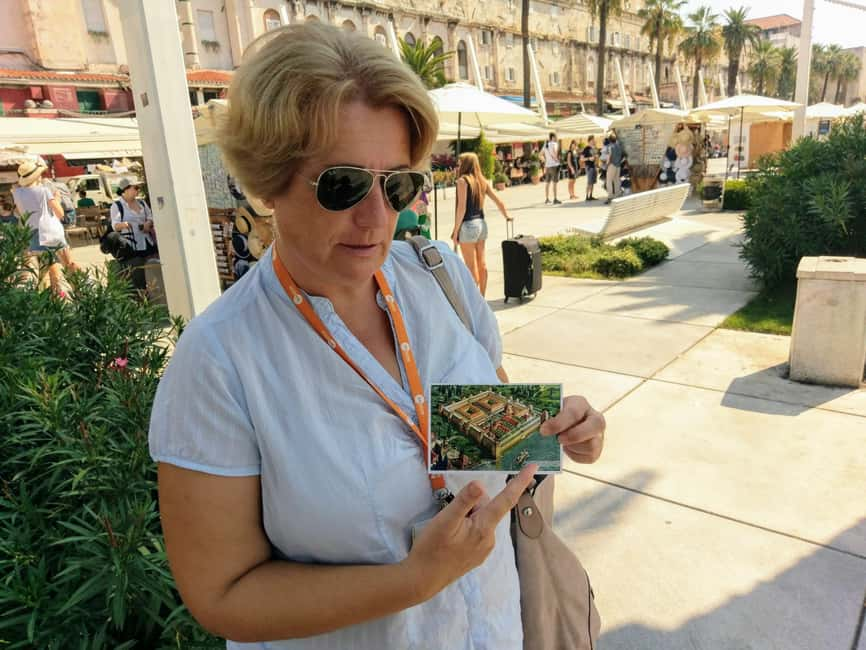
The tour begins near the model of Split’s historical core, with the meeting point on Riva in front of the entrance to Diocletian’s Palace cellars at Obala Hrvatskog narodnog preporoda 15b. That location is useful because you are already at the edge of the old center and close to the water.
Your guide then builds the story in a sensible order. You see Split as a Roman foundation, a medieval town shaped by Venetian rule, and a modern Dalmatian city with shops, markets, restaurants, and cafés. I like this approach because it keeps the history tied to places you can actually see instead of turning the tour into a string of dates.
Since this is a private group, you are not sharing the guide with a large crowd. The advertised price is $141 for the group, up to 20 people. That is a fair arrangement for a family or small group that will make good use of the guide’s attention. For one or two people, it is less of a bargain than a shared walk, but you gain privacy and control over the pace.
More walks through the old quarter in Split:
- Split: Old Town and Diocletian Palace Walking Tour
★ 4.9 · 4,727 reviews - Walking Tour of Split and Diocletian’s Palace
★ 5.0 · 2,588 reviews - Krka Waterfalls tour with Trogir Walking tour and Krka panoramic boat cruise
★ 5.0 · 1,659 reviews
Riva and the first look at Split
The walk includes about 15 minutes on Riva, Split’s waterfront promenade. This is a useful starting point, not simply a scenic pause. Riva helps you understand the city’s orientation: the sea lies directly beside the historic center, while the palace and later neighborhoods extend inland.
You will finish the tour here as well, returning to the original meeting area. That makes the route easy to combine with your own plans for lunch, coffee, or further exploring. The promenade has restaurants and cafés, though the tour itself does not include food or drinks.
A guide can also explain how Split functions as Dalmatia’s main urban, cultural, and transport center. That context helps you see why the old center feels active rather than preserved only for sightseeing.
Green Market and fish market: history with a daily pulse
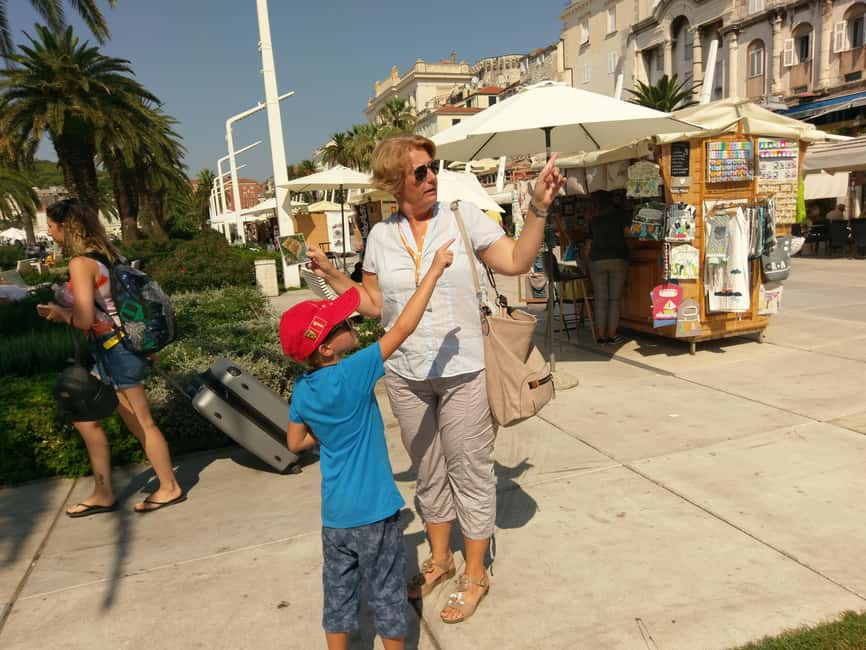
The Green Market receives about 10 minutes, including time for shopping. This short stop gives the walk a welcome change of pace. Instead of looking only at carved stone and palace walls, you see a market that belongs to present-day Split.
The fish market is another 10-minute visit. These stops are brief, so you should not expect a long market tour or a food-focused experience. Their value is in showing how the historic core remains part of local routines.
I particularly like that these markets are included because they keep the experience from becoming too concentrated on imperial history. If your interests lean toward food and local life, tell your guide early. The tour is tailor made, but two hours places a natural limit on how long you can linger.
Diocletian’s Palace and the cellars
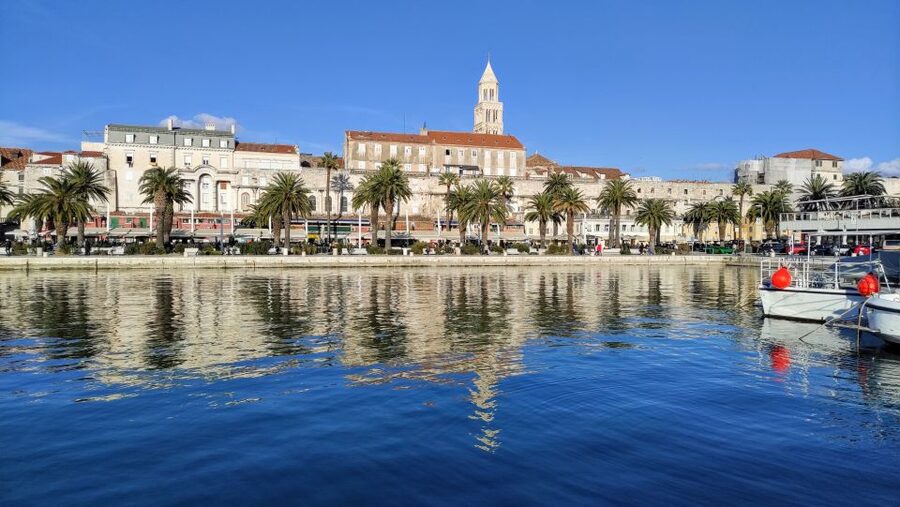
The palace receives the longest single portion of the tour, about 45 minutes. This is the main event, and it deserves the time. Diocletian’s Palace was built for the Roman emperor Diocletian, and its structure now forms the heart of Split.
The cellars are especially useful for understanding the building above them. Their architectural purpose was to support and raise the imperial residential area on the upper floor. As you walk through them, the guide can help you connect the lower rooms with the palace plan rather than treating them as unrelated underground chambers.
The cellars were also a filming location for Game of Thrones. That detail will interest fans, but the site has more value than a television connection. The spaces help explain the scale and planning of the Roman residence, and their position beneath today’s city shows how old and new Split fit together.
Entrance to the cellars is not included in the tour price. That matters when you compare the advertised $141 with your actual spending. Ask about the current entrance charge when booking or before the walk, since the supplied information does not give a fee.
More walking tours in Split:
- Split & Diocletian’s Palace Walking Tour
★ 5.0 · 1,125 reviews - Walking Tour of Split with a ‘Magister’ of History
★ 5.0 · 1,122 reviews - Split Walking Tour with Professor of History
★ 5.0 · 926 reviews - Split: Diocletian Palace & Old Town Guided Walking Tour
★ 4.7 · 882 reviews
Peristil and the imperial stage
After the cellars, you walk up the stairs to Peristil. This courtyard was meant for Diocletian and the cult of the living son of Jupiter. It is one of the places where the palace’s political and religious purpose becomes easiest to picture.
The guide also points out Jupiter’s temple. The Roman setting is not presented as a detached ruin. You are standing in a courtyard that has continued to shape movement through the center for centuries.
Peristil is a good place to pause and look closely at the surrounding stonework. Your guide’s explanation gives the space meaning, while the private format lets you ask about details that catch your eye. Past comments single out guides such as Zrinka for making this part engaging and easy to follow.
St. Duje Cathedral and Diocletian’s mausoleum
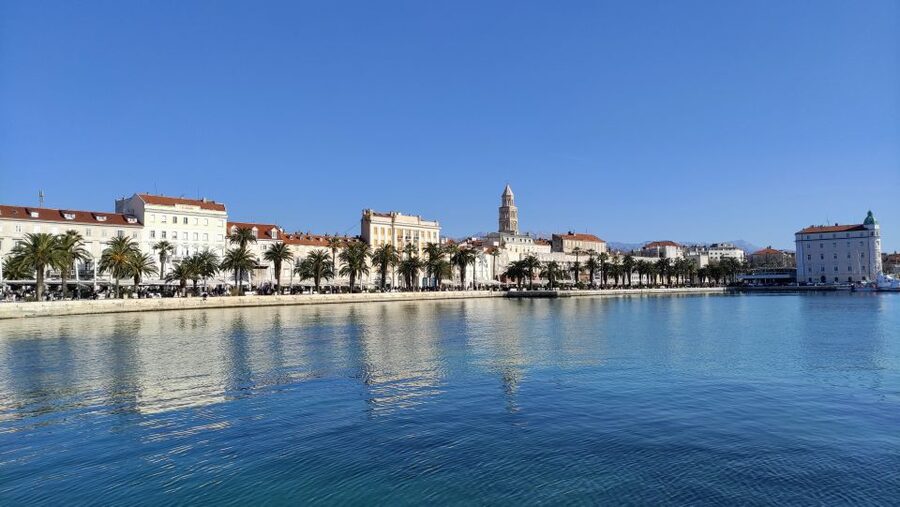
The cathedral of St. Duje is dedicated to Split’s patron saint. Its original purpose was very different: the building began as Diocletian’s mausoleum. It is often described as the oldest cathedral in the world, a claim tied to its unusual conversion from imperial tomb to Christian cathedral.
The tour includes the cathedral as a major sight, but the entrance fee is separate. If you want to go inside, dress properly. Shoulders and knees must be covered, so this is not the place for beach clothing.
That dress rule is easy to miss on a hot Dalmatian day. Carrying a light cover-up can save you from having to change plans. The cathedral stop also illustrates the long shift from Roman imperial power to Christian Split, one of the most useful themes in the whole walk.
Golden Gate and the Gregory of Nin statue
The Golden Gate receives about 10 minutes as a guided stop and photo point. It was one of the palace’s main entrances, and it gives you another way to read the Roman plan. Rather than seeing the palace as a single block, you begin to understand its gates, courts, and connected paths.
Near the gate is the statue of Gregory of Nin, included as a 10-minute photo stop. This adds a later Croatian layer to the Roman story. It also gives you a clear landmark for finding your way around the center after the tour.
The stop is short, so your guide will likely focus on the essential story and allow time for photographs. If you have a particular interest in Croatian religious or national history, this is a good point to ask for more detail.
Pjaca and the medieval streets
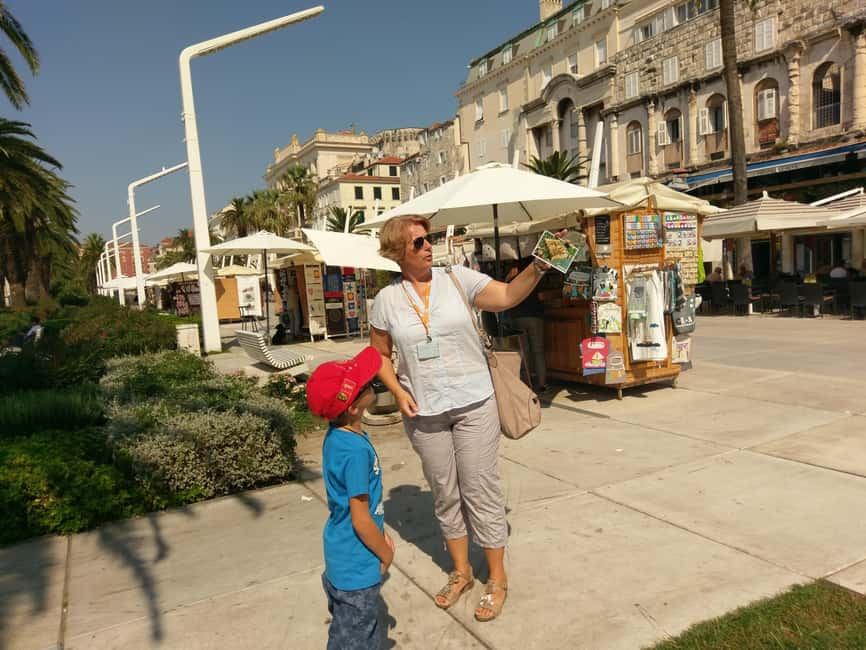
People’s Square, or Pjaca, comes from the period of Venetian rule. The tour allows about 15 minutes for a visit, photographs, and possible shopping. This is where Split’s medieval and Venetian character becomes more visible after the Roman palace sections.
The Old Town Hall is a shorter five-minute photo stop. It is easy to pass without noticing when you walk alone, which is one reason a local guide adds value. You are not only being led from famous sight to famous sight. You are shown how the pieces fit into the old city.
Fruit Square receives another 15 minutes. It is a good place to see how later urban life developed beside the palace. The route’s mix of squares and lanes gives you a better feel for Split than a palace-only visit would.
One caution comes from the shape of the tour itself. Although it is called a walking tour, the scheduled visits are concentrated around specific landmarks. One past booking wanted more time in small streets and alleyways and felt there was not enough open-ended walking. If free wandering is your top priority, say so at the start and ask the guide to build in more lanes, even if that means shortening a formal stop.
A private pace and three guide languages
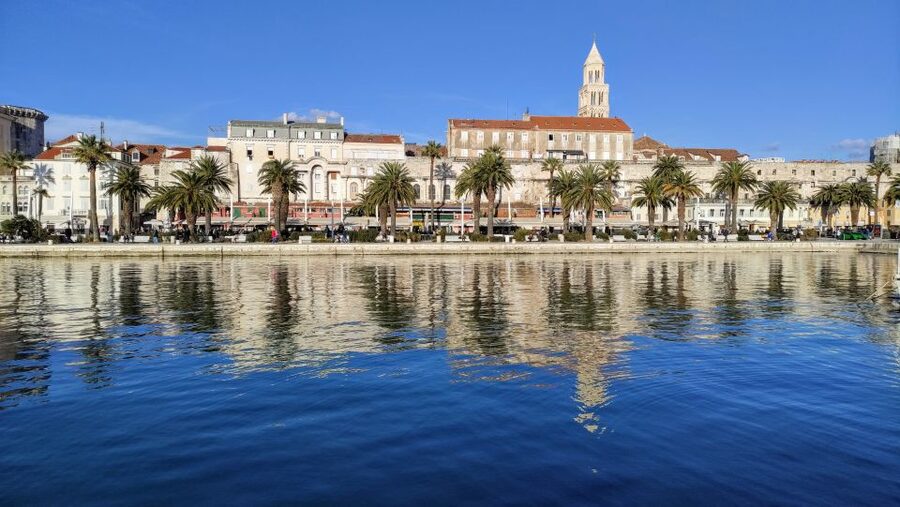
The tour is offered in English, French, and Croatian. Past bookings specifically praise French-speaking guides, with comments naming Zrinka, Zinka, and Yvonna. They are described as friendly, clear, amusing, and generous with local suggestions. Those personal qualities matter on a short tour because a rushed or flat explanation can make two hours feel long.
The guide assigned to your booking may not be one of those named above, so treat the names as examples from earlier departures rather than a guarantee. If language is important, confirm it when you reserve.
Private touring also helps families and groups with mixed interests. You can ask for more Roman history, more local life, more Game of Thrones connections, or a gentler pace. The experience is marked wheelchair accessible, but the route includes old, uneven surfaces and stairs, particularly around historic areas. Contact the provider before booking if your group needs specific route adjustments.
Price, timing, and practical value
At $141 per group of up to 20, the price is not calculated per person. For a full group, the cost per person is low. For a couple, it is a premium over a shared tour, but you are paying for a private guide and the ability to tailor the walk.
The two-hour length works well as an introduction before exploring Split on your own. It is long enough to cover the central sights but short enough to fit around a cruise day, a morning arrival, or an afternoon departure. It is not long enough to thoroughly tour every interior or spend extended time in the markets.
Cellar and cathedral entrance fees are extra, and transfers are not included. You make your own way to Riva, which is also the return point. Wear comfortable shoes. Uneven surfaces are part of the old center, and the route includes a lot of walking even if the time spent moving between stops feels shorter than expected.
The cancellation details supplied for this experience are inconsistent: one section says full cancellation refunds are available up to 24 hours before the start, while another says cancellation is free up to 14 days before with no refund after that point. Check the terms shown at booking rather than relying on either figure.
Who should book this Split walk?
I would choose this tour if you want a clear first reading of Split, prefer a private guide, or are traveling with family and want to control the pace. It is also a good fit if French, English, or Croatian service matters to you, or if you want a guide who can connect Roman, medieval, and modern Split.
The tour is less suitable if you want a long, loose wander through every alley or a full archaeological visit with extensive interior time. You can improve the fit by telling the guide what matters most before setting off. Ask for more streets if that is your priority, or focus on the palace and cellars if Roman history is your reason for coming.
Should you book it?
Book it if you value personal attention and want the essential Split story explained in two efficient hours. The strongest reasons are the private format, the central route, and the guides’ record for friendly explanations and useful local advice.
Skip it if you mainly want unstructured wandering or expect all admission costs to be included. For everyone else, this is a sensible way to get oriented, see Diocletian’s Palace in context, and finish with enough time to return to the places that caught your interest.
FAQ
How long is the Split private walking tour?
The tour lasts two hours.
What is the price?
The price is $141 per private group of up to 20 people.
Where does the tour meet?
It meets on Riva in front of the entrance to the cellars of Diocletian’s Palace, at Obala Hrvatskog narodnog preporoda 15b, 21000 Split, Croatia.
Which languages are available?
The live guide service is available in English, French, and Croatian.
Is this a private tour?
Yes. It is offered as a private group experience.
Are entrance fees included?
No. Entrance fees for the cathedral and the cellars are not included.
Is transportation included?
No. Transfers are not included. The tour begins and ends at the stated meeting area on Riva.
Is the tour wheelchair accessible?
The activity is marked wheelchair accessible. The historic route also includes uneven surfaces and stairs, so you should consider your specific access needs before booking.
What should I wear?
Wear comfortable shoes because the tour involves substantial walking on uneven surfaces. If you plan to enter the cathedral, your shoulders and knees must be covered.
Just added around Split
- From Makarska : Wine Tasting Grabovac Tour★ 4.5 · 30 reviews
- Essential Diocletian’s Palace Tour for First-Time Visitors★ 4.8 · 19 reviews
- Unique vintage Tomos moped tour Split – Back to the ’80s★ 4.8 · 17 reviews
- Walking Tour Split★ 4.7 · 61 reviews
- Trogir; Private walking tour of higlights of Trogir★ 4.7 · 3 reviews
- Trogir: White Lagoon, Maslinica & Blue Lagoon Speedboat Tour★ 4.8 · 11 reviews
- Trogir 1.5-Hour City Tour★ 4.4 · 37 reviews
- Split: Trogir Open Top Bus Trip + Free Split Walking Tour★ 4.1 · 17 reviews
Split Old Town Walking Tours, compared.
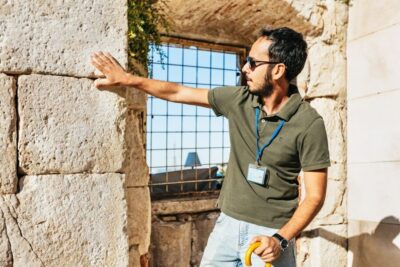
Split: Old Town and Diocletian Palace Walking Tour
Read our review →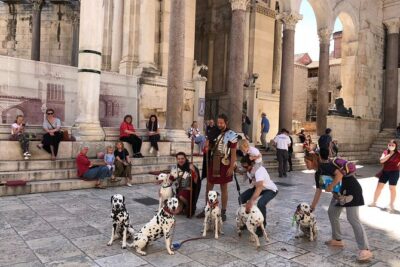
Walking Tour of Split and Diocletian’s Palace
Read our review →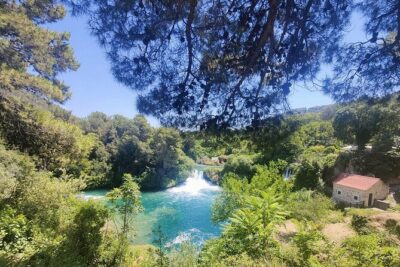
Krka Waterfalls tour with Trogir Walking tour and Krka panoramic boat cruise
Read our review →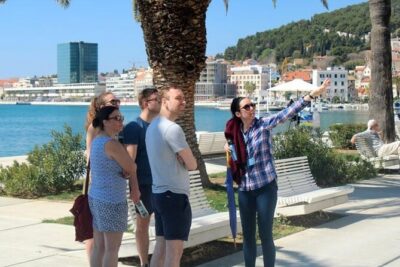
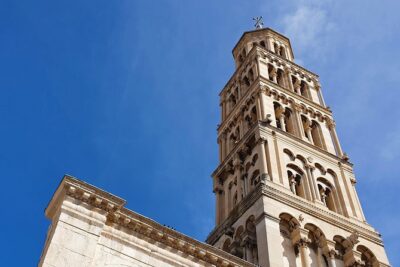
Walking Tour of Split with a ‘Magister’ of History
Read our review →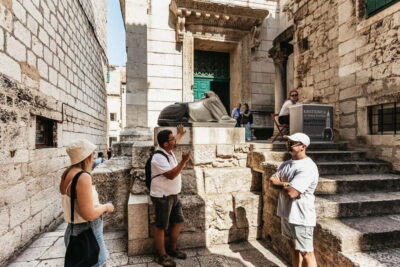
Split: Diocletian Palace & Old Town Guided Walking Tour
Read our review →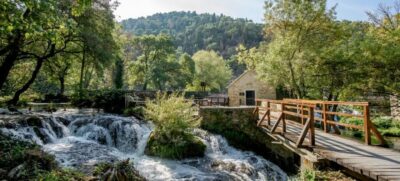
From Split: Krka Waterfalls Cruise & Trogir Walking Tour
Read our review →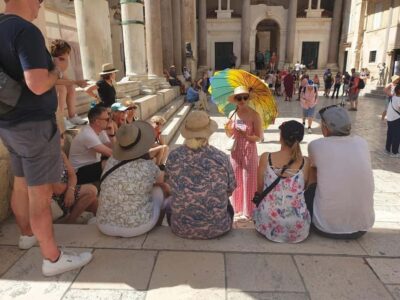
Browse the lists this tour appears in