
Reviewed · DIOCLETIAN'S PALACE TOURS
SPLIT-PRIVATE Walking Tour of Diocletian’s Palace & Old Town
Diocletian’s Palace is not a tidy monument sitting apart from city life. It is the old center of Split, with homes, cafés, shops, churches, and lanes built into and around a Roman emperor’s retirement palace. This private walk helps you read those layers instead of simply passing through them. Josko, also written Joško in some accounts, is the guide most often named, and his style mixes dates, local stories, and humor.
I like the private format, since your group can ask questions without waiting for a crowd to catch up. I also like the focus on the palace cellars, the best-preserved part of the complex, along with the everyday squares and lanes of Old Split. The main thing to consider is that this is a history-led walk, not a long scenic stroll. Much of the palace visit is below ground, and some of the most important interior sights cost extra.
Key points to know
- Roman palace and living city: See how Diocletian’s fourth-century residence became the core of modern Split.
- Private group of up to 12: You receive a guide for your party rather than joining a large public group.
- Strong storytelling: Josko’s explanations cover Roman rule, later rulers, architecture, and local life in an easy-to-follow way.
- Cellars cost extra: Entry to Diocletian’s Cellars is not included and costs €10 per person.
- Optional interior visits: The Cathedral of Saint Domnius costs €3.50 per person, and the Temple of Jupiter costs €1.50 per person.
- Good first-day choice: The route gives you useful bearings for the palace, Old Town, Riva harbor, and nearby squares.
Why Split’s palace is also its old town
The first useful idea to grasp is that Diocletian’s Palace is not just one building. Emperor Diocletian built it around AD 305 as a fortified residence and place of retirement. Over the centuries, the palace changed purpose, absorbed later buildings, and became the framework for the city center.
That makes a guided walk especially helpful. Without context, a Roman column, a medieval wall, and a modern doorway can look like unrelated sights. A good guide connects them. This tour is designed around that connection, moving from the palace to Old Split and showing how the city grew inside an ancient plan.
The guide also brings local perspective. The strongest accounts describe Josko as warm, funny, and deeply interested in Split’s past. He is praised for making a huge amount of material manageable, including for families with children and teenagers. That matters here, because the story covers more than 1,700 years.
More ways to see Diocletian's Palace:
- Split: Old Town and Diocletian Palace Walking Tour
★ 4.9 · 4,727 reviews - Walking Tour of Split and Diocletian’s Palace
★ 5.0 · 2,588 reviews - Split & Diocletian’s Palace Walking Tour
★ 5.0 · 1,125 reviews
Starting on the Riva promenade
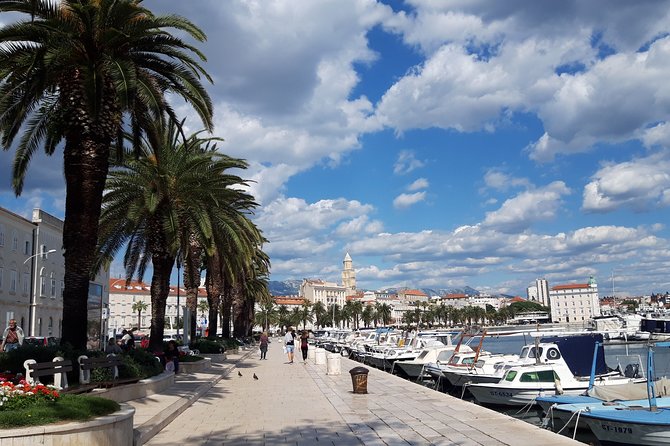
The tour begins and ends at Obala Hrvatskog narodnog preporoda 22, on Split’s main Riva promenade. This is a practical meeting point near public transportation and close to the historic center.
Starting on the waterfront gives the walk a useful opening view. You begin at the edge of the old city, then move into the palace and its lanes. The route finishes back at the same meeting point, so you do not need to arrange a second pickup location.
The advertised duration is about two hours. Since the route includes many stops and the private setup allows questions, I would avoid scheduling a tight connection immediately afterward. Some accounts describe the experience running closer to three hours, so leave room if your group likes to stop, ask questions, or add a little more Old Town walking.
Entering Diocletian’s Palace through its surviving layers
The main palace visit takes about 25 minutes in the stated plan, though the full walk returns to palace landmarks several times. The guide explains the site as both an imperial residence and the foundation of today’s Split.
You will see the palace in pieces rather than as a single complete structure. Roman walls, later homes, religious buildings, and narrow lanes now share the same space. This is one of the tour’s best features: you are not only looking at old stones. You are learning how an ancient complex continued to serve people long after the emperor was gone.
The palace section suits anyone who wants more than a list of dates. The guide’s approach is built around rulers, wars, peace, architecture, and the changing role of the site. If you prefer a quick photo stop with little explanation, the pace may feel too talkative. If you want to understand why Split looks the way it does, the detail earns its time.
The Peristyle, the palace’s central stage
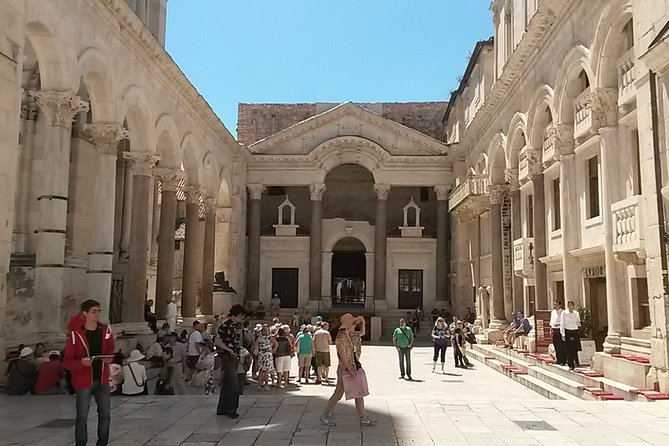
The Peristyle is the heart of the palace and one of the key stops. This former imperial square was designed to make the emperor’s presence feel grand and formal. Today, it is one of the most recognizable spaces in Split, but the guide’s explanation helps you see more than the columns and stone.
The square connects several parts of the complex, including the cathedral and the Vestibule. Your guide explains its role in the palace plan and how its meaning changed over time. This is a good place to pause and get the basic layout in your head before heading deeper into the surrounding lanes.
The stop is brief in the stated schedule, only about five minutes, so expect a focused explanation rather than a long break. The private format gives you a chance to ask about details that catch your eye.
More walks through the old quarter in Split:
- Krka Waterfalls tour with Trogir Walking tour and Krka panoramic boat cruise
★ 5.0 · 1,659 reviews - Walking Tour of Split with a ‘Magister’ of History
★ 5.0 · 1,122 reviews - Split Walking Tour with Professor of History
★ 5.0 · 926 reviews - Split: Diocletian Palace & Old Town Guided Walking Tour
★ 4.7 · 882 reviews
Cathedral of Saint Domnius and the former Temple of Jupiter
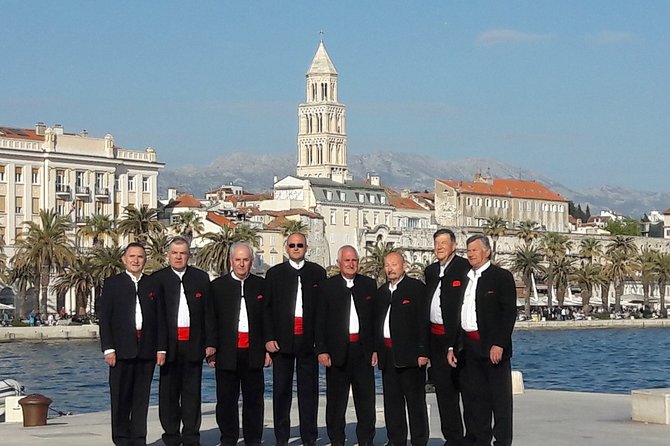
The Cathedral of Saint Domnius is viewed from outside as part of the standard route. Its setting is particularly striking because a Christian cathedral occupies a central place within the former Roman palace.
You may choose to go inside for an additional €3.50 per person. That fee is not included, so decide before the tour whether your group wants the extra interior visit. The outside explanation still helps place the cathedral within the palace, but the optional entry is useful if you want to see more of the later religious history.
The Temple of Jupiter is another short stop, viewed from outside on the standard walk. It was dedicated to the chief Roman god and later became part of the changing religious fabric of the palace. Interior entry costs an additional €1.50 per person.
These optional fees are modest, but they affect the total cost and timing. If your group wants to enter both sites, carry a little extra money and tell the guide early. If you are mainly interested in the Roman layout, the exterior visits may be enough.
The cellars reveal the palace’s original plan
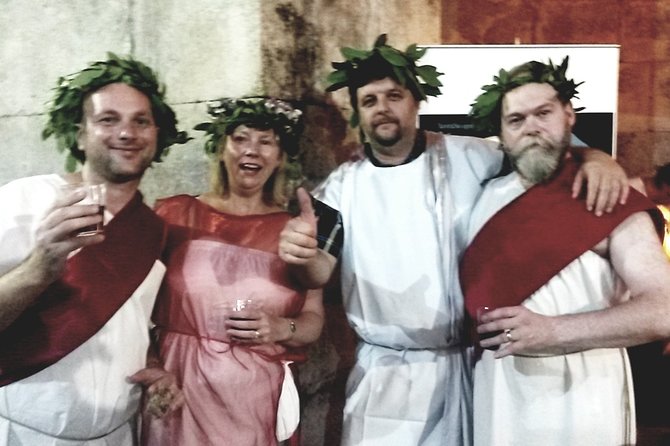
The Diocletian Palace Substructures are the tour’s most important paid sight. Entry to the cellars costs €10 per person and is not included in the group price.
The substructures are widely described as the best-preserved part of the palace. They matter because they show the shape and organization of the imperial residence below the later city. A guide can explain how the lower level relates to the rooms above, making the palace easier to understand even when the upper sections have been altered.
Be clear about the nature of this tour: much of the palace experience takes place in these cellars. One account specifically warns that it is not simply a sightseeing walk. That is not a criticism, but it is an important expectation. You are signing up for an historical explanation in an underground setting, not a route made mainly of broad outdoor views.
If you have limited time in Split, I would budget for the cellars unless you already plan to visit them separately. The €10 fee is the largest extra cost, but it covers the part of the palace that gives the clearest sense of the original structure.
The Vestibule and the emperor’s private entrance
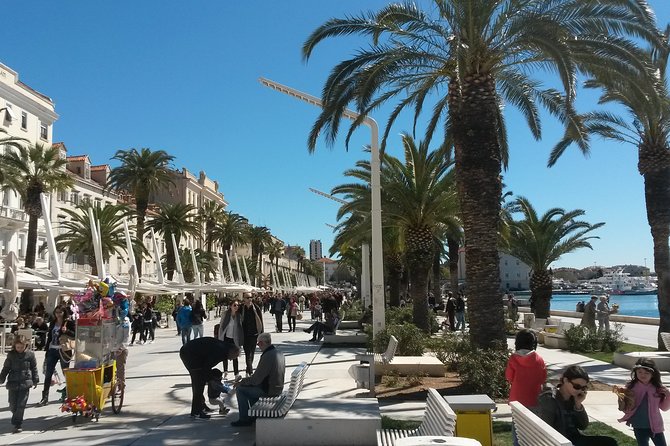
The Vestibule was the main entrance to Diocletian’s private residence. It is a compact but meaningful stop because it helps separate the public and private sides of the palace.
The guide uses places like this to explain how the emperor moved through the complex and how the palace was organized around status and access. Since the visit is guided, you do not need to arrive with a floor plan. You can follow the route physically while the explanation supplies the missing structure.
This is also where the private format helps. A group of 12 can gather in a tight space more easily than a large public group, though the guide still needs to keep the explanation moving when the area is busy.
Golden Gate, Grgur Ninski, and the city beyond Rome
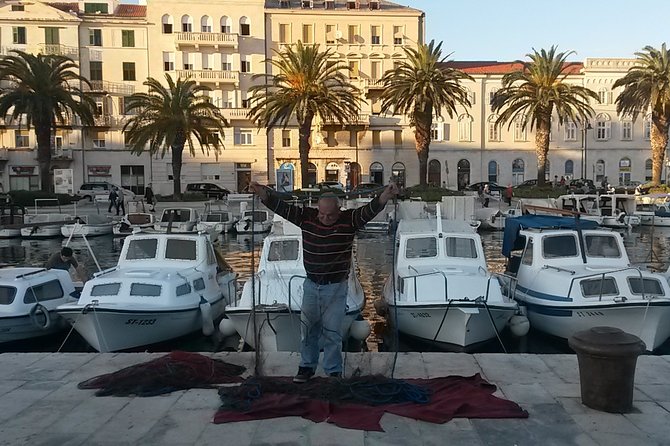
The Golden Gate is the main and most impressive entrance into the palace. It shows the defensive side of Diocletian’s design and gives the walk a clear connection between the palace interior and the streets beyond it.
Nearby, you will see the statue of Grgur Ninski, an important figure in Croatian history. The guide explains who he was and why the statue matters. This adds a national and local layer to a tour that could otherwise remain focused on ancient Rome.
The stop is especially useful if you want to connect Split with Croatia beyond the Roman period. The palace is the main attraction, but Split’s identity did not stop with Diocletian. The guide moves between Roman, medieval, and Croatian subjects so the city feels like a place that kept changing.
Fruit’s Square and People’s Square
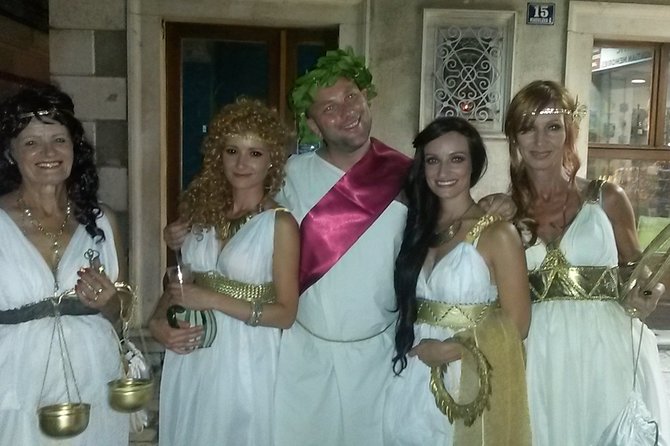
Fruit’s Square, officially Trg Braće Radić, occupies the site of a former green market. It also features a statue of Marko Marulić, often called the father of Croatian literature.
This is the sort of stop that makes the walk feel less like a palace lecture. You get a small piece of local public life, a literary connection, and a reminder that Split’s important places have served practical purposes as well as ceremonial ones.
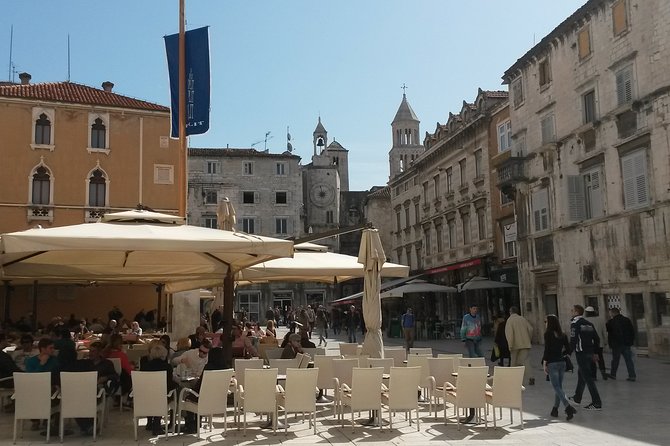
Narodni Trg, or People’s Square, is the largest and liveliest piazza in the Old Town. It gives you a sense of Split’s civic center and helps show how the medieval city developed around the palace.
The stated schedule allows about five minutes at each square. That is enough for an introduction, but not enough for a long market visit or relaxed café stop. If your priority is wandering Old Split at leisure, you may want to return after the tour. One useful benefit is that the guide helps you recognize places worth revisiting on your own.
The 500-year-old clock and medieval Old Split
The City Clock is another short stop. The tour points out its 24-hour display and its age of about 500 years.
On its own, a clock may not seem like a major attraction. In the context of the walk, it helps show how the city center kept adapting long after Roman rule. The guide’s job is to connect such details to the broader story rather than treat every stop as an isolated object.
The Old Town portion covers medieval Split and the streets around the palace. The emphasis is on history and orientation, with some room for questions and local suggestions. You should expect a compact introduction rather than a broad exploration of every lane.
If your ideal tour includes plenty of unstructured walking, this may be the one limitation to note. One account wished for more time strolling through Old Town because the area is so appealing. The tradeoff is that this tour gives you more historical explanation than a general orientation walk.
What the $240 group price really means
The price is $240 per group for up to 12 people. That makes the value depend heavily on your party size.
For two people, it is a premium private tour. You are paying for personal attention, a custom-designed route, and an English-speaking licensed resident guide rather than a seat in a larger group. For a family or group of six to 12, the cost per person becomes much more reasonable.
The price includes the guide’s service and tour organization. It does not include gratuities or the entrance fee for the palace cellars. The cathedral and Temple of Jupiter also require separate payment if you choose to enter.
For me, the private format is most worthwhile when you care about questions, flexible pacing, or keeping children engaged. The guide can adjust explanations, take photos, respond to interests, and point out extra places. One family account describes the guide taking many photos, while another notes that the route was adjusted around shade and comfort. Those details are not guaranteed, but they show what a private setup can make possible.
Who will get the most from this walk
I would choose this tour if you are visiting Split for the first time and want the city’s main story in one focused outing. It is also a good match for families, history fans, and people who prefer a local guide over an audio guide.
The style appears particularly well suited to visitors who like stories with humor. The guide is praised for keeping information clear and entertaining, including for teenagers. The tour can also work well for a history teacher or serious amateur, since the subject matter reaches from Diocletian through later rulers and the medieval city.
You may want another format if you mainly want panoramic views, a slow photo walk, or extended time in cafés and markets. This experience is built around explanation. The palace cellars and historical details are the core, not extras.
The tour is offered in English. Confirmation is provided at booking, and the activity is described as suitable for most participants. Since it requires good weather and a minimum number of participants, bad weather or insufficient bookings can lead to a new date or a full refund. Cancellation is free up to 24 hours before the start time; changes or cancellations inside that window are not refunded.
Should you book it?
Book this walk if you want Split to make sense, not just look attractive. The best reasons are the private group, the cellars, and the guide’s lively explanation of Roman and local history. The route gives you a useful first look at the Riva, palace, cathedral, Old Town squares, gates, and medieval streets.
I would skip it only if you want a mostly outdoor stroll or if your schedule cannot allow more than the stated two hours. For a couple, the $240 price requires a real interest in guided history. For a family or larger group, it can be a fair way to share one guide and build a clear plan for the rest of your time in Split.
FAQ
How long does the tour last?
The stated duration is approximately two hours. Some tour experiences may run longer when the group asks questions or spends additional time at certain sights, so leave some flexibility afterward.
How much does the private tour cost?
The price is $240 per group, with up to 12 people included.
Is the tour private?
Yes. Only your group participates in the private activity.
What language is the tour offered in?
The tour is offered in English.
Is admission to Diocletian’s Cellars included?
No. Entry to the palace cellars costs €10 per person and is paid separately.
Can I enter the Cathedral of Saint Domnius?
The standard tour views the cathedral from outside. An optional interior visit costs €3.50 per person.
Can I enter the Temple of Jupiter?
The standard route views the temple from outside. Optional entry costs €1.50 per person.
Where does the tour start and finish?
It starts at Obala Hrvatskog narodnog preporoda 22, 21000 Split, Croatia, on the main Riva promenade. It ends back at the meeting point.
Can I cancel for a refund?
You can cancel up to 24 hours before the start time for a full refund. Cancellations or changes made less than 24 hours before the start are not refunded. If poor weather or an unmet minimum causes the activity to be canceled, you are offered another date or a full refund.
Just added around Split
- From Makarska : Wine Tasting Grabovac Tour★ 4.5 · 30 reviews
- Essential Diocletian’s Palace Tour for First-Time Visitors★ 4.8 · 19 reviews
- Unique vintage Tomos moped tour Split – Back to the ’80s★ 4.8 · 17 reviews
- Walking Tour Split★ 4.7 · 61 reviews
- Trogir; Private walking tour of higlights of Trogir★ 4.7 · 3 reviews
- Trogir: White Lagoon, Maslinica & Blue Lagoon Speedboat Tour★ 4.8 · 11 reviews
- Trogir 1.5-Hour City Tour★ 4.4 · 37 reviews
- Split: Trogir Open Top Bus Trip + Free Split Walking Tour★ 4.1 · 17 reviews
Diocletian's Palace Tours, compared.
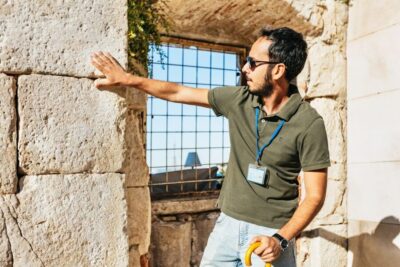
Split: Old Town and Diocletian Palace Walking Tour
Read our review →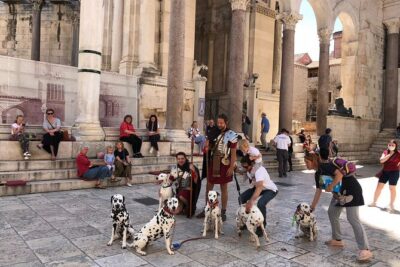
Walking Tour of Split and Diocletian’s Palace
Read our review →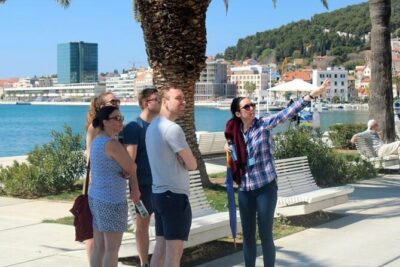
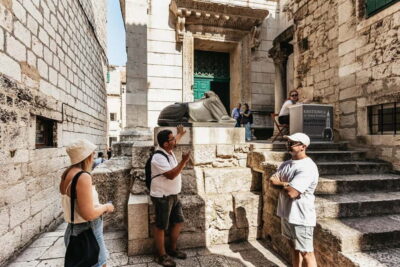
Split: Diocletian Palace & Old Town Guided Walking Tour
Read our review →
Split: Game of Thrones Tour with Diocletian’s Palace Cellar
Read our review →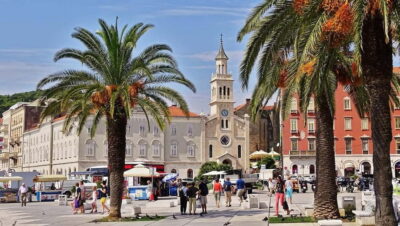
Diocletian’s Palace and Old Town SMALL GROUP Walking Tour
Read our review →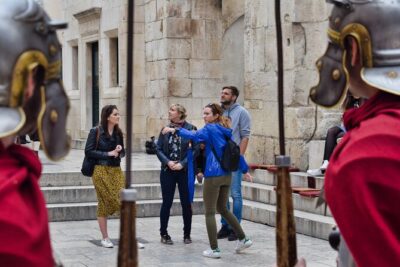

Split: Diocletian’s Palace Virtual Reality Experience
Read our review →Browse the lists this tour appears in