
Reviewed · DIOCLETIAN'S PALACE TOURS
Chill Private Walking Tour of Diocletian’s Palace
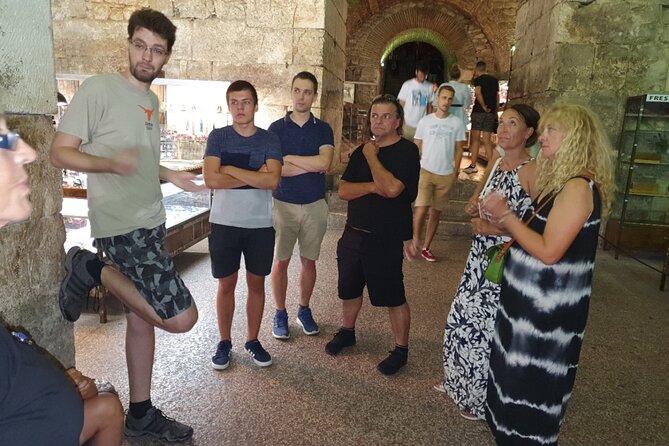
Diocletian’s Palace is not a fenced-off ruin. It is Split’s living center, with homes, cafés, lanes, churches, and shops built into Roman walls. This private walk with Mili helps you read that complicated mix, from the Peristyle and palace cellars to the Golden Gate and the statue of Grgur Ninski.
I like two things here: the small private format, which lets you ask questions and set the pace, and the visual comparisons showing how parts of the palace may have looked 17 centuries ago. Mili also brings in useful Game of Thrones details without making the tour depend on the show. The main drawback is that tickets for some interiors are extra, so the advertised price does not cover every sight.
Key points to know before you book
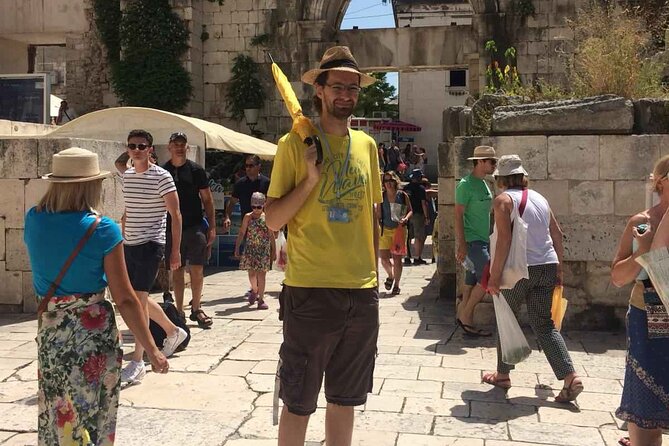
- A private tour for up to 15 people: Your group gets the guide’s attention instead of joining a large crowd.
- Mili leads the walk: He combines Roman history, Croatian culture, humor, and practical explanations in clear English.
- Nine major stops: The route runs from the Eastern Gate through the palace to the Golden Gate and Grgur Ninski Statue.
- Optional paid interiors: The cathedral, Temple of Jupiter, and museum section of the substructures can add time and cost.
- 3D reconstructions bring ruins to life: These images help you picture the palace before later buildings filled its spaces.
- The route lasts about 90 minutes to two hours: Allow extra time if you enter the optional sites.
Why Diocletian’s Palace is easier with a guide
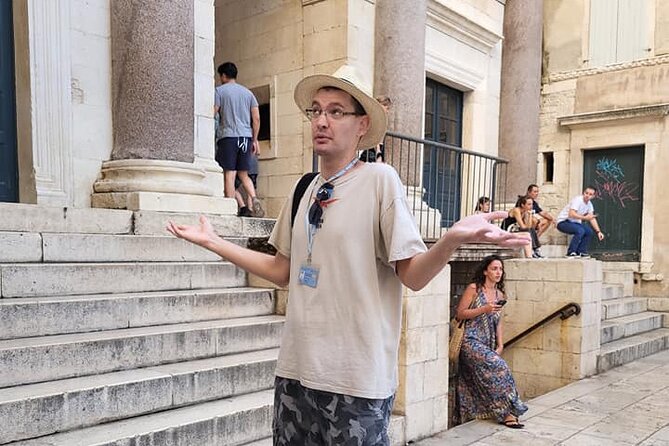
The first thing to understand about Split is that Diocletian’s Palace is not simply one grand building. It is a Roman palace folded into a modern city. Parts were destroyed, reused, rebuilt, and absorbed into later homes and public spaces.
That makes the site fascinating, but it can also be hard to read on your own. A column may belong to the Roman period, while the wall around it belongs to a later century. A church may sit inside a former imperial tomb. A narrow lane may follow the line of an old palace corridor.
Mili’s value is in connecting those layers. He explains what you are looking at, why it survived, and how its purpose changed. The 3D images are especially useful because they give you a clear picture of the original Roman plan instead of leaving you to imagine it from scattered stones.
This is also a good format if your group has mixed interests. History fans can ask detailed questions. People with only a passing interest in Roman sites still get a clear story. Families and teenagers can follow the jokes, visual material, and Game of Thrones references without sitting through a long lecture.
More ways to see Diocletian's Palace:
- Split: Old Town and Diocletian Palace Walking Tour
★ 4.9 · 4,727 reviews - Walking Tour of Split and Diocletian’s Palace
★ 5.0 · 2,588 reviews - Split & Diocletian’s Palace Walking Tour
★ 5.0 · 1,125 reviews
Starting at the Peristyle and Silver Gate
The meeting point is by the Eastern, or Silver, Gate, at Poljana kraljice Jelene 5. From there, the tour begins at the Peristyle, the palace’s central ceremonial space.
The Peristyle is the natural place to start because it shows the scale and ambition of Diocletian’s project. Here you get the basic story of the emperor, his retirement, and the decision to build a fortified palace on the coast near his birthplace.
You spend about 20 minutes here, which is enough time to establish the plan of the palace without rushing through the details. Look up, around, and down. The surrounding buildings make it easy to miss how much Roman structure remains beneath later changes.
The open square can be busy, especially during the main sightseeing hours. A private guide helps because you can keep your attention on the details instead of trying to follow a fixed group through the crowd.
Seeing the palace from below
The free section of the Diocletian Palace substructures takes about 10 minutes. These underground rooms give you a better sense of how the palace was engineered and arranged.
The substructures originally helped support the upper palace. Because later construction filled and altered many rooms above ground, the lower level can provide a clearer view of the original layout. You will hear more about the materials, construction, and changing use of the palace.
There is an optional museum section. If you choose to buy that ticket, Mili can take you through the additional rooms, adding roughly 20 minutes to the tour. This is useful if you want a fuller look at the underground complex, but you should budget for both the extra time and the separate admission fee.
The free portion keeps the main tour reasonably priced. Still, if underground architecture is one of your main interests, ask about the paid area before you begin so you can decide early.
The Cathedral of Saint Domnius, from Roman tomb to church
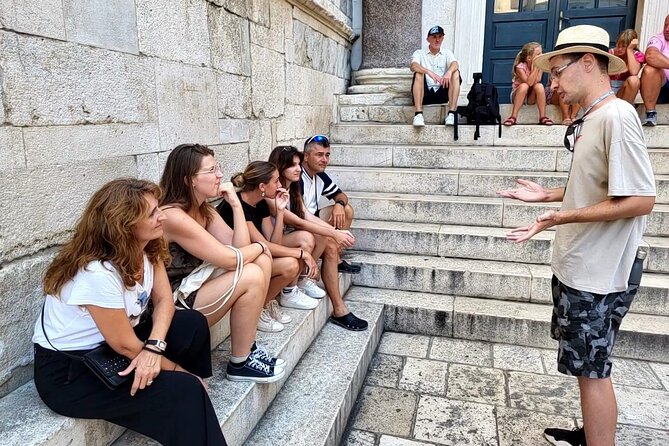
The Cathedral of Saint Domnius is one of the most memorable examples of changing use in the palace. It began as part of Diocletian’s Roman complex and was later converted into a Christian cathedral.
The tour spends about 10 minutes explaining that transition from outside. With a cathedral ticket, you can go inside and see how a Roman tomb became a Christian place of worship. That adds about 10 minutes.
This stop is valuable because it cuts through the idea that Roman sites are frozen in one period. The building survived not because it was left untouched, but because later generations found new uses for it.
If you plan to enter, the extra ticket matters to the overall cost. The main tour remains available without it, so you can keep the walk focused on the exterior if your group is short on time or trying to control expenses.
More walks through the old quarter in Split:
- Krka Waterfalls tour with Trogir Walking tour and Krka panoramic boat cruise
★ 5.0 · 1,659 reviews - Walking Tour of Split with a ‘Magister’ of History
★ 5.0 · 1,122 reviews - Split Walking Tour with Professor of History
★ 5.0 · 926 reviews - Split: Diocletian Palace & Old Town Guided Walking Tour
★ 4.7 · 882 reviews
The Temple of Jupiter and the palace’s religious change
The Temple of Jupiter is another well-preserved Roman structure. It was dedicated to Jupiter, the chief Roman god, and later received a Christian use.
You spend about 10 minutes here. The guide explains the temple from outside, and a ticket allows you to see the small interior. The stop is brief, but it adds an important point: the palace was not only a residence. It also contained ceremonial and religious spaces tied to imperial power.
I like this part of the route because it pairs naturally with the cathedral. Together, the two buildings show how Roman and Christian traditions overlap in Split. You do not need to be an architecture expert to understand the basic change, and Mili’s explanations keep the information focused.
Triklinij and the emperor’s private world
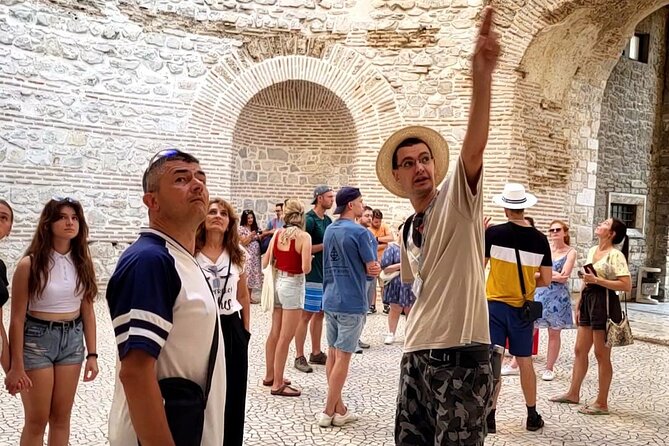
At Triklinij, you get an impression of how Diocletian might have lived. The southeastern corner of the palace was largely destroyed, but its construction allowed for an accurate partial reconstruction.
The stop lasts about 15 minutes. It is less about a complete surviving room and more about reading the evidence. You see how the space may have worked and how the palace combined defensive walls with the comforts expected by an emperor.
This is one of the places where the 3D comparisons are particularly helpful. A partial reconstruction can be difficult to picture from bare remains. The visual aid gives you a reference point, helping you connect the present structure with its earlier form.
Do not expect a fully restored imperial residence. The value here is the explanation of what can still be known, what has been rebuilt, and what has disappeared.
Papalićeva Street and the city built inside the palace
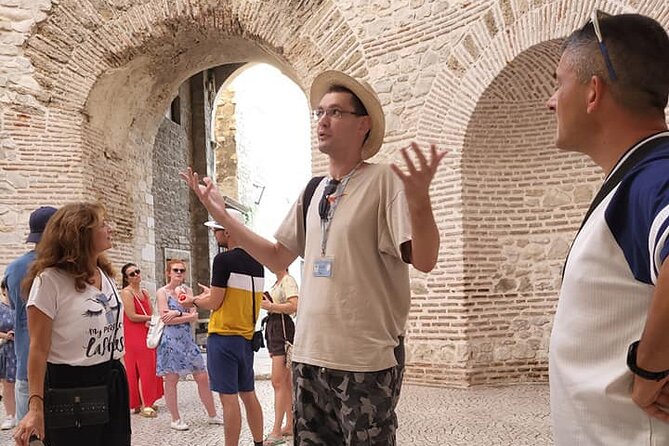
Papalićeva Street takes about 15 minutes as you walk through the northern half of the complex. This section is a reminder that Split’s palace is also an ordinary neighborhood.
The lanes are not just scenic passages between monuments. They show how later residents adapted Roman spaces for daily life. Mili points out details and explains how the palace continued to change after the imperial period.
This is where a guided walk can feel more useful than a list of famous sights. You are not only stopping at monuments. You are learning to notice how old stone, newer buildings, and modern life fit together.
The route includes stairs, uneven historic paving, and narrow lanes typical of an old city center. Most people can take part, but comfortable shoes will make the walk easier.
Fruit’s Square and Croatia’s later story
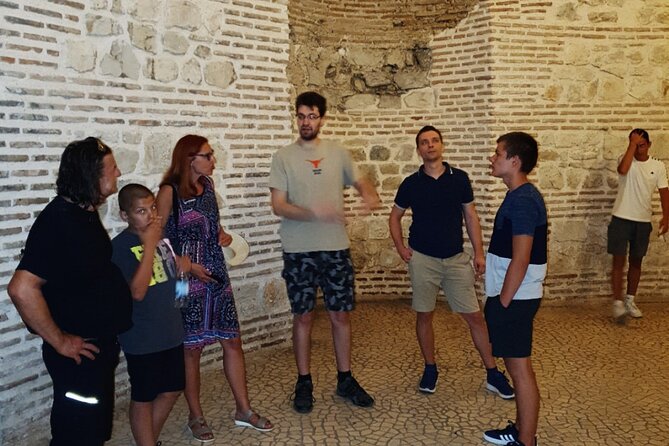
Fruit’s Square, also called Trg Braće Radić, lies outside the palace walls. The stop lasts around 15 minutes and shifts the focus from Roman construction to an important period of Croatian history.
It also shows how the palace was absorbed into newer parts of Split. The Roman complex is not isolated from the city around it. Its walls and structures remain part of the urban fabric, with later buildings pressed against or built into them.
This broader context is important. If you only focus on Diocletian, you miss much of what makes Split distinctive. The city’s story continues after the emperor, and the tour gives you a short bridge into that later period.
The Golden Gate and changing defenses
The walk finishes near the Golden Gate, the palace’s northern entrance. The gate is a strong place to discuss Roman defenses, since its purpose and appearance changed between its construction and the present day.
You spend about 10 minutes here. The guide explains how the entrance fitted into the fortified plan and what happened as the palace became part of a growing city.
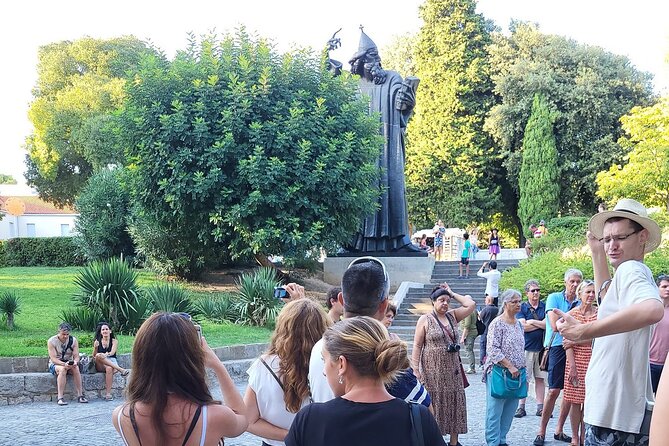
The tour ends outside the gate at Dioklecijanova 7, beside the bronze statue of Grgur Ninski. That end point is practical if you want to continue exploring Split on foot afterward.
Grgur Ninski and a final look at Croatian history
The final 15 minutes center on the statue of Grgur Ninski, an important bishop in Croatian history. The statue dominates the open space outside the northern gate and provides a useful closing point.
Here, Mili wraps up the Roman story and connects it with Croatia’s later development. The end is not simply a photo stop. It gives you a final reminder that Diocletian’s palace is one chapter in a much longer story.
You finish with a clearer sense of how the Roman structure was built, altered, reused, and incorporated into modern Split. That is the core lesson of the walk.
What the private format is worth
The price is $107.84 for a group of up to 15 people. For one person or a couple, that is a serious cost compared with a self-guided walk. For a family or group of friends, the value improves quickly because the price is shared.
A private tour also gives you more control. Mili can answer questions, adjust the pace, and check that your group is getting enough information without being overloaded. He has also handled changes in conditions, including adjusting the route during a sudden thunderstorm.
The tour is offered in English and lasts about 90 minutes to two hours. The base route uses free access at several stops, but optional interiors can extend the walk by about 10 to 20 minutes and add admission fees.
The reviews consistently praise Mili’s communication, punctuality, clear English, humor, and ability to explain the palace’s complicated layers. One particularly useful detail is his mix of serious history with a few groan-worthy puns. That may not sound important, but it helps keep a dense subject lively.
Game of Thrones fans get extra context, too. The tour includes filming-related information, but you do not need to follow the show to enjoy the Roman and Croatian material.
Timing, weather, and who should book
The tour requires good weather. If conditions force a cancellation, you can choose another date or receive a full refund. You can cancel for a full refund up to 24 hours before the start time, but later cancellations and changes are not accepted.
An evening departure may suit you on hot days. One review specifically recommends the evening in warm weather, and the private format makes it easier to enjoy a slower pace when the sun is strong.
This tour suits you best if:
- You have only a short time in Split and want the main palace story quickly.
- You prefer a private guide to a large scheduled group.
- You enjoy Roman architecture but need help understanding altered ruins.
- Your group includes children or teenagers who respond well to humor and visual aids.
- You want Game of Thrones information without booking a tour focused only on filming sites.
- You are happy to decide on optional interior tickets as you go.
It may not suit you if you want a fully ticketed museum experience included in the starting price. It is also less appealing if you prefer to wander without a set route or already know the palace very well.
Should you book this Split walking tour?
I would book it for a first visit, especially if you have one day in Split or are traveling with family and friends. The private price makes the most sense for a group, and Mili’s explanations address the hardest part of Diocletian’s Palace: understanding what is Roman, what came later, and how the two periods overlap.
Book it if you want a clear story, a flexible pace, and optional extras rather than a rushed march through every interior. Skip it if you only want free sightseeing and are comfortable piecing the palace together on your own.
FAQ
How long does the private walking tour last?
The tour lasts approximately 1 hour 30 minutes to 2 hours. Optional visits to the substructure museum and cathedral can add extra time.
How many people can join the private tour?
The price covers one private group of up to 15 people. Only your group participates.
What language is the tour offered in?
The tour is offered in English.
Where does the tour begin?
The tour begins at the Eastern, or Silver, Gate, at Poljana kraljice Jelene 5 in Split.
Where does the tour end?
The tour ends outside the Golden Gate at Dioklecijanova 7, near the bronze statue of Grgur Ninski.
Are entrance tickets included?
The base tour includes free access to the listed outdoor areas and the free part of the substructures. Tickets for the cathedral, Temple of Jupiter interior, and museum section of the substructures are optional and not included.
Can I cancel for a full refund?
Yes. You can cancel up to 24 hours before the experience begins for a full refund. Later cancellations and changes are not accepted. If poor weather causes the tour to be canceled, you can receive a full refund or choose another date.
Just added around Split
- From Makarska : Wine Tasting Grabovac Tour★ 4.5 · 30 reviews
- Essential Diocletian’s Palace Tour for First-Time Visitors★ 4.8 · 19 reviews
- Unique vintage Tomos moped tour Split – Back to the ’80s★ 4.8 · 17 reviews
- Walking Tour Split★ 4.7 · 61 reviews
- Trogir; Private walking tour of higlights of Trogir★ 4.7 · 3 reviews
- Trogir: White Lagoon, Maslinica & Blue Lagoon Speedboat Tour★ 4.8 · 11 reviews
- Trogir 1.5-Hour City Tour★ 4.4 · 37 reviews
- Split: Trogir Open Top Bus Trip + Free Split Walking Tour★ 4.1 · 17 reviews
Diocletian's Palace Tours, compared.
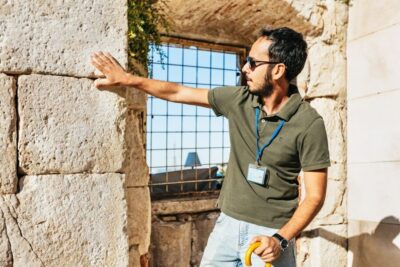
Split: Old Town and Diocletian Palace Walking Tour
Read our review →
Walking Tour of Split and Diocletian’s Palace
Read our review →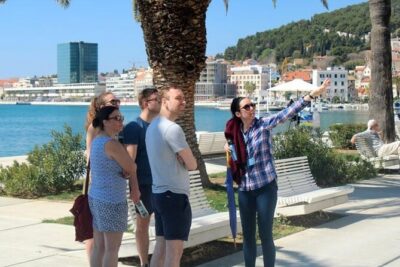
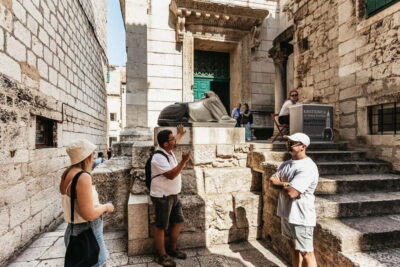
Split: Diocletian Palace & Old Town Guided Walking Tour
Read our review →
Split: Game of Thrones Tour with Diocletian’s Palace Cellar
Read our review →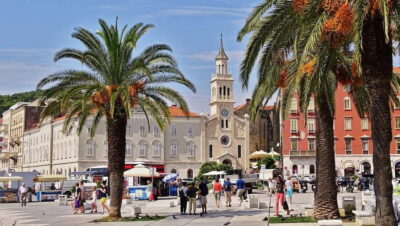
Diocletian’s Palace and Old Town SMALL GROUP Walking Tour
Read our review →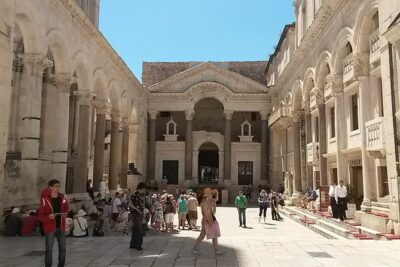
SPLIT-PRIVATE Walking Tour of Diocletian’s Palace & Old Town
Read our review →
Browse the lists this tour appears in