
Reviewed · SPLIT OLD TOWN WALKING TOURS
Experience Split History Walking Tour With Local Historian
Diocletian’s Palace is not a quiet ruin. It is Split’s old town, with cafés, homes, shops, churches, laundry, and daily life built into Roman walls. This two-hour walking tour helps you read that living monument, from the Golden Gate and Peristil to the palace cellars and medieval squares.
I like the small group size, capped at 12, and the use of 3D reconstruction images to show how vanished Roman spaces may have looked. I also like the local focus: guide Boris covers Croatian culture, religion, food tips, and the pomalo way of life, not just dates and emperors.
The main drawback is the pace. There are many stops in two hours, so you get a strong overview rather than extended time inside every site. Uneven stone streets and steps also make this a poor choice for wheelchair users or anyone with major mobility problems.
Key points to know before you book
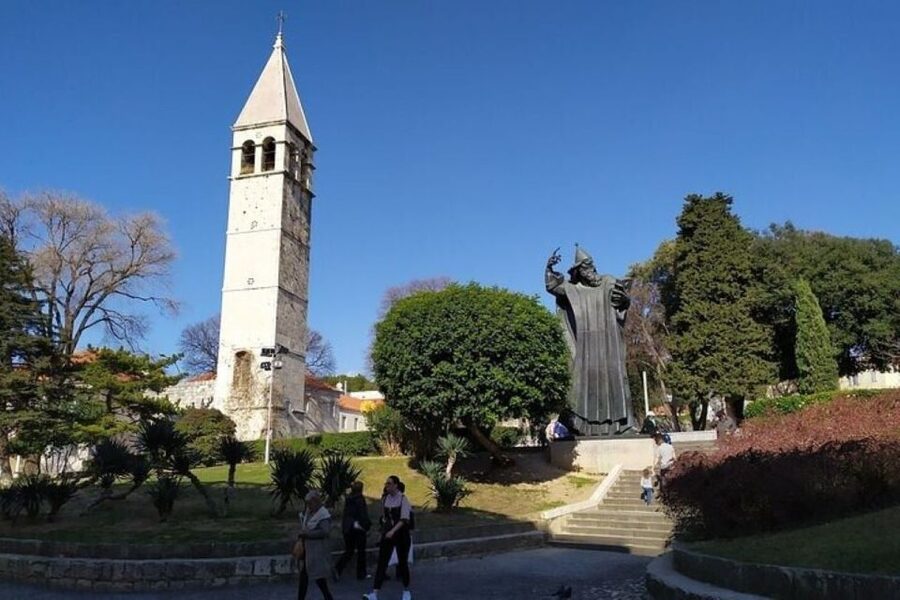
- Enter through the Golden Gate: You begin at Split’s northern Roman entrance, beside the eight-meter statue of Gregory of Nin.
- See the palace as a living neighborhood: Roman, medieval, and modern life are explained together rather than treated as separate eras.
- Peristil gets proper attention: The main palace square is one of the tour’s longer stops, with time for its surrounding monuments and stories.
- Small groups make questions easier: The maximum of 12 people gives the guide room to respond to individual interests.
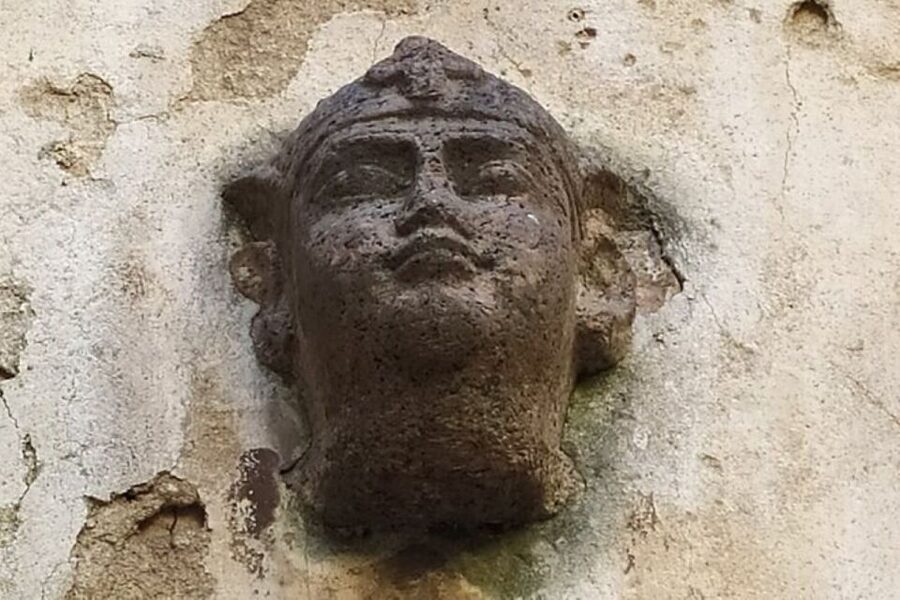
- Look for the less obvious corners: The route includes a narrow church, a narrow street, a lost sphinx head, and a secret garden.
- Expect practical local advice: Boris has offered useful suggestions for ice cream and other places to explore after the walk.
Why this Split tour works well as an introduction
At $37 per person, this is priced like a standard guided city walk, but the value comes from the guide’s historical training and the route’s range. You are not simply shown the postcard sights. You are given a way to understand how a Roman imperial residence became a medieval town and then the center of modern Split.
The guide has a master’s degree in history and leads the walk in English or Croatian. That matters in Split, where a column, wall, or doorway can belong to several different centuries at once. Without context, the palace can feel like a maze of handsome stone. With context, the maze begins to make sense.
The tour also suits you if you prefer a personal feel without paying for a fully private guide. A group of 12 is small enough for questions, though the actual number may be lower. One group had only five people and found the pace easy and the experience close to a private tour.
You will be walking outdoors for much of the time. Wear firm, comfortable shoes, carry water, and bring a hat or cap on sunny days. Split’s old center is made for walking, but polished stone and narrow passages are not kind to flimsy footwear.
More walks through the old quarter in Split:
- Split: Old Town and Diocletian Palace Walking Tour
★ 4.9 · 4,727 reviews - Walking Tour of Split and Diocletian’s Palace
★ 5.0 · 2,588 reviews - Krka Waterfalls tour with Trogir Walking tour and Krka panoramic boat cruise
★ 5.0 · 1,659 reviews
Starting at the Golden Gate and Gregory of Nin
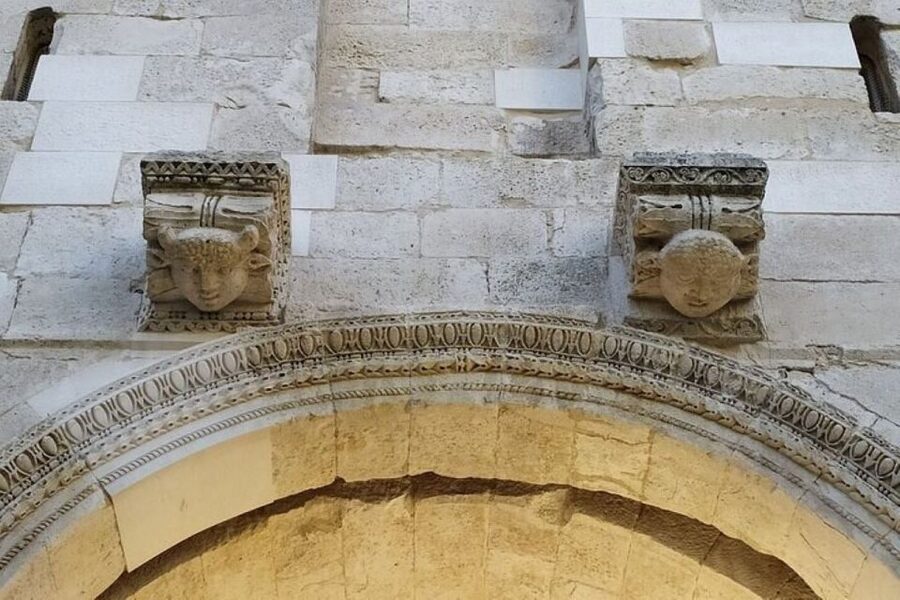
The meeting point is the Golden Gate, the northern entrance to Diocletian’s Palace. This is an excellent place to begin because the gate gives you an immediate sense of scale and purpose. The guide explains the name, function, and importance of the entrance before you pass through it in the same general direction used by the Roman emperor and empress.
Across from the gate is the huge statue of Gregory of Nin, a medieval Croatian bishop. The guide uses the statue to open a wider conversation about Split and Croatia. You will hear general information about the city and country, then learn why this figure matters to local identity.
The first 15 minutes focus on the Golden Gate, followed by about eight minutes with Gregory of Nin. That opening is useful for orientation. You learn where you are before entering the palace, rather than being dropped straight into a cluster of stone alleys.
Diocletian’s Palace, from imperial retreat to city center
Diocletian built his palace near the end of his life, after ruling as Roman emperor. This was not just a holiday villa. It was a fortified residence and a place of retirement, with formal rooms, religious buildings, service areas, and strong walls.
The 10-minute palace introduction explains what you are seeing before the route moves into individual spaces. You will hear about Diocletian’s life in and outside the palace, along with the reasons this large complex was built here.
The important point is that the palace did not remain frozen after Roman rule. People adapted its spaces over the centuries. The result is a town inside an ancient plan, not an archaeological site separated from modern life.
That is one of the tour’s strongest ideas. You are encouraged to notice how old stones still serve ordinary purposes. A Roman wall can frame a café. A former ceremonial space can become a route home. The past is not placed behind glass here.
Peristil, Jupiter’s Temple, and the Roman center
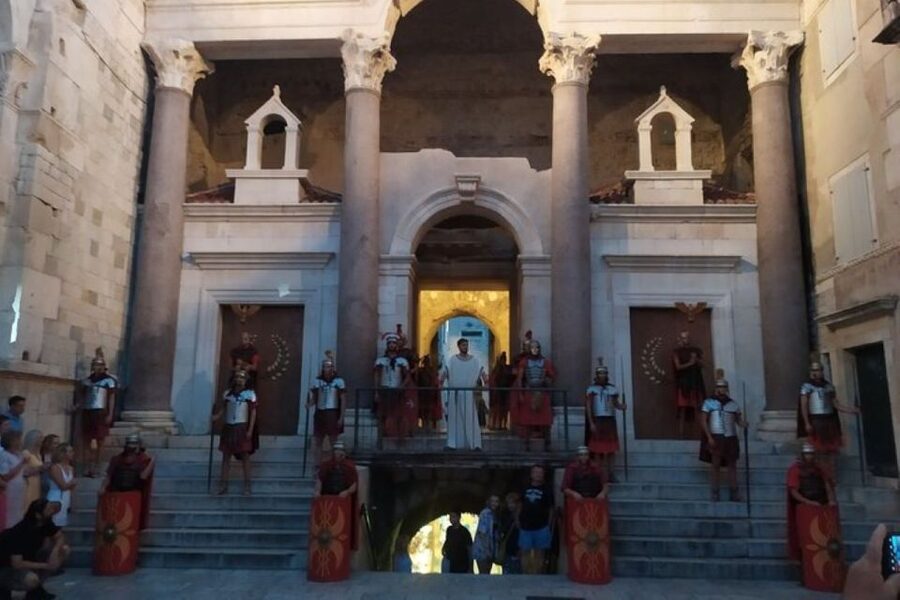
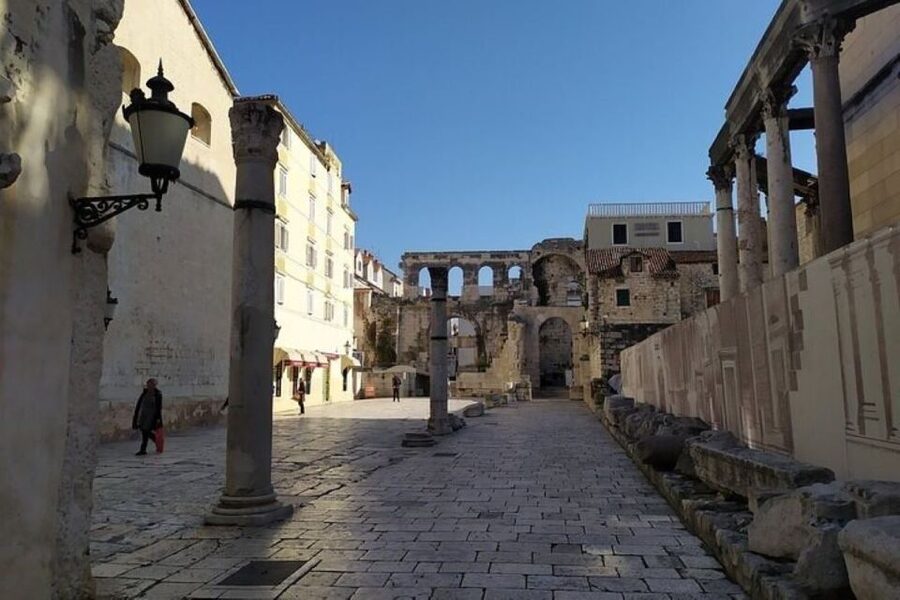
Peristil is the main square of the palace and receives about 15 minutes on the route. This is one of the places where the tour’s visual aids can help. A 3D reconstruction image or old picture gives you a better sense of how the square functioned when it was part of an imperial complex.
The guide explains the monumental buildings around Peristil and the ceremonies associated with the space. Take time to look up and around rather than focusing only on the central view. The square works because of its proportions, surrounding stone, and connection to the rest of the palace.
Jupiter’s Temple receives another 10 minutes. It is a compact stop, but an important one because Roman religion was woven into the design of the palace. The guide connects the temple to Diocletian’s status and the beliefs that shaped imperial life.
The tour also includes a short secret stop and a two-minute lesser-known corner. These quick pauses are not meant to replace the major sights. They add texture and help you notice details you might otherwise walk past.
More history walks in Split:
- Walking Tour of Split with a ‘Magister’ of History
★ 5.0 · 1,122 reviews - Split Walking Tour with Professor of History
★ 5.0 · 926 reviews - Split: History and Heritage Walking Tour
★ 4.9 · 650 reviews - Split History and Gastro Small-Group Tour with Food and Drinks
★ 5.0 · 375 reviews
The cathedral and the unusual story of adaptation
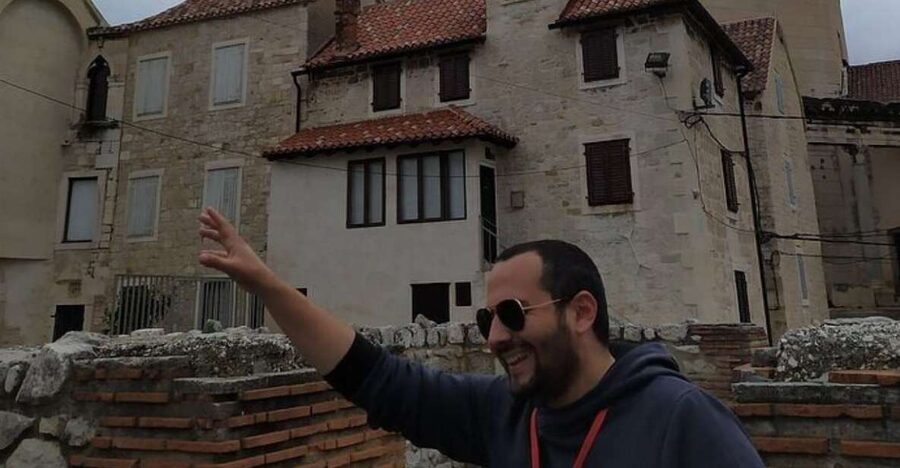
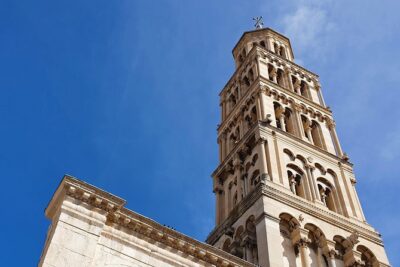
The Cathedral of Saint Domnius occupies what began as Diocletian’s mausoleum. That change tells you a great deal about Split. A building created for an emperor eventually became a Christian cathedral, showing how later residents reused and reshaped the Roman center.
The cathedral stop lasts about 10 minutes. The guide places the building within the story of the palace instead of treating it as an unrelated church visit. You hear how Roman and medieval Split overlap in the same few steps.
The tour is designed mainly as a walking and interpretation experience, so do not expect a long independent visit inside every monument. If you want to explore the cathedral or palace cellars in greater detail, use the guide’s suggestions after the tour. One especially useful tip was to return to the palace substructures and the mausoleum area for a closer look.
Vestibule and Diocletian’s Cellars
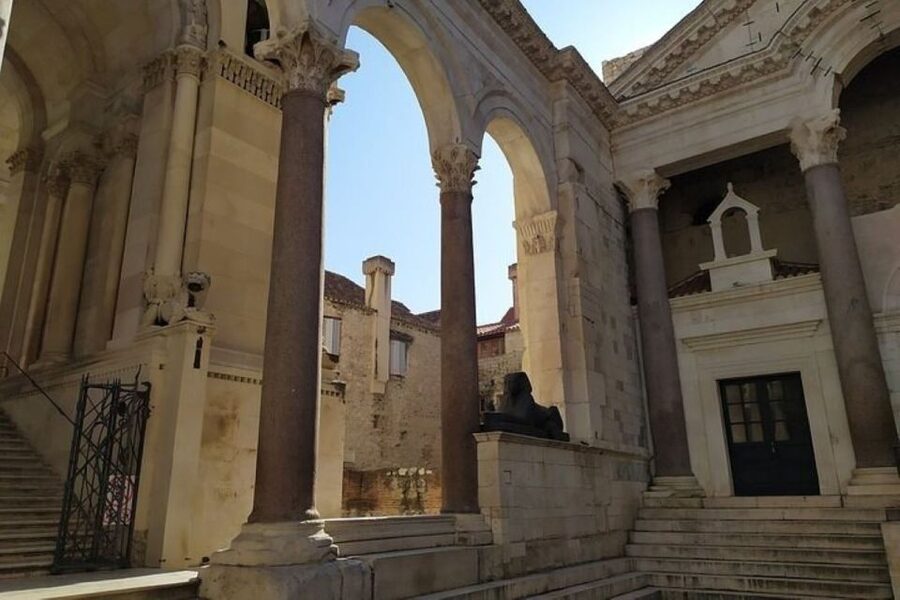
The Vestibule is another Roman space that makes more sense when you understand its role in the palace plan. The route allows about 10 minutes here. It is a good place to consider the difference between public ceremony and private imperial life.
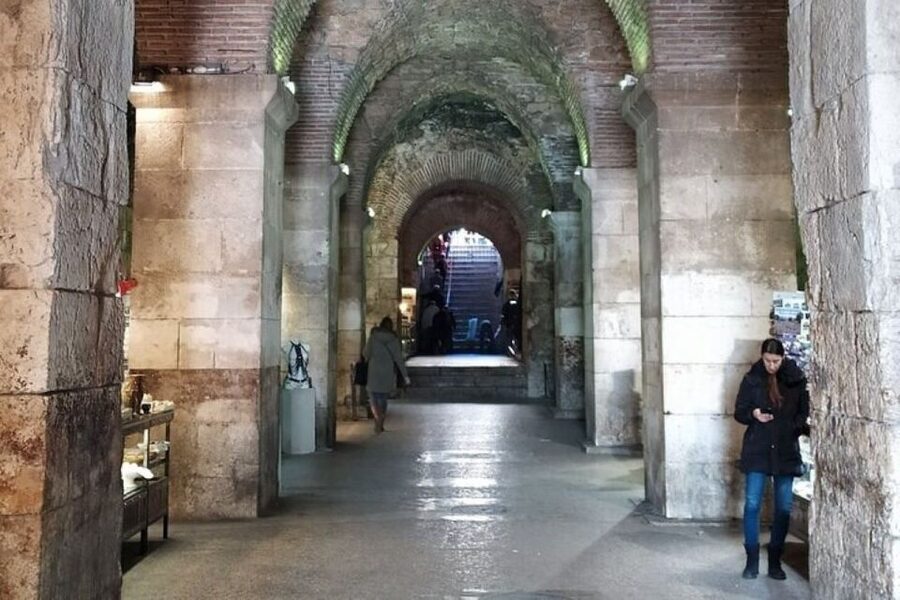
The Diocletian’s Cellars receive about 10 minutes as well. These lower rooms are among the most useful places for understanding the original palace layout because their structure helps explain what once stood above them.
The guide’s historical training is particularly helpful in the cellars. You are not left with a simple impression of old stone corridors. You learn how the substructures supported the upper palace and how later use helped preserve parts of the Roman plan.
The route includes a ticket-line skip, but the exact access arrangement can depend on the site and conditions. Treat the tour as an introduction to the cellars rather than a substitute for an extended archaeological visit.
Riva, where Roman and medieval Split meet
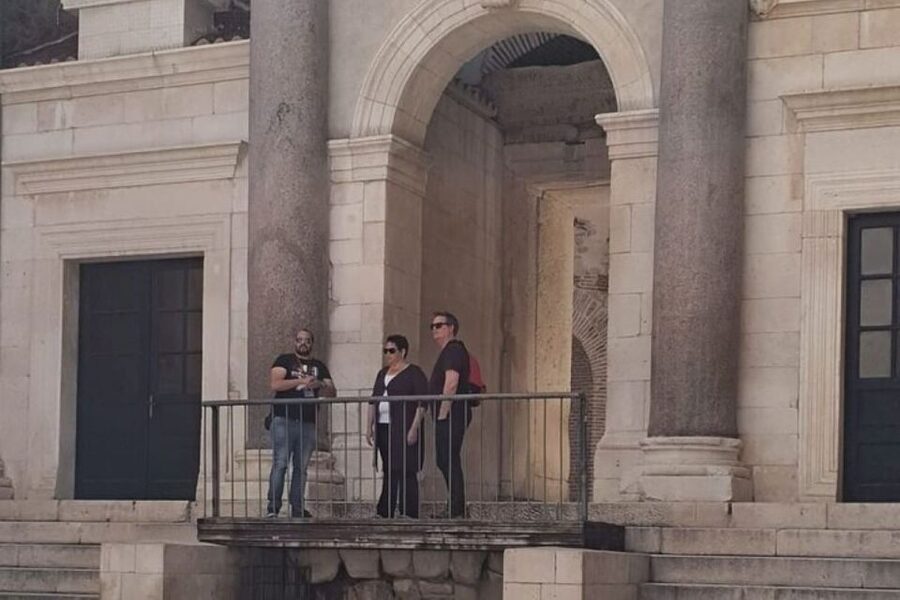
After the palace, the walk reaches the Riva promenade for about five minutes. This is a short stop, yet it changes the mood. The waterfront helps explain how Split’s old core connects with present-day social life.
Here the guide introduces the pomalo approach, a local phrase linked with taking life at an unhurried pace. You will hear about everyday customs and how to fit into the city’s rhythm while you are there.
This portion keeps the tour from becoming a procession of monuments. Split is also cafés, conversation, errands, and time spent outdoors. The Riva is a useful place to see the city as locals use it, even during a brief visit.
Fruit Square and People’s Square
The tour then leaves the Roman palace center for two medieval squares. Fruit Square, or Voćni trg, is given about 10 minutes. Its name points to its former market role, while its buildings show how the city developed beyond the imperial compound.
People’s Square, or Narodni trg, is the finishing point and receives another 10 minutes. The architecture and stories here help connect medieval Split with the later city. The route ends at Narodni trg rather than returning to the Golden Gate, so plan your next stop from the square.
These two places are valuable because they widen your view of Split. If you only see the palace, you may think the city’s story ended with Rome. The medieval squares make clear that Split continued to grow, trade, worship, and change long after Diocletian’s time.
The short stops that reward close attention
Some of the tour’s most memorable details are not the grand monuments. The guide points out a very narrow church, a very narrow street, a lost sphinx head, and a secret garden. The exact appeal is in the search. You are asked to look carefully at spaces that can be easy to miss while moving between major sights.
These moments also suit the tour’s See, Hear, and Feel approach. You see the physical detail, hear the story attached to it, and get a sense of how the old center works as a lived-in place.
Do not expect every minor stop to take long. One is listed at only two minutes, and another secret stop lasts about five minutes. That is enough to point out the feature and explain its meaning, but not enough for a long photo session or independent exploration.
The guide, the group, and the teaching style
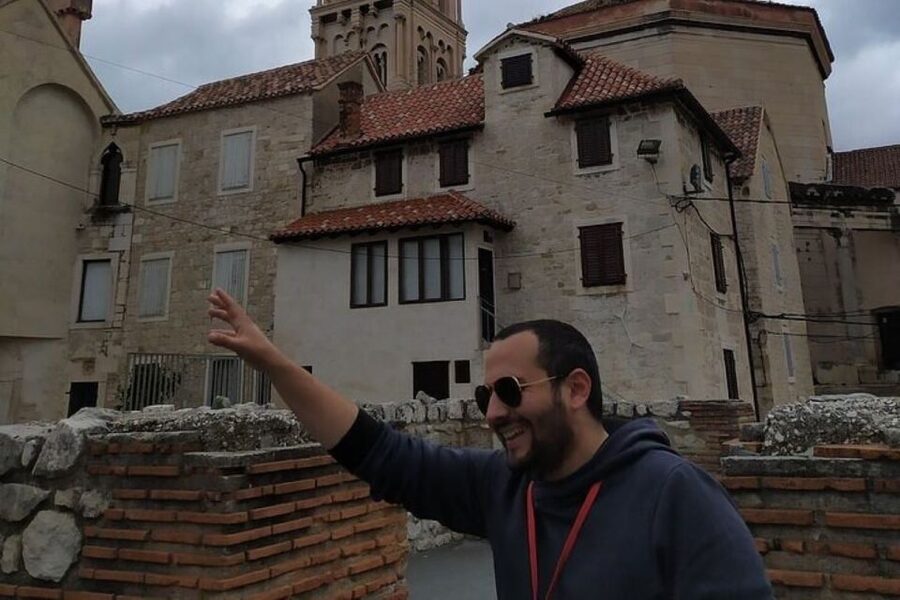
Boris is the guide named in the tour experience, and his approach combines formal history with practical local knowledge. He explains Diocletian’s Palace, but also answers questions about Croatian culture, religion, community life, and places to eat or visit afterward.
The 3D images and display book are useful tools, especially for travelers who struggle to picture vanished buildings. A photograph can also show how the city looked at another point in time, giving you a clearer sense of change.
The tone is conversational rather than lecture-heavy. That works well in a small group, where you can ask why a building changed function or what a local custom means. If you want a fast list of dates and facts, this may feel more personal and less rigid than you expect. If you like connecting history to ordinary life, that is a benefit.
Is $37 good value for two hours?
I consider $37 fair for this tour, especially if you are visiting Split for the first time. You get two hours with a local professional guide who has advanced historical training, a route through the palace and medieval center, visual reconstruction material, and advice for further exploring.
The value is highest when you use the walk as a first orientation. Afterward, you can return to the palace cellars, cathedral, or other places with a better grasp of what you are seeing. One practical food suggestion, an ice cream stop, was singled out as especially accurate, which is the sort of small help that can improve the rest of your day.
The price does not include food, drinks, or hotel pickup and drop-off. That is normal for a central walking tour, but remember to arrive at the Golden Gate on your own and carry water.
Who should book this Split walk?
Book it if you want a clear introduction to Split’s Roman, medieval, and modern layers in one compact outing. It is especially good for first-time visitors, history fans, cruise-day visitors with limited time, and anyone who prefers a local guide to a large group with a flag.
It also suits you if you enjoy small details and local context. The narrow church, sphinx head, secret garden, food advice, and explanation of pomalo life add variety to the main monuments.
Think twice if you need step-free access, use a wheelchair, or have difficulty walking on uneven historic streets. The tour is specifically not suitable for wheelchair users or people with mobility impairments. Also consider your expectations: two hours gives you a well-planned overview, not a full archaeological study.
The tour offers free cancellation up to 24 hours before departure and allows you to reserve now and pay later. Starting times vary, so check availability for your date.
Final call: a strong first walk through Split
I would choose this tour early in a Split visit. It gives you the Roman framework, explains the medieval changes, and finishes with the social life of the modern city. The small group, Boris’s history background, and visual material make the $37 fee reasonable.
You should book it if you want stories and context, not just photographs. Skip it if you prefer exploring alone at a slow pace or need fully accessible routes. For most able walkers making a first visit, it is a useful, friendly way to get oriented before you return to the palace on your own.
FAQ
How long is the Experience Split History Walking Tour?
The tour lasts two hours.
What does the tour cost?
The price is $37 per person.
Where does the tour begin?
It begins at the Golden Gate, the northern gate of Diocletian’s Palace, opposite the statue of Gregory of Nin.
Where does the tour finish?
The tour finishes at People’s Square, also called Narodni trg.
What languages are available?
The live tour guide is available in English and Croatian.
How large is the group?
The group has a maximum of 12 participants.
Who guides the experience?
The tour is led by a local licensed professional guide with a master’s degree in history. Boris is the guide named in the experience information.
What sights are included?
The route includes the Golden Gate, Gregory of Nin, Diocletian’s Palace, Peristil, Jupiter’s Temple, the Cathedral of Saint Domnius, the Vestibule, Diocletian’s Cellars, the Riva promenade, Fruit Square, and People’s Square.
Are food and drinks included?
No. Food and drinks are not included.
Is hotel pickup and drop-off provided?
No. Hotel pickup and drop-off are not included.
Is the tour suitable for wheelchair users?
No. The tour is not suitable for wheelchair users or people with mobility impairments.
What should I bring?
Wear comfortable shoes. Water and a hat or cap are recommended on sunny days.
Can I cancel for a refund?
Yes. You can cancel up to 24 hours in advance for a full refund.
Just added around Split
- From Makarska : Wine Tasting Grabovac Tour★ 4.5 · 30 reviews
- Essential Diocletian’s Palace Tour for First-Time Visitors★ 4.8 · 19 reviews
- Unique vintage Tomos moped tour Split – Back to the ’80s★ 4.8 · 17 reviews
- Walking Tour Split★ 4.7 · 61 reviews
- Trogir; Private walking tour of higlights of Trogir★ 4.7 · 3 reviews
- Trogir: White Lagoon, Maslinica & Blue Lagoon Speedboat Tour★ 4.8 · 11 reviews
- Trogir 1.5-Hour City Tour★ 4.4 · 37 reviews
- Split: Trogir Open Top Bus Trip + Free Split Walking Tour★ 4.1 · 17 reviews
Split Old Town Walking Tours, compared.
Split: Old Town and Diocletian Palace Walking Tour
Read our review →
Walking Tour of Split and Diocletian’s Palace
Read our review →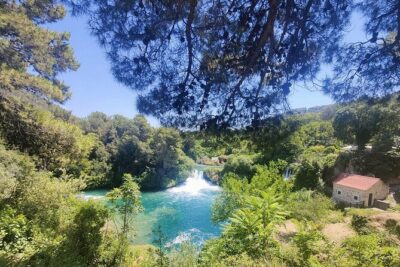
Krka Waterfalls tour with Trogir Walking tour and Krka panoramic boat cruise
Read our review →
Walking Tour of Split with a ‘Magister’ of History
Read our review →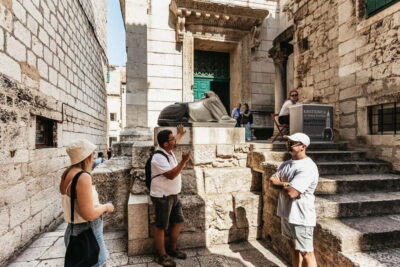
Split: Diocletian Palace & Old Town Guided Walking Tour
Read our review →
From Split: Krka Waterfalls Cruise & Trogir Walking Tour
Read our review →
Browse the lists this tour appears in