
Reviewed · SPLIT OLD TOWN WALKING TOURS
Private History Split Walking Tour in English
Split’s Old Town is not a museum behind ropes. It is a living city built into and around Diocletian’s Palace, where cafés, homes, shops, and ancient stone share the same lanes. This private walk gives you a useful map of that layered city in just 90 minutes, with an English-speaking guide focused on history, architecture, and local stories.
I like the private format, since you can ask questions without trying to keep up with a large crowd. I also like the route’s range: the imperial Peristyle, palace basements, the harbor, a Venetian fort, Croatian literature, and Split’s Jewish heritage all appear in one compact outing. The main caution is the pace and footing. High steps can be a problem, and the palace substructures museum is not included.
Key points to know before booking
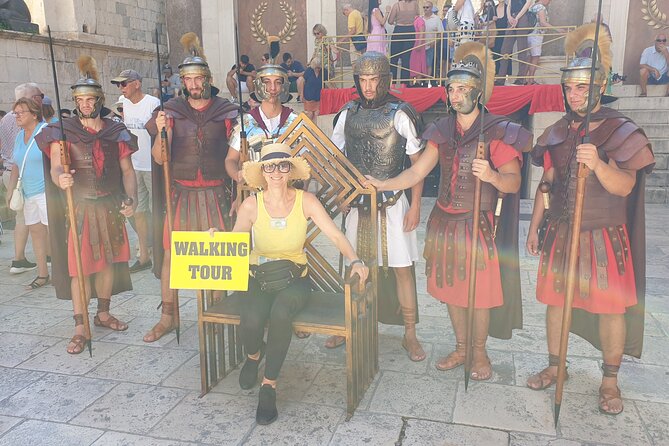
- The Peristyle is your starting map: This central square connects you to nearly every major part of the palace.
- The palace is still part of daily life: You walk through an active Old Town, not an isolated archaeological park.
- The route reaches beyond Roman ruins: Riva Harbor, Fruit’s Square, the Venetian citadel, and Split Synagogue add later chapters to the city’s story.
- You get a private English-speaking guide: Only your group participates, making questions and conversation easier.
- Antonella is one guide praised by name: If she leads your tour, expect an engaging account of Split’s past and useful local suggestions.
- The 90-minute length is both strength and limit: It is easy to fit into a day, but some places receive only a brief stop.
Why Diocletian’s Palace makes this walk different
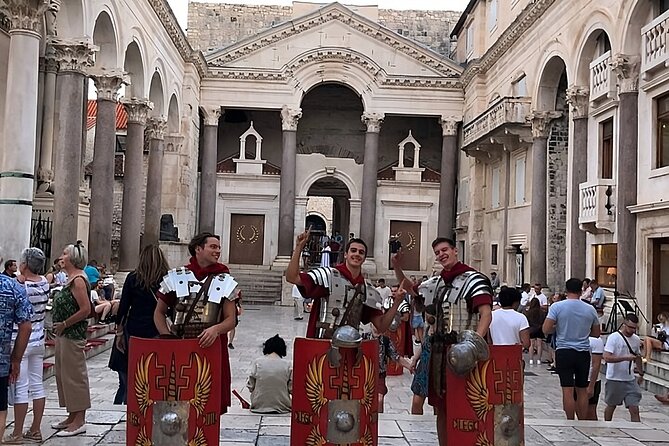
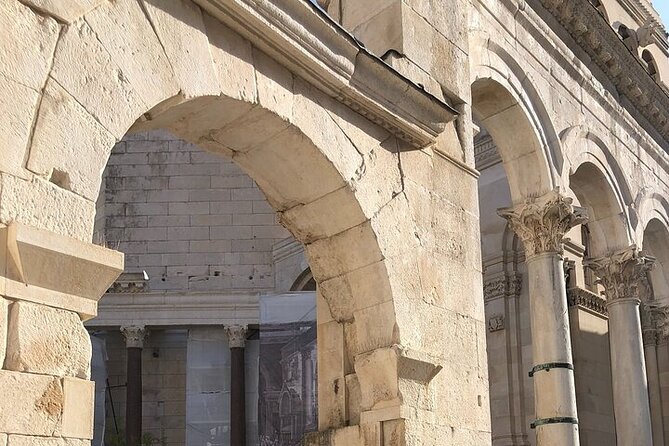
The name can mislead you. Diocletian’s Palace is not simply one grand building waiting at the end of a boulevard. It is a large Roman complex that became the core of Split. The modern city grew inside its walls, and the route shows you how ancient stone was reused over centuries.
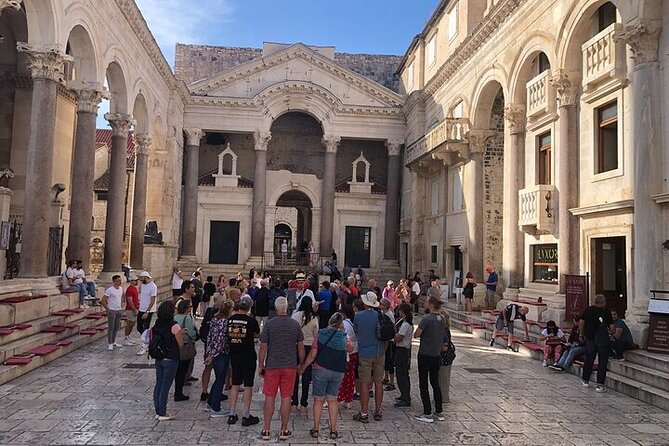
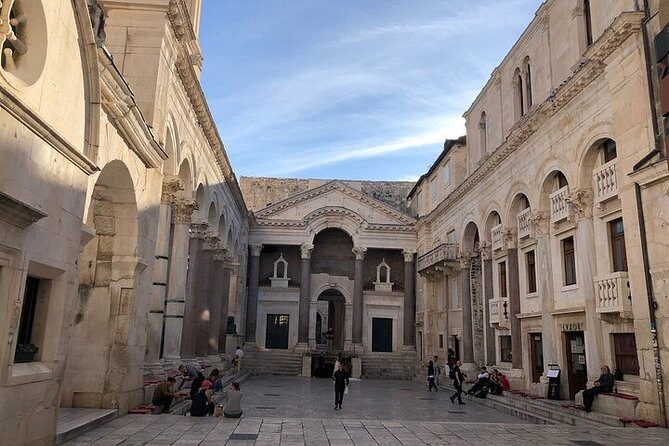
You begin at Peristil, the palace’s central square. This is the right place to start because it helps you understand the layout before the narrow lanes begin to twist. From here, your guide can point out how the palace connects to its gates, halls, waterfront, and underground levels.
I find this kind of orientation especially useful on a first morning in Split. After the tour, you can return to places that caught your attention instead of wandering without knowing what you are seeing. The walk also gives you historical links that a quick photo stop cannot provide, including the purpose of the palace substructures and the role of Emperor Diocletian.
The guide’s teaching style matters here. The strongest comments about this experience focus on clear explanations, historical detail, architecture, and an entertaining delivery. One guide named in the feedback is Antonella, who is described as bringing the palace to life in an easy, approachable way. Guide assignments can vary, so I would treat Antonella as a possible guide rather than a guarantee.
More walks through the old quarter in Split:
- Split: Old Town and Diocletian Palace Walking Tour
★ 4.9 · 4,727 reviews - Walking Tour of Split and Diocletian’s Palace
★ 5.0 · 2,588 reviews - Krka Waterfalls tour with Trogir Walking tour and Krka panoramic boat cruise
★ 5.0 · 1,659 reviews
Peristyle: the best place to get your bearings
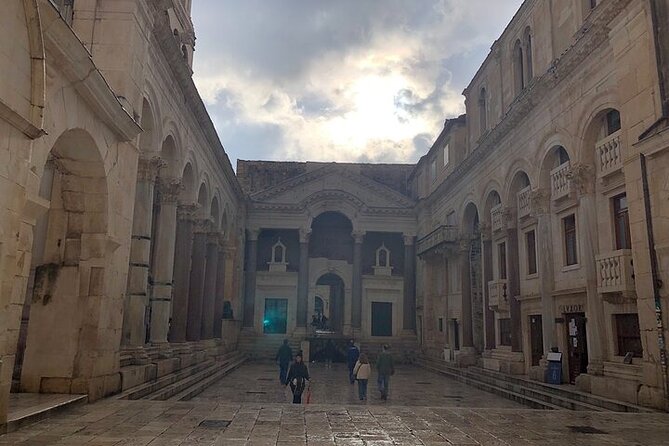
The tour spends about 15 minutes at the Peristyle, with no admission charge for this stop. This is the ceremonial heart of Diocletian’s Palace and the place from which you can reach almost every other area in the complex.
Look around before you focus on one detail. The square gives you a sense of the palace’s scale and the way Roman planning still shapes Split’s center. Your guide explains the square’s place in the imperial complex, then uses it as a reference point for the rest of the walk.
This stop is also practical. Split’s Old Town can feel like a maze, especially when you are trying to reach the Golden Gate, Riva, or the palace basements. Starting here lets you build a mental map quickly.
The Peristyle is a popular meeting point, so expect other people nearby. A private tour does not mean private access to the square. It means your guide’s attention belongs to your group, which is more important when you want to stop and ask about an inscription, column, or architectural feature.
The Vestibule and the sound of Dalmatia
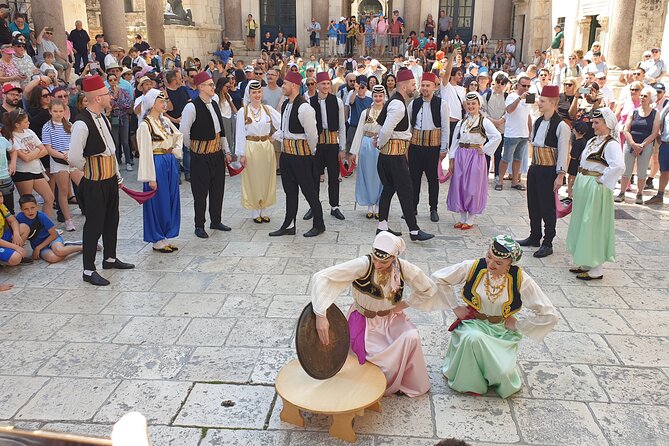
Next comes the Vestibule, where the visit lasts about five minutes. This was part of the emperor’s palace and gives you another look at the ceremonial side of Diocletian’s residence.
The stop is short, but it may have a memorable local touch. You might hear traditional Dalmatian singing in or near the Vestibule. The information does not promise a scheduled performance, so treat it as a possibility rather than a fixed part of the tour.
That distinction matters. The main value here is the structure and its place in the palace. Any singing adds atmosphere, but you should not book this experience solely for that possibility.
Palace substructures: the practical side of Roman building
The palace substructures receive about 10 minutes. You go through the lower levels while your guide explains how they were built and how their function changed over time.
This is one of the most useful stops for understanding the palace as a whole. The lower rooms reflect the arrangement of the upper palace, helping you see how the original complex was planned. They also show how old spaces can be reused and interpreted long after their first purpose has ended.
There is an important limit. The tour does not include the museum section of the substructures, and any admission connected with that area is not included in the tour price. You can visit the museum after the walk, giving you the option to add more time if the underground rooms interest you.
I would ask the guide about the museum before the tour ends. You may get better value from returning on your own, when you can look more closely without the group moving on. The listed visit to the substructures is brief, so expect an introduction rather than a full archaeological visit.
More history walks in Split:
- Walking Tour of Split with a ‘Magister’ of History
★ 5.0 · 1,122 reviews - Split Walking Tour with Professor of History
★ 5.0 · 926 reviews - Split: History and Heritage Walking Tour
★ 4.9 · 650 reviews - Split History and Gastro Small-Group Tour with Food and Drinks
★ 5.0 · 375 reviews
Golden Gate and Gregory of Nin
The Golden Gate is the main entrance to Diocletian’s Palace and receives about 10 minutes. It is one of the route’s clearest links between the Roman complex and the modern city.
Your guide explains the gate’s role, then introduces the statue of Gregory of Nin. Gregory was an important Croatian bishop, and his significance connects to the country’s language and cultural story. This is a good example of how the tour moves beyond emperors and stones. You get a sense of the people and ideas that shaped Croatia later.
The stop also gives you a useful photo point, but I would listen before reaching for your phone. The statue has a story, and the guide explains why it matters instead of treating it as a random landmark.
The Golden Gate is free to see, though the surrounding area can be active. Stay close to your guide and pay attention to the ground underfoot. Much of Split’s center uses old stone paving, and the route includes steps.
Riva Harbor: Split opens toward the sea
The walk continues to Riva Harbor for about 15 minutes. Here you see a bronze model of Diocletian’s Palace and learn about the history of Split’s waterfront promenade.
Riva gives the tour a welcome change of scale. Inside the Old Town, the lanes and walls can feel tight. Along the harbor, you can step back and see how Split faces the water and how the palace relates to the modern city.
The bronze model is especially helpful if you struggled to picture the palace from ground level. It gives you a compact view of the complex and can make the earlier explanations easier to follow.
This is also a good point to ask for practical suggestions. Several pieces of feedback praise the guides for offering recommendations about things to do and places to try. The tour operator does not provide a fixed list of recommendations, so ask directly about what interests you.
Riva is not an isolated sightseeing stop. It is part of Split’s public life, so you may see people walking, sitting, or passing through. The private format helps your guide adapt the explanation to your questions, but it cannot remove normal city activity.
Fruit’s Square and the Venetian chapter
Fruit’s Square, also called Trg Brace Radic, receives about 10 minutes. The focus here shifts from Roman Split to the Venetian period and Croatian cultural history.
You learn about a 15th-century Venetian citadel, which adds another layer to the city’s defenses and political past. You also hear about Marko Marulić, often described as the father of Croatian literature. This makes the stop especially useful if you want more than a Roman history lesson.
The square shows why a guided walk is valuable in Split. A visitor moving quickly from the palace to the waterfront could easily miss the meaning of a fortress or a literary figure. With a guide, the stonework becomes part of a larger story about the city’s changing rulers and identity.
The stop is free, and 10 minutes is enough for an introduction. It is not enough for a long discussion of Venetian history or Marulić’s work, so consider this a starting point for further exploring Split on your own.
Split Synagogue and a less visible part of the city
The final listed stop is Split Synagogue, where the walk spends about 10 minutes. You pass by the 16th-century synagogue and learn about the history of the Jewish community in Split.
This is one of the route’s most valuable choices because it broadens the city’s story. Ancient emperors and medieval rulers often take up most of the attention in Split, while the experiences of minority communities receive less space. The synagogue stop gives you a chance to consider the city through another social and religious history.
Admission is not included, and the route says you pass by the synagogue rather than promising an interior visit. Ask your guide what access is possible on the day, but do not assume that the tour includes entry.
The stop also works well near the end because you have already seen several periods of Split’s development. Roman, Venetian, literary, religious, and modern elements now fit into a single picture.
What the private format is worth at $66.54
The listed price is $66.54 per person. That is not the cheapest way to see Diocletian’s Palace, but price alone misses the main point. You are paying for a private English-language guide, a focused route, and the chance to ask questions without sharing the guide’s attention with a larger group.
The value improves if two or more people in your party can use the group discount. The exact discount is not specified, so check the price for your group before booking. Since the activity is private, the per-person cost may make more sense for a small party than for one person traveling alone.
The 90-minute length also affects the value. You are not paying for a full-day history program. You are paying for a compact orientation that covers the major palace areas and several important city landmarks. I like this format for arrival day, before a longer independent visit.
The strongest praise focuses on the guide’s historical detail, clear speaking style, and ability to make the walk enjoyable. One comment calls the tour a time machine, while another says the guide made the palace feel alive. Those descriptions point to the central benefit: you get interpretation, not just a sequence of photo stops.
Timing, walking conditions, and planning tips
The meeting point is on Peristil ulica, at Peristil, 21000 Split. The activity returns to the same meeting point, so you do not need to arrange transport back from a distant neighborhood.
The tour is offered in English and accepts mobile tickets. Confirmation arrives when you book, and the route is near public transportation. Service animals are allowed, and most people can take part.
The main physical warning is high steps. If you have trouble with stairs, ask about the route before booking. The Old Town also has uneven historic surfaces, though the supplied details only specifically identify high steps as a concern.
I would arrive ready to walk and keep the schedule flexible. The formal duration is about 1 hour and 30 minutes, but questions, city conditions, and the exact guide can affect the rhythm. Since the tour is private, you have a better chance of adjusting the pace than you would on a large group walk.
This experience is booked an average of nine days ahead. That does not guarantee it will sell out, but it is sensible to reserve early if you have a fixed Split itinerary.
Cancellation is free up to 24 hours before the start time for a full refund. Changes or cancellations inside that window are not accepted, and the minimum group requirement can affect whether the tour runs.
Who should choose this Split walking tour?
I would choose this tour if you want a fast but serious introduction to Split, especially on your first day. It suits couples, families, and small groups who enjoy asking questions and prefer a private guide to a large crowd.
It is also a good match for anyone curious about more than Roman ruins. The route includes the palace, Croatian language and literature, Venetian defenses, the waterfront, and Jewish history. That range gives you a more rounded picture of Split in a short time.
You may want something else if you prefer long museum visits, a slow photography walk, or a tour built around food. The substructures museum is not included, several stops last only five or ten minutes, and the walk does not promise interior admission at every site.
Should you book it?
Book this private Split walking tour if clear history, personal attention, and a compact route matter more to you than the lowest possible price. At $66.54 per person, it offers solid value for a small group that wants an English-speaking guide and a useful introduction to Diocletian’s Palace.
I would be especially inclined to book it early in a Split stay, then return to the substructures museum or any landmark that caught your interest. Skip it if high steps are a serious problem or if you want a much longer, museum-centered visit. For most first-time visitors who want the city to make sense quickly, this is a well-focused choice.
FAQ
How long does the private Split walking tour last?
The tour lasts approximately 1 hour and 30 minutes.
What language is the tour offered in?
The tour is offered in English.
How much does the tour cost?
The listed price is $66.54 per person. Group discounts are available, though the exact discount is not specified.
Is this a private tour?
Yes. Only your group participates in the activity.
Where does the tour begin?
The meeting point is at Peristil ulica, Peristil, 21000 Split, Croatia.
Where does the tour end?
The activity ends back at the meeting point.
Is entry to the palace substructures museum included?
No. The museum section of the substructures is not visited as part of the tour, and admission is not included.
Is the tour suitable for people with mobility concerns?
Most people can participate, but the tour is not recommended for anyone who has problems with high steps.
Can I cancel for a full refund?
Yes. You can cancel at least 24 hours before the local start time for a full refund. Cancellations or changes made less than 24 hours before the start time are not accepted.
Just added around Split
- From Makarska : Wine Tasting Grabovac Tour★ 4.5 · 30 reviews
- Essential Diocletian’s Palace Tour for First-Time Visitors★ 4.8 · 19 reviews
- Unique vintage Tomos moped tour Split – Back to the ’80s★ 4.8 · 17 reviews
- Walking Tour Split★ 4.7 · 61 reviews
- Trogir; Private walking tour of higlights of Trogir★ 4.7 · 3 reviews
- Trogir: White Lagoon, Maslinica & Blue Lagoon Speedboat Tour★ 4.8 · 11 reviews
- Trogir 1.5-Hour City Tour★ 4.4 · 37 reviews
- Split: Trogir Open Top Bus Trip + Free Split Walking Tour★ 4.1 · 17 reviews
Split Old Town Walking Tours, compared.
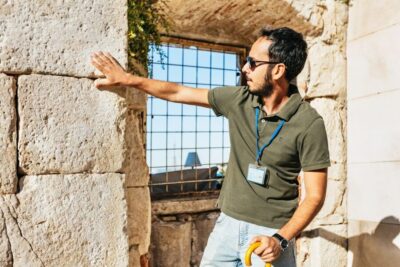
Split: Old Town and Diocletian Palace Walking Tour
Read our review →
Walking Tour of Split and Diocletian’s Palace
Read our review →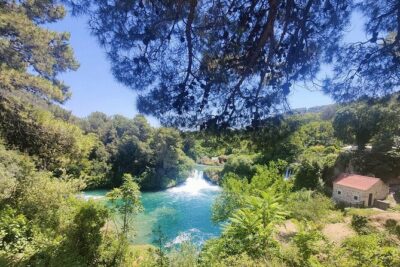
Krka Waterfalls tour with Trogir Walking tour and Krka panoramic boat cruise
Read our review →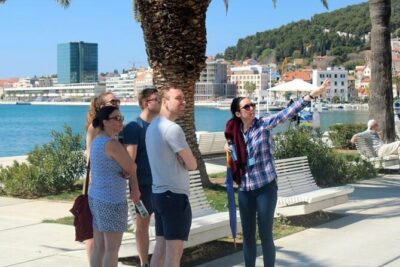

Walking Tour of Split with a ‘Magister’ of History
Read our review →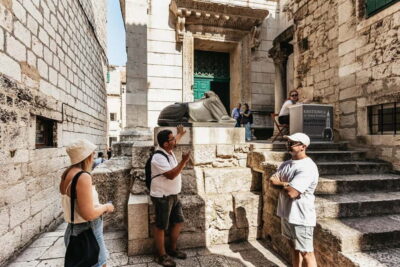
Split: Diocletian Palace & Old Town Guided Walking Tour
Read our review →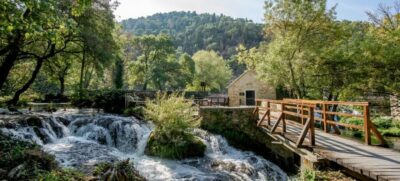
From Split: Krka Waterfalls Cruise & Trogir Walking Tour
Read our review →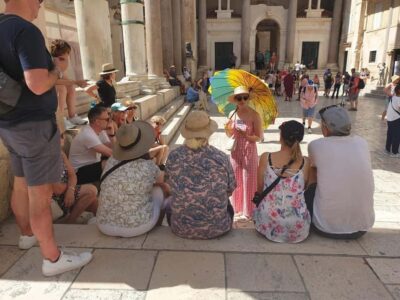
Browse the lists this tour appears in