
Reviewed · SPLIT OLD TOWN WALKING TOURS
Private Split Walking tour with a Photo session
Diocletian’s Palace is not a museum sealed behind ropes. It is the heart of Split, filled with homes, cafés, shops, churches, and daily city life. This private walk adds a useful extra: professional photographs by Ivan Gudić, so you can enjoy the streets without handing your phone to strangers.
I like the flexible pace and the mix of Roman, medieval, Venetian, and modern Split. I also like the personal touch reported with guide Jelena, who uses clear English, welcomes questions, and may add Roman costumes for playful portraits. The main drawback is the price, $300.73 per person, which is a serious outlay for a 2.5-hour walk, especially since the cathedral admission details need confirming before you book.
Key points to know before booking
- Private pace: Only your group takes part, so you can ask questions, pause for photos, and move at a comfortable speed.
- A photographer comes along: Ivan Gudić is included as the professional lifestyle photographer, giving the tour more value than a standard city walk.
- The route covers Split’s core: You visit the Riva, Diocletian’s Palace, the Vestibule, Saint Domnius Cathedral, major squares, and Prokurative.
- Jelena adds local character: Her guiding style is described as friendly, clear, and helpful, with advice for enjoying the rest of your time in Split.
- The cathedral fee needs checking: The details list both included admission and a separate 25 kuna, or 3.5 euro, charge for the cathedral, Temple of Jupiter, and Crypt of Saint Lucy.
- You finish where you begin: The meeting point is on the Riva, near the bronze model of Split, and the tour returns there.
Why this private Split walk feels different
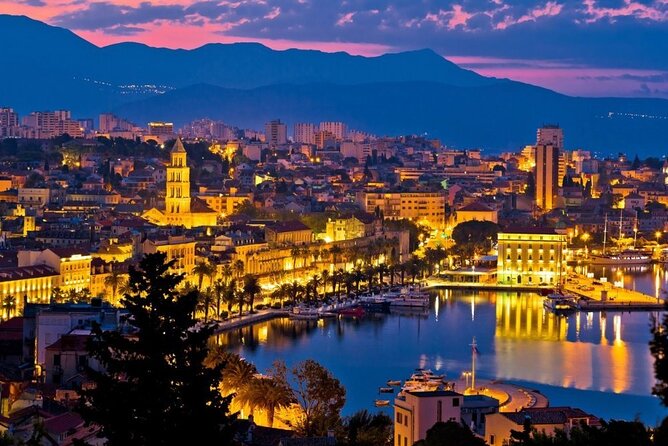
Many city tours show you a Roman ruin, explain its date, and move on. This one is more personal because Split’s old center is still part of everyday life. You walk through spaces that serve as public squares, church grounds, restaurant terraces, and working streets.
The photography session changes the rhythm. You are not simply collecting facts while rushing from one monument to the next. You can pause for a portrait or a group photograph while the guide explains what you are seeing. That is useful for couples, families, and small groups who want better holiday pictures than quick phone snapshots.
The experience lasts about two and a half hours. That is long enough to get a strong first look at central Split, but short enough to leave your afternoon free for lunch, the Marjan area, a museum, or time beside the water.
Because this is a private tour, the guide can respond to your interests. If Diocletian’s Palace catches your attention, you can ask for more Roman context. If you prefer food, local life, or photography, you can make that clear. The supplied details do not promise a set number of edited images, so ask what photographs you will receive and how they will be delivered.
More walks through the old quarter in Split:
- Split: Old Town and Diocletian Palace Walking Tour
★ 4.9 · 4,727 reviews - Walking Tour of Split and Diocletian’s Palace
★ 5.0 · 2,588 reviews - Krka Waterfalls tour with Trogir Walking tour and Krka panoramic boat cruise
★ 5.0 · 1,659 reviews
Starting on the Riva, Split’s outdoor living room
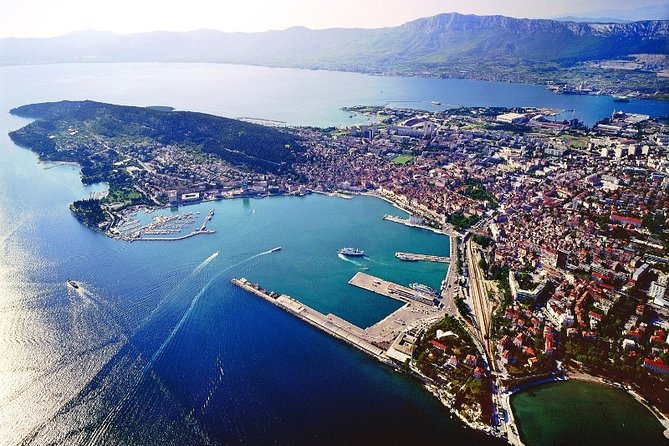
The walk begins on the Riva promenade, at the waterfront near a bronze model of Split. This is an easy meeting place, and that matters in a city where old streets can twist around unexpectedly.
The Riva is more than a scenic strip beside the harbor. It is a central public gathering place for Split, used for concerts, festivals, holiday celebrations, and everyday coffee breaks. The promenade is about 250 meters long and 55 meters wide, with cafés and restaurants facing the sea.
Your first stop lasts about 10 minutes. It is a short introduction, but a useful one. From here, you can see why Split is best understood as a living city rather than a collection of isolated ruins. The waterfront also offers a natural setting for opening photographs.
You should arrive with the meeting point details ready on your phone. The experience is listed as a mobile-ticket activity, and the start point is Obala Hrvatskog narodnog preporoda, 21000 Split.
Reading Diocletian’s Palace as a city plan
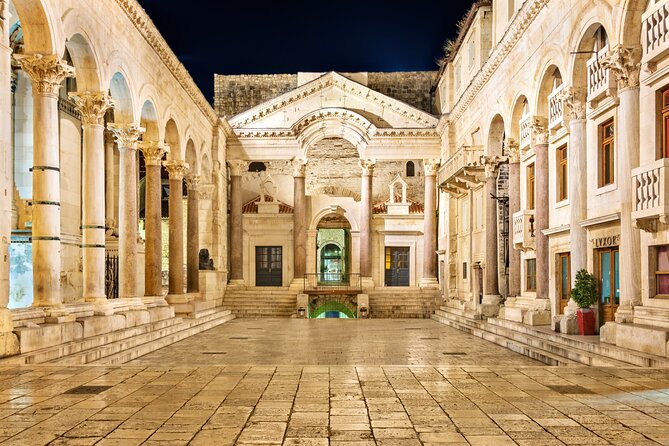
The next stop is the main event: Diocletian’s Palace. You get about 30 minutes here, with no admission charge listed for the palace itself.
The palace was built for Emperor Diocletian as a combination of luxury residence and military camp. Its plan was divided into four sections by two main streets. The southern area held the imperial apartments and spaces for official and religious ceremonies. The northern section served the guards, servants, storage rooms, and military needs.
The rectangle measures roughly 215 by 180 meters. Four large corner towers, gates on each side, and smaller towers along the walls helped give the complex a fortified shape. Yet it was also a retreat for an emperor who chose to retire near his birthplace.
The important thing for you is how much of the palace still functions as urban space. Streets pass through it. Buildings have been adapted over time. Modern life does not sit outside the Roman remains. It occupies them.
That makes this part especially good with a private guide. You can ask how the original plan relates to the streets you see today, rather than treating the palace as one grand monument. The supplied schedule gives 30 minutes here, so expect an overview rather than a full archaeological study.
The Vestibule and the sound of Dalmatia

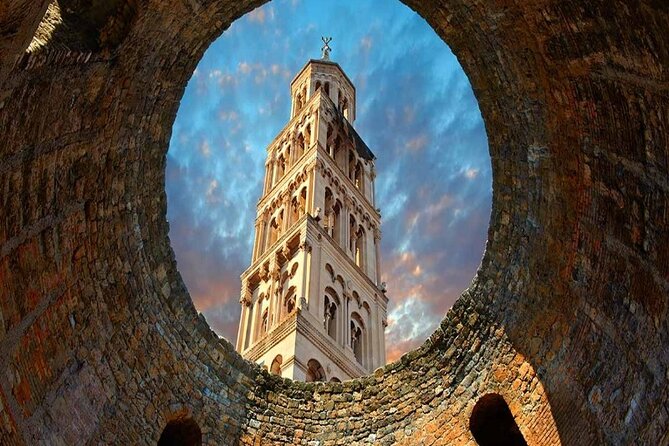
The Vestibule takes about 10 minutes. From the outside it is rectangular, while inside it has a circular plan. This was the entrance to the emperor’s residential area, and its shape still gives the room a powerful sense of ceremony.
The original interior was more elaborate than what survives. It had semicircular niches for statues and a large cupola decorated with colorful mosaic. The building also has a more recent, less grand story. Within living memory, people used the space as a home, kept poultry there, and cultivated gardens.
Today, the Vestibule is valued for its acoustics. Groups sometimes sing traditional Dalmatian a cappella songs here. You cannot assume a performance will take place during your visit, but the guide can explain why the room carries sound so well.
This is also a strong photo stop. The circular interior, worn stone, and open sky above create a setting that feels very different from the broad Riva. If your group wants posed pictures, ask when the photographer plans to work them into the walk.
More photo sessions in Split:
- Private Vacation Photography Experience in Split, Croatia
★ 5.0 · 47 reviews - Split: Photographer for your holidays!
★ 4.8 · 14 reviews - Private Photography Activity in Split
★ 5.0 · 9 reviews - IRIS Photography (macro photo of your eye)
★ 5.0 · 4 reviews
Saint Domnius Cathedral inside an imperial mausoleum

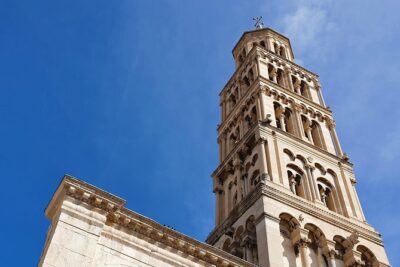
The cathedral is one of the most unusual stops in Split because it occupies Diocletian’s former mausoleum. A building created for an emperor who persecuted Christians later became a Christian cathedral in the seventh century.
Inside, several periods meet in a small space. The Roman mausoleum remains at the core. Christian worship, medieval additions, and modern restoration have all become part of the building’s story. The cathedral holds relics connected with Saint Domnius and Saint Anastasius, martyrs executed near ancient Salona.
The carved walnut doors by Andrija Buvina are one of the key details to watch for. They connect the cathedral to Split’s medieval artistic tradition and reward a slower look than a quick pass through the entrance.
The scheduled visit is about 15 minutes. That is enough for an introduction, but not much time if you want to explore every associated area. Admission is described inconsistently in the supplied details. One section says the cathedral, Temple of Jupiter, and Crypt of Saint Lucy require 25 kuna, or 3.5 euros, while another says cathedral admission is included. Confirm this before the tour begins so the cost does not catch you by surprise.
Gregory of Nin and the famous toe

Outside the Golden Gate, you meet the statue of Gregory of Nin. This medieval bishop is remembered for defending the use of Croatian in church services rather than relying only on Latin. The issue was practical as well as cultural: people could understand services in their own language.
The large statue was made by Croatian sculptor Ivan Meštrović in 1929, marking a thousand years since Gregory’s historic defense of Croatian culture. It is one of Split’s most popular photo stops.
You will also notice the polished big toe. Local custom says rubbing it brings good luck or grants a wish. The stop lasts around 10 minutes, giving you time for the story, a photograph, and the small ritual.
This is a good example of the tour’s balance. You are not only looking at ancient stones. You are also learning how later generations used sculpture, language, and public space to express identity.
Pjaca and Fruit’s Square, where Split meets itself
Narodni Trg is officially the People’s Square, but locals usually call it Pjaca. It was first recorded in the 13th century as Saint Lawrence’s Square and became the first settled area outside Diocletian’s Palace on the western side.
The square has served as a center of city life for centuries. The Gothic Old Town Hall now functions as an exhibition space, while former noble residences around the square recall the families who shaped Split’s civic life.
You get about 15 minutes here. Look beyond the central open space and pay attention to the façades. Every building has a different line, window, or decorative detail. Today, cafés, restaurants, and shops make the square an easy place to return after the tour.
Fruit’s Square, officially Trg Braće Radić, follows with about 10 minutes. Its most obvious landmark is the octagonal Venetian tower, a remnant of a 15th-century defensive fortress. Across from it is the Milesi family palace, with a Baroque façade considered one of Dalmatia’s finest examples of that style.
A statue of Marko Marulić, a 15th-century writer and thinker often linked with Croatian literature, faces the palace. Ivan Meštrović also created this monument. For photography, this compact square offers several contrasting backgrounds within a short walk: the tower, the palace, the statue, and the surrounding cafés.
Prokurative and the Italian imprint on Split
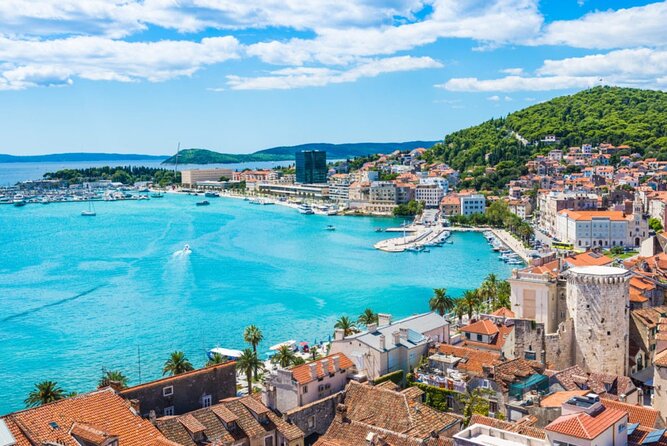
The final listed stop is Prokurative, officially Republic Square. It lies west of the Riva and takes its popular name from the arches on the Neo-Renaissance buildings around three sides.
Antonio Bajamonti, one of Split’s best-known mayors, began the project in the mid-19th century. He wanted the square to show Split’s connection to Italian culture, which explains its Venetian flavor and the references to ancient and Renaissance design.
Bajamonti also built a theater here, though fire later destroyed it. The square continues to serve as a setting for cultural events and a popular place for local bars and restaurants.
The stop lasts about 10 minutes. It is a fitting finish because it moves you away from the Roman core and shows how Split continued to change long after Diocletian’s reign. From here, the tour returns to the meeting point on the Riva.
The photography session and guide style
The included photographer is Ivan Gudić, described as a private professional lifestyle photographer. That is the feature that most clearly separates this experience from a normal walking tour.
You should treat the photography as part of the tour, not necessarily as a full portrait shoot with a long studio-style session. The schedule does not state how many photos are included, whether they are edited, or when you receive them. Ask these questions before booking:
- How many final photographs are included?
- Are the images edited?
- How and when will they be delivered?
- Is the session built into the walking route or scheduled as a separate block?
The guide named in the supplied feedback is Jelena, with Yelena also appearing in one account. She is described as punctual, easy to contact through WhatsApp, clear in English, and willing to suggest ways to enjoy the rest of your time in Split.
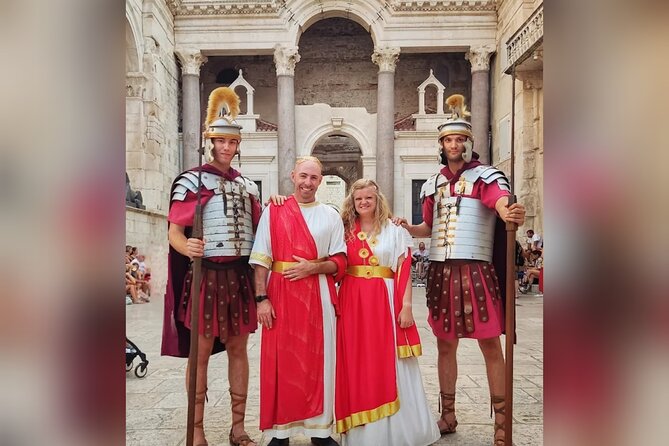
One particularly nice extra is the possibility of Roman costumes for photographs. This was offered after the walking portion in one account, turning the history of Diocletian into a playful picture session. It is not listed as a guaranteed part of every departure, so consider it a possible bonus rather than a promise.
Price, timing, and who gets good value
At $300.73 per person, this is expensive for a 2.5-hour walking tour. The price makes more sense if you place real value on privacy and professional photographs, or if you are marking a special occasion.
A standard group tour usually spreads the guide’s time across many people. Here, your group gets a private guide and a photographer, with the ability to pause and ask questions. That is useful for couples, families, and small groups who dislike fixed schedules or want photos of everyone together.
The value is weaker if you mainly want a low-cost introduction to Split. Most of the route is outdoors, and the palace, squares, Riva, statue, and Prokurative do not require a large admission fee. The cathedral charge also needs clarification.
The tour is offered in English and takes place on foot. Most people can participate, and service animals are allowed. It is near public transportation, but no separate transport is part of the experience. Plan to meet at the Riva and expect the activity to finish there.
Book at least a little ahead if your date matters. The experience is booked around 13 days in advance on average. Free cancellation is available up to 24 hours before the start time. Poor weather can lead to a new date or a full refund, and the same applies if the minimum number of participants is not met.
Should you book this private Split photo walk?
Book it if you want a personal introduction to Split, dislike large groups, and care about coming home with good photographs. The route gives you the city’s main historical sequence in a sensible order: waterfront, palace, imperial entrance, cathedral, medieval identity, public squares, and later Venetian influence.
I would be more cautious if you are traveling on a tight budget or want a long, detailed visit inside the cathedral and palace complex. The tour moves through many major places in 2.5 hours, so it favors orientation and atmosphere over exhaustive sightseeing.
Before paying, confirm the cathedral admission, the exact photography package, and whether the Roman costume session is available on your date. If those details suit you, the combination of Jelena’s personal guiding, Ivan Gudić’s photography, and a private route can justify the high price.
FAQ
Where does the tour begin?
It begins on Obala Hrvatskog narodnog preporoda in Split, on the Riva promenade near a bronze model of the city.
Where does the tour end?
The tour ends back at the meeting point on the Riva.
How long does the experience last?
The walking tour lasts approximately 2 hours and 30 minutes.
Is this a private tour?
Yes. Only your group takes part in the activity.
Is the tour offered in English?
Yes. English is the listed tour language.
Who is the photographer?
The included private professional lifestyle photographer is Ivan Gudić.
Is cathedral admission included?
The information is inconsistent. One section lists admission to Saint Domnius Cathedral, the Temple of Jupiter, and the Crypt of Saint Lucy at 25 kuna, or 3.5 euros, while another says cathedral admission is included. Confirm the current arrangement before booking.
Can I cancel for a full refund?
Yes, if you cancel at least 24 hours before the experience start time. Cancellations made less than 24 hours in advance are not refunded.
Just added around Split
- From Makarska : Wine Tasting Grabovac Tour★ 4.5 · 30 reviews
- Essential Diocletian’s Palace Tour for First-Time Visitors★ 4.8 · 19 reviews
- Unique vintage Tomos moped tour Split – Back to the ’80s★ 4.8 · 17 reviews
- Walking Tour Split★ 4.7 · 61 reviews
- Trogir; Private walking tour of higlights of Trogir★ 4.7 · 3 reviews
- Trogir: White Lagoon, Maslinica & Blue Lagoon Speedboat Tour★ 4.8 · 11 reviews
- Trogir 1.5-Hour City Tour★ 4.4 · 37 reviews
- Split: Trogir Open Top Bus Trip + Free Split Walking Tour★ 4.1 · 17 reviews
Split Old Town Walking Tours, compared.
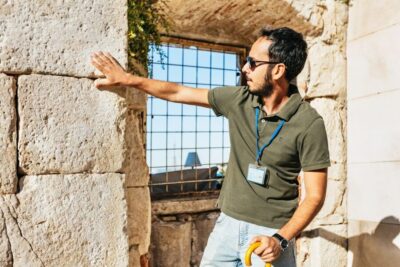
Split: Old Town and Diocletian Palace Walking Tour
Read our review →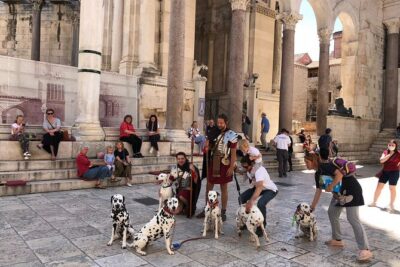
Walking Tour of Split and Diocletian’s Palace
Read our review →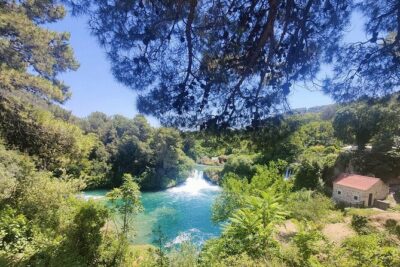
Krka Waterfalls tour with Trogir Walking tour and Krka panoramic boat cruise
Read our review →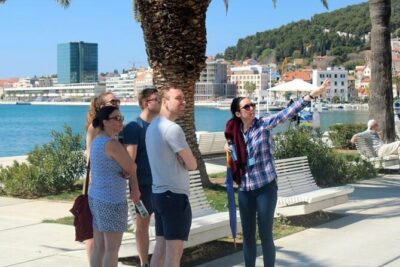
Walking Tour of Split with a ‘Magister’ of History
Read our review →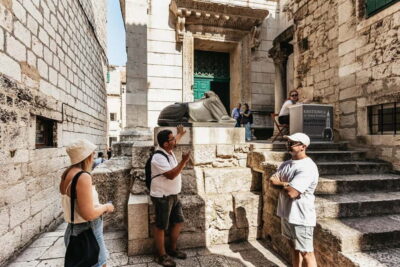
Split: Diocletian Palace & Old Town Guided Walking Tour
Read our review →
From Split: Krka Waterfalls Cruise & Trogir Walking Tour
Read our review →
Browse the lists this tour appears in