Reviewed · TOURS
Small-Group Communist Tour of Split – Boutique group tour
Split’s communist past is easiest to understand away from Diocletian’s Palace. This small-group tour takes you to Poljud Stadium, Koteks, Split 3, and Kopilica, linking striking buildings with the politics and daily life of socialist Yugoslavia.
I like the small maximum of eight people, which gives a local historian and history teacher room to explain rather than rush. I also like the private, air-conditioned vehicle, since the key sites are spread around Split and are awkward to connect on foot.
The main drawback is focus. If you only want ancient ruins, beaches, and postcard views, this is not your tour. Some stops are brief or mainly panoramic, and the subject includes dictatorship, nationalism, and the violent breakup of Yugoslavia.
Key points at a glance
- A different side of Split: Leave the old town behind and see the city’s socialist neighborhoods, shopping centers, stadium, and railway district.
- Guide-led historical context: Local historian and history teacher Boris explains Tito’s Yugoslavia, World War II, housing, education, consumer life, and the country’s collapse.
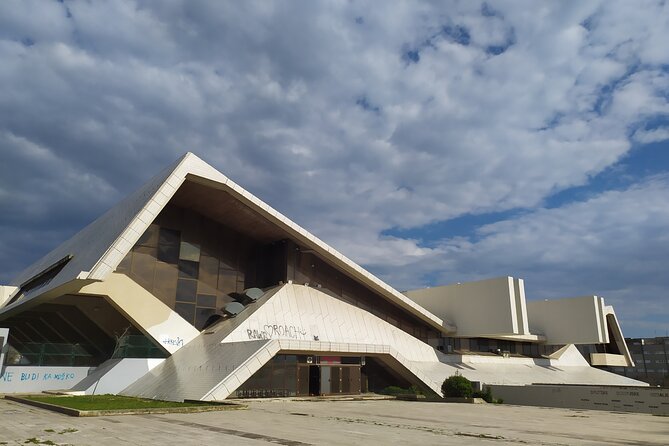
- Poljud Stadium and the China Wall: See two major examples of Yugoslav-era architecture, including a stadium once displayed in New York’s Museum of Modern Art.
- Split 3 in detail: Walk through a planned neighborhood built around living, working, and resting, with time to examine its unusual buildings.
- Private transport included: An air-conditioned vehicle makes the scattered stops practical in a 3.5-hour tour.
- A small-group setting: The group is limited to eight people, and an occasional one-on-one departure can make the discussion especially personal.
Why communist Split deserves your time
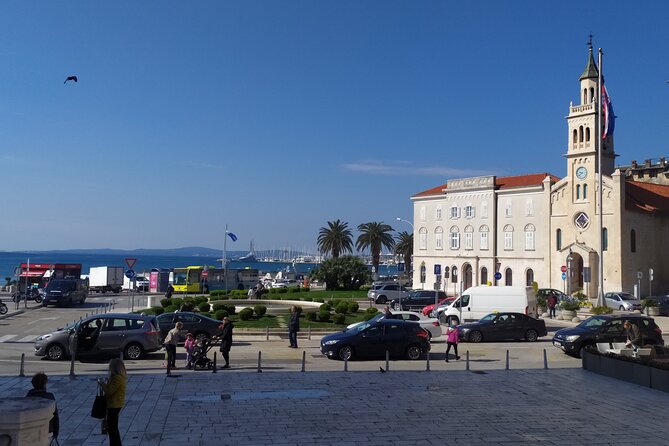
Most first-time visits to Split begin with Diocletian’s Palace, and rightly so. But the palace tells only one chapter of the city’s story. The postwar decades changed Split’s size, architecture, housing, industry, and social life in ways you can still see today.
This tour looks at those changes through the former Yugoslav idea of a modern city. You will not simply see old apartment blocks and hear that they were built under communism. You will learn why some neighborhoods were planned as complete communities, how consumer goods reached ordinary households, and how Yugoslavia tried to position itself between the Soviet bloc and the West.
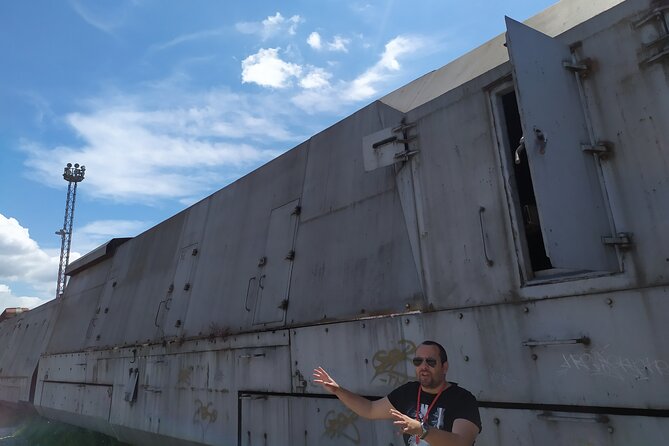
I find that approach useful because the subject can otherwise become a list of political names and dates. Here, the buildings give the discussion a physical setting. A stadium becomes evidence of national ambition. A shopping center shows how Yugoslav socialism handled consumer culture. A railway station and armored train help explain the grim end of the country.
The tour is conducted in English and lasts about three and a half hours. Since the group maximum is eight, you should have a better chance to ask questions than on a large city coach tour. The price is $108.14 per person, so this is not a budget sightseeing ride. Its value depends on your interest in modern history, architecture, and the former Yugoslavia. If those subjects matter to you, the private vehicle and specialist guide make the cost easier to justify.
Other Split days people book alongside this one:
- Split: Krka Waterfalls Trip with Boat Cruise and Swimming
★ 4.8 · 10,519 reviews - From Split: Krka Waterfalls, Food & Wine Tasting Tour
★ 5.0 · 9,326 reviews - Blue cave, Mamma Mia and Hvar, 5 islands speedboat tour
★ 5.0 · 7,150 reviews
Starting at Trg Franje Tuđmana
The tour begins at 9:00 a.m. at the bus stop on Trg Franje Tuđmana, also called Franje Tuđmana Square. This is more than a simple meeting point. It gives the guide a place to set up the story of Split before the vehicle begins moving through the city.
The opening discussion covers major events in World War II and the path toward the creation of communist Yugoslavia. You will also see photographs showing wartime damage in Split. That visual start matters because it places the later buildings in a city that had suffered destruction and then faced the task of rebuilding.
I like beginning here because the tour does not treat communist architecture as a collection of odd-looking structures. You first get the political and wartime background, then see how those ideas shaped the city. The guide can explain why reconstruction, housing, industry, and public facilities became such large parts of postwar life.
This first stop lasts about 25 minutes and has no admission fee. You return to the same meeting point at the end of the activity, so you do not need to plan around a distant drop-off.
Poljud Stadium and the China Wall
The next stop is a short panoramic visit near Poljud Stadium and the large residential building known as China Wall. The stop lasts about 10 minutes, so expect an introduction and an exterior look rather than a full stadium visit.
Poljud Stadium is one of Split’s symbols. It was built for the Mediterranean Games, one of the largest sporting events held in Yugoslavia at that time. Its design was important enough to appear in an exhibition of Yugoslav architecture at the Museum of Modern Art in New York.
That detail helps explain why the stadium matters beyond football. It represented a confident, modern Yugoslavia that wanted to show the world it could produce daring public architecture. The stadium’s unusual form also gives the guide a clear way to discuss the country’s architectural ambitions.
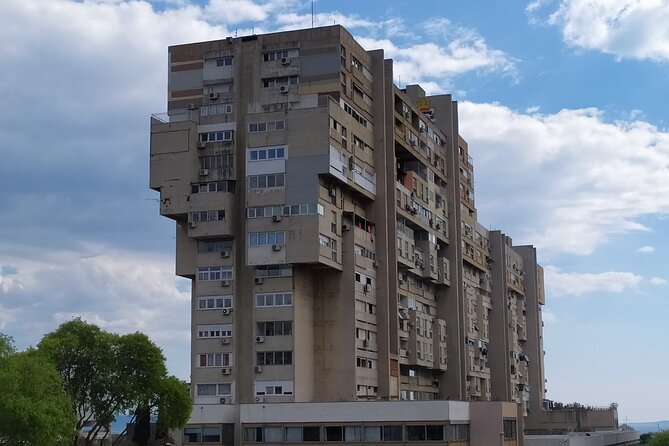
Nearby, the China Wall provides a different example. It is described as the widest existing building in Split and is a product of Yugoslav socialist architecture. Its scale brings the housing question into view. After World War II, cities needed large amounts of new housing, and huge residential projects became one answer.
The short timing is the limitation here. If you want a detailed architectural study or time inside Poljud, this stop may feel quick. Its purpose is to give you the main ideas before the tour moves to sites where you can spend more time walking and looking.
Koteks and the experiment of socialist shopping
At Prodajni centar Koteks, you walk through what is described as the first shopping mall in Yugoslavia. The stop lasts about 30 minutes and shifts the subject from public architecture to ordinary consumer life.
This is one of the most useful parts of the experience because it challenges the simple idea that communist countries had no consumer culture. Yugoslavia followed its own path. It was socialist, but it was not sealed off in the same way as many countries behind the Iron Curtain. People had contact with the West, and the country created a consumer system that sat between western shopping culture and the more restricted eastern model.
The guide explains what a modern shopping center was meant to offer and why Koteks became popular for only a short time before falling into decline. You also hear how people had to be inventive when trying to find particular goods. That practical angle can make the period easier to understand than a purely political lecture.
I like this stop because it brings history down to the level of shopping, household needs, and access to products. You can think about what it means to live in a system that permitted more openness than the Soviet model but still had shortages and limits.
Do not expect a polished retail attraction. The point is not to admire a modern mall. The point is to look at a former symbol of progress and consider how its meaning changed over time. That may be less visually dramatic than Poljud Stadium, but it gives the tour social depth.
Same coastline, a completely different kind of day:
- From Split: Krka Waterfalls, Food & Wine Tasting Tour
★ 4.9 · 6,598 reviews - Split/Trogir: Blue Cave, Mamma Mia, Hvar and 5 Island Tour
★ 4.6 · 6,320 reviews - Blue Lagoon & 3 Islands Cruise with Lunch from Split
★ 4.5 · 5,756 reviews - Split: Old Town and Diocletian Palace Walking Tour
★ 4.9 · 4,727 reviews
Walking through Split 3
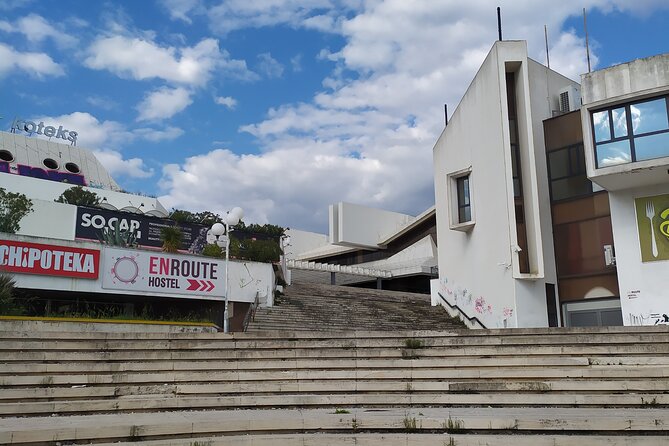
Split 3 is the longest stop, lasting about 1 hour and 10 minutes. It is also the section most likely to reward anyone interested in architecture, city planning, or daily life under Tito.
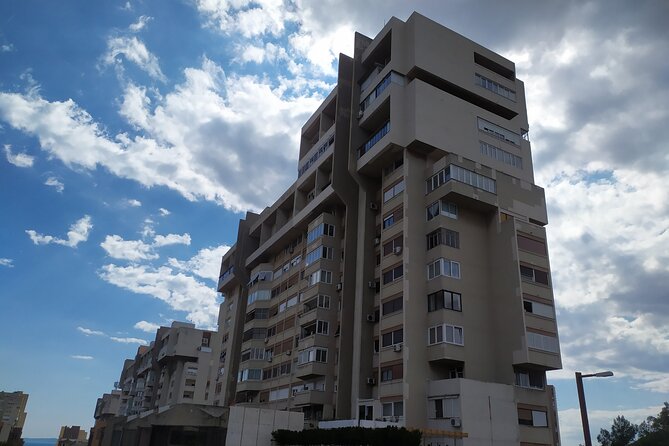
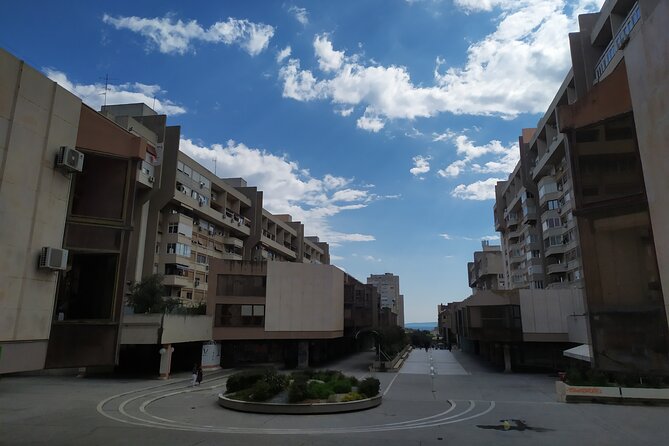
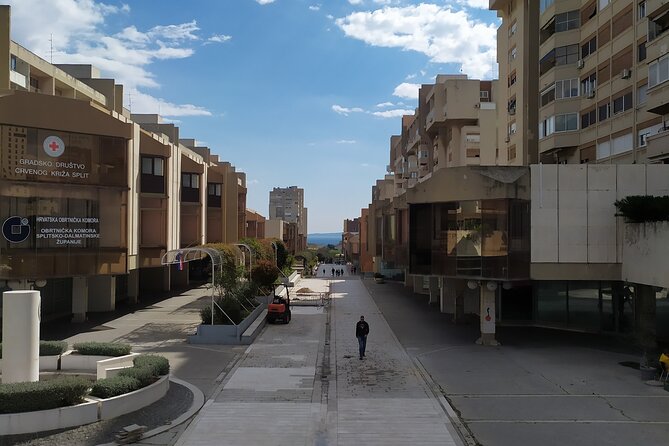
The neighborhood was planned as a place for living, working, and resting. Rather than build housing as isolated blocks, planners aimed to create a complete modern district. As you walk, the guide points out different styles by local architects, including the building known as Cruiser.
Split 3 was also included in the Museum of Modern Art exhibition of Yugoslav architecture in New York. Its inclusion shows that the district was not viewed only as routine public housing. It was presented as an important example of residential planning.
This is where the tour’s walking element matters most. From a vehicle, large apartment blocks can blur into one another. On foot, you can compare their shapes and see how individual architects gave different buildings their own identity. The guide can connect design choices to the broader socialist goal of providing quality housing for a growing urban population.
The discussion also widens here. You hear about housing policy, education, health care, the economy, social life, and politics, with particular attention to Tito’s rule. The district becomes a useful case study. You are not just hearing that the state provided services. You are considering how those services were organized and how the political system shaped everyday life.
There is free time at this stop, which is helpful. You can look more closely at the buildings, gather your thoughts, or ask follow-up questions. The long stop also makes the tour less dependent on a constant stream of facts.
The tradeoff is that you should be ready for a fair amount of walking and an extended discussion in a residential district. This is not a quick photo stop. If modern architecture does not interest you, the hour here may feel long. If you enjoy seeing how cities are planned, it is likely the strongest part of the route.
Kopilica, the armored train, and Yugoslavia’s collapse
The final stop is in Split’s Predgrađe area, at Kopilica railway station. Here the subject turns from the construction of Yugoslavia to its failure and violent end.
The guide explains some of the reasons Yugoslavia did not survive and why its breakup in the 1990s led to war. The setting is an armored train displayed beside the railway. It symbolizes the beginning of the country’s bloody final period, when political and national tensions became armed conflict.
This is a serious ending, and it should be. The tour does not present socialist architecture as a harmless design exercise detached from later events. The same country that built ambitious neighborhoods and public buildings also faced rising tensions between nations and religions. The final discussion helps connect the optimistic projects of earlier stops with the painful history that followed.
You should expect the tone to become more political and difficult here. The guide’s role is especially important because the breakup of Yugoslavia remains a sensitive subject. A local history teacher can provide context, but no three-hour tour can cover every perspective or explain every cause in full.
Still, the stop gives the route a clear arc. You begin with wartime damage and the birth of communist Yugoslavia, examine the country’s ambitions and daily life, and finish with the reasons those ambitions failed to hold the state together.
What the small group and vehicle add
The private, air-conditioned vehicle is not just a comfort feature. The sites are spread across Split, and connecting them without transport would take more time and planning. The vehicle keeps the route practical while allowing the tour to reach places beyond the old center.
The group limit is eight people. That size suits a subject that benefits from questions and discussion. You are more likely to hear the guide clearly and get a direct answer when a point needs more explanation.
One departure became a one-on-one experience for the person who booked it, creating a more personal discussion. You should not assume every date will be private, but the small maximum leaves room for a more individual experience than a standard bus tour.
A local soft drink is included. It is described as a typical drink that was popular during communist Yugoslavia and remains popular today. It is a small touch, but it fits the tour’s focus on everyday life rather than only monuments and political leaders.
The activity requires good weather and a minimum number of participants. If poor weather or low numbers cancel the tour, you are offered another date or a full refund. You can also cancel for a full refund up to 24 hours before the start time.
Who should book this Split history tour?
I would choose this tour if you want to understand Split beyond the Roman palace and medieval lanes. It suits people interested in:
- Yugoslav and Balkan history
- Socialist and modern architecture
- City planning and public housing
- Tito and the political system of Yugoslavia
- Consumer life between East and West
- The causes and consequences of Yugoslavia’s breakup
It also works well for repeat visitors who have already seen the old town. The route shows a part of Split that many short city visits miss.
I would skip it if your priority is ancient history, food, beaches, or a relaxed sightseeing ride. The subject is thoughtful and sometimes heavy. Some stops are exterior visits, and the longest section centers on a residential neighborhood rather than a famous monument.
Should you book it?
Book this tour if you want a focused, small-group look at modern Split and you are willing to pay for specialist guiding and private transport. The most valuable features are the route beyond the tourist center, the long walk through Split 3, and the way the guide connects architecture with politics and daily life.
At $108.14, it is expensive for a three-and-a-half-hour activity, especially since no museum admissions are included. But the listed stops do not require admission, and the price covers an air-conditioned vehicle, private transportation, a small group, a local drink, and a guide who teaches the subject rather than simply naming buildings.
For a strong introduction to communist Split, I would book it. Start at 9:00 a.m., wear comfortable shoes for Split 3, and arrive ready for a history lesson that reaches from wartime destruction to the armored train at Kopilica.
FAQ
How long does the Communist Tour of Split last?
The tour lasts approximately 3 hours and 30 minutes.
What time does the tour start?
It starts at 9:00 a.m.
Where does the tour begin?
The meeting point is the bus stop Sv. Frane on Trg Franje Tuđmana in Split, Croatia.
Where does the tour end?
The activity ends back at the meeting point.
How many people can join the tour?
The maximum group size is eight people.
Is transportation included?
Yes. The tour includes private transportation in an air-conditioned vehicle.
What happens if the tour is canceled because of weather or low participation?
You will be offered a different date or experience, or a full refund.
Just added around Split
- From Makarska : Wine Tasting Grabovac Tour★ 4.5 · 30 reviews
- Essential Diocletian’s Palace Tour for First-Time Visitors★ 4.8 · 19 reviews
- Unique vintage Tomos moped tour Split – Back to the ’80s★ 4.8 · 17 reviews
- Walking Tour Split★ 4.7 · 61 reviews
- Trogir: White Lagoon, Maslinica & Blue Lagoon Speedboat Tour★ 4.8 · 11 reviews
- Trogir; Private walking tour of higlights of Trogir★ 4.7 · 3 reviews
- Trogir 1.5-Hour City Tour★ 4.4 · 37 reviews
- Split: Trogir Open Top Bus Trip + Free Split Walking Tour★ 4.1 · 17 reviews
Tours, compared.
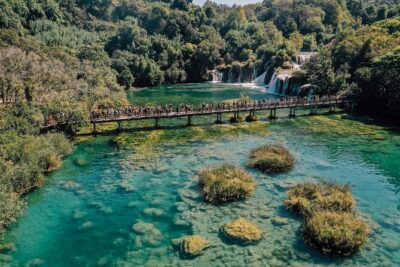
From Split: Krka Waterfalls, Food & Wine Tasting Tour
Read our review →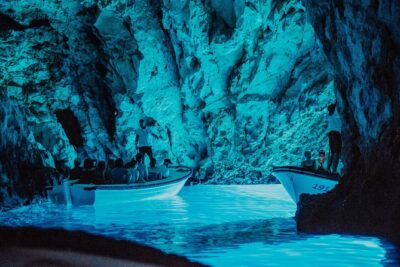
Blue cave, Mamma Mia and Hvar, 5 islands speedboat tour
Read our review →From Split: Krka Waterfalls, Food & Wine Tasting Tour
Read our review →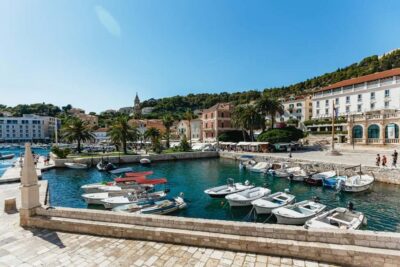
Split/Trogir: Blue Cave, Mamma Mia, Hvar and 5 Island Tour
Read our review →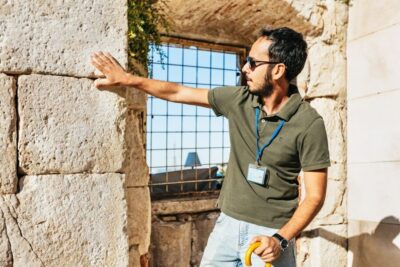
Split: Old Town and Diocletian Palace Walking Tour
Read our review →
From Split: Krka Waterfalls Tour, Boat Cruise & Swimming
Read our review →
Split: Blue Lagoon and 3 Islands Speedboat Tour
Read our review →