
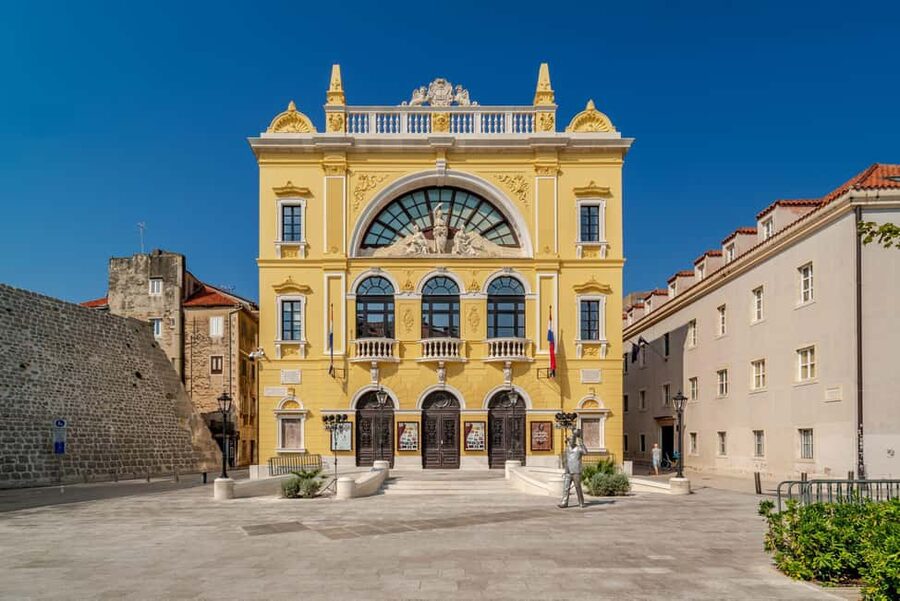
Reviewed · DIOCLETIAN'S PALACE TOURS
Split: 1.5-Hour Walking Tour and Diocletian’s Palace
Diocletian’s Palace is not a fenced-off ruin. It is the heart of Split, where Roman walls hold shops, homes, cafés, churches, and daily life. This walking tour takes you from the palace gates and underground cellars through Peristyle and the Cathedral of Saint Domnius, then out to the Riva waterfront. I like the way it connects ancient stone with modern Split, and I like that local guides such as Sandra, Ana, Ivan, and Jelena add personal stories rather than sticking to dates alone.
The route also gives you two useful things early in a visit: a clear map of the old town and practical advice on food, viewpoints, and sights worth paying for. Guides have helped visitors find shortcuts, explained local customs, and pointed out Game of Thrones filming locations. The main drawback is the pace and footing. You walk on uneven old streets, spend time in crowded lanes, and pay extra for entrance fees, so this is not a good choice for anyone with limited mobility.
Key points at a glance
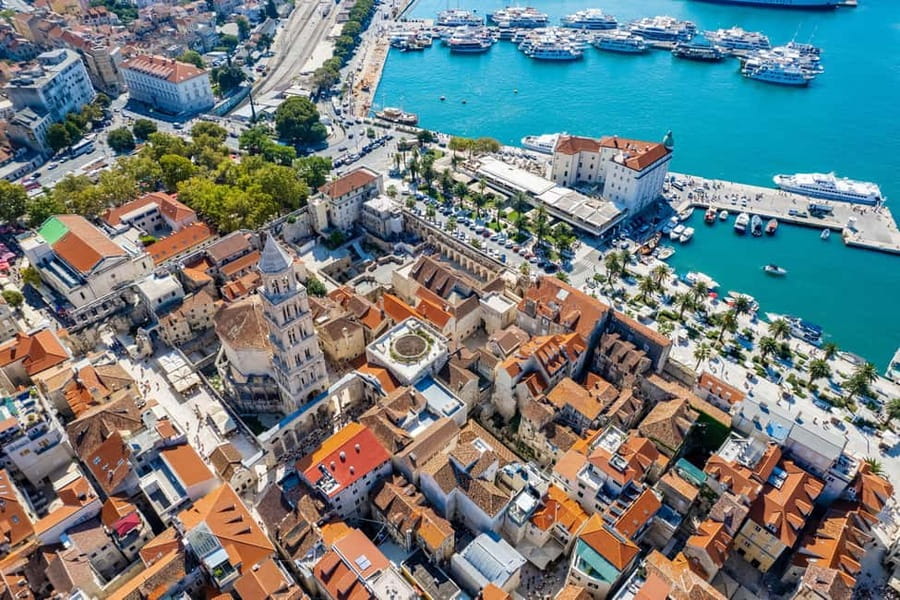
- Roman palace still used as a city center: Walk through streets where ancient walls contain modern businesses and homes.
- A strong first-day orientation: The route links the Golden Gate, People’s Square, Fruit Square, Riva, and the main palace spaces.
- Local stories add value: Guides including Sandra, Ana, Ivan, and Jelena have shared personal views, restaurant advice, and modern Croatian context.
- The cathedral began as a mausoleum: Saint Domnius occupies the former imperial mausoleum of Diocletian.
- The 18:00 time can be pleasant: A past booking found the cooler evening and lighter crowds helpful, while an early start can also beat the heat.
- Entrance tickets cost extra: The guide is included, but paid access to interior sights is not.
Why Diocletian’s Palace feels different
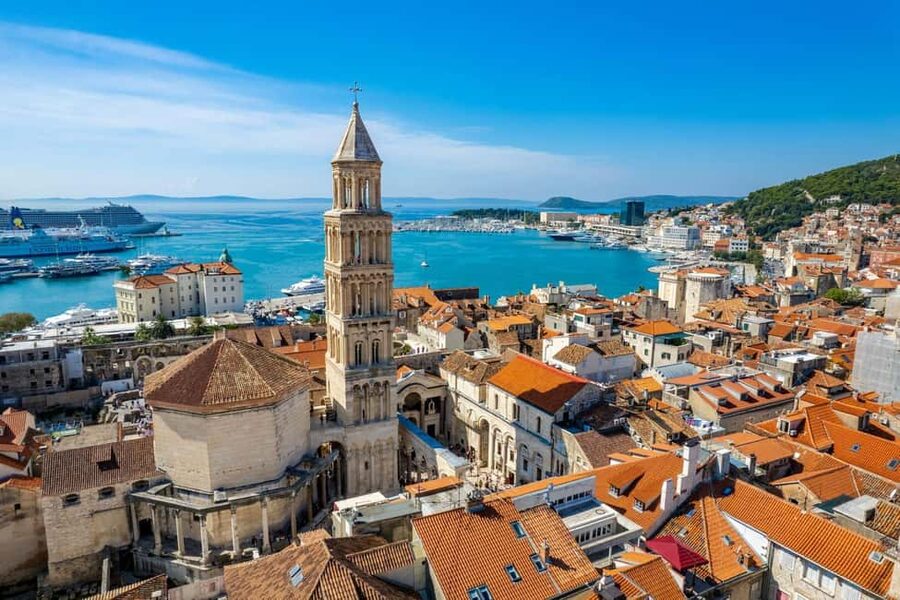
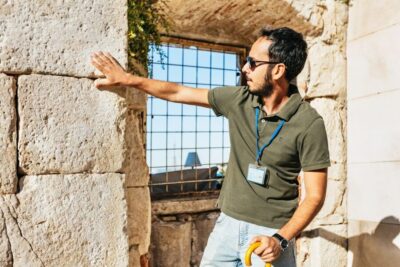
The palace is the reason Split feels unlike a standard archaeological site. Diocletian built it at the turn of the fourth century AD as a retirement residence, but the old complex later became the core of the city. Today, you do not simply walk around the outside and take a photo. You pass through its gates, squares, alleys, and surviving rooms while ordinary Split carries on around you.
That mixture is the tour’s central strength. One moment you are looking at the black-granite Egyptian sphinx beside the Peristyle. The next, you are in a later stone lane or a square lined with newer buildings. The route also reaches architecture from the 20th century, so you get a useful lesson in how cities change instead of a tidy presentation of one period.
I would take this tour near the start of a Split stay. The old town is compact, but its lanes can feel confusing at first. By the end, you should have a better sense of how the palace connects to the market, waterfront, and surrounding streets.
More ways to see Diocletian's Palace:
- Split: Old Town and Diocletian Palace Walking Tour
★ 4.9 · 4,727 reviews - Walking Tour of Split and Diocletian’s Palace
★ 5.0 · 2,588 reviews - Split & Diocletian’s Palace Walking Tour
★ 5.0 · 1,125 reviews
Starting at the Golden Gate
The exact meeting place can vary by booking option, with the South Tours Travel Agency listed as a starting point. From there, the route reaches the Golden Gate, the grand northern entrance to the palace.
The gate is a good place to begin because it shows the palace as a defensive and ceremonial complex. Your guide sets the Roman story in place before leading you deeper into the old town. You should expect about ten minutes here, enough for an explanation and photographs rather than a long architectural study.
The tour also passes the Game of Thrones Museum for a short guided look. The museum stop is brief, around five minutes, so do not book this walk expecting a full museum visit. Its value is mainly in connecting modern screen culture with Split’s old streets. Sandra once added filming locations that were not part of the basic route, so you can ask your guide if this subject interests you.
People’s Square and Fruit Square
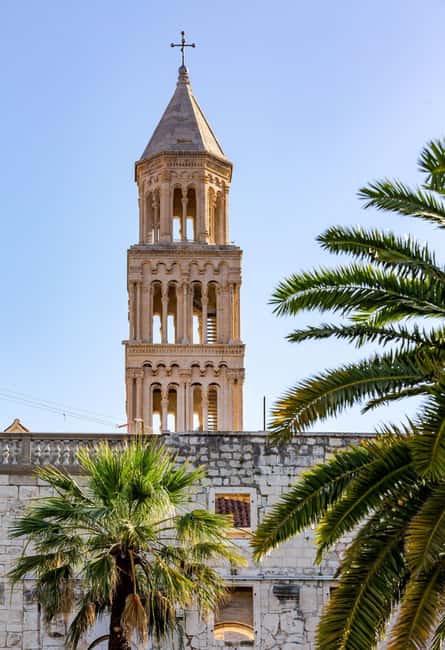
From the palace area, the route moves into People’s Square, known locally as Pjaca, for roughly ten minutes. This is where the tour broadens beyond Roman Split and shows how the city developed around the palace over the centuries.
You then reach Fruit Square, or Voćni Trg, the site of the old fruit market. The name gives you a useful sense of the square’s former role, while the surrounding architecture helps explain how trade and public life grew outside the original imperial plan. I like this part because it keeps the tour from becoming a single long lecture about Diocletian.
The guide’s local knowledge matters here. Several guides have offered advice about authentic food, local taverns, and what is worth spending money on. That sort of information can save you from choosing a restaurant only because it has the best view or the largest menu.
The Riva and Marjan Hill view
The walk continues down to the Riva, Split’s waterfront promenade. You get about ten minutes here, with views toward Marjan Hill and a chance to see how the city meets the sea.
The Riva is not an ancient monument in the same way as the palace, but it helps you understand Split as a living port. Guides have also explained the port’s current role, not just its past. That modern context is useful if you are staying in town, arriving by ship, or planning another outing from the waterfront.
This stop can also provide a natural pause. Much of the tour takes place among stone walls and narrow streets, while the Riva opens the view and gives you room to look around. Keep an eye on the weather, though. Split’s summer heat can make any walking tour tiring, and one guide took special care when a visitor became overheated. Comfortable shoes, water, and a hat make sense.
More walks through the old quarter in Split:
- Krka Waterfalls tour with Trogir Walking tour and Krka panoramic boat cruise
★ 5.0 · 1,659 reviews - Walking Tour of Split with a ‘Magister’ of History
★ 5.0 · 1,122 reviews - Split Walking Tour with Professor of History
★ 5.0 · 926 reviews - Split: Diocletian Palace & Old Town Guided Walking Tour
★ 4.7 · 882 reviews
Entering Diocletian’s Palace and its cellars
The palace section lasts about 15 minutes in the advertised route, though the full guided walk takes 90 minutes to two hours. You see the South Gate, the cellars, and the main palace areas, then continue toward the North and West Gates.
The cellars are one of the most useful stops because they show the palace’s original scale and structure. They also help you picture how the imperial complex was arranged above ground. Entrance fees are not included, so check what you want to enter before you arrive. The guide can explain the setting, but paid access to specific interiors is separate.
The cellars are also a good reason to choose a guided walk instead of relying only on a map. A map can show you where the palace sits. It cannot easily explain how later city life grew into the Roman framework or why one passage leads to another.
Peristyle, the sphinx, and Vestibul
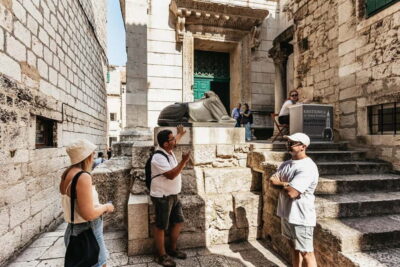
Peristyle is the visual center of the palace route. This formal square presents the Roman core in a compact space, with the black-granite Egyptian sphinx as its most striking detail. The tour allows about ten minutes here, enough to hear the main story and take in the proportions of the square.
The guide can help you notice what a quick solo visit might miss. The sphinx is not just an exotic decoration. It points to the wider reach of Roman power and the way imperial building projects used objects from far beyond Dalmatia.
Next comes Vestibul, a circular entrance space that makes a good photo stop. You get around ten minutes for the visit and walk. This is one of the places where the route’s mix of explanation and movement works well. You are not held in one room for too long, but you still have time to understand the connection between the ceremonial entrance and the palace interior.
The old surfaces can be uneven, and narrow areas may feel tight when the city is busy. That is why the mobility warning matters. This is a walking tour through an old urban center, not a smooth route built for modern access.
Cathedral of Saint Domnius

The Cathedral of Saint Domnius is one of the tour’s most important stops. It began as Diocletian’s imperial mausoleum, then became a Christian cathedral. The tour presents it as the oldest Catholic cathedral in the world, a remarkable example of how one building can carry both Roman imperial and Christian identities.
You get about ten minutes with a guide here. That is enough for the main explanation, but not necessarily enough for an extended independent visit to every part of the complex. If the cathedral is your main reason for booking, ask about entrance arrangements and extra time, since admission is not included.
The stop also gives the tour a stronger human story. Diocletian was a Roman emperor, but Split’s later identity grew around the buildings he left behind. The cathedral is a clear example of reuse rather than simple preservation. The old structure survived because each era found a new purpose for it.
One past booking described the route as a good general introduction but wished for a longer version with more time for the cathedral and Jupiter’s Temple. That is fair. This tour covers many sights, so it offers breadth first. You may want to return independently if you prefer slow looking and detailed interior visits.
What the guides add
The guide can shape the experience more than any individual stop. The guides associated with this tour have included Sandra, Ana, Ivan, Jelena, Ina, and Iva, with English and Spanish offered.
Sandra has been described as energetic and passionate about Split’s past. Ana has offered a local view of history, food, and current life, while Ivan has combined a relaxed manner with practical suggestions. Jelena has been praised for making dates and events easy to follow, and Spanish-language tours have also been available with Ana.
The strongest pattern is a mix of history and personal context. You may hear about shortcuts through the old town, good places for local food, Marjan Hill viewpoints, and what is not worth paying for. Some guides have adjusted the walk to the group, including a wheelchair route in one case, though the current information clearly says the tour is not recommended for people with mobility impairments.
Group size can vary. A few bookings became nearly private because only two people signed up, which allowed for more questions and a flexible pace. You should not assume that will happen every time. One practical issue is language grouping: an English and Spanish group once shared the tour, which slowed the flow.
Timing, heat, and value at $41

At $41 per person, this is a reasonable price if you want a short orientation with a live guide. You are paying for local interpretation, a route through several major parts of Split, and advice that can improve the rest of your stay. The price is less attractive if you only want a quick look at the palace exterior or plan to pay for several interior attractions afterward.
Timing matters more than the price suggests. An 8:00 start can help you avoid the strongest heat and early crowds. An 18:00 departure has also worked well, with cooler air and fewer people. Midday is the least appealing choice in hot weather because the route has limited shade and plenty of stone that reflects the sun.
The walk lasts 90 minutes to two hours. That range depends on the group, guide, questions, and stops. One and a half hours can be enough to hold your attention while still covering the essentials. If you want long cathedral visits, extensive cellar time, and a full museum stop, choose a longer private experience instead.
Who should book this Split walking tour?
I would recommend it to first-time visitors, cruise passengers with a limited window, and anyone who wants the old town explained before exploring alone. It suits people who enjoy history in short sections, photo stops, and practical local advice.
It is also a good choice for visitors who want more than Roman dates. The route connects the palace to markets, squares, the waterfront, modern Split, and local life. That wider view is the reason I would choose it over a narrow palace-only walk.
I would hesitate if you dislike group pacing, need step-free access, or want a long, quiet look at the cathedral and cellars. You will also need to budget for entrance fees and food separately. Wear firm walking shoes, bring water, and consider an early or evening start.
Should you book it?
Book this tour if you want a clear introduction to Split in under two hours, with Roman monuments, local stories, and useful advice for the rest of your visit. The best value comes from taking it early in your stay, then returning on your own to the cathedral, cellars, or palace corners that deserve more time.
Skip it if you already know the old town well or want a detailed archaeological tour with every interior included. For most first visits, though, the combination of palace history, modern city life, and a local guide makes $41 a fair way to get your bearings.
FAQ
How long does the Split walking tour last?
The tour lasts between 90 minutes and two hours. The exact length can depend on the group, guide, and pace.
What languages are available?
The tour is offered with live guides speaking English or Spanish.
What sights are included on the walking route?
The route includes the Golden Gate, Game of Thrones Museum, People’s Square, Fruit Square, Riva, Diocletian’s Palace, Peristyle, the Cathedral of Saint Domnius, and Vestibul.
Are entrance fees included?
No. The guide is included, but entrance fees are not.
Is food or drink included?
No. Food and beverages are not included.
Is the tour suitable for people with limited mobility?
The tour is not recommended for people with mobility impairments. Comfortable walking shoes are recommended because the route passes through old streets and palace areas.
Can I cancel for a full refund?
Yes. You can cancel up to 24 hours in advance for a full refund. You can also reserve now and pay later.
Just added around Split
- From Makarska : Wine Tasting Grabovac Tour★ 4.5 · 30 reviews
- Essential Diocletian’s Palace Tour for First-Time Visitors★ 4.8 · 19 reviews
- Unique vintage Tomos moped tour Split – Back to the ’80s★ 4.8 · 17 reviews
- Walking Tour Split★ 4.7 · 61 reviews
- Trogir; Private walking tour of higlights of Trogir★ 4.7 · 3 reviews
- Trogir: White Lagoon, Maslinica & Blue Lagoon Speedboat Tour★ 4.8 · 11 reviews
- Trogir 1.5-Hour City Tour★ 4.4 · 37 reviews
- Split: Trogir Open Top Bus Trip + Free Split Walking Tour★ 4.1 · 17 reviews
Diocletian's Palace Tours, compared.
Split: Old Town and Diocletian Palace Walking Tour
Read our review →
Walking Tour of Split and Diocletian’s Palace
Read our review →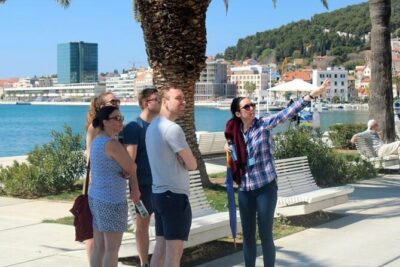
Split: Diocletian Palace & Old Town Guided Walking Tour
Read our review →
Split: Game of Thrones Tour with Diocletian’s Palace Cellar
Read our review →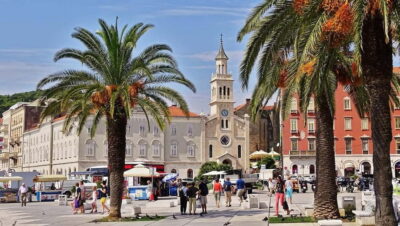
Diocletian’s Palace and Old Town SMALL GROUP Walking Tour
Read our review →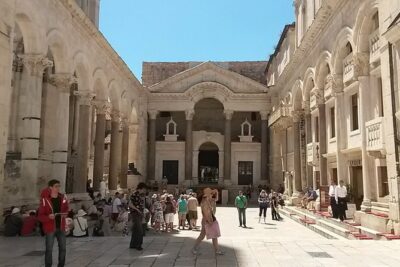
SPLIT-PRIVATE Walking Tour of Diocletian’s Palace & Old Town
Read our review →
Browse the lists this tour appears in