
Reviewed · SPLIT OLD TOWN WALKING TOURS
Split: History Walking Tour of the Old Town
Split’s old town is not simply a collection of Roman ruins. It is a living city built inside and around Diocletian’s Palace, where ancient columns, medieval lanes, cafés, shops, and homes share the same tight streets. This 90-minute walk gives you a useful map of that unusual mix, from the Golden Gate to the palm-lined Riva.
I like the tour’s clear route through the palace core and its lively teaching style. Guides such as Maya, Nina, Marko, and Marc use questions, riddles, jokes, photos, and maps to make the past easier to follow. I also like the practical finish, with advice on Dalmatian food, beaches, ice cream, and islands.
The main consideration is time. Ninety minutes is enough for a strong introduction, but not for a slow visit inside every monument. The pace can also feel brisk in summer, so bring water, sunscreen, a hat, and comfortable shoes.
Key points to know before booking
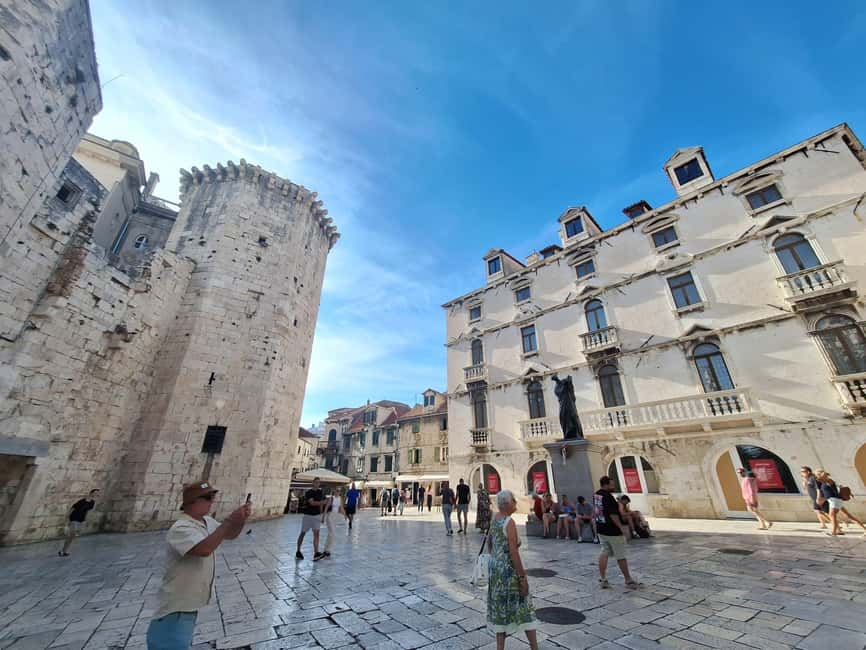
- The palace is the main attraction: You walk through a 1,700-year-old Roman palace that now forms the heart of Split.
- The cellars add a modern twist: You see the underground spaces used as Daenerys Targaryen’s dragon chambers in Game of Thrones.
- Guides use more than memorized dates: Expect riddles, jokes, maps, photographs, and stories about Emperor Diocletian and local life.
- The route covers major landmarks: Golden Gate, Đardin Park, Peristyle, Mausoleum, Jupiter’s Temple, Vestibule, People’s Square, and Fruit Square are all part of the walk.
- You finish with useful local advice: The tour ends at the Riva, with suggestions for food, beaches, ice cream, and island trips.
- Private options are available: You can choose a private group, and pickup may be arranged from a hotel, street address, or cruise ship.
Why Split’s palace makes a better walking tour than a normal ruin
The first thing to understand is that Diocletian’s Palace is not an isolated archaeological site. The old town grew within its walls, so you move from Roman stonework to a busy square, then through a narrow passage where daily life still goes on.
That makes a guide especially useful. Without context, the old town can look like a jumble of columns, arches, steps, and shopfronts. A good explanation shows how the Roman palace shaped the later city and why Split feels different from a standard historic center.
The tour covers roughly 1,700 years of change in a compact area. You learn about Emperor Diocletian, the palace, Christianity, Venetian rule, and present-day Croatian habits without needing to read a long plaque at every stop.
I would treat this as an orientation walk rather than a complete archaeological visit. It helps you understand what you are seeing and decide which places deserve a longer return visit later in your stay.
More walks through the old quarter in Split:
- Split: Old Town and Diocletian Palace Walking Tour
★ 4.9 · 4,727 reviews - Walking Tour of Split and Diocletian’s Palace
★ 5.0 · 2,588 reviews - Krka Waterfalls tour with Trogir Walking tour and Krka panoramic boat cruise
★ 5.0 · 1,659 reviews
Starting at the Golden Gate and Đardin Park
The Golden Gate is a smart place to begin. It gives you an immediate sense of the palace’s defensive design and puts the old town into a Roman frame before the route turns into smaller streets.
Your guide may use questions and visual material here to get you involved. One recurring theme is the palace’s original purpose: this was connected to an emperor’s retirement residence, military protection, religious spaces, and ceremonial entrances, not just a place for sightseeing.
Đardin Park adds a little breathing room before the route enters the denser palace area. In summer, that matters. The old town can be hot and crowded, while shade and a short pause help you keep your attention on the story.
The meeting point depends on the option you book. Pickup can also be arranged, with the booking information allowing you to provide a hotel and street name or identify your cruise ship. Confirm the exact starting place before you set out.
Peristyle and the Mausoleum: Roman power in a tight space
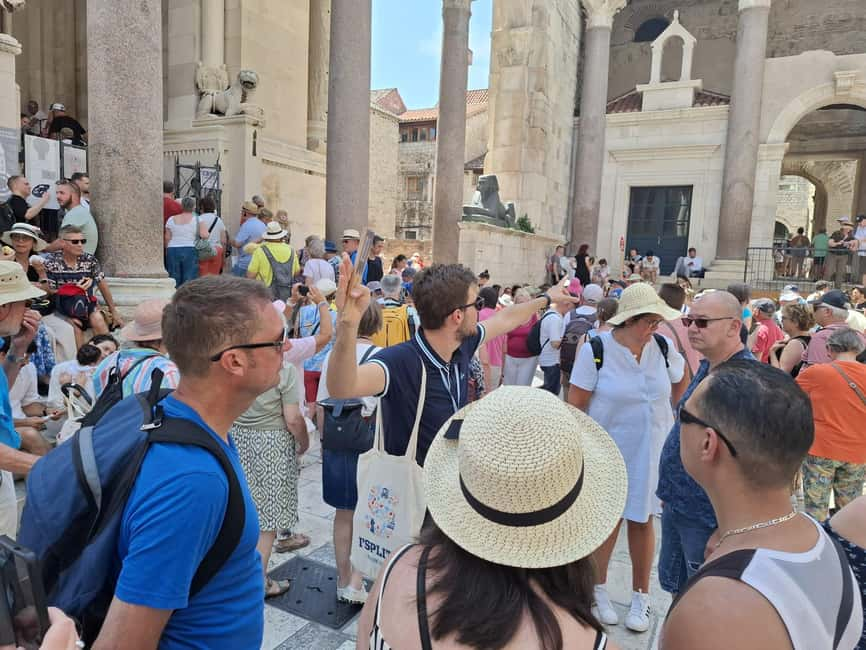
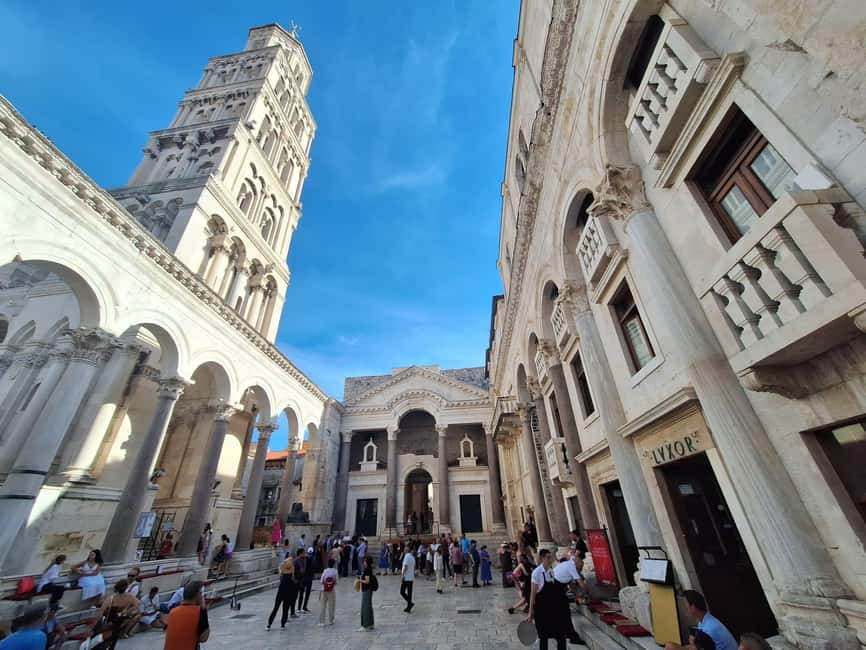
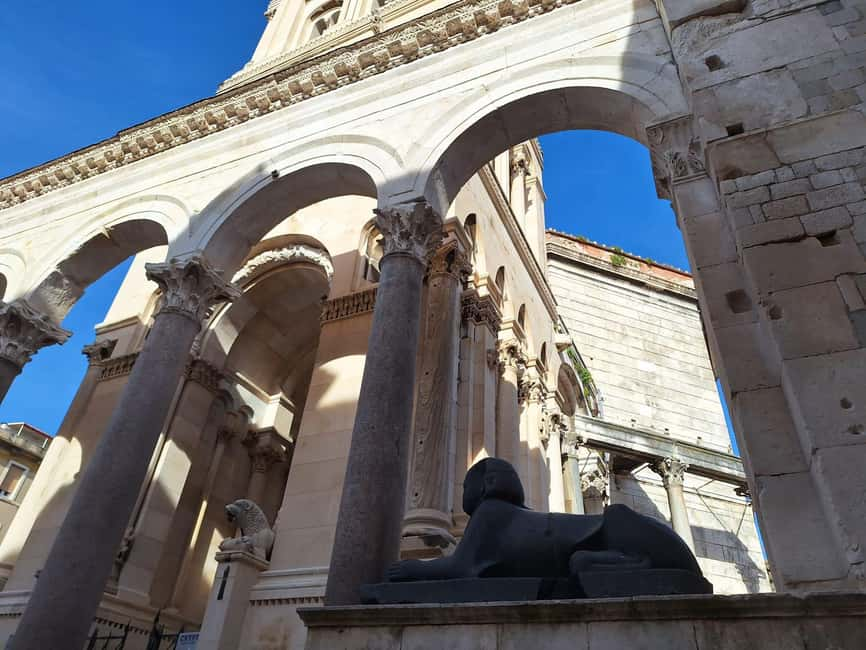
The Peristyle is the visual center of the walk. Tall stone columns frame a ceremonial square that still feels grand, even when people are crossing it or sitting nearby. This is where the scale and authority of the Roman palace become easiest to grasp.
The guide spends about 15 minutes here, which is enough to explain the layout and point out the relationship between the public court and Diocletian’s private and religious areas. You will want to look upward as well as ahead, since later buildings press directly against the Roman remains.
The former Mausoleum is another important stop. It is now associated with Split’s cathedral, whose bell tower is one of the city’s familiar landmarks. The supplied tour description calls it the oldest cathedral in the world, and the guide uses the site to explain how a Roman imperial structure took on a Christian role.
This part of the tour can be visually crowded, especially at peak times. A guide who can find a clear place to speak is valuable. One guide, according to the experience details, was particularly good at managing crowds and finding shade, a small practical skill that can make a real difference in August.
Jupiter’s Temple and the headless sphinx
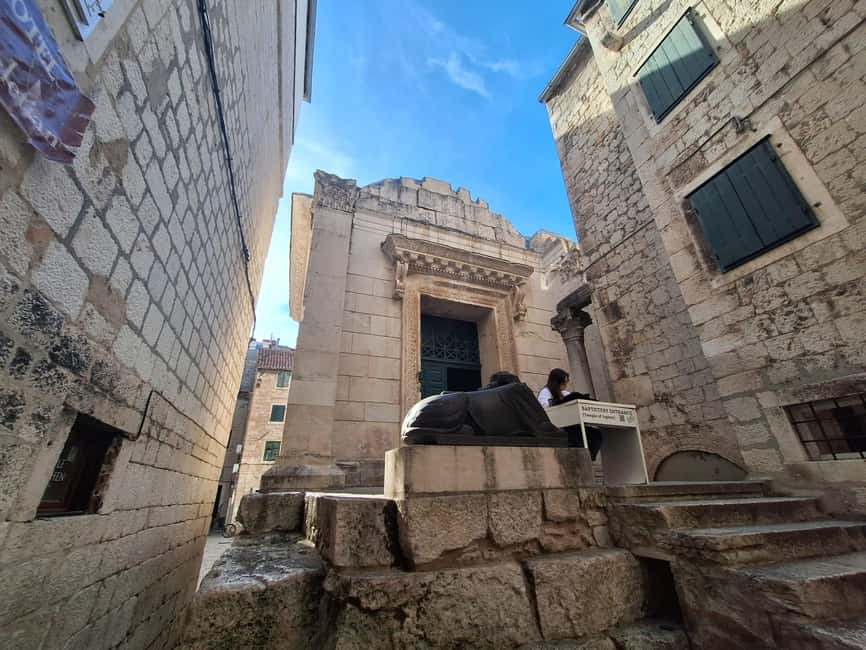
Jupiter’s Temple is a short stop, listed at about five minutes, but it carries a memorable story. The entrance is guarded by a headless Egyptian sphinx, a striking reminder that Diocletian’s palace drew on more than one religious and political tradition.
The guide connects the temple with Diocletian’s image as emperor and with the later changes brought by Christianity. You also hear stories about Diocletian’s treatment of Christians and the odd personal details that make him easier to remember, including why he vomited after dinner.
That mix of major events and strange human detail suits a short walking tour. Dates alone rarely stick. A story about power, food, religion, and a headless sphinx gives you something concrete to recall when you pass the temple again.
The stop is brief, so you should not expect a long interior visit or a detailed architectural study. Its value is in seeing the place in sequence with the Peristyle and Mausoleum.
More history walks in Split:
- Walking Tour of Split with a ‘Magister’ of History
★ 5.0 · 1,122 reviews - Split Walking Tour with Professor of History
★ 5.0 · 926 reviews - Split: History and Heritage Walking Tour
★ 4.9 · 650 reviews - Split History and Gastro Small-Group Tour with Food and Drinks
★ 5.0 · 375 reviews
The Vestibule and the palace’s human scale
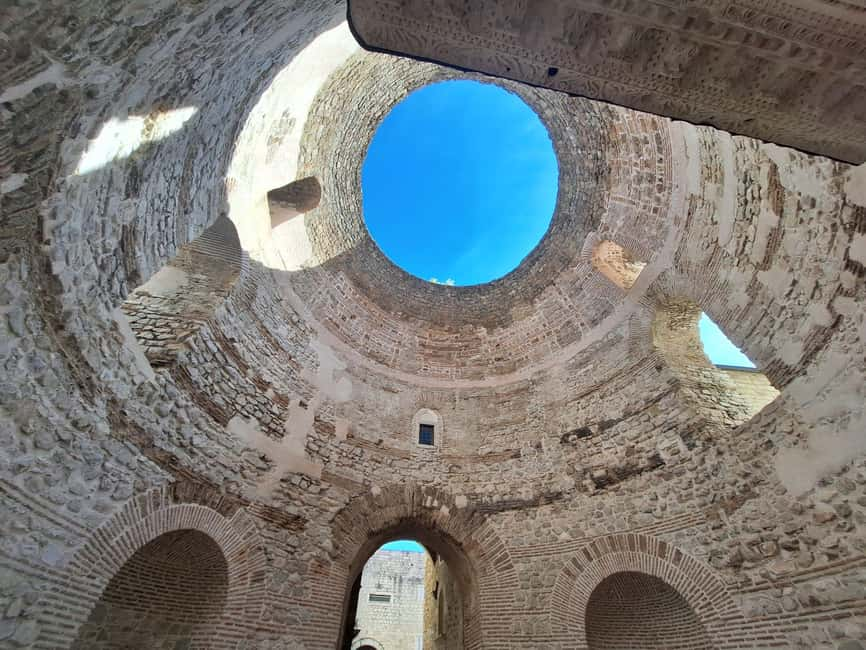
The Vestibule was once a formal entrance to the emperor’s apartments. Today, its round form and open roof show how much of the original palace has survived, even though the surrounding town has changed over many centuries.
The tour description adds playful details here, including the idea of replacing your head with the Sphinx’s, answering a Sphinx riddle, and passing through a human mousetrap. These are not just throwaway jokes. They help you notice how the palace controlled movement through gates, corridors, and narrow openings.
I like this part because it moves the story away from famous monuments and toward how people actually used the building. You begin to picture officials, guards, residents, worshippers, and workers moving through the same spaces.
The Vestibule can also be a good place for photographs, but your guide’s explanation is the main reason to linger. The stop lasts about ten minutes, so keep an eye on the group and do not wander too far for a picture.
The cellars and the Game of Thrones connection
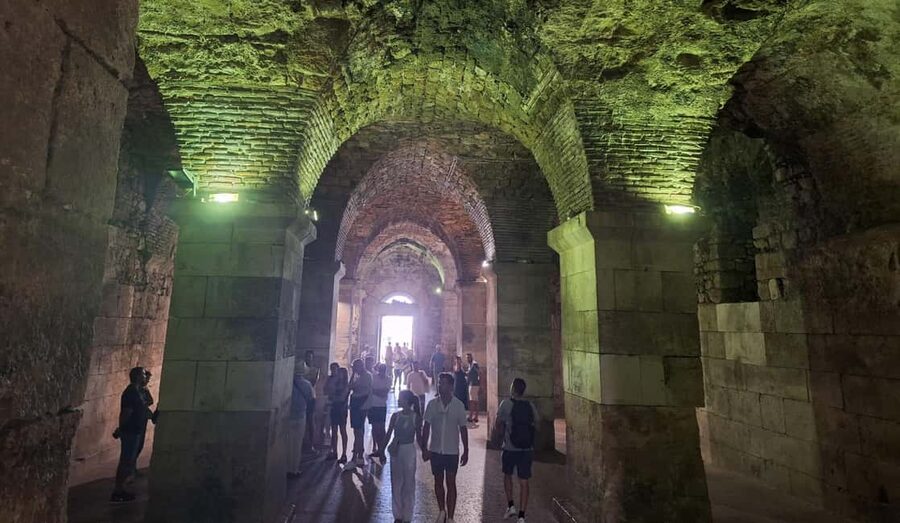
The underground cellars are one of the strongest parts of the route. They once supported the palace above and now offer a cooler, darker change from the sunny streets. In the summer heat, this is practical as well as atmospheric.
Fans of Game of Thrones will recognize the cellars as the place where Daenerys Targaryen’s dragons were chained. The tour also points to the location used for the Unsullied fighting the Sons of the Harpy. These scenes gave the cellars a second life for television audiences.
Even if you have never watched the show, the cellars are worth seeing for their Roman structure and sense of depth. If you have watched it, the connection gives you an easy way into the history of the space.
The cellar visit is listed at about 15 minutes. It is enough to see the main areas and hear the filming stories, but you should not expect a long archaeological lecture. One guide used the cooler underground route to keep the group comfortable during hot weather, which is another reason to appreciate this section.
People’s Square and Fruit Square show Split after Rome

After the palace interior, the walk moves toward People’s Square, also called Pjaca, and Fruit Square, or Voćni trg. These spaces show how Split developed beyond the Roman plan.
People’s Square helps you see the old town as a city center rather than a museum. Fruit Square brings in the everyday side of Split, including local food and social habits. The guide uses these stops to explain what people eat, where to find Dalmatian specialties, and how the city works today.
This is where the tour becomes useful for the rest of your trip. You are not just collecting ancient names. You are getting ideas for lunch, snacks, ice cream, beaches, and later day trips.
The route also includes advice about which islands to visit. The tour does not provide island transport or a separate food tasting, so think of this as local orientation rather than a culinary tour or excursion-planning service.
Ending at the Riva with a plan for the rest of your day
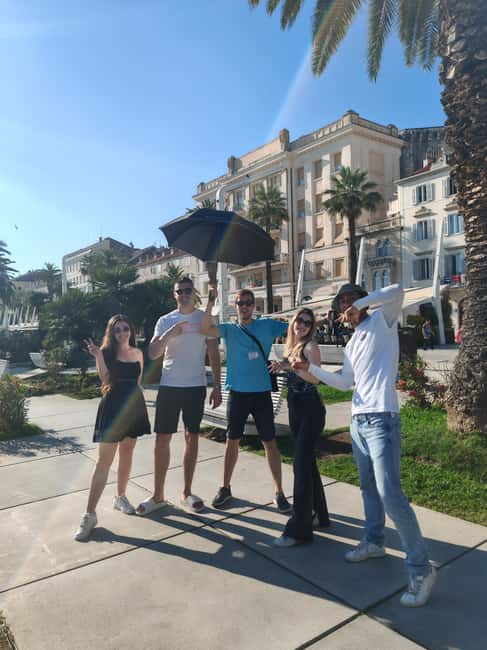
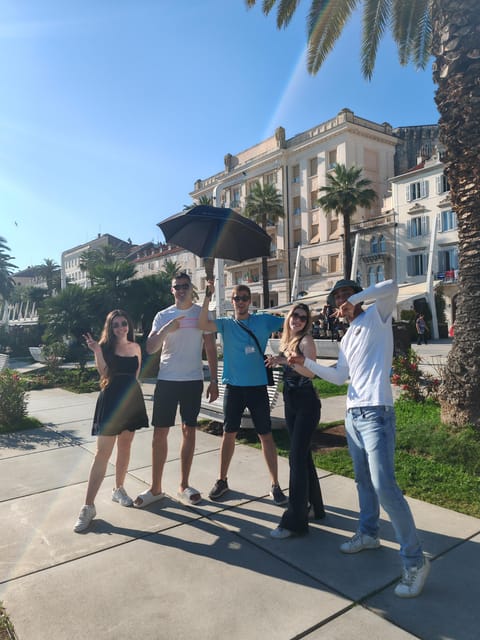
The walk finishes on the Riva, Split’s seafront promenade lined with tall palm trees. It is a natural place to end because the old town opens toward the water and the route shifts from Roman walls to the city’s modern public life.
You receive recommendations for spending the rest of the day, including food, beaches, ice cream, and islands. I find this more useful than ending at the same place where you started. By the final stop, you have a better idea of which direction to walk next.
The tour may finish at the Riva or near a model of Split’s historic core, depending on the option selected. Check the exact ending details when booking, especially if you have a fixed dinner reservation or a ship departure.
The guides and the tone of the experience
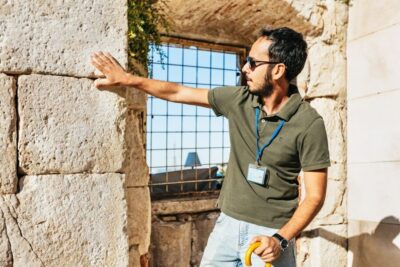
The strongest feature here is the guide-led teaching style. Guides named in the supplied information include Maya, Nina, Marko, and Marc. English and Spanish tours are available, and the Spanish-language feedback describes a warm, funny guide with clear explanations.
Maya is associated with a folder of photos and maps, which can help when the stonework becomes hard to read at a glance. Nina is described as making the history fun for a very small group while adding useful tips about food, beaches, and ice cream.
Marc handled detailed questions during a solo tour, while Marko used riddles and jokes to keep the walk moving. These details suggest that the experience depends on the individual guide, but the format encourages conversation rather than a silent march from one monument to the next.
The tour also includes information about Croatia beyond Split. That is useful if you are new to the country, though visitors seeking only architecture may prefer a more specialized Roman archaeology tour.
Is $41 good value for 90 minutes?
At $41 per person, this is not the cheapest way to walk around Split. You can see many exterior sights on your own for nothing. The price makes more sense if you want a licensed guide to connect the palace, the city’s later development, local habits, and the filming locations.
The value improves if you are visiting Split for only a short time. In 90 minutes, you get a structured route through the key center and practical suggestions for the rest of the day. One solo participant described it as especially good value, while another small-group experience included crowd management and shade-finding.
A private group is available, which may suit families or friends who want to ask many questions. The group format is not otherwise fixed in the supplied details, so ask what type of booking you are selecting if group size matters to you.
Free cancellation up to 24 hours before the start and reserve-now-pay-later booking make the cost easier to manage. Those policies are useful in a port city, where ship schedules and weather can affect your plans.
Who should book this Split walking tour?
I would choose this tour if you want a clear first look at Split, enjoy history told through stories, or like mixing major sights with practical food advice. It also suits Game of Thrones fans who want to see the dragon cellars without giving up the Roman and local context.
It is a good fit for cruise passengers because the route is compact and ends by the waterfront. Spanish speakers may appreciate having the tour available in Spanish, while English speakers can expect a live guide rather than an audio recording.
You may want something else if you prefer to explore at your own pace, spend a long time inside each monument, or focus only on detailed Roman architecture. Ninety minutes moves quickly, and the price covers explanation and orientation more than extended entry time.
Wear comfortable shoes, and bring a hat, sunscreen, and water. The cellars offer some relief from the heat, but much of the walking takes place outdoors on old city surfaces.
Should you book it?
Book this tour if you want Split’s palace to make sense as a living city, not just a group of impressive ruins. The best reasons are the compact route, the lively guides, the cool cellars, and the useful advice at the Riva.
Skip it only if you already know the old town well or prefer a slow, self-guided visit. For a first morning in Split, $41 is a fair price for a focused introduction that leaves you with a better plan for food, beaches, and island trips.
FAQ
How long does the Split history walking tour last?
The tour lasts 90 minutes.
What landmarks are included?
The route includes the Golden Gate, Đardin Park, Peristyle, Mausoleum, Jupiter’s Temple, Vestibule, Diocletian’s Cellars, People’s Square, Fruit Square, and the Riva.
Does the tour visit the cellars of Diocletian’s Palace?
Yes. The tour includes the cellars, including the areas associated with Daenerys Targaryen’s dragons and the Unsullied scenes in Game of Thrones.
Is the tour available in English?
Yes. Live tours are available in English and Spanish.
Can I book a private group?
Yes. A private group option is available.
Is hotel or cruise ship pickup possible?
Pickup is optional. You can provide a hotel name and street or indicate that you are arriving by cruise ship. The exact meeting point depends on the option selected.
What should I bring?
Bring comfortable shoes, a hat, sunscreen, and water.
What does the tour cost?
The listed price is $41 per person.
Can I cancel for a full refund?
Yes. You can cancel up to 24 hours in advance for a full refund. You can also reserve now and pay later.
Just added around Split
- From Makarska : Wine Tasting Grabovac Tour★ 4.5 · 30 reviews
- Essential Diocletian’s Palace Tour for First-Time Visitors★ 4.8 · 19 reviews
- Unique vintage Tomos moped tour Split – Back to the ’80s★ 4.8 · 17 reviews
- Walking Tour Split★ 4.7 · 61 reviews
- Trogir; Private walking tour of higlights of Trogir★ 4.7 · 3 reviews
- Trogir: White Lagoon, Maslinica & Blue Lagoon Speedboat Tour★ 4.8 · 11 reviews
- Trogir 1.5-Hour City Tour★ 4.4 · 37 reviews
- Split: Trogir Open Top Bus Trip + Free Split Walking Tour★ 4.1 · 17 reviews
Split Old Town Walking Tours, compared.
Split: Old Town and Diocletian Palace Walking Tour
Read our review →
Walking Tour of Split and Diocletian’s Palace
Read our review →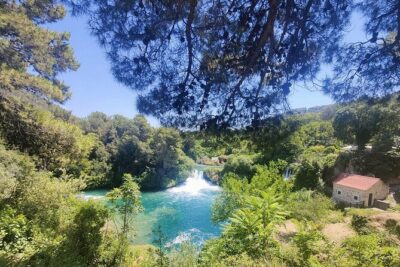
Krka Waterfalls tour with Trogir Walking tour and Krka panoramic boat cruise
Read our review →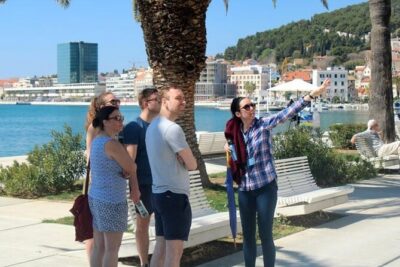

Walking Tour of Split with a ‘Magister’ of History
Read our review →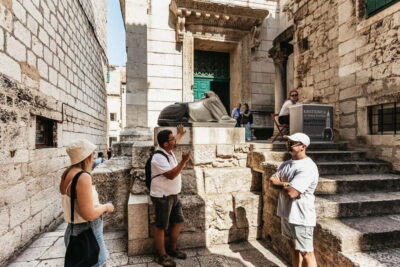
Split: Diocletian Palace & Old Town Guided Walking Tour
Read our review →
From Split: Krka Waterfalls Cruise & Trogir Walking Tour
Read our review →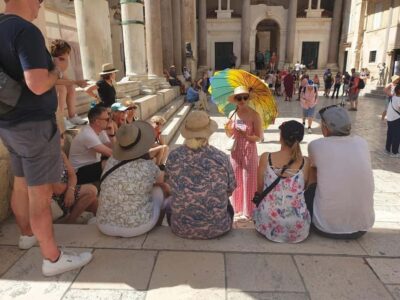
Browse the lists this tour appears in