
Reviewed · SPLIT OLD TOWN WALKING TOURS
Split Old Town History Walking Tour
Diocletian’s Palace is not a museum sealed behind glass. It is the heart of Split, with homes, cafés, shops, laundry, church bells, and Roman stone all sharing the same streets. This 90-minute walk gives you a quick way to understand how the palace became a living city.
I like the compact route, which covers the Riva, palace cellars, Peristyle, cathedral, Golden Gate, and two handsome squares without taking up your whole day. I also like the local touch: guides such as Anita, Petra, Iva, Toni, and Rocco are praised for explaining the past while offering tips on food, drinks, and places to explore later.
The main consideration is pace. Ninety minutes is enough for a strong introduction, not a detailed archaeological study. You should also expect uneven Roman stone, outdoor walking, and a possible change or cancellation if the weather is poor or the minimum group size is not reached.
Key points to know before you book
- Walk through a living Roman palace: Diocletian’s Palace is still part of everyday Split, not simply an ancient ruin.
- See the palace underground: The cellars show how the emperor’s residence was supported above them.
- Meet local guides with personality: Anita, Petra, Iva, Toni, and Rocco are specifically praised for clear explanations, humor, warmth, and local advice.
- Choose a cooler departure: The evening option can be more comfortable and quieter than the heat of midday.
- Expect a small-to-medium group: The tour accepts a maximum of 20 people, with some departures reported at only seven or ten.
- Finish with Split’s everyday squares: Pjaca and Fruit’s Square add Venetian buildings, cafés, palaces, and modern city life to the Roman story.
Why this short Split walk works
At $30.23 per person, this is priced like a practical orientation walk rather than an all-day historical tour. I think the value comes from the route and the guide, not from the length alone. In an hour and a half, you see the city’s main historic core and learn how Roman, medieval, Venetian, and modern Split fit together.
That matters because Split can feel confusing at first. The palace is large, but its old walls, gates, passages, and courtyards blend into ordinary streets. A guide helps you recognize what you are looking at, then points out details you might otherwise pass without noticing.
The experience is offered in English, with two departure times. The end point is the same as the start, at Obala Hrvatskog narodnog preporoda 21 on the Riva. That makes it easy to continue with lunch, a café stop, or your own walk afterward.
The group limit of 20 is sensible for narrow streets and busy courtyards. Smaller departures can be especially pleasant. You are more likely to hear the guide clearly and ask questions without holding up a large crowd.
More walks through the old quarter in Split:
- Split: Old Town and Diocletian Palace Walking Tour
★ 4.9 · 4,727 reviews - Walking Tour of Split and Diocletian’s Palace
★ 5.0 · 2,588 reviews - Krka Waterfalls tour with Trogir Walking tour and Krka panoramic boat cruise
★ 5.0 · 1,659 reviews
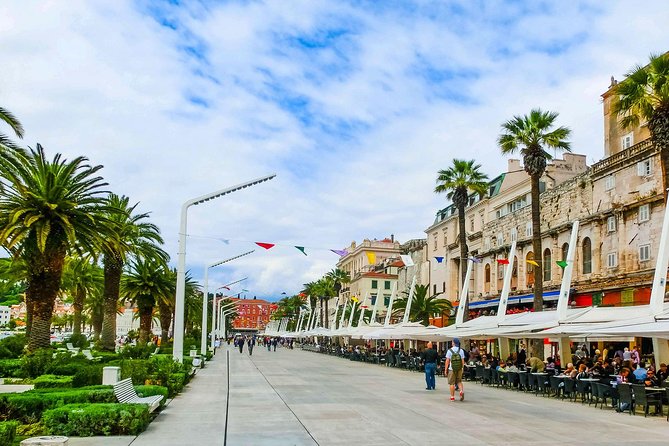
Starting on the Riva waterfront
The walk begins on the Riva, Split’s waterfront promenade. This is a useful meeting point because it gives you an immediate sense of the city’s layout: the sea in front of you, the old center behind you, and Diocletian’s Palace woven into the streets nearby.
The guide spends about 10 minutes setting the scene. You can expect an introduction to Split’s past, culture, and basic orientation rather than a long lecture. This opening is useful because it frames the rest of the walk before you enter the palace.
The Riva is also a good place to notice how Split works today. It is social, open, and tied to the water. You are not beginning at an isolated monument. You are beginning where local life and the old town meet.
Beneath the palace in Diocletian’s cellars
The next stop takes you into the palace substructures for about 15 minutes. These chambers supported the imperial residence above and give you a clear sense of the scale and organization of Diocletian’s complex.
I consider this one of the most useful stops because underground spaces are often easier to understand than scattered walls. You can see the structural relationship between the lower level and the palace that once stood above it. The guide also connects the rooms to life in the Roman Empire and to the emperor’s residence.
The stop is listed without a separate admission charge, but you should still expect a historic interior with stone floors and changing surfaces. Wear shoes with good grip. One account specifically noted that non-slip footwear is important, and the route is not suitable for wheelchair users.
The Peristyle and Cathedral of Saint Domnius
The Peristyle is the palace’s grand central court, framed by Roman columns and monumental stone. Here, the tour shifts from underground construction to the public face of imperial power.
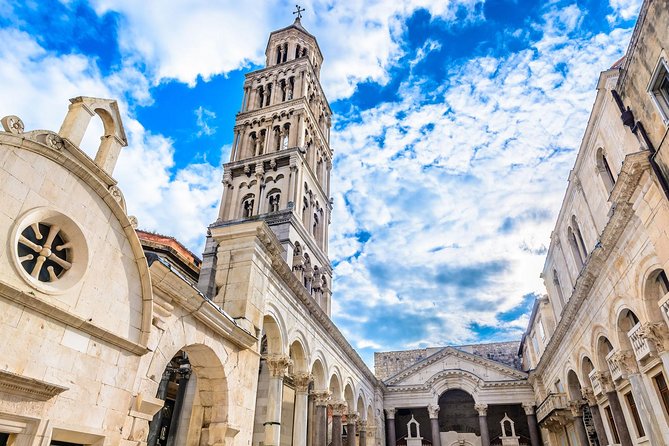
You then see the Cathedral of Saint Domnius, once the mausoleum of Diocletian. That change in purpose tells much of Split’s story in a single place. A building connected to a Roman emperor became a Christian cathedral, and the old palace continued to serve the city instead of disappearing.
About 10 minutes is scheduled here. That is enough to identify the main features and hear the essential story, but not enough for a slow study of every column, carving, or architectural phase. If you want detailed religious art or Roman architecture, plan to return on your own.
This is also the point where a good guide makes a real difference. Anita is praised for her passion for Croatia, while Petra and Iva are noted for clear explanations and friendly answers. The best use of your time is to ask about the details that catch your eye.
More history walks in Split:
- Walking Tour of Split with a ‘Magister’ of History
★ 5.0 · 1,122 reviews - Split Walking Tour with Professor of History
★ 5.0 · 926 reviews - Split: History and Heritage Walking Tour
★ 4.9 · 650 reviews - Split History and Gastro Small-Group Tour with Food and Drinks
★ 5.0 · 375 reviews
The Vestibulum, Jupiter’s Temple, and Triklinij
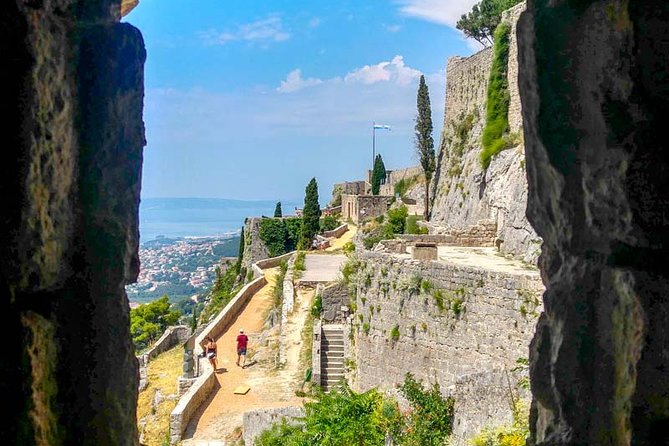
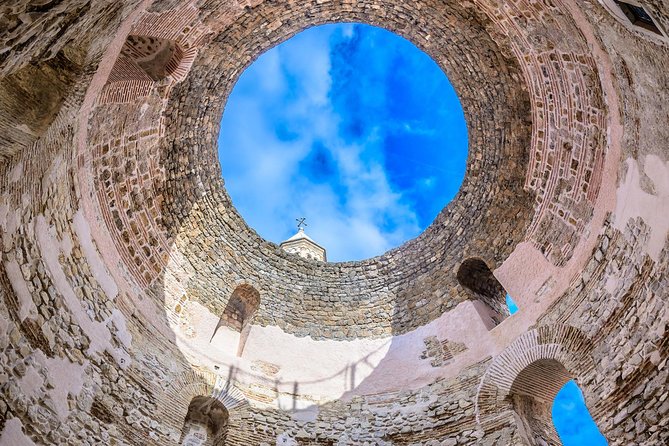
The Vestibulum takes only about five minutes, but it is a memorable space. Its circular opening creates unusual acoustics, and you might hear traditional klapa singing if a performance happens during your visit.
That possibility adds a local note to the Roman setting, though it should not be treated as a guaranteed part of the tour. The guide can explain the structure, while the space itself supplies much of the atmosphere.
The tour then moves to the Temple of Jupiter, another short stop of about five minutes. This former Roman temple later became a baptistery. Ancient sculpture and a preserved sarcophagus help show how buildings and objects were reused as Split changed over time.
Triklinij is where the guide discusses imperial banquets and Roman dining customs. The name refers to the dining arrangement associated with Roman feasts, and the stop gives you a glimpse of the luxury expected inside the emperor’s palace.
These three stops are brief, so listen for the main point rather than expecting a long visit at each one. The route is built around connections: Roman ceremony, imperial living, Christian reuse, and modern local culture.
Leaving through the Golden Gate
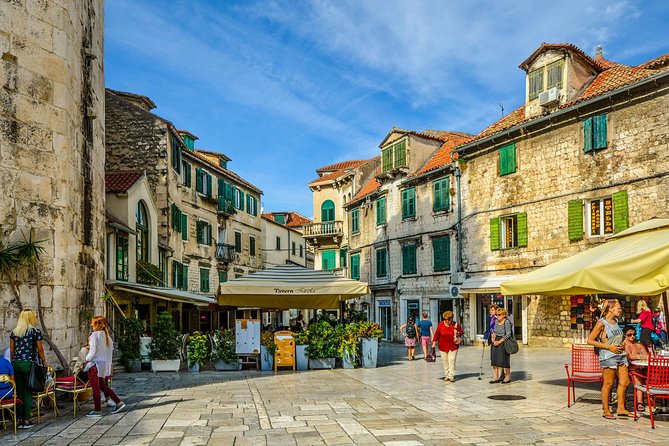
The Golden Gate is the grandest of the palace’s four gates and marks the transition from the palace interior to the streets outside. The stop lasts about 10 minutes and includes the statue of Gregory of Nin.
You will see people rubbing the statue’s toe for good luck. It is a small, friendly tradition and an easy way to take part in Split’s everyday folklore. The statue also gives the guide a chance to move from Roman history into later Croatian identity.
This is one of the more practical parts of the route. Once you leave through the Golden Gate, you begin to understand the palace as part of a wider town. The walls are no longer just an ancient boundary. They connect directly with cafés, shops, squares, and ordinary foot traffic.
Pjaca and Fruit’s Square
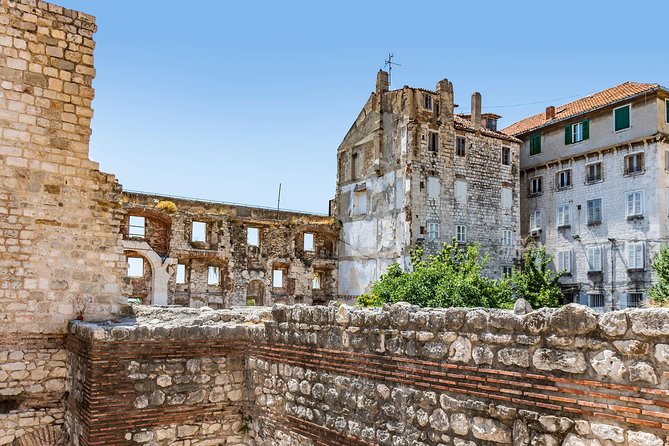
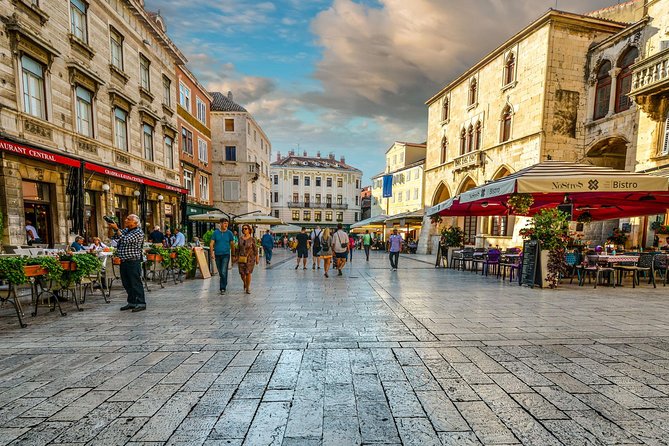
Narodni trg, usually called Pjaca, is a historic square surrounded by Venetian-era buildings. You will see an old city clock and cafés where modern Split carries on around centuries-old architecture.
The stop lasts about 10 minutes, making it one of the longer pauses outside the palace. I like this part because it prevents the tour from becoming only a Roman history lesson. Split’s identity also comes from the medieval and Venetian periods, and Pjaca makes that visible.
Fruit’s Square, or Trg Braće Radić, takes about five minutes. Its name recalls the fruit markets once held there, while baroque palaces now frame the square. It is another good place to watch the city at work and to ask your guide where to return for a drink or meal.
The guide’s local advice can be especially useful here. Rocco is praised for good English, humor, and practical suggestions about what to investigate later. Toni is noted for making the walk feel informal and personal, though one useful criticism was that jokes and historical facts could sometimes be separated more clearly. If you prefer a tightly academic presentation, guide style may vary.
Returning to the Riva
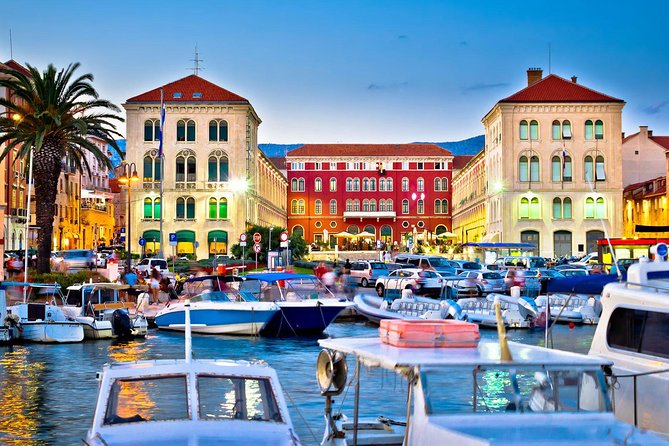
The walk ends back on the Riva after about five minutes at the final stop. Returning to the starting point is convenient, especially if you are fitting the tour between a ferry, meal, or other plans.
By then, the waterfront should look different. You have seen the palace from within, followed its gates, and learned how its Roman foundations support a living town. That is the main success of the route: it gives you a mental map, not just a list of monuments.
I would use the tour as an introduction, then revisit the places that interested me most. The cellars, cathedral, Peristyle, and squares each deserve more time than the schedule allows if you want to inspect details closely.
What the guide can add to the experience
The guide is the most important variable here. The tour includes a professional licensed local guide, and several named guides receive strong praise for warmth, clear English, humor, and local insight.
Anita is described as passionate about Croatia and highly informative. Petra is praised for answering many questions, while Iva is noted for being efficient, friendly, and well prepared. Rocco’s evening walk is valued for its cooler timing, quieter streets, and willingness to continue beyond the strict time limit.
Toni brings a relaxed, friend-like manner and explains both historical events and local stories. That informal approach can make the walk enjoyable, though you may need to ask for clarification if a joke and a historical fact run together.
The strongest common thread is enthusiasm for Split. You are not simply being led from one stone to the next. A good guide helps you see why the city still functions inside an ancient palace.
Timing, weather, and comfort
You can choose between two departure times, and the evening option deserves serious thought during hot weather. One evening group found the streets cooler and quieter than during the day. That can make a major difference on exposed squares and busy palace passages.
The tour operates in all weather conditions, so dress for the forecast. The cancellation terms allow a full refund if you cancel at least 24 hours before the start time. If poor weather or insufficient bookings cause the operator to cancel, you are offered another date or a full refund.
Bring comfortable shoes and be ready to walk on old stone. Children must be accompanied by an adult. Pets are not allowed, and most people can participate, but the route is not suitable for wheelchairs.
The meeting point is near public transportation. Confirmation is provided when you book, and the activity ends where it begins. Food and drinks are not included, so plan your café or restaurant stop after the walk.
Who should book this Split tour
I would recommend it to first-time visitors who want a clear introduction without giving up half a day. It also suits cruise passengers, couples, families with older children, and anyone arriving in Split without knowing how to read the palace’s unusual layout.
It is a good first-day activity. You can gather restaurant suggestions, learn the names of the main squares, and decide which sites deserve a return visit. The tour is also a sensible choice if you prefer a local guide to a recorded audio tour.
I would hesitate if you want a slow, specialist examination of Roman architecture or church interiors. The schedule is brisk, and some stops last only five minutes. I would also think twice if uneven stone is difficult for you or if you require wheelchair access.
Should you book it?
Book this tour if you want a friendly, efficient introduction to Split’s old center and value a guide who can connect Roman remains with Croatian life today. The $30.23 price is reasonable for the route, the local perspective, and the time saved finding the main sights yourself.
Choose the evening departure if heat and crowds concern you. Ask questions, wear shoes with firm soles, and treat the walk as your orientation rather than your complete visit to Diocletian’s Palace.
Skip it only if you already know the old town well or want a longer, more technical history tour. For most first visits, this is a useful way to get your bearings fast and then explore Split with better context.
FAQ
How long does the Split Old Town History Walking Tour last?
The tour lasts approximately 1 hour and 30 minutes.
What language is the tour offered in?
The tour is offered in English.
Where does the tour start and finish?
It starts at Obala Hrvatskog narodnog preporoda 21, 21000 Split, Croatia, and ends back at the same meeting point.
What is included in the tour price?
The price includes a professional licensed local guide. Food and drinks are not included.
How many people can join the tour?
The activity has a maximum of 20 participants.
Are children and pets allowed?
Children must be accompanied by an adult. Pets are not allowed on the tour.
Can I cancel for a full refund?
Yes. You can cancel at least 24 hours before the experience starts for a full refund. Cancellations or changes made less than 24 hours before the start time are not refunded or accepted.
Just added around Split
- From Makarska : Wine Tasting Grabovac Tour★ 4.5 · 30 reviews
- Essential Diocletian’s Palace Tour for First-Time Visitors★ 4.8 · 19 reviews
- Unique vintage Tomos moped tour Split – Back to the ’80s★ 4.8 · 17 reviews
- Walking Tour Split★ 4.7 · 61 reviews
- Trogir; Private walking tour of higlights of Trogir★ 4.7 · 3 reviews
- Trogir: White Lagoon, Maslinica & Blue Lagoon Speedboat Tour★ 4.8 · 11 reviews
- Trogir 1.5-Hour City Tour★ 4.4 · 37 reviews
- Split: Trogir Open Top Bus Trip + Free Split Walking Tour★ 4.1 · 17 reviews
Split Old Town Walking Tours, compared.
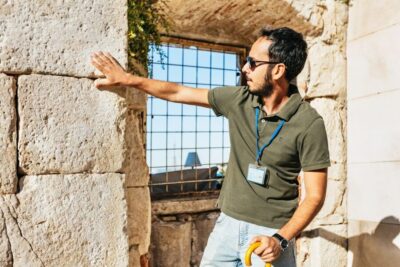
Split: Old Town and Diocletian Palace Walking Tour
Read our review →
Walking Tour of Split and Diocletian’s Palace
Read our review →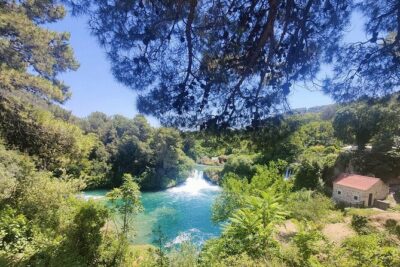
Krka Waterfalls tour with Trogir Walking tour and Krka panoramic boat cruise
Read our review →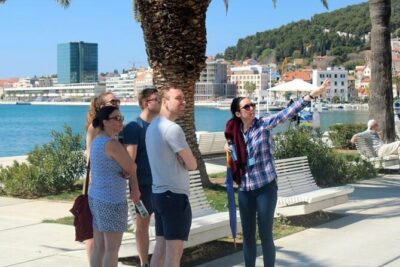
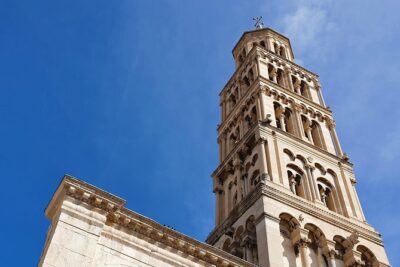
Walking Tour of Split with a ‘Magister’ of History
Read our review →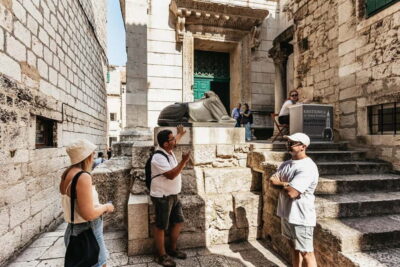
Split: Diocletian Palace & Old Town Guided Walking Tour
Read our review →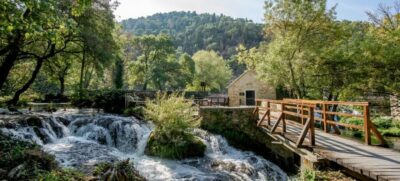
From Split: Krka Waterfalls Cruise & Trogir Walking Tour
Read our review →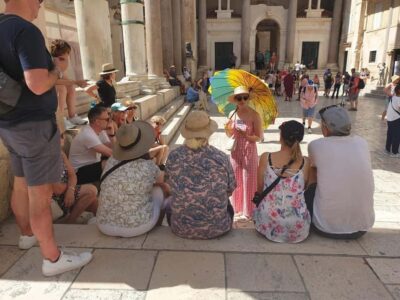
Browse the lists this tour appears in