
Reviewed · SPLIT OLD TOWN WALKING TOURS
SPLIT-PREMIUM Emperor’s Walking Tour for History Lovers + Museum
Diocletian’s Palace is not a fenced-off ruin. It is the center of Split, with homes, cafés, shops, lanes, and Roman walls still woven into daily life. This tour helps you read that jumble, from the imperial Peristyle to the medieval streets built inside the palace.
I like the small maximum of 15 people, which makes it easier to hear and ask questions. I also like the local guides, especially Joško, Daniela, and Joe, who explain the city with humor, personal stories, and a clear feel for its past. The main drawback is that the group tour is for adults only, and the €10 museum entry is extra.
Key points to know before booking
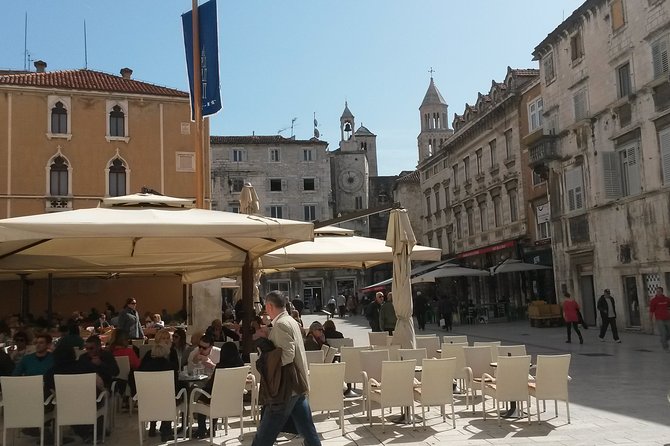
- Roman palace at the heart of modern Split: See the Peristyle, Vestibule, Golden Gate, Temple of Jupiter, and palace cellars.
- Local guides with personality: Joško, Daniela, Joe, and Joseph are praised for clear explanations, humor, patience, and local insight.
- Small-group format: The group tour has a maximum of 15 people and requires at least four to operate.
- A real history tour: You will learn about Roman, medieval, Croatian, and Dalmatian history, not receive a dedicated Game of Thrones tour.
- Useful for cruise visits: The waterfront meeting point is within walking distance of the cruise port, and the tour returns to the same place.
- Plan for extra costs: The Diocletian’s Cellars museum costs €10 per person, and guide gratuities are not included.
Why Diocletian’s Palace needs a guide
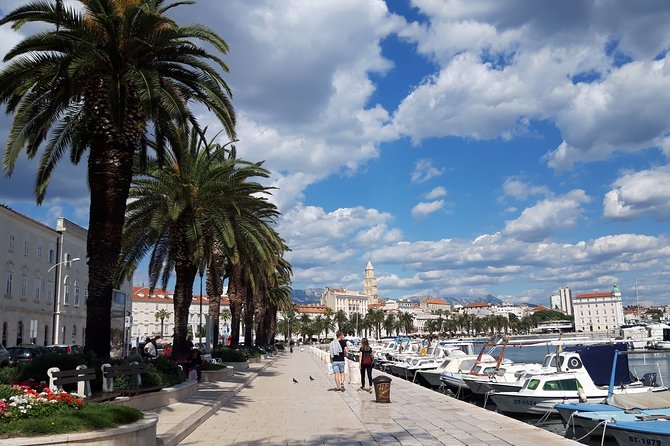
Split’s old center can look simple at first: a waterfront promenade, a few broad squares, and a maze of stone lanes. The story is far more layered. Roman Emperor Diocletian built his enormous retirement residence here in 305 AD, then later centuries filled its halls and courtyards with homes, churches, shops, and public spaces.
That is the great strength of this walking tour. You are not just shown a Roman wall and told its date. You are guided through the ways the palace changed after the emperor was gone. The old structure becomes a living town rather than a collection of isolated monuments.
I would choose this tour early in a Split visit. It gives you a useful map of the old center, and the guide can explain what you are seeing before you return on your own. It also helps you avoid spending your first hour in the palace wondering which lane leads where.
The emphasis is firmly on history. You will see places connected with Game of Thrones, but the guide does not build the tour around filming locations. If Roman and Croatian history interest you, that focus is a strength. If television locations are your main reason for visiting Split, you may want a different tour or some advance research.
More walks through the old quarter in Split:
- Split: Old Town and Diocletian Palace Walking Tour
★ 4.9 · 4,727 reviews - Walking Tour of Split and Diocletian’s Palace
★ 5.0 · 2,588 reviews - Krka Waterfalls tour with Trogir Walking tour and Krka panoramic boat cruise
★ 5.0 · 1,659 reviews
Starting beside the Riva promenade
The tour begins and ends at the Main Stage on the Riva promenade, at Obala Hrvatskog narodnog preporoda 22. This is a practical meeting point beside the waterfront, and it is within walking distance of the cruise port.
The Riva is a good place to begin because it immediately shows how Split works. The sea is at one side, the old city is just behind you, and the palace walls rise among ordinary city buildings. You are not being driven to a distant archaeological site. The tour starts in the middle of local life.
The walk returns to the same meeting point, so you do not need to arrange transport at the end. That matters if you have a ship departure, a dinner reservation, or a hotel near the waterfront. Still, leave enough time after the tour for the walk back to your ship or for any extra visits you plan to make.
The palace and Old Split in one compact walk
The first major section covers Diocletian’s Palace and the medieval Old Town. Each is given about 25 minutes, though the actual pace can vary with questions, crowd levels, and the guide.
The palace was built as a private imperial residence, military complex, and seaside retreat. Its scale is hard to grasp from one viewpoint, so a guide helps you connect the gates, courtyards, underground areas, and ceremonial spaces. You will hear how the Roman plan shaped the city that followed.
Old Split adds the next chapter. Instead of treating the medieval center as separate from the Roman palace, the tour shows how later residents adapted the old structure. That is one of the most useful ideas to carry with you as you walk alone afterward: look up, look down, and notice where Roman stone meets later construction.
The route is described as about two hours, but some outings have lasted closer to two and a half or even three hours when the guide had time to answer questions or adjust for a slower pace. Do not book this with a departure scheduled immediately afterward. The extra time can be generous, but it is not a guarantee.
The Peristyle, Cathedral, and Vestibule

The Peristyle is the ceremonial heart of Diocletian’s Palace. This open square once formed part of the approach to the emperor’s private quarters, and it remains one of the clearest places to picture imperial power in Split.
The guide explains the square rather than rushing through it for a photograph. You will learn how the palace was organized and why this space mattered. The setting also makes a good pause point, since the surrounding stone and columns give the Roman plan a strong visual anchor.
The Cathedral of Saint Domnius is viewed from outside. Its connection with the palace is one of Split’s most striking examples of change over time. An imperial mausoleum became a Christian cathedral, giving the old Roman center a new purpose.
This tour does not include interior admission to the cathedral or its treasury. That is useful to know before you arrive. You can make a separate visit afterward if you want to see inside, as long as opening times and admission arrangements suit your schedule.
The Vestibule was the main entrance to the emperor’s private residence. Its rounded form and position make it an important link between the public ceremonial areas and the private imperial quarters. The stop is brief, but the guide’s explanation gives the space more meaning than a quick photo stop would.
More history walks in Split:
- Walking Tour of Split with a ‘Magister’ of History
★ 5.0 · 1,122 reviews - Split Walking Tour with Professor of History
★ 5.0 · 926 reviews - Split: History and Heritage Walking Tour
★ 4.9 · 650 reviews - Split History and Gastro Small-Group Tour with Food and Drinks
★ 5.0 · 375 reviews
The smaller squares of Split
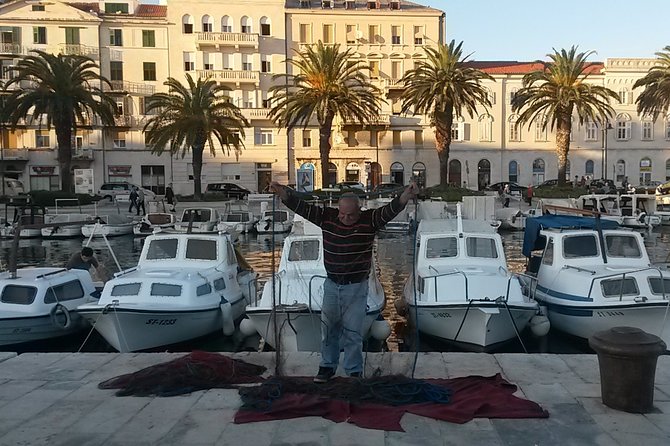
The itinerary moves beyond the main palace landmarks into the squares that give Old Split its everyday character.
At Fruit’s Square, also called Trg Braće Radić, you will hear about the former green market and see the statue of Marko Marulić, often called the father of Croatian literature. This stop brings Croatian cultural history into a tour that could otherwise stay focused on Rome.
Narodni Trg, or People’s Square, is the largest and liveliest piazza in the old center. It shows how Split’s public life moved beyond the original palace boundaries. The tour uses these squares to connect the old stone buildings with the city people experience today.
The City Clock is another short but memorable stop. You will see a 500-year-old 24-hour clock, a reminder that Split’s past is not limited to the Roman period. The tour moves quickly through these points, so listen closely and ask questions when something catches your interest.
Grgur Ninski and the Golden Gate
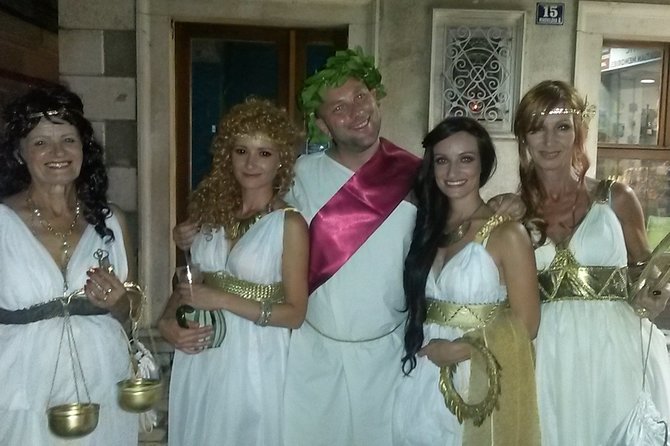
The statue of Grgur Ninski introduces one of the major historical figures in Croatia. This is a useful counterpoint to the palace story because it shifts the focus from an emperor of late antiquity to Croatian religious and national history.
The Golden Gate is the main and most impressive entrance to Diocletian’s Palace. Its position helps you understand the palace as a fortified complex rather than only a royal residence. Look at how the gate connects the outer city with the old imperial core.
This part of the walk is also where crowd levels may affect the experience. Split’s center can become crowded, especially when cruise ships are in port. A smaller group helps, since the guide does not need to gather a large crowd around every stop, but you should still expect narrow lanes and pauses for passing pedestrians.
Temple of Jupiter and the palace cellars
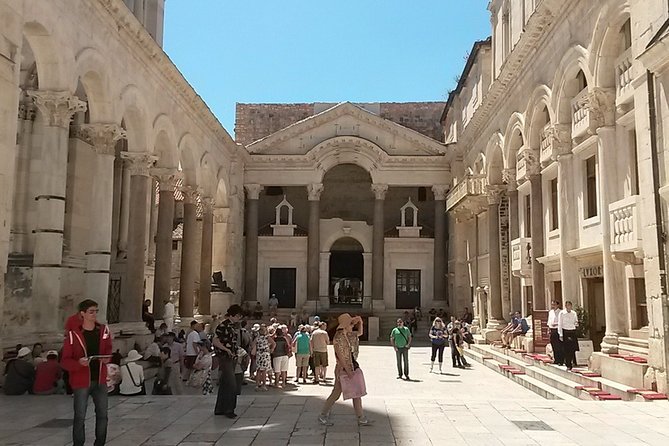
The Temple of Jupiter is viewed from outside, with an optional interior visit available at an additional cost. It is another place where the tour shows the transition from Roman religion to later Christian use.
The most important optional admission is the Diocletian’s Cellars museum, which costs €10 per person and is not included in the tour price. The cellars are described as the best-preserved part of the palace. They are valuable because they let you see the original planning and construction more clearly than many of the upper-level spaces, which were altered over the centuries.
At $30 per person, the tour offers good value if you want a guide to interpret the palace and old town rather than simply walk through them. The price covers the licensed resident guide and the organized route, but not the cellars, other optional admissions, or gratuity.
I would treat the €10 cellars ticket as part of the real cost if you want the full experience. The tour can still work without it, but the underground section is one of the most important chances to understand the Roman structure.
What the guides do best
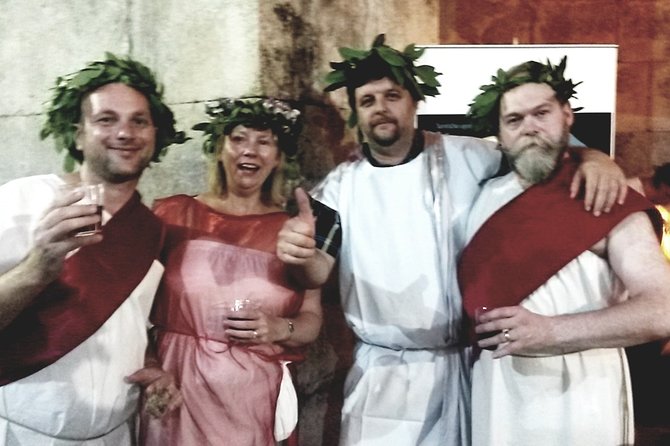
The strongest feature is the quality of the guiding. Joško is repeatedly described as funny, patient, thorough, and passionate about Split. Daniela is praised for her detailed explanation of Dalmatia and her ability to make the palace feel understandable without rushing. Joe and Joseph are also described as local guides with strong personal knowledge of the city.
That local connection matters here. Split is not only a Roman site, and a guide raised in or closely connected with the city can place the palace within Croatia’s later story. You may also get practical help after the walk, such as restaurant or bakery suggestions. Joško has even helped visitors communicate dietary needs at a restaurant and assisted with photographs.
The guides also seem willing to adapt. One outing was extended to accommodate a person with limited mobility, while another was shaped around the group’s interests. This does not turn the walk into a fully accessible tour, and no detailed accessibility plan is provided, but it suggests that you should tell the guide about mobility concerns at the start.
The tone is educational without being stiff. Several guides use humor to keep the Roman dates, architectural terms, and political changes from becoming a lecture. One small criticism is that Joško was occasionally quiet, so you should stay close and speak up if you cannot hear.
Group size, timing, and weather
The group tour is adults only and has a maximum of 15 people. It requires at least four participants to run. A private version is available for all ages, which is the better choice for families with children or a group wanting a more tailored pace.
The small format is especially useful in the old center. You can hear the guide more easily, ask follow-up questions, and avoid the feel of being herded from one photo stop to the next. During busy periods, such as days with two cruise ships in port, this difference becomes more noticeable.
Split can be very hot in summer. Early morning is the sensible choice, especially in August or during a heat wave. Wear practical shoes, bring water, and expect a lot of sun on exposed stone streets. The route is a walking tour through an old urban center, not a shaded garden stroll.
The activity needs good weather. If poor weather forces cancellation, you are offered another date or a full refund. The same applies if the minimum number of participants is not reached. For ordinary cancellations, you receive a full refund if you cancel at least 24 hours before the start time. Inside that window, no refund is provided.
Who should book this Split history tour?
I would recommend it most strongly to first-time visitors, cruise passengers with a few hours in town, and anyone who wants Roman and Croatian history explained by a local. It also suits independent walkers who prefer to explore alone afterward but want a strong introduction first.
History fans get the most from the route, especially if they are curious about how a Roman palace became a medieval and modern city. The mix of imperial architecture, Croatian culture, religious change, and daily city life gives the tour more range than a quick palace walk.
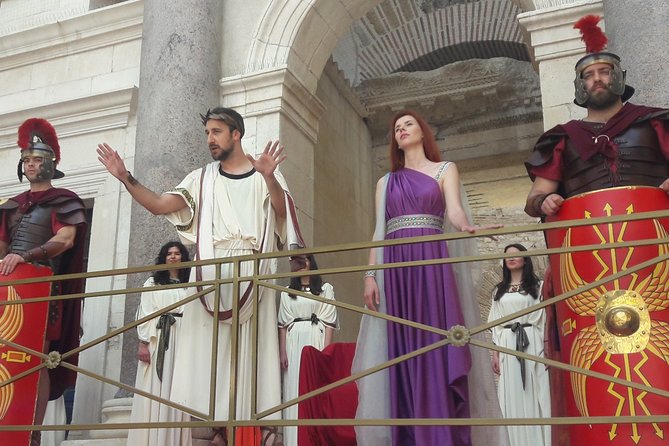
It is less suitable if you want a theatrical presentation, costumed performers, or a dedicated Game of Thrones route. It is also not the right group option for children under 18, since the group tour is adults only. Families should ask about the private version.
Should you book it?
Book this tour if you want Split’s old center to make sense, not just look attractive. For $30, the local guide, small group, and carefully connected route offer solid value, especially when cruise crowds fill the palace lanes.
Choose an early start in hot weather, allow extra time beyond the stated two hours, and budget another €10 if you want the cellars. If Joško, Daniela, Joe, or Joseph is leading your departure, expect a personal, history-focused walk with plenty of room for questions. For a first visit to Split, this is a sensible way to get your bearings and understand why the palace is still the city’s beating center.
FAQ
Where does the tour start?
It starts at the Main Stage on the Riva promenade, at Obala Hrvatskog narodnog preporoda 22, 21000 Split, Croatia.
Where does the tour finish?
The tour ends back at the same meeting point on the Riva promenade.
How long does the tour last?
The advertised duration is approximately two hours. Some outings have lasted longer, including around two and a half to three hours.
What language is the tour offered in?
The tour is offered in English.
How much does the tour cost?
The listed price is $30 per person.
Is admission to the Diocletian’s Cellars included?
No. Admission to the Museum of Diocletian’s Cellars costs €10 per person and is paid separately.
Is the Cathedral of Saint Domnius included?
The cathedral is seen from outside during the walk. Interior admission is not included.
Is the Temple of Jupiter included?
The Temple of Jupiter is viewed from outside. An optional interior visit is not included in the tour price.
Can children join the group tour?
No. The group tour is for adults only and is not recommended for anyone under 18. The private tour is available for all ages.
How many people can join the group?
The group tour has a maximum of 15 people and requires at least four participants to operate.
Is the tour wheelchair accessible?
The available information does not provide a formal accessibility rating. A guide has accommodated a participant with mobility difficulties, but you should discuss your needs before or at the start of the walk.
Can I cancel for a full refund?
Yes, if you cancel at least 24 hours before the experience begins. Cancellations or changes made within 24 hours are not refunded or accepted.
More Museums in Split
- Blue Lagoon & Underwater Museum from Split with Lunch & Drinks
★ 4.5 · 1,122 reviews - Split: Klis Fortress GOT and Olive Museum Entry Tickets
★ 4.6 · 283 reviews - Trogir: Boat tour to Unique underwater museum
★ 4.5 · 229 reviews - Visit Klis fortress GOT & Olive museum Klis
★ 4.5 · 77 reviews
Just added around Split
- From Makarska : Wine Tasting Grabovac Tour★ 4.5 · 30 reviews
- Essential Diocletian’s Palace Tour for First-Time Visitors★ 4.8 · 19 reviews
- Unique vintage Tomos moped tour Split – Back to the ’80s★ 4.8 · 17 reviews
- Walking Tour Split★ 4.7 · 61 reviews
- Trogir; Private walking tour of higlights of Trogir★ 4.7 · 3 reviews
- Trogir: White Lagoon, Maslinica & Blue Lagoon Speedboat Tour★ 4.8 · 11 reviews
- Trogir 1.5-Hour City Tour★ 4.4 · 37 reviews
- Split: Trogir Open Top Bus Trip + Free Split Walking Tour★ 4.1 · 17 reviews
Split Old Town Walking Tours, compared.
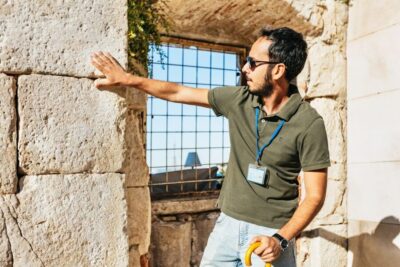
Split: Old Town and Diocletian Palace Walking Tour
Read our review →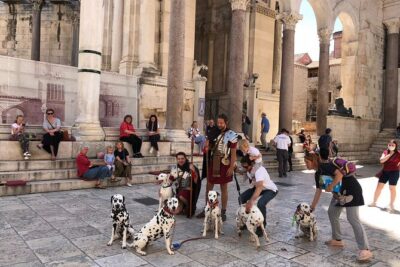
Walking Tour of Split and Diocletian’s Palace
Read our review →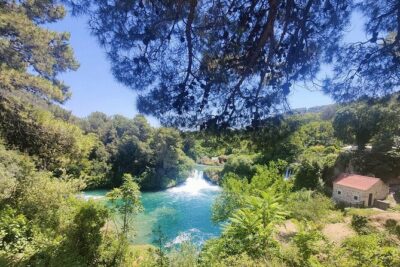
Krka Waterfalls tour with Trogir Walking tour and Krka panoramic boat cruise
Read our review →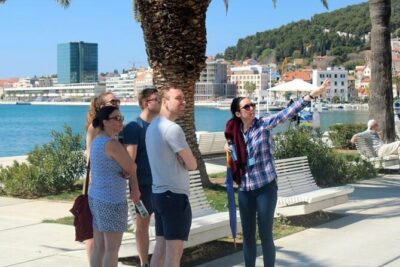
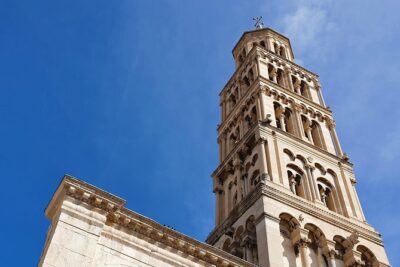
Walking Tour of Split with a ‘Magister’ of History
Read our review →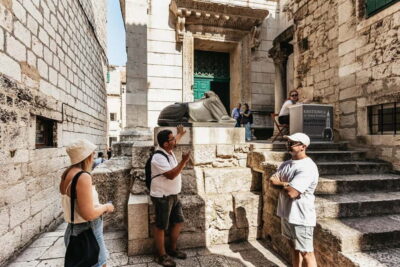
Split: Diocletian Palace & Old Town Guided Walking Tour
Read our review →
From Split: Krka Waterfalls Cruise & Trogir Walking Tour
Read our review →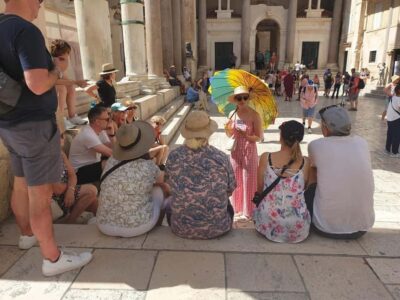
Browse the lists this tour appears in