
Reviewed · SPLIT OLD TOWN WALKING TOURS
Split: Private Walking Tour for Families with kids (5-17y)
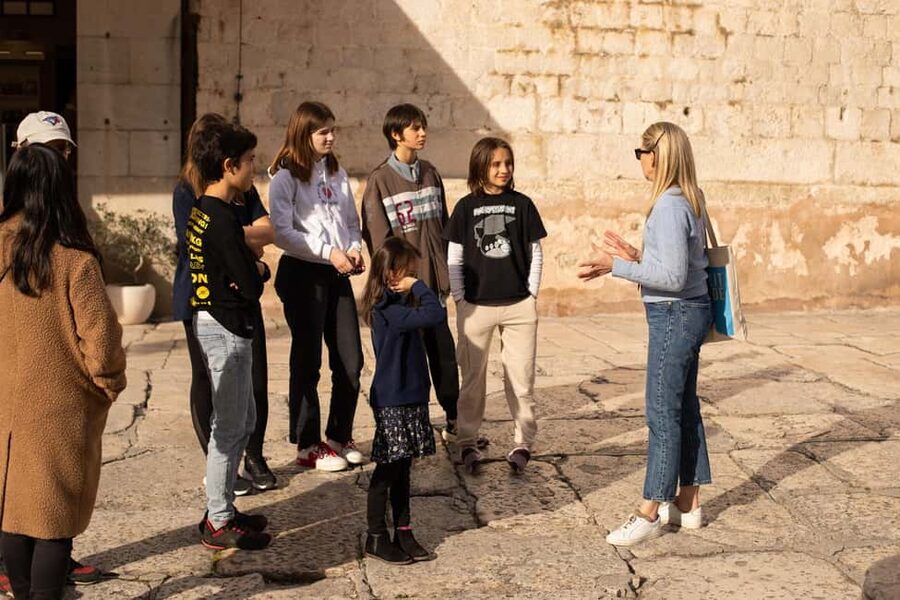
Diocletian’s Palace becomes a giant history game on this private family tour. You follow Roman clues, test your wits with riddles, meet the emperor at the Peristil, and finish with sweets from a local chocolate maker. The treasure-hunt format gives children a reason to look closely instead of simply trailing behind an adult.
I especially like the private setup, since the guide can focus on your children’s questions and pace. I also like the smart ending: a tasting of sweets after the palace walk gives young minds a pleasant reward. The main consideration is the price, $352 for up to six people, which is strong value for a full family group but costly for only two or three.
Key points to know
- Roman history becomes a family puzzle: Children learn about Emperor Diocletian, Jupiter, the Peristil, and the cathedral through questions and games.
- The tour is private for up to six people: Your family does not share the guide with a large group.
- Sweets are part of the experience: Chocolate and other treats from a local manufactory are included.
- The cathedral hides a good mystery: Your guide explains Diocletian’s vanished coffin and the important saint connected with the building.
- It suits children from 5 to 17: The mix of stories, riddles, and tasting works across a wide age range.
- English, French, and German are offered: Previous guides have included Dana and Jen.
Why Diocletian’s Palace works so well for children
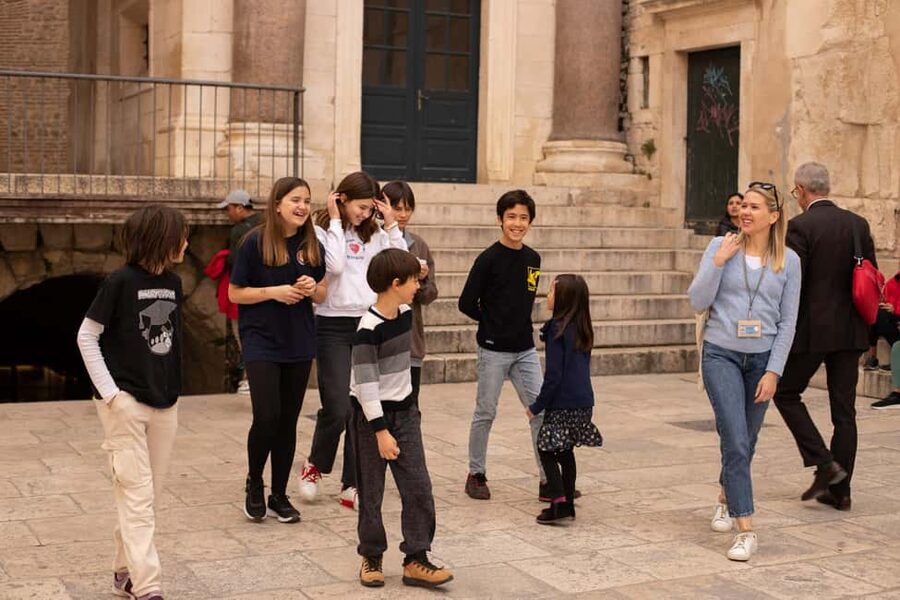
Split’s old center is not a museum sealed behind glass. Diocletian’s Palace is woven into the modern city, with homes, shops, lanes, and working streets inside and around the Roman remains. That gives children something concrete to inspect as they learn.
The palace dates to the Roman era, about 1,700 years ago. A standard history talk can lose a seven-year-old within minutes. This tour uses a different method: your children have to search, answer, and solve. History becomes a task rather than a lecture.
The private format matters here. A guide leading your own family can give extra time to a child who wants to ask questions, or move on when the youngest member begins to tire. You also avoid the awkwardness of keeping your children quiet while a guide explains the same point to a large adult group.
The age range is broad, from 5 to 17. That means the guide has to keep the content lively without making it childish. The puzzle structure helps, because younger children can enjoy searching and guessing while older children can follow the political and religious details.
More walks through the old quarter in Split:
- Split: Old Town and Diocletian Palace Walking Tour
★ 4.9 · 4,727 reviews - Walking Tour of Split and Diocletian’s Palace
★ 5.0 · 2,588 reviews - Krka Waterfalls tour with Trogir Walking tour and Krka panoramic boat cruise
★ 5.0 · 1,659 reviews
Meeting Emperor Diocletian at the Peristil
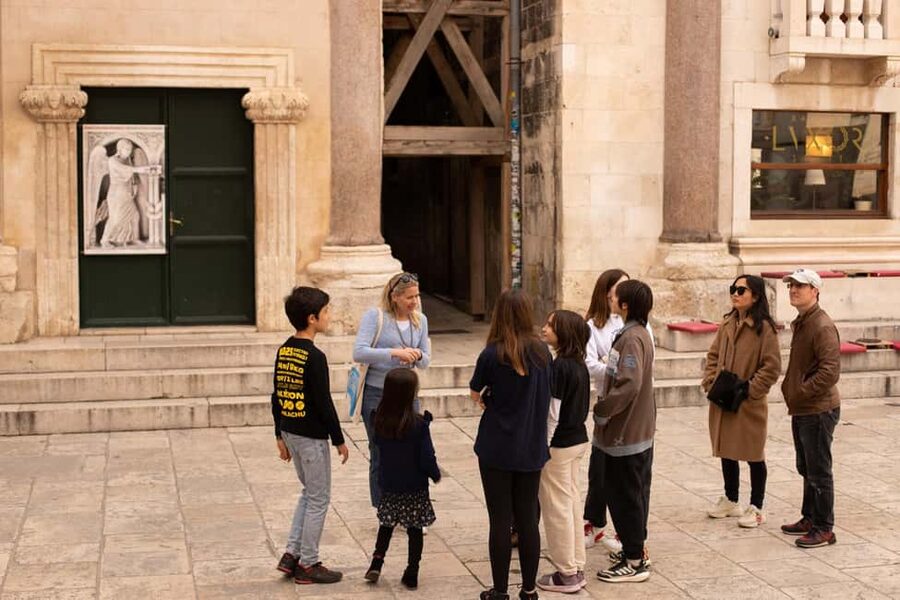
The Peristil is one of the tour’s strongest teaching stops. This was the ceremonial heart of the palace, where Diocletian presented himself to his people. Your guide explains that the emperor expected visitors to bow before him, a useful detail that helps children picture Roman power in human terms.
Diocletian did not settle for being seen as an ordinary ruler. He presented himself as the son of Jupiter, the mighty Roman god. For children, that is an easy story hook. They can compare the emperor’s public image with the way modern leaders use symbols, ceremony, and grand settings to look powerful.
The Peristil also gives your family a chance to connect the palace’s architecture with its purpose. This was not simply a comfortable residence. It was a place built to control how the emperor appeared to the world.
The guide uses a quiz and riddles to keep the stop active. You will not know every answer, and that is the point. A wrong guess can lead to a short explanation, while a correct answer gives children the satisfaction of moving the family closer to the treasure-hunt goal.
A cathedral with a surprising Roman past
The Split Cathedral adds a sharp change of mood. The building is associated with a famous saint, but it also has a direct link to Diocletian. Your guide tells you that the cathedral once held the emperor’s elaborate coffin, then asks the obvious child-friendly question: where did it go?
That missing coffin gives the stop a touch of mystery. It also helps show how old Roman buildings can be reused and changed over time. The palace was not frozen in the fourth century. Its spaces gained new functions, new symbols, and new religious meaning.
For older children and teenagers, this is likely one of the more interesting parts of the tour. They can think about why an emperor’s tomb would be connected with a cathedral and what happened when later generations changed the purpose of the site.
For younger children, the missing coffin is the hook. They do not need to follow every historical detail to enjoy the search for an answer. The guide can build the explanation around the puzzle rather than asking children to remember a long list of dates.
You should expect the cathedral stop to be educational rather than a separate religious tour. The supplied details focus on the saint, the coffin, and the palace’s Roman story.
Treasure hunting through the palace
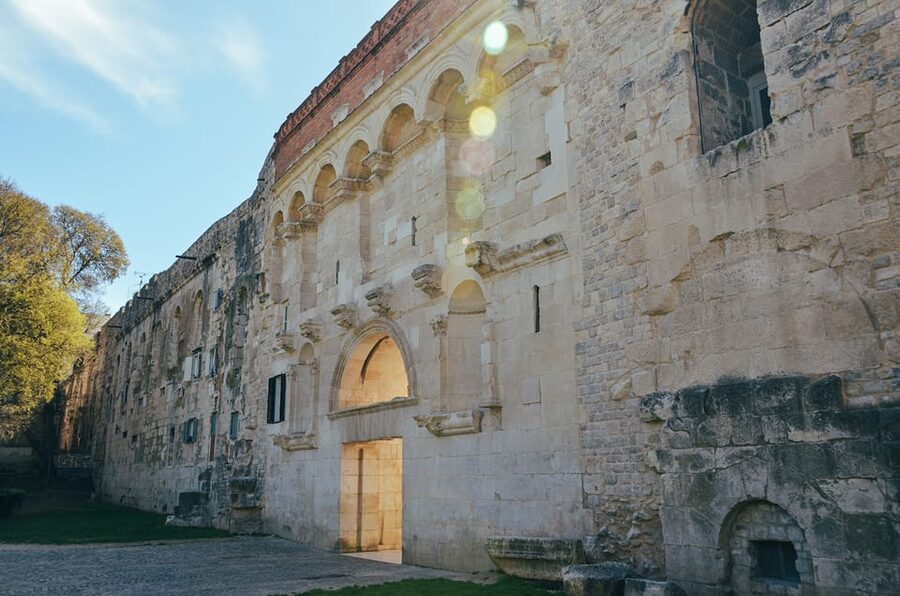
The tour’s main strength is the way it turns movement through Split into a series of small challenges. Instead of asking children to admire an ancient wall because an adult says it is important, the guide gives them a reason to inspect the surroundings.
The exact riddles can vary, but the format includes a quiz, games, and a treasure hunt. That is useful for families with different attention spans. One child may enjoy the factual questions. Another may prefer finding a clue. A teenager may respond best to the odd behavior of a Roman emperor who claimed divine parentage.
I would let the children take the lead. Keep phones in your pocket when possible, encourage them to answer before you do, and treat wrong answers as part of the game. The tour works best when adults resist turning it into a private school lesson.
The private group also allows parents to add family humor. If your children enjoy competition, you can divide into teams. If one child is shy, the guide can ask questions more gently than a large group setting allows.
There is one practical limitation. No duration is provided, so you cannot plan the rest of your day around an exact finishing time. Ask for the expected length when booking if you have a meal reservation or another timed activity.
More walking tours in Split:
- Split & Diocletian’s Palace Walking Tour
★ 5.0 · 1,125 reviews - Walking Tour of Split with a ‘Magister’ of History
★ 5.0 · 1,122 reviews - Split Walking Tour with Professor of History
★ 5.0 · 926 reviews - Split: Diocletian Palace & Old Town Guided Walking Tour
★ 4.7 · 882 reviews
Sweets from a local manufactory
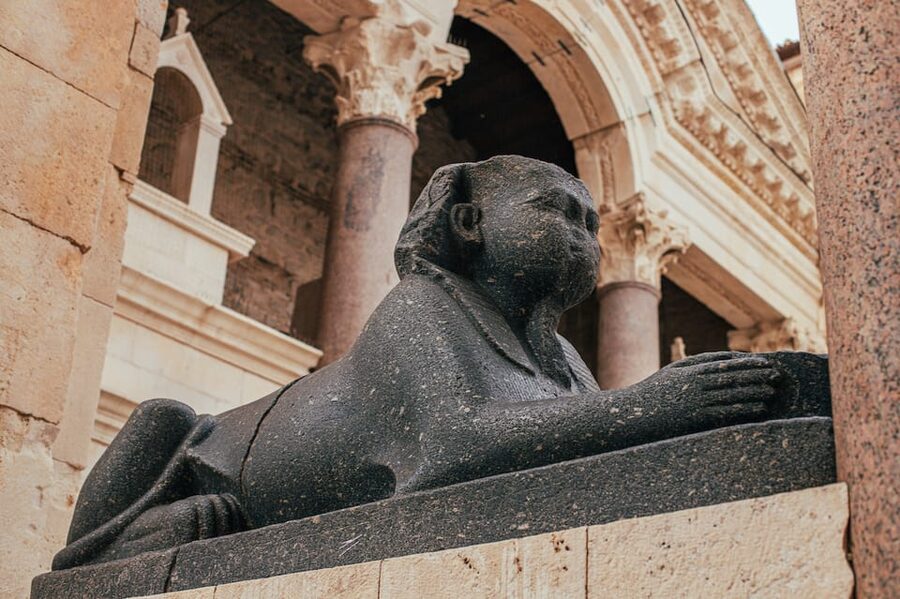
The tasting is more than a small extra. It gives the tour a clear finish and helps balance the serious Roman material with something immediate and fun. After the palace stories and puzzles, your family can try sweets and chocolates from a local manufactory.
The included tasting covers the sweets and chocolate listed for the experience. Other food and drinks are not included, so you should not treat this as lunch or a full snack stop. Children with a large appetite may still need something else later.
I like this ending because it is linked to the tour’s rhythm. The children work through the history first, then receive a treat. It is a simple reward, but it can help younger children stay focused during the earlier palace stops.
The tasting also gives you a small local food connection without turning the experience into a food tour. If your family enjoys chocolate, this will likely be a highlight. If someone has food allergies or dietary restrictions, confirm what is available before booking, since no ingredient or dietary information is provided.
What the guide needs to do well
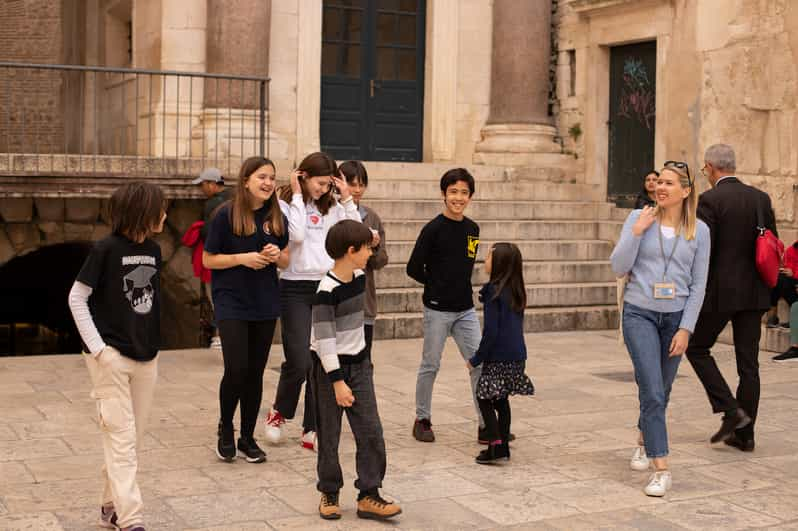
A family tour succeeds or fails on the guide’s ability to read the group. The strongest evidence here comes from the specific family experiences with Dana and Jen. Dana kept two girls, ages 7 and 9, involved in the sights and activities, while Jen held the attention of three children between 7 and 12.
That age range is useful to note. The format has worked for early elementary children and older primary-school children, not just preschoolers. One family also appreciated the children’s interest in the palace cats, a reminder that small, unexpected details can become part of a good walking tour.
Guide language choices are English, French, and German. Jen was praised for speaking clear English, but your booking should state your preferred language so the provider can arrange the right guide.
Because the tour is private, you can tell the guide in advance if your children are especially interested in Roman gods, puzzles, architecture, chocolate, or religious history. The supplied information does not promise a custom route, so think of this as a useful request rather than a guaranteed feature.
Is $352 a fair family price?
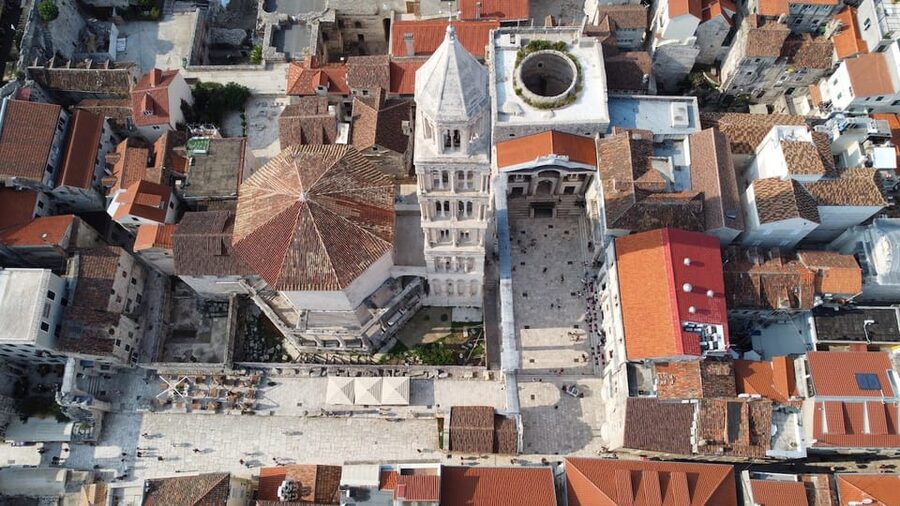
The price is $352 per group of up to six people. If six family members join, that works out to about $59 per person. For four people, it becomes $88 each, and for only two people, $176 each.
That calculation explains who gets the best value. A family of five or six receives a private guide, palace walk, games, quiz, and sweets at a reasonable per-person rate for a specialized activity. A smaller family may still value the privacy, but the cost becomes harder to justify.
You are paying for more than an ordinary orientation walk. The guide has to present the palace in a child-friendly way, manage a treasure hunt, answer questions, and keep several ages involved. The sweets are included, though other food and drinks are not.
The experience has a perfect five-star rating from five submitted ratings, with particular praise for the children’s engagement, the puzzles, the historical content, and the ending. That is a small sample, so I would treat it as encouraging rather than final proof. Still, the praised qualities match the tour’s stated design.
Who should book this Split experience?
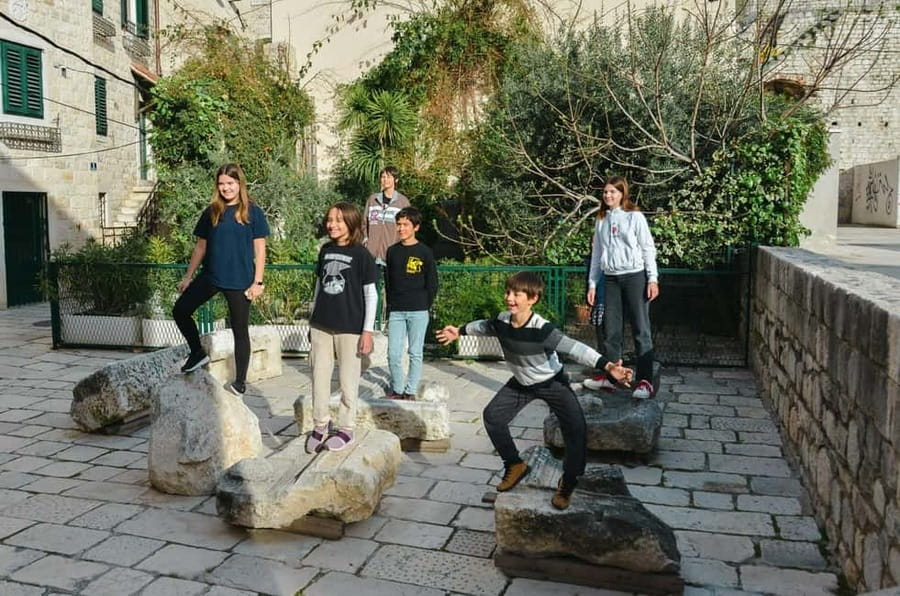
This is a good choice if your family wants history but knows that a standard adult walking tour may lose the children. It is especially suited to families with children between 5 and 17 who like games, guessing, and rewards.
It should also work well for siblings with different interests. A younger child can focus on the treasure hunt and sweets, while an older child can ask about Diocletian, Jupiter, the Peristil, and the cathedral.
I would choose it for a family that values a private guide and wants one central Split activity with both learning and fun. I would not choose it if your priority is a long food tasting, a full meal, or a detailed specialist lecture on Roman architecture.
The price is easiest to defend when you can fill most of the six-person group. If you have only two people, compare it with other private tours before committing. The flexible booking terms help: you can reserve and pay later, and cancellation up to 24 hours before the experience brings a full refund.
Should you book this private palace tour?
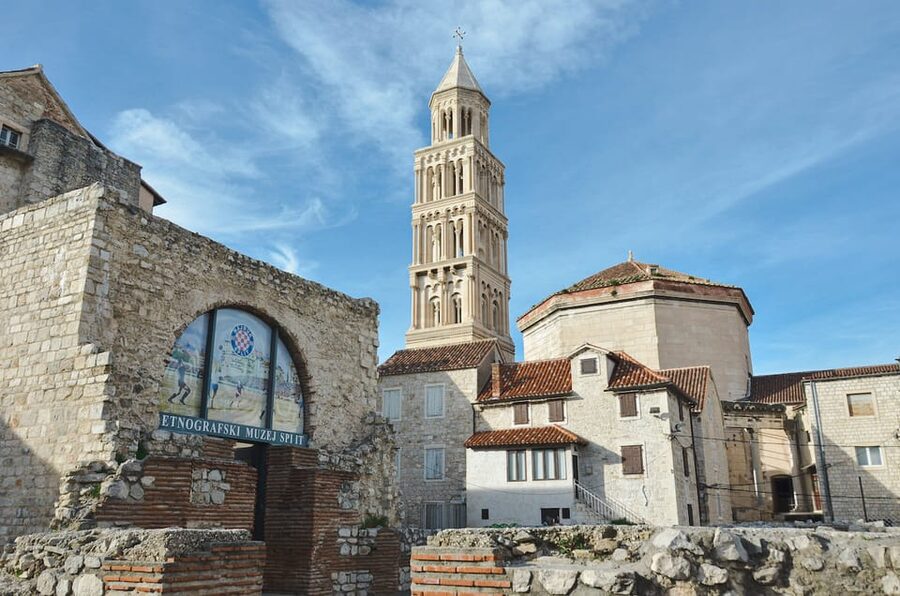
Book it if you want your children to remember Split as a place where they solved a mystery, met a powerful Roman emperor, explored a cathedral with a missing coffin, and ate local sweets. The puzzles and private format are the main reasons to choose it.
I would be most comfortable recommending it to families with at least four people, since the group price then makes better sense. Ask about the expected duration and any dietary concerns before booking. If those details fit your plans, this is a practical way to give children a real connection to Diocletian’s Palace without asking them to endure a dry history lesson.
FAQ
Where does the tour take place?
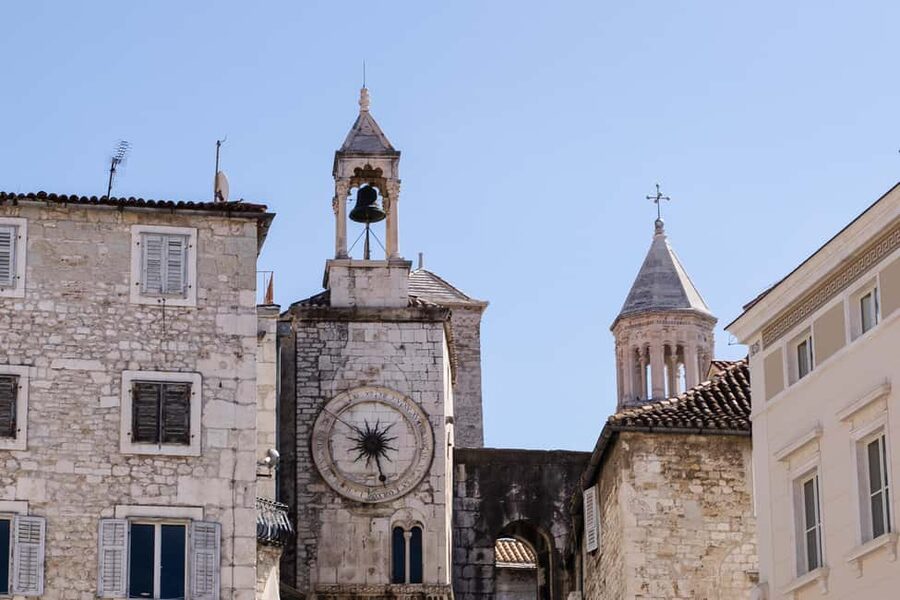
The tour takes place in Split, in Dalmatia, Croatia, and focuses on Diocletian’s Palace.
Is this a private tour?
Yes. The walking tour is private for your family and allows up to six people per group.
What ages is the tour designed for?
The experience is designed for children and teens ages 5 to 17.
Which languages are available?
The tour is offered in English, French, and German.
Are sweets included?
Yes. Sweets and chocolate from a local manufactory are included.
Is food or drink besides the sweets included?
No. Other food and drinks are not included.
Can I cancel for a full refund?
Yes. You can cancel up to 24 hours in advance for a full refund, and you can reserve the tour while paying nothing at the time of booking.
Just added around Split
- From Makarska : Wine Tasting Grabovac Tour★ 4.5 · 30 reviews
- Essential Diocletian’s Palace Tour for First-Time Visitors★ 4.8 · 19 reviews
- Unique vintage Tomos moped tour Split – Back to the ’80s★ 4.8 · 17 reviews
- Walking Tour Split★ 4.7 · 61 reviews
- Trogir; Private walking tour of higlights of Trogir★ 4.7 · 3 reviews
- Trogir: White Lagoon, Maslinica & Blue Lagoon Speedboat Tour★ 4.8 · 11 reviews
- Trogir 1.5-Hour City Tour★ 4.4 · 37 reviews
- Split: Trogir Open Top Bus Trip + Free Split Walking Tour★ 4.1 · 17 reviews
Split Old Town Walking Tours, compared.
Split: Old Town and Diocletian Palace Walking Tour
Read our review →
Walking Tour of Split and Diocletian’s Palace
Read our review →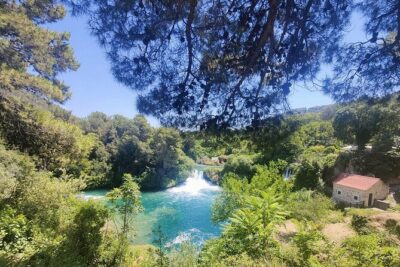
Krka Waterfalls tour with Trogir Walking tour and Krka panoramic boat cruise
Read our review →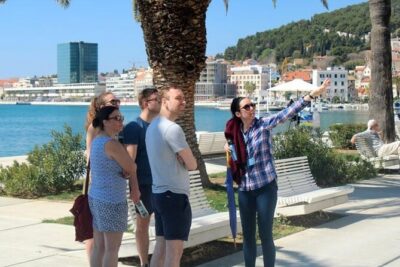

Walking Tour of Split with a ‘Magister’ of History
Read our review →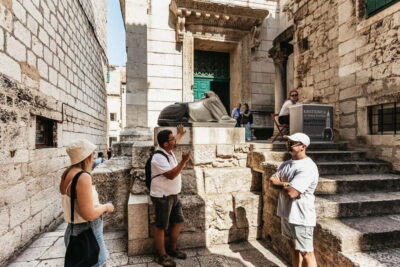
Split: Diocletian Palace & Old Town Guided Walking Tour
Read our review →
From Split: Krka Waterfalls Cruise & Trogir Walking Tour
Read our review →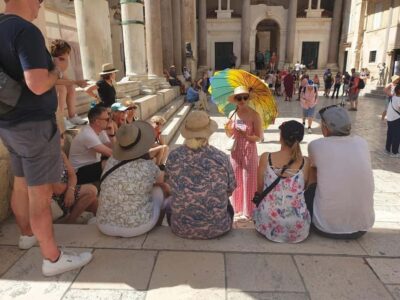
Browse the lists this tour appears in