
Reviewed · SPLIT OLD TOWN WALKING TOURS
Split Walking Tour with History Professor
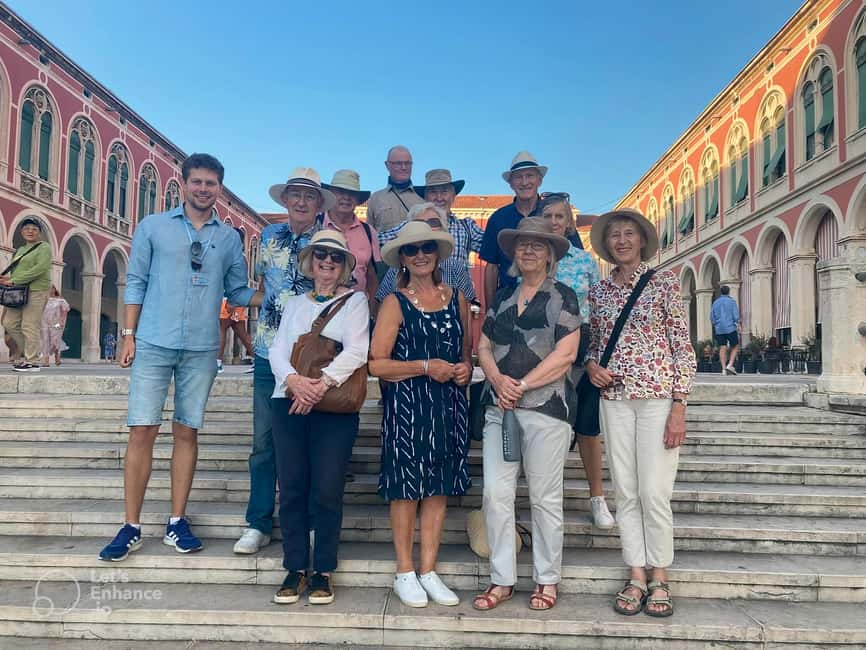
Split’s best history lesson may be the one that leaves the palace. This walking tour with history professor Mario begins beside the Riva and moves from Diocletian’s Roman residence into medieval lanes, Venetian-influenced squares, Napoleonic-era streets, and modern Split. The time travel is the main attraction, with Game of Thrones locations and local legends added along the way.
I like the small-group format, which gives Mario room to ask questions and respond to your interests. I also like the mix of famous sights and everyday city life, from the palace’s grand Peristyle to Marmontova Street and Fruit’s Square. The main consideration is pace: you cover many places in about two hours, and admission to the Cathedral and Temple of Jupiter is not included.
Key points to know before you book
- Roman to modern Split: The route moves beyond Diocletian’s Palace to medieval, Venetian, Ottoman, Napoleonic, and present-day influences.
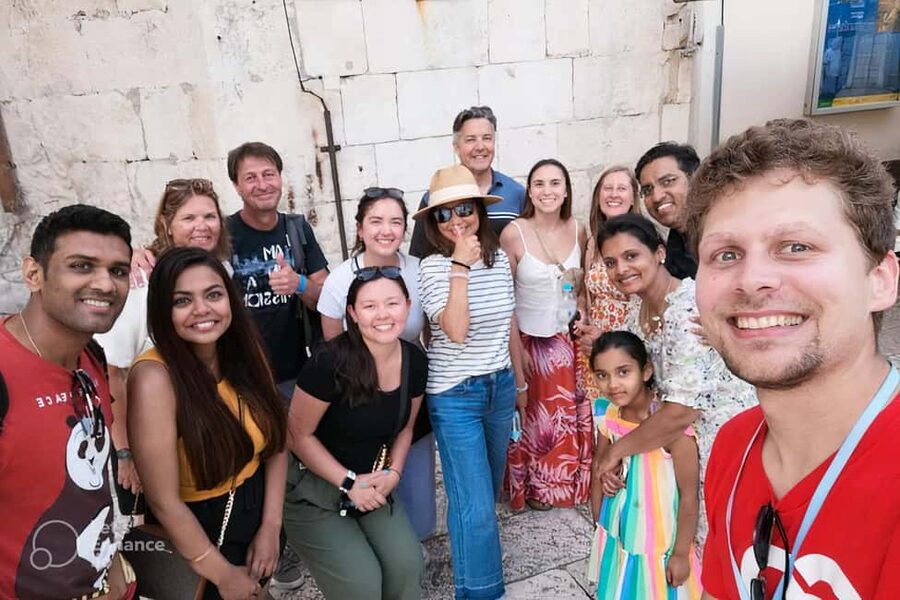
- History professor Mario: Mario teaches through questions, humor, and conversation rather than giving you a string of dates.
- A compact central route: You see the Riva, palace substructures, Peristyle, Vestibule, Cathedral, Golden Gate, Marmontova, Prokurative, and Fruit’s Square.
- Game of Thrones connections: The walk includes filming locations inside and around the palace.
- Good value at $23: You receive roughly two hours of guided sightseeing, with private tours available by request.
- Plan for uneven walking: Comfortable shoes are important, and the tour is not suitable for wheelchair users.
Why this Split walking tour feels different
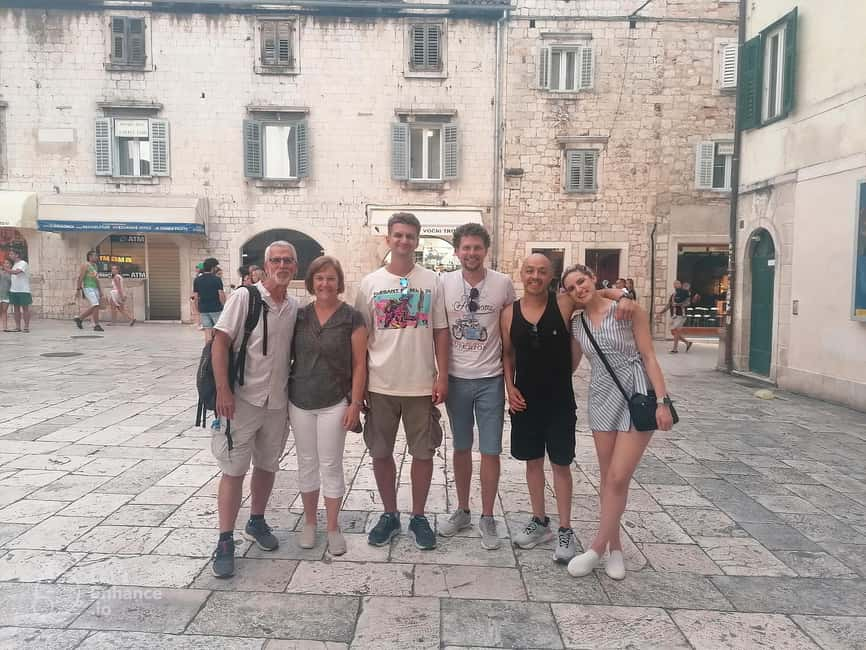
Many walks through Split stop once you have seen Diocletian’s Palace. That approach misses the city’s most interesting trick: the ancient palace is not a separate ruin outside town. It is woven into the center of modern Split, with homes, shops, lanes, cafés, churches, and squares built into and around the Roman structure.
Mario’s route uses that fact well. You begin with the palace, then keep moving outward through the forces that shaped Split after the Roman period. You hear about medieval life, Venetian influence, Ottoman pressure, Napoleon, local customs, legends, and modern streets. The result is less like a single monument tour and more like a short history of the city itself.
The tone also matters. Mario is a history professor, but the walk is not presented as a classroom lecture. He uses humor, asks questions, and encourages the group to take part. That makes a difference when you are standing among stone walls and trying to understand which part is Roman, which part came later, and how people use the space today.
The tour is offered in English. Private tours are available on request through the provider, so you can ask about that option if your party wants a more personal format.
More walks through the old quarter in Split:
- Split: Old Town and Diocletian Palace Walking Tour
★ 4.9 · 4,727 reviews - Walking Tour of Split and Diocletian’s Palace
★ 5.0 · 2,588 reviews - Krka Waterfalls tour with Trogir Walking tour and Krka panoramic boat cruise
★ 5.0 · 1,659 reviews
Starting at the Riva and the city model
The meeting point is beside the Brass Gate of Diocletian’s Palace. That is a useful place to begin because you are at the edge of the old core, next to the harbor and the Riva promenade.
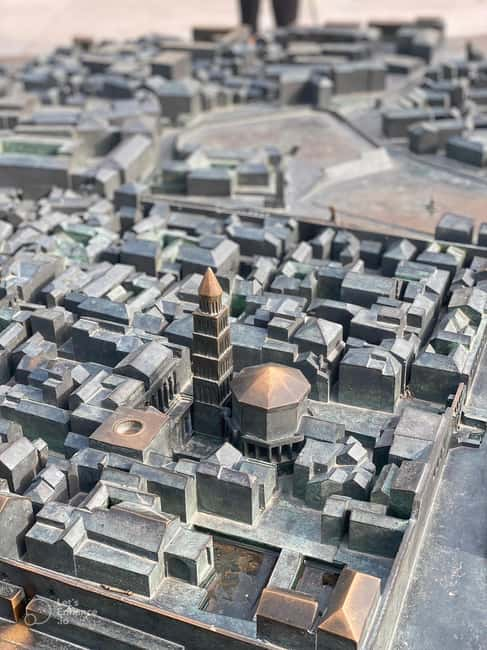
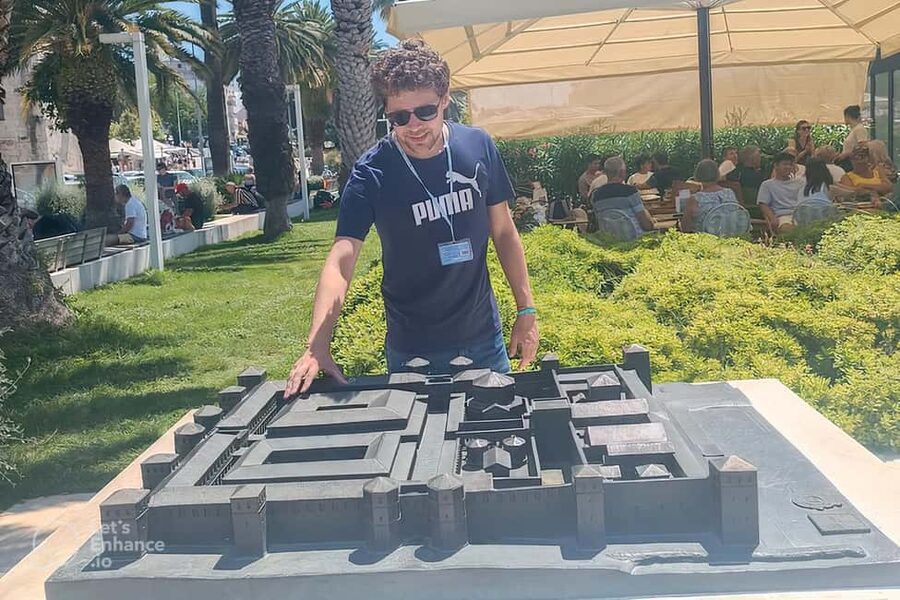
The first stop is a model of Split’s historic center, with about 10 minutes to get oriented. I like this opening because the palace can be confusing at street level. A model helps you see the basic plan before you enter the maze of lanes and courtyards.
This is also where Mario can set up the larger story. Diocletian’s Palace was built for the Roman emperor Diocletian, but Split did not remain a frozen Roman site. Later residents adapted the palace, built into it, and turned its spaces into part of a living city.
You should use this first stop to ask questions. The guide’s style works best when you take part, and several people who joined the walk specifically praised Mario’s habit of encouraging questions rather than simply talking at the group.
Inside the palace substructures
The next stop is the substructures of Diocletian’s Palace, with about five minutes listed here. These underground rooms supported the upper level of the palace and preserve the shape of the Roman complex.
The substructures are important because they help explain the palace above ground. Once you understand the lower plan, the Peristyle, Vestibule, and surrounding streets make more sense. You can see how much of Split grew from the original Roman layout.
The short time allocation means this is an introduction rather than a full underground visit. If you want an extended look at the substructures, you may need a separate ticket or additional time after the walk. The tour keeps moving because it has a lot of ground to cover.
Peristyle, Vestibule, and the Cathedral
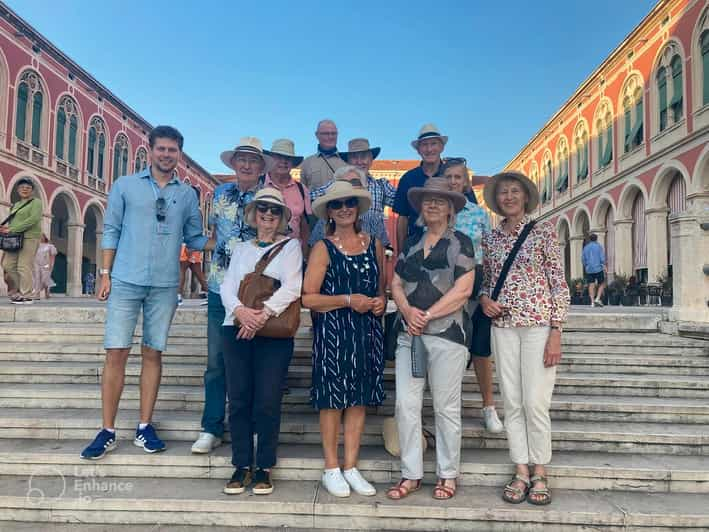
The Peristyle receives about 10 minutes. This is the grand central court of the palace and one of the clearest places to feel the scale and ceremony of the Roman design.
Expect Mario to connect the architecture with the emperor who built the palace, then explain how later generations reused the setting. The value here is not just identifying columns or stone. It is seeing how a Roman ceremonial space became part of a city where people pass through every day.
The Vestibule follows, with another 10 minutes. Its circular form and unusual acoustics make it one of the most memorable spaces on the route. You will also see how the transition from public court to imperial interior was carefully planned.
The Cathedral of Saint Domnius receives about 20 minutes, the longest stop on the route. Admission is not included, so check the current entry arrangement when you book or meet the guide. The cathedral occupies part of the old palace complex, making it a particularly clear example of Split’s layers: Roman imperial architecture, Christian worship, and a functioning city all in one compact area.
The longer stop gives Mario time to explain the building rather than rush past it. Still, this is a walking tour, not a full cathedral visit. If the interior matters greatly to you, allow extra time before or after the tour.
More history walks in Split:
- Walking Tour of Split with a ‘Magister’ of History
★ 5.0 · 1,122 reviews - Split Walking Tour with Professor of History
★ 5.0 · 926 reviews - Split: History and Heritage Walking Tour
★ 4.9 · 650 reviews - Split History and Gastro Small-Group Tour with Food and Drinks
★ 5.0 · 375 reviews
Jupiter’s Temple and the Golden Gate
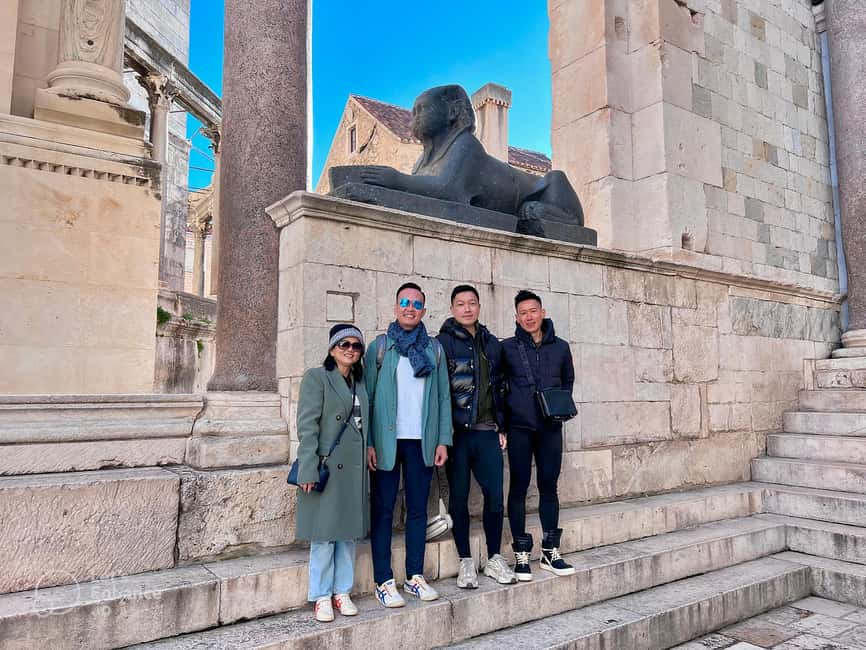
The Temple of Jupiter is scheduled for about 10 minutes, with admission excluded. This stop helps complete the Roman picture. You are not only looking at the emperor’s residence and court, but also at the religious setting that supported Roman public life.
As with the cathedral, the entry cost is separate. That keeps the base price low, but you should budget for tickets if you want to go inside. At $23, the tour remains good value even with that limitation, particularly because it covers far more than one paid attraction.
The Golden Gate receives another 10 minutes. This was the main northern entrance to the palace and remains one of the most recognizable points in the old center. Gates are easy to glance at and pass through, but they make more sense when you know their place in the city plan.
The route uses the gate to shift from the palace itself toward the wider story of Split. You can expect a mix of Roman explanation, later changes, and local details rather than a narrow focus on military architecture.
Grgur Ninski and the meaning of local detail
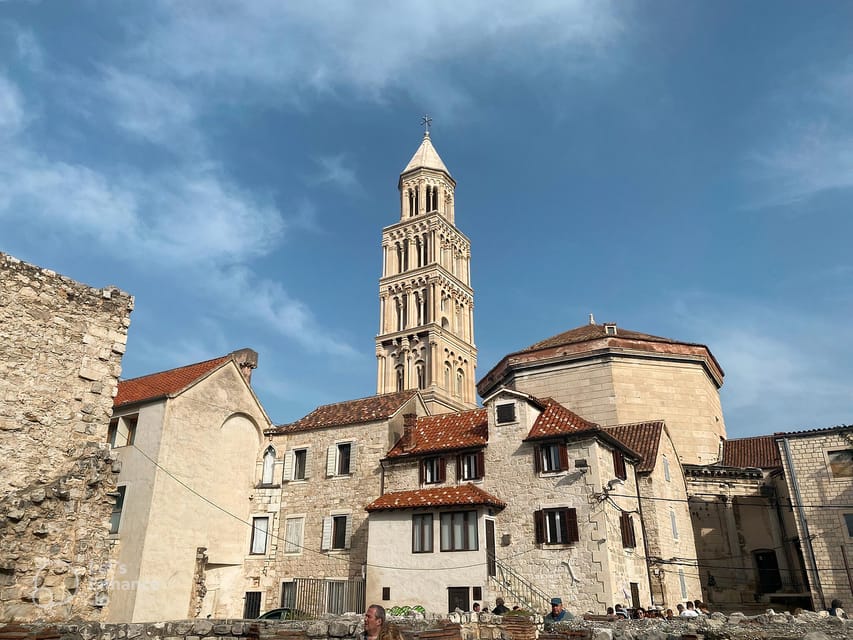
The stop at the Grgur Ninski Statue lasts about 10 minutes. This is a good moment to move from ancient imperial history into Croatian cultural memory.
The statue is also a practical city landmark. Mario can use it to explain local customs and legends, giving you something more human than a list of rulers and building dates. The route’s local-life angle is one of its stronger features because it shows how Split residents relate to their public spaces.
A walk like this becomes more useful when you remember a few stories after the tour. Mario’s humor and friendly manner help with that. The history still matters, but it is easier to hold onto when it comes with a person, a place, or a local tradition.
Marmontova Street and Napoleonic Split
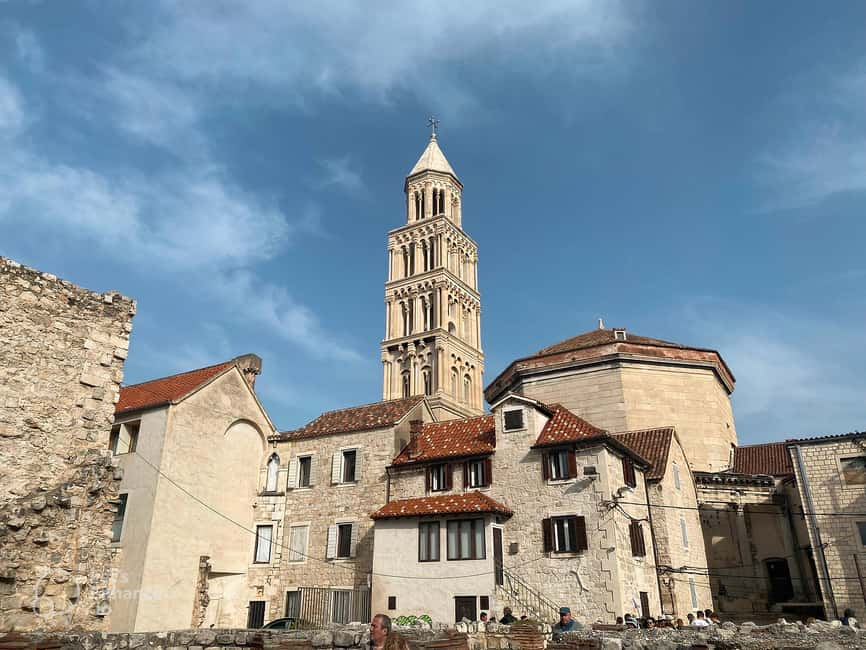
Marmontova Ulica receives about 10 minutes. This street helps show that Split’s story did not end with Rome or the Middle Ages.
The route also discusses Venetian, Ottoman, and Napoleonic influences. Those references give you a wider frame for understanding Dalmatia, a region shaped by different powers and trade connections over many centuries. You are not simply walking through an old town. You are seeing the marks left by changing governments and cultures.
Marmontova also provides a contrast with the palace. Instead of standing in an ancient court, you are in a city street that belongs to modern daily life. That contrast is exactly why the broader route works. You can compare the Roman core with the later city without needing transportation between the sights.
Prokurative and Fruit’s Square
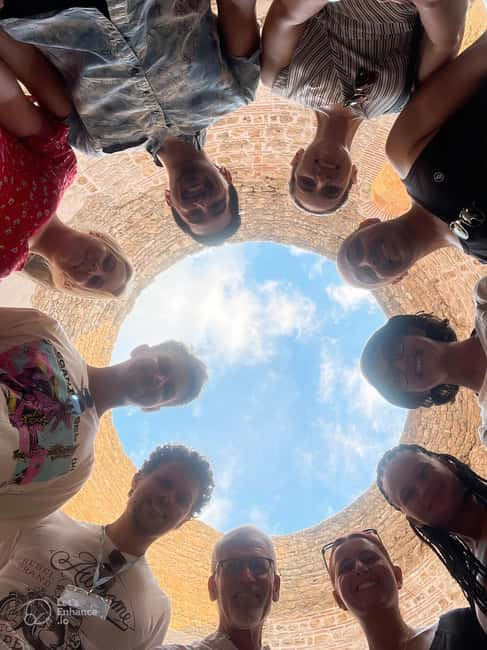
Prokurative, officially Trg Republike, receives around 10 minutes. Its architecture reflects a later period and offers another break from the Roman focus. Mario uses the square to help place modern Split within the city’s long development.
Fruit’s Square, or Trg Brace Radic, is the final listed stop and receives about 15 minutes. The extra time makes sense. This square is a useful closing point because it gathers several themes from the walk: public life, later architecture, local legends, and the way Split’s old center continues to function as a living neighborhood.
By ending outside the most famous palace sights, the walk leaves you with a broader map of the city. You should finish knowing not only where Diocletian lived, but also where later Split took shape.
Game of Thrones, legends, and local life
The Game of Thrones material is a pleasant extra for fans of the show. The tour includes filming locations connected with Split, especially around the palace and old center.
This is not presented as a substitute for history. It works better as a modern bridge to places you might otherwise overlook. A familiar screen location can make a narrow lane or stone passage easier to remember, while Mario’s historical explanation keeps the stop grounded in the real city.
The legends and local stories serve a similar purpose. They break up the formal history and give you reasons to pay attention to details around you. I would not choose this tour only for television locations, but if you enjoy the series, you will get an added layer of interest.
Timing, walking conditions, and group size
The activity is described as lasting two hours, while the highlights also refer to two hours and 15 minutes. The listed stops add up to about 110 minutes, before time spent walking between them. Expect a compact tour of roughly two hours, with the exact pace depending on questions, entrances, and the group.
You should wear comfortable shoes and comfortable clothes. The route includes historic stone surfaces and palace spaces, so this is not the place for delicate footwear. The tour is appropriate for all ages, but it is not suitable for wheelchair users.
Small groups are a major advantage. Mario can ask questions, explain a point twice, or adjust his examples more easily than on a large coach-style walk. The group size is not specified, so do not assume it will be a one-to-one experience. Private tours can be requested if you want that arrangement.
Is $23 a fair price?
At $23 per person, this is a strong value for a guided introduction to Split. You receive a route through the palace, medieval center, later streets, and modern squares, plus a live English-speaking guide with a teaching background.
The price does not include admission to the Cathedral of Saint Domnius or the Temple of Jupiter. That is worth noting, but it also gives you control. You can decide which interiors matter to you instead of paying one bundled fee.
The value is highest if you want context. If you only need directions or a quick list of monuments, you can walk the center on your own. If you want to understand how Roman, medieval, Venetian, Ottoman, Napoleonic, and modern Split connect, Mario’s explanations justify the cost.
The tour also earns praise for its delivery. Mario is described as personable, funny, enthusiastic, and interactive. His habit of posing questions can keep the history moving, especially if you usually lose interest during long lectures.
Who should book this walk?
I would choose this tour if you are visiting Split for the first time and want a clear introduction before exploring on your own. It suits couples, families, history fans, Game of Thrones followers, and anyone who prefers a guide who talks with the group rather than at it.
It is also a good choice if you have limited time. The route brings together the palace’s major sights and several later parts of the center without requiring a bus or taxi.
You may want another option if you need step-free access, dislike walking on old stone surfaces, or want a slow, detailed visit inside every monument. The schedule is full, and admission is not included at two stops.
Should you book the Split Walking Tour with History Professor?
Book it if you want more than a quick palace tour. The strongest reason is Mario’s teaching style: clear history, humor, questions, and local stories delivered in a small group.
At $23, you get a well-rounded look at Split from Rome to the present day. Just wear good shoes, allow for separate admission fees, and expect a brisk route rather than a long stop at every site. If that balance suits you, this is a smart first walk through the city.
FAQ
Where does the tour meet?
The guide waits next to the Brass Gate of Diocletian’s Palace.
How long does the tour last?
The activity is listed as two hours. The tour description also refers to two hours and 15 minutes, so allow roughly two hours or a little more.
What language is the tour conducted in?
The live tour guide speaks English.
Who leads the walking tour?
The tour is led by Mario, a history professor and local guide.
Are entrance tickets included?
Admission to the Cathedral of Saint Domnius and the Temple of Jupiter is excluded.
Is the tour suitable for children?
Yes. The activity is stated to be appropriate for all ages.
Is the tour wheelchair accessible?
No. It is not suitable for wheelchair users.
What should I wear?
Bring comfortable shoes and comfortable clothes for the walking route.
Just added around Split
- From Makarska : Wine Tasting Grabovac Tour★ 4.5 · 30 reviews
- Essential Diocletian’s Palace Tour for First-Time Visitors★ 4.8 · 19 reviews
- Unique vintage Tomos moped tour Split – Back to the ’80s★ 4.8 · 17 reviews
- Walking Tour Split★ 4.7 · 61 reviews
- Trogir; Private walking tour of higlights of Trogir★ 4.7 · 3 reviews
- Trogir: White Lagoon, Maslinica & Blue Lagoon Speedboat Tour★ 4.8 · 11 reviews
- Trogir 1.5-Hour City Tour★ 4.4 · 37 reviews
- Split: Trogir Open Top Bus Trip + Free Split Walking Tour★ 4.1 · 17 reviews
Split Old Town Walking Tours, compared.
Split: Old Town and Diocletian Palace Walking Tour
Read our review →
Walking Tour of Split and Diocletian’s Palace
Read our review →
Krka Waterfalls tour with Trogir Walking tour and Krka panoramic boat cruise
Read our review →

Walking Tour of Split with a ‘Magister’ of History
Read our review →
Split: Diocletian Palace & Old Town Guided Walking Tour
Read our review →
From Split: Krka Waterfalls Cruise & Trogir Walking Tour
Read our review →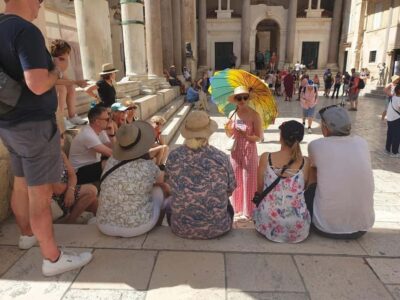
Browse the lists this tour appears in