
Reviewed · SPLIT OLD TOWN WALKING TOURS
Walking tour of Split with an Art Historian
Split’s old town is not a museum behind ropes. It is a living city built into the remains of Emperor Diocletian’s retirement palace, with homes, cafés, narrow lanes, and laundry tucked among Roman stone. This tour makes that unusual mix its main subject, led by local art historian Josipa.
I like the small maximum of 10 people and the way the walk links Roman planning, medieval life, art, and present-day Split. I also like the practical local advice at the end, including tips on food and what to see next. The main drawback is clear: you will look into the cathedral and palace substructures, but you will not enter any paid site.
Key points to know before booking
- A living Roman palace: Walk through ancient gates and streets that now form the center of modern Split.
- Art historian guide: Josipa adds architecture, sculpture, archaeology, folklore, and local customs to the usual palace story.
- Small-group format: With no more than 10 people, it is easier to hear, ask questions, and adjust the pace.
- Free-site focus: The tour explains paid attractions from outside, but admission fees are not included.
- Useful starting point: The route gives you a strong sense of Split’s layout before you explore on your own.
- Outdoor walking: Expect sun, uneven surfaces, and several unavoidable steps. The tour operates rain or shine.
Why Split makes an excellent walking-tour subject
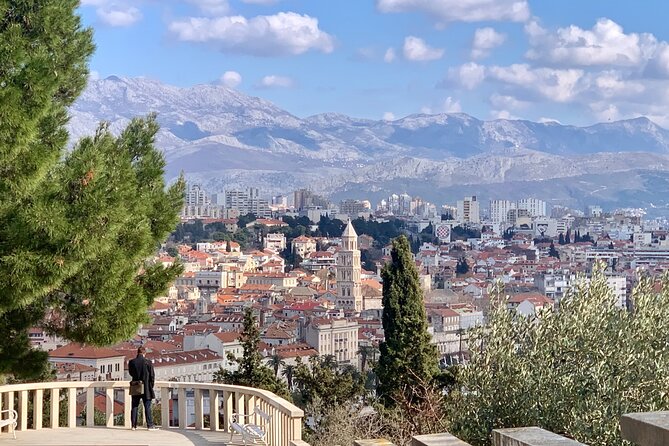
Diocletian’s Palace is often described as one sight, but it is really the historic core of Split. Roman walls form part of the city streets. The former imperial apartments sit beside shops. A medieval lane can end at a Roman column. You do not simply look at an ancient building here. You watch a city continue to use it.
That is why an art historian can add real value. A basic orientation walk may point out the Golden Gate and Peristyle. Josipa’s approach connects those pieces to the emperor’s building choices, the shape of the peninsula, later Christian use, local customs, and the way residents live in the old center today.
The route also moves beyond the most famous square. You begin in Strossmayer Park, pass through several palace gates, pause at the narrow Let Me Pass Street, walk through the Vestibule, and finish by the Riva waterfront. You get both the grand Roman monuments and the small details that make Split feel like a town rather than an archaeological site.
More walks through the old quarter in Split:
- Split: Old Town and Diocletian Palace Walking Tour
★ 4.9 · 4,727 reviews - Walking Tour of Split and Diocletian’s Palace
★ 5.0 · 2,588 reviews - Krka Waterfalls tour with Trogir Walking tour and Krka panoramic boat cruise
★ 5.0 · 1,659 reviews
Starting with water and Split’s northern edge
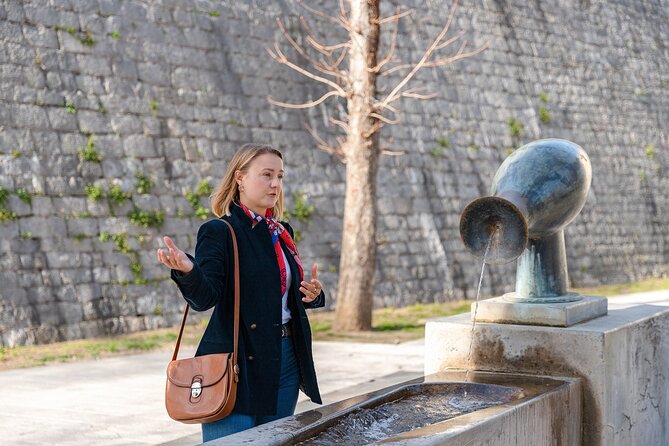
Meet Josipa beside the fountain in Strossmayer Park, known locally as Đardin. This is a sensible starting point because the opening story is about water and how it supported life in the palace for more than 17 centuries.
The park is also a useful place to get your bearings. You are close to the northern side of Diocletian’s Palace, but the first stop does not throw you straight into a crowded monument. After about 10 minutes, the walk turns to Tower 2, one of the palace’s less glamorous remains.
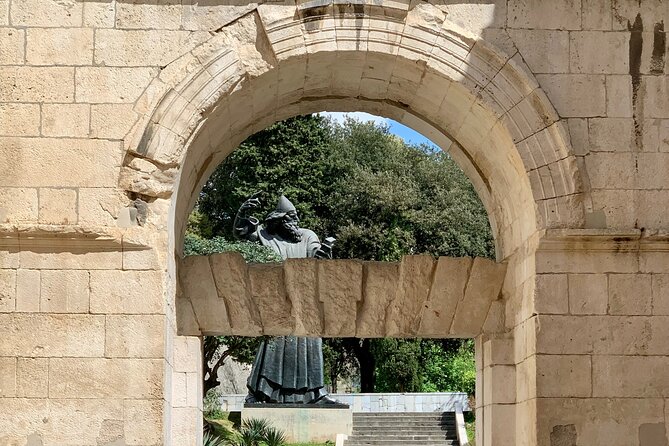
That choice tells you something about the tour. The focus is not only on postcard views. A plain defensive tower helps explain the palace as a huge fortified residence, not just a decorative Roman villa. You then walk to the seven-meter bronze statue of Gregory of Nin, created by Croatian sculptor Ivan Meštrović.
Rub Gregory’s toe for luck if you like. Josipa explains how the statue became part of local popular culture, which gives the stop more meaning than a quick photograph. It is an easy example of the tour’s wider method: pair a famous object with the story people attach to it.
Through the Golden Gate and along the ancient Cardo
The Golden Gate was the northern entrance to the palace and one of four major entry points. From here, you follow the Cardo Maximus, the main north-south Roman street.
This part of the walk helps you see the original plan. The palace was not an accidental cluster of old stones. Its streets, gates, and quarters were arranged with purpose, and Josipa explains how the route led toward the emperor’s area.
You also make a short stop at a garden hidden within the palace. It is a useful pause after the formal entrance and Roman street. Split’s old center keeps shifting between open spaces and tight lanes, grand views and ordinary corners.
The Iron Gate comes next in the northwest corner. Josipa tells you why this entrance earned the nickname of the city’s platinum gate. The stop is brief, but it adds a layer of later urban history to the Roman structure. Each gate has its own role and story, so the palace begins to feel less like one monument and more like a city with several faces.
The Peristyle and the palace’s grand center
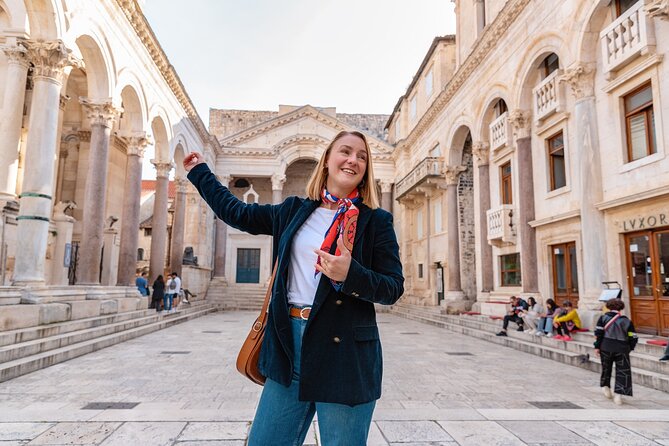
The Peristyle is the visual heart of Diocletian’s Palace. You reach it along the Decumanus, the east-west Roman street, and the scale changes quickly. The space gives you the formal side of the emperor’s residence, with architecture meant to impress and frame movement toward the imperial quarters.
Josipa spends about 10 minutes here explaining the square’s origin and the stories attached to it. This is likely the point where her art-history background is most useful. Instead of listing dates, she can point out how the space worked as architecture, ceremony, and public display.
The route then makes a short detour to the Eastern, or Silver, Gate. The reason for this turn is explained on site, so you get more than a standard straight-line walk through the palace. The detour also helps you compare the different entrances and understand how the palace related to the wider city.
Expect the Peristyle to be one of the busier parts of the walk. The small group helps, since you can stay close to the guide and ask questions without trying to hear a speech across a large crowd. A morning departure is worth considering if you want a calmer visit, especially when cruise groups are active in Split.
More history walks in Split:
- Walking Tour of Split with a ‘Magister’ of History
★ 5.0 · 1,122 reviews - Split Walking Tour with Professor of History
★ 5.0 · 926 reviews - Split: History and Heritage Walking Tour
★ 4.9 · 650 reviews - Split History and Gastro Small-Group Tour with Food and Drinks
★ 5.0 · 375 reviews
The cathedral and the unusual afterlife of a mausoleum
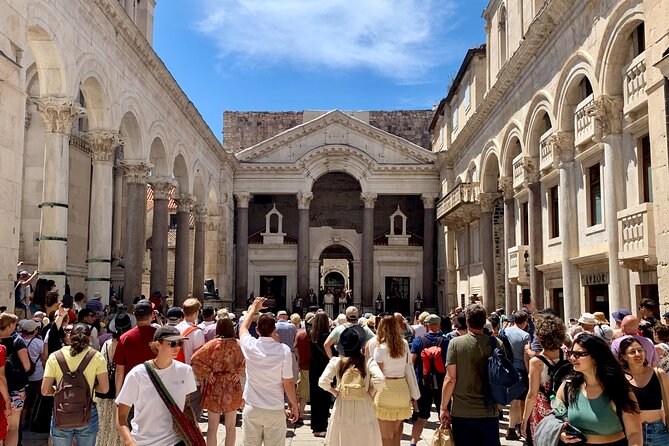
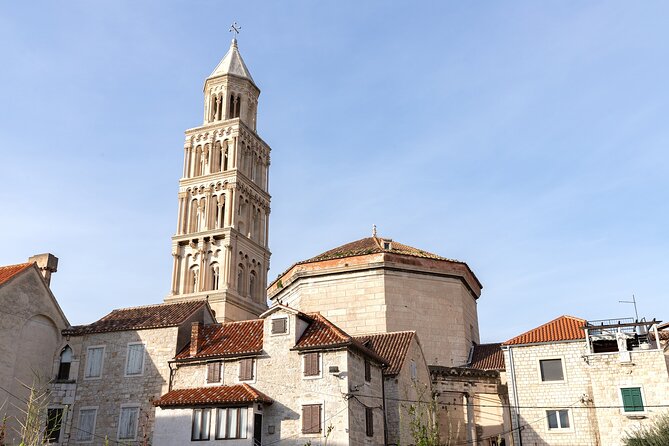
From the Peristyle, you learn about the Cathedral of Saint Domnius. The building began as Diocletian’s mausoleum, then took on a new life as a Christian cathedral.
That change is one of the clearest examples of Split’s layered past. The original imperial purpose did not vanish. It was reshaped and given another role. Josipa provides the essential background and adds historical details to help you picture the building across different periods.
The tour does not enter the cathedral. This matters when you compare the $30.23 price with tours that include tickets. You will need to pay separately if you want to go inside, and admission is not part of this experience. The same rule applies to museums and other paid sites along the route.
For some people, this is a limitation. If you want to climb, inspect interiors, or spend time inside the cathedral, you will need another visit. For others, the outside explanation is a good first look, especially if you plan to return later at your own pace.
Let Me Pass Street and local life in tiny spaces
One of the most memorable stops is Let Me Pass Street, or Pusti me da prodjem. It is less than 10 meters long and only 57 centimeters wide, making it one of the narrowest streets in the world.
The lane is a quick stop, but it gives the walk a welcome change of scale. After Roman avenues and ceremonial spaces, you are suddenly considering how one person can squeeze through a narrow passage. Josipa also explains why the street matters to Split residents and how it is remembered elsewhere in the city.
This is the kind of detail that can disappear if you explore without a guide. You may notice the lane, take a photo, and move on. With context, it becomes part of the city’s local identity rather than just a quirky measurement.
The Vestibule, klapa singing, and the way sound shapes a place
The Vestibule was once the entrance to Diocletian’s private quarters. Today, it is one of the palace’s favorite open-air photo locations.
You pause here for about 10 minutes. The round space is also known for its strong acoustics, and you might hear traditional klapa singing. The tour does not promise a performance, but Josipa can help you understand why this spot has become associated with that sound.
I like this stop because it treats architecture as more than stone and decoration. The shape of the Vestibule affects how people use it now. You get a photo opportunity, but you also get a sense of how the building’s design continues to shape daily life and public culture.
Through the substructures to the Riva
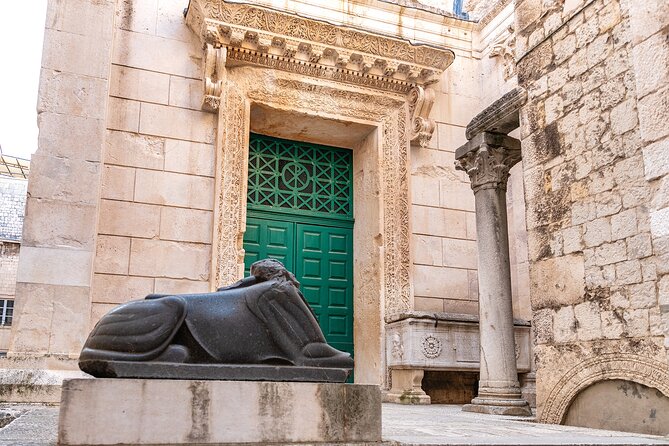
The palace substructures offer the route’s strongest change in mood. You use part of this underground passage as a shortcut toward the waterfront, moving from the open Peristyle into darker, quieter spaces before emerging near the Riva.
The substructures are important because they preserve the lower plan of the imperial residence and help explain the structure above. However, this tour only passes through part of the area. It does not include a full visit, since that requires an additional admission fee and more time.
That is another point to weigh before booking. The route gives you an introduction and shows why the substructures matter, but anyone eager to explore them fully should arrange a separate guided visit. You will not receive an underground archaeology tour during this walk.
Once outside, you continue along the Riva. This waterfront route functions as a street, promenade, and meeting place. The walk here is easier and more open after the palace’s narrow lanes. You then continue toward Fruit Square and the final model of Split’s historic core.
Finishing with a map and local advice
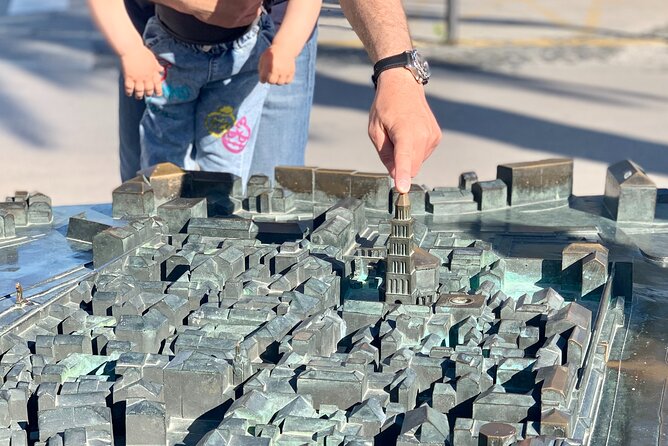
The large bronze model near the seaside exit offers a useful recap. It shows the layout of the old town and its position beside the water, helping you connect the gates, streets, palace quarters, and waterfront you have just seen.
This final stop may be the end of the tour, depending on time. The palace is extensive, and the advertised duration is about one hour and 40 minutes to two hours. If time allows, Josipa may continue. If not, she shares suggestions for further exploring Split, including personal ideas about food and activities.
That local follow-up is one of the tour’s practical strengths. You can ask where to eat, what to visit next, or how to use the rest of your day. Several reviews specifically praise her restaurant recommendations and her ability to answer questions beyond the formal route.
Price, group size, and pace
At $30.23 per person, this is a fair price for a small-group orientation led by an art historian, particularly if your group is interested in architecture and history. The value comes less from the number of sights than from the connections between them. You are paying for an organized route, interpretation, and the chance to ask questions.
The group maximum is 10 people, though the actual group may be smaller. In some cases, the walk has been close to a private tour. That makes a practical difference in Split’s tight lanes. You are less likely to lose sight of the guide, and Josipa can adjust the pace or answer questions without holding up a large crowd.
The walk is mostly flat, but it includes unavoidable steps and uneven surfaces. Hot weather can make the stone streets tiring, so bring water, wear sun protection, and choose comfortable shoes. The tour runs rain or shine, and it waits no more than 10 minutes after the scheduled start.
Service animals are allowed. Dogs may be possible, but you should contact the provider before booking so Josipa can check that the arrangement suits the group. The tour is near public transportation, and most people can take part, but anyone with walking difficulty should consider the steps and surfaces carefully.
Who will get the most from this tour?
I would choose this walk if you want a strong first introduction to Split before exploring independently. It suits people who like architecture, Roman history, sculpture, archaeology, and local stories, but it is not limited to specialists. Josipa’s explanations are designed to connect the formal history with everyday life.
It also works well for families and mixed-age groups. A family ranging from age 29 to 77 was able to set the pace and ask questions, which suggests the small format can be more comfortable than a large scheduled walk.
You may want something else if your priority is entering every major attraction. The cathedral and full substructures are not included, and no museums or paid sites are entered. In that case, use this as an orientation, then plan separate admissions.
Should you book the Split art historian tour?
Book it if you want Diocletian’s Palace explained as a living city rather than a collection of Roman walls. Josipa’s strengths are her art, architecture, and local knowledge, along with a natural pace that leaves room for questions. The 5/5 rating from 106 ratings and a 100 percent recommendation record fit the tour’s strongest features: clear explanations, personal attention, and useful advice for the rest of your stay.
Skip it if you prefer to move quickly on your own or want paid interiors included. Otherwise, this is a smart first activity in Split. Choose a morning time if available, carry water, and save room in your schedule for the cathedral or substructures if you decide you want to see them from inside. Free cancellation is available until 24 hours before the start time.
FAQ
Where does the walking tour begin?
It begins beside the Strossmayer Fountain in Strossmayer Park, also called Đardin, at Ul. kralja Tomislava 12 in Split.
Where does the tour end?
The walk ends on the Riva waterfront beside the bronze model of Split’s Old Town, at Obala Hrvatskog narodnog preporoda 23.
How long does the tour last?
The tour lasts approximately one hour and 40 minutes to two hours.
Is the tour offered in English?
Yes. The tour is offered in English.
Are cathedral or museum admission fees included?
No. The tour does not enter museums or paid sites. Cathedral and palace substructure admission is not included.
How many people can join the tour?
The maximum group size is 10 travelers.
Is the tour suitable for people with limited mobility?
The route includes several unavoidable steps and some uneven areas. If walking is difficult for you, consider your comfort and safety before booking and contact the provider for assistance.
Just added around Split
- From Makarska : Wine Tasting Grabovac Tour★ 4.5 · 30 reviews
- Essential Diocletian’s Palace Tour for First-Time Visitors★ 4.8 · 19 reviews
- Unique vintage Tomos moped tour Split – Back to the ’80s★ 4.8 · 17 reviews
- Walking Tour Split★ 4.7 · 61 reviews
- Trogir; Private walking tour of higlights of Trogir★ 4.7 · 3 reviews
- Trogir: White Lagoon, Maslinica & Blue Lagoon Speedboat Tour★ 4.8 · 11 reviews
- Trogir 1.5-Hour City Tour★ 4.4 · 37 reviews
- Split: Trogir Open Top Bus Trip + Free Split Walking Tour★ 4.1 · 17 reviews
Split Old Town Walking Tours, compared.
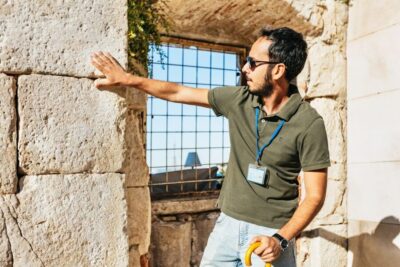
Split: Old Town and Diocletian Palace Walking Tour
Read our review →
Walking Tour of Split and Diocletian’s Palace
Read our review →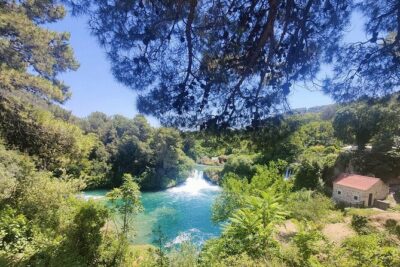
Krka Waterfalls tour with Trogir Walking tour and Krka panoramic boat cruise
Read our review →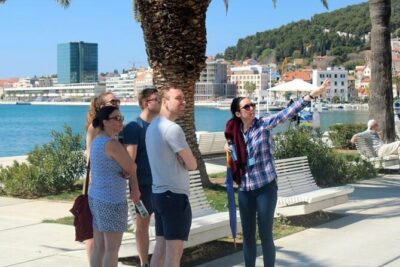
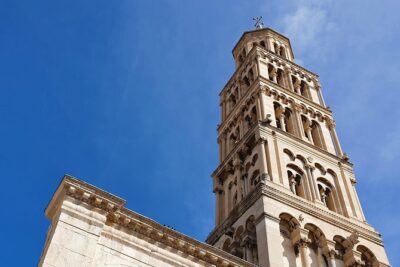
Walking Tour of Split with a ‘Magister’ of History
Read our review →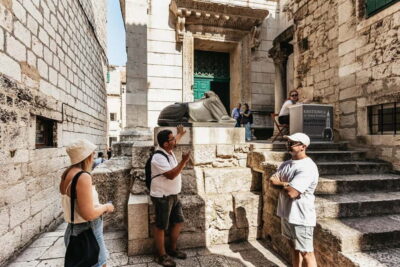
Split: Diocletian Palace & Old Town Guided Walking Tour
Read our review →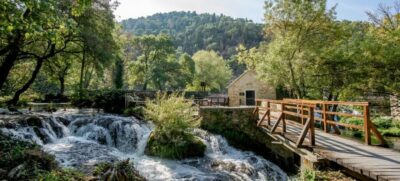
From Split: Krka Waterfalls Cruise & Trogir Walking Tour
Read our review →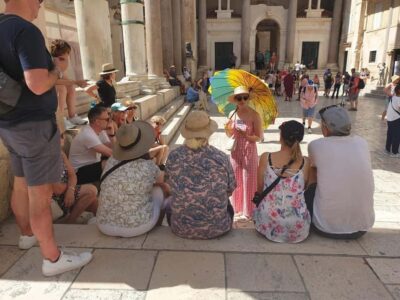
Browse the lists this tour appears in