
Reviewed · SPLIT OLD TOWN WALKING TOURS
Trogir walking tour with a local guide
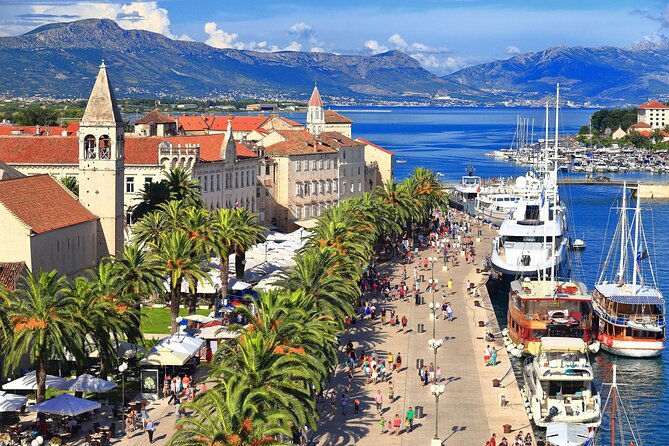
Trogir packs Romanesque churches, Venetian courtyards, medieval meeting places, and a palm-lined waterfront into a small island town. This 90-minute walking tour gives you a useful first map of the place, with local guides such as Daniela, Kristina, Blanka, and Michaela bringing family stories and modern Croatian history into the walk.
I like the route’s compact design and its mix of famous sights with small details, from the bald-headed figure of Kairos to the plague church of St. Sebastian. I also like the local point of view, especially when guides explain what it was like to grow up in Trogir or live through Croatia’s Homeland War.
The main caution is timing. The advertised duration is about an hour and a half, but one guest reported a 60-minute tour. The pace and depth may depend on your guide, group, and questions, so this works best as an introduction rather than a full museum visit.
Key points to know before you book
- A compact Old Town route: See major sights without needing transport between stops.
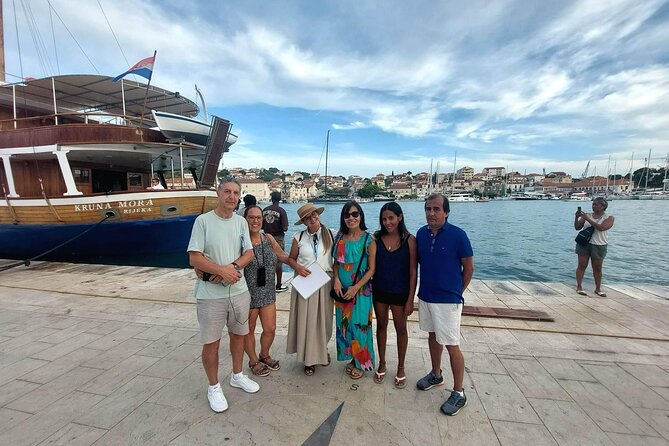
- Local guides with personal stories: Daniela, Kristina, Blanka, Michaela, and other guides have been praised for connecting Trogir’s past with life in the town today.
- A strong first-day activity: The walk helps you get your bearings and decide what deserves more time later.
- Excellent value at $18.14: The price is modest for a small-group introduction to several major landmarks.
- Mostly an outdoor experience: Shade can be limited, and one guest found the walk very hot.
- Maximum group size of 15: Small enough for a more personal feel, though not a private tour.
Why this short Trogir walk works
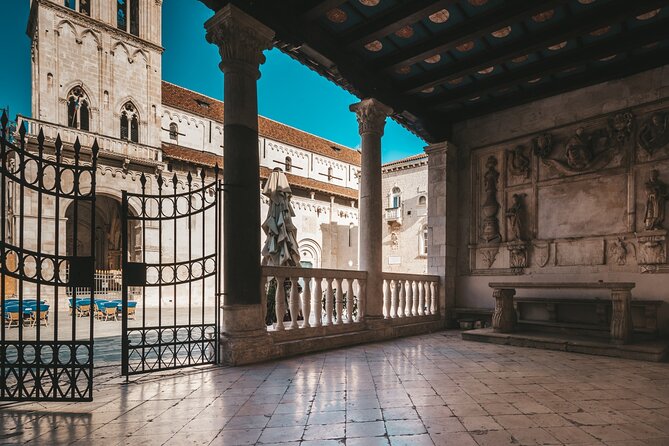
Trogir is easy to underestimate. On a map, the Old Town looks small enough to cover quickly, but its lanes twist around churches, palaces, courtyards, and old defensive walls. A guide helps you see how these pieces fit together instead of treating them as a string of pretty stones.
The tour begins at Ul. Gradska vrata 5, near the historic town gates, and ends on Obala bana Berislavića by the waterfront. That point-to-point route is useful. You begin inside the Old Town, move through its civic and religious center, then finish with open views across the channel toward Čiovo and the fortress at the edge of town.
At $18.14 per person, I consider this a strong value if you want orientation and context. You are not paying for a long excursion or a meal, but you are getting a local English-speaking guide and a concentrated look at many of Trogir’s main sights. The listed stops have no separate admission charge, though you should not assume every interior or tower visit is included.
The group limit of 15 matters. Trogir’s lanes are narrow, and a very large group would be awkward. Fifteen people is still enough to feel like a shared walk, but it gives the guide a fair chance to answer questions and keep the group together.
The tour is offered in English and includes a mobile ticket. It is near public transportation, and most people can participate. Since the route is outdoors and depends on good weather, wear comfortable shoes and bring water, especially in the warmer months.
More Old Town Walking Tours in Trogir
- Krka Waterfalls tour with Trogir Walking tour and Krka panoramic boat cruise
★ 5.0 · 1,659 reviews - From Split: Krka Waterfalls Cruise & Trogir Walking Tour
★ 4.7 · 681 reviews - Trogir: City Highlights Guided Walking Tour
★ 4.9 · 199 reviews
Radovan’s Portal and the Cathedral of St. Lawrence
The Cathedral of St. Lawrence is the natural anchor of the first part of the walk. Construction began in 1213 and continued for five centuries, which explains the building’s blend of Romanesque and Gothic forms. Its mass is easy to read from outside, with three naves giving it a broad, sturdy appearance.
The most memorable detail is Radovan’s Portal, the cathedral’s main entrance. Master Radovan, a medieval craftsman from Trogir, carved it in the first half of the 13th century. The portal is not merely a doorway. It is a lesson in medieval sculpture, crowded with figures and scenes that reward a guide’s explanation.
Allow about 10 minutes here. That may sound brief, but a good guide can point out the key elements without turning the stop into an art lecture. You will get more from the carving if you look closely while the guide explains what makes it unusual.
The bell tower provides wide views over Trogir, Čiovo, the mainland, and the Adriatic. The route description highlights those views, but it does not clearly state that climbing the tower is included in the tour. Ask your guide or check the arrangements if the panorama is a priority.
John Paul II Square, Trogir’s open-air living room
The next major stop is John Paul II Square, called Trg Ivana Pavla II in Croatian. This is one of those places where Trogir’s architecture and daily life meet. Important historic buildings surround the piazza, while café tables and umbrellas occupy much of the open space.
I like this stop because it is not only a monument. It is a place to pause, look around, and watch the town use its own history as part of everyday life. You may want to return here later for coffee or ice cream, although the tour allows about 15 minutes rather than a long café break.
The square helps you understand Trogir’s scale. Grand buildings are close together, and the streets leading away from it quickly become narrow and shaded. Your guide can also help you notice details you might otherwise pass without a second glance.
If you prefer a fast-moving tour, this stop keeps the pace gentle. If you enjoy sitting and absorbing a place, you may wish the schedule allowed more time. I would treat the square as a place to mark for a return visit.
Town Hall and the Venetian civic center
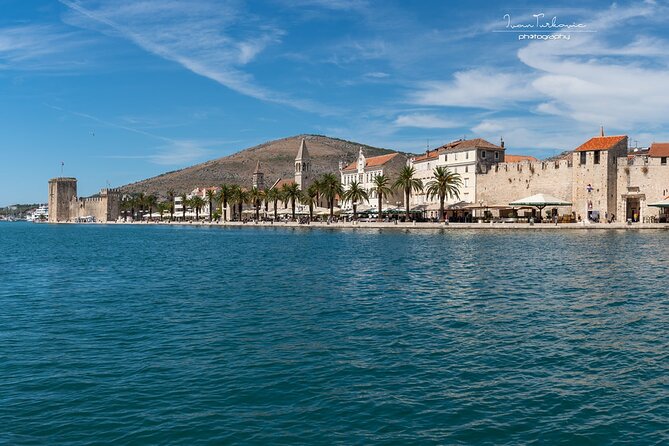
The 15th-century Town Hall is a good example of how Trogir’s public life was shaped by Venetian rule. The stone building includes an elegant courtyard decorated with coats of arms, while the outside staircase is one of the most striking Venetian features in town.
The stop lasts about 10 minutes. You may not see every room, since this is primarily an exterior walking tour, but the courtyard and staircase give the guide plenty to explain. Look for the way the building presents authority through stone, symbols, and formal access.
This is where a local guide adds real value. A photograph can show you the staircase, but it cannot easily explain how public buildings, local families, and Venetian power fit together. The best guides on this tour use short stories and anecdotes instead of reciting dates.
More walks through the old quarter in Trogir:
- From Split: Half-Day Tour of Trogir Old Town in Small Group
★ 4.9 · 77 reviews - Trogir: Old Town Guided Walking Tour
★ 4.6 · 76 reviews - Trogir Old Town & Klis Fortress from Split
★ 5.0 · 38 reviews - Private Krka waterfalls & Trogir old town
★ 4.5 · 31 reviews
St. Sebastian, the Clock Tower, and the Town Loggia

St. Sebastian’s Church was built in 1476 by citizens who were grateful to have survived a plague. Its architect was Niccolò di Giovanni Fiorentino, also known in English as Nicolas of Florence. The church’s origin gives the building an emotional connection to the people of Trogir, not just to its artistic style.
Next to it is the Clock Tower. Together, the church and tower make a compact stop that shows how faith, public time, and civic identity shared the same small square. You have about 10 minutes here.
The nearby Town Loggia dates from the 13th century. This covered space once served as a meeting place where citizens discussed public issues. A local court also met here on certain days to proclaim laws and hear cases.
I find the loggia especially useful because it turns an attractive architectural feature into a place with a job. It was not simply built for visitors to admire centuries later. It was part of the town’s working public life.
Cipiko Palace and Trogir’s grand families

The Great Cipiko Palace is made from a group of Romanesque buildings that were remodelled between the 15th and 17th centuries. Its later appearance reflects Venetian Renaissance taste, and Niccolò di Giovanni Fiorentino also worked on the project, including the south portal.
The stop is short, about five minutes, so expect a concise explanation and an exterior view rather than an extended palace visit. That is enough to understand the basic pattern: older structures were joined and reshaped as powerful families updated their homes.
The palace helps connect the cathedral and civic buildings to private wealth. Trogir’s story is not only one of churches and fortifications. It is also a story of families using architecture to display status and influence.
North Gate, the Garagnin-Fonfogna Museum, and Kairos
The route also points out the museum housed in palaces once owned by the Venetian Garagnin-Fonfogna family. You see it as you enter the Old Town through the North Gate, one of the two main historic entrances into the former walled town.
The museum is a useful option to remember if you are staying in Trogir longer. The walking tour introduces its location, but the experience is not presented as a separate museum visit. You can return later if you want indoor time and more objects than a walking tour can provide.
Another memorable detail is the bas-relief of Kairos. The young figure stands on tiptoe, ready to fly away, with outstretched arms holding scales. His hair falls in a long tuft over his forehead, while the back of his head is bald.
The image carries a simple lesson: opportunity can be seized only at the right moment. Grab Kairos by the tuft as he passes, because there is nothing to hold once he has flown away. It is a small piece of ancient symbolism, but it gives the walk a playful human touch.
Our Lady of Mount Carmel and the working waterfront
The Church of Our Lady of Mount Carmel sits near the waterfront in the western part of the Old Town. Founded in the Middle Ages, it was historically linked with Trogir’s fishermen, craftsmen, and labourers.
That connection gives you a different view of the town. The grand cathedral and palace belong to Trogir’s official image, while this church points toward the people who worked on the water and in local trades.
If you are in Trogir on July 16, the church is associated with an evening procession carrying a statue of Our Lady. The walking tour does not make this event part of the standard experience, but the date is worth noting if your visit matches it.
Riva and the view toward Čiovo
The tour reaches the Riva, Trogir’s palm-lined waterfront promenade. It is wide, flat, and straight, a welcome change after the tight Old Town lanes. From here, you look across the sea channel toward Čiovo.
This is one of the most relaxed parts of the route. You can see the relationship between Trogir’s historic island and the larger island nearby, while boats and waterfront activity give the town a more open feel.
The listed stop lasts about 10 minutes. Take advantage of the easier walking here, but keep listening. A good guide can use the waterfront to explain the town’s position and how its identity has long been tied to the sea.
The Riva is also a useful place to return after the tour. It gives you room to pause, take photographs, or continue toward the castle without navigating another maze of lanes.
Kamerlengo Castle and the end of the walk
The tour finishes near Kamerlengo Castle, an early 15th-century fortress at the end of the promenade. It occupies a corner of the small island that holds the Old Town.
The castle shares this area with a local football pitch, a children’s playground, and stalls operated by local tour companies. That mixture is worth noticing. Trogir’s defensive past is not sealed away from daily life. The fortress sits beside spaces used by children, football players, and people arranging their next outing.
The end point on Obala bana Berislavića is practical. You are already by the water, with a clear choice of continuing along the promenade, returning into the Old Town, or spending time around the castle. Since the tour finishes here rather than circling back to the meeting point, keep that in mind when planning your next stop.
The local guide makes the difference
The strongest part of this experience is the guide’s personal connection to Trogir. Daniela has been praised for sharing family experiences from growing up in the town and for placing Croatia’s Homeland War in a personal context. Kristina has used stories from her own life, including memories connected with her school years, to make the town feel lived-in rather than frozen in the past.
Blanka has been described as enthusiastic about Trogir and its different historical periods, while Michaela has been appreciated for her command of the area’s Roman past and her natural energy. Michael has been praised for mixing historical facts with anecdotes, a useful approach when you want substance without a string of dry dates.
You may not receive the same guide on every departure, so do not book on the assumption that a particular person is guaranteed. Still, the repeated pattern is clear: this is meant to be a local-led walk, not simply a script read beside buildings.
Several guides have also recommended practical follow-up ideas, such as a beach for after the tour. That kind of advice is especially handy if Trogir is one stop in a larger Croatian trip.
Timing, heat, and what to expect on foot
The planned duration is approximately 1 hour 30 minutes. Most stops are short, with 10 minutes at Radovan’s Portal, John Paul II Square, Town Hall, St. Sebastian, the Town Loggia, and the Riva, plus a brief five-minute look at Cipiko Palace.
That schedule gives you breadth rather than long interior visits. You will see many of Trogir’s headline sights and learn what to revisit, but you will not have time to linger at every church or palace.
One reported experience ended after 60 minutes, so I would leave a little flexibility in your plans and ask at the start how long the guide expects to walk. If you want a detailed architectural study, this may feel brief. If you want a clear introduction before exploring independently, the short format is a strength.
Heat is another real consideration. Much of the route is outside, and the stone streets can feel hot. Book a morning or cooler departure if your schedule allows, wear light clothing, and bring water. The tour requires good weather, and if poor weather causes cancellation, you are offered another date or a full refund.
The experience is non-refundable if you cancel or request a change for another reason. That makes it wise to book when your plans are firm.
Who should book this Trogir tour?
I would choose this walk if you are visiting Trogir for the first time, staying in or near the Old Town, or arriving with limited time. It is also a good fit for families and mixed-age groups because the route is short and the stories can appeal to people who do not want a long academic lecture.
It suits you especially well if you value local voices. The personal stories about family, school, Croatian history, and life in Trogir add something a self-guided map cannot provide.
I would choose a longer or more specialized tour if you want extended access to interiors, a slow study of sculpture, or guaranteed time inside the cathedral and museum. This walk is a framework. You will still need to explore on your own if you want the full picture.
Should you book it?
Yes, if you want an affordable introduction to Trogir that combines major landmarks with local stories. The $18.14 price is reasonable for a small-group walk covering the cathedral, civic square, Venetian buildings, old meeting spaces, waterfront, and Kamerlengo Castle.
Book it near the beginning of your stay if possible. You will learn where the important sights are, pick up ideas for later, and get a better sense of how the Old Town fits together.
Just keep your expectations practical. The walk may last closer to an hour than 90 minutes, the route is exposed to heat, and the tour does not promise a full interior visit at every stop. If those limits suit you, this is a smart, friendly way to meet Trogir.
FAQ
How long is the Trogir walking tour?
The planned duration is approximately 1 hour and 30 minutes. One reported tour lasted 60 minutes, so the exact length may vary.
How much does the tour cost?
The listed price is $18.14 per person.
In what language is the tour offered?
The tour is offered in English.
Where does the tour start?
The meeting point is Ul. Gradska vrata 5, 21220, Trogir, Croatia.
Where does the tour finish?
The walk ends at Obala bana Berislavića, 21218, Trogir, Croatia.
How many people can join?
The tour has a maximum group size of 15 people.
What happens if bad weather cancels the tour?
The experience requires good weather. If it is canceled because of poor weather, you are offered a different date or a full refund.
Just added around Trogir
- Trogir; Private walking tour of higlights of Trogir★ 4.7 · 3 reviews
- Trogir: White Lagoon, Maslinica & Blue Lagoon Speedboat Tour★ 4.8 · 11 reviews
- Trogir 1.5-Hour City Tour★ 4.4 · 37 reviews
- Trogir: Old Town Guided Walking Tour★ 4.6 · 76 reviews
- Trogir Old City Walking Tour★ 5.0 · 8 reviews
- Private Transfer from Split Croatia Airport to Hotel★ 5.0 · 4 reviews
- Trogir 1,5-Hour Small Group City Tour★ 4.5 · 10 reviews
- Trogir Boat Tour To Secret Underwater Museum★ 5.0 · 50 reviews
Split Old Town Walking Tours, compared.
Split: Old Town and Diocletian Palace Walking Tour
Read our review →
Walking Tour of Split and Diocletian’s Palace
Read our review →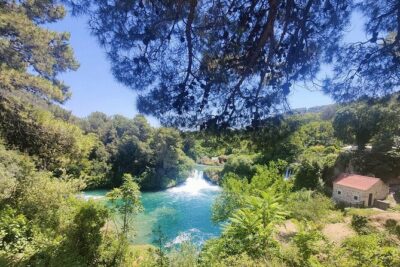
Krka Waterfalls tour with Trogir Walking tour and Krka panoramic boat cruise
Read our review →
Walking Tour of Split with a ‘Magister’ of History
Read our review →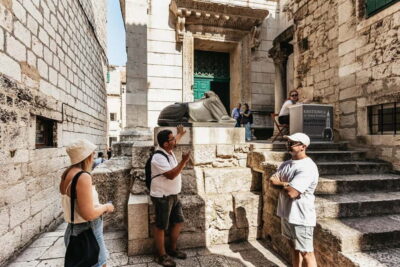
Split: Diocletian Palace & Old Town Guided Walking Tour
Read our review →
From Split: Krka Waterfalls Cruise & Trogir Walking Tour
Read our review →
Browse the lists this tour appears in