
Reviewed · DIOCLETIAN'S PALACE TOURS
Split & Diocletian Palace Historical Walking Tour
Split’s Diocletian’s Palace is not a single building you walk around once and leave behind. It is the working heart of Split, with homes, cafés, lanes, churches, and shops tucked into the old Roman plan. This 90-minute walking tour gives you a useful first map of that maze, starting at the Peristyle and moving through the palace’s key gates, courtyards, and waterfront.
I like the choice between a five-person small group and a regular group of up to 20, since the smaller option should make it easier to ask questions and hear the guide. I also like the morning and afternoon departures, plus the evening option noted in the tour information, which can help you avoid the strongest daytime heat.
The main caution is scope. At $156.17 per person, this is a costly tour for 90 minutes, and some sights are viewed from the outside or explained without a museum admission. One past participant also found the guide difficult to hear, so group size and guide delivery matter here.
Key details before you book
- The tour begins at the Peristyle, the central square from which most palace routes branch out.
- The small-group option is limited to five people, while the regular version can include up to 20.
- The substructures are included, but the museum section below the palace is not visited during the tour.
- You cover Roman, medieval, Venetian, and modern Split in a short walk.
- The tour is offered in English, with morning and afternoon choices.
- Free cancellation is available up to 24 hours before the start time, subject to the stated minimum group requirement.
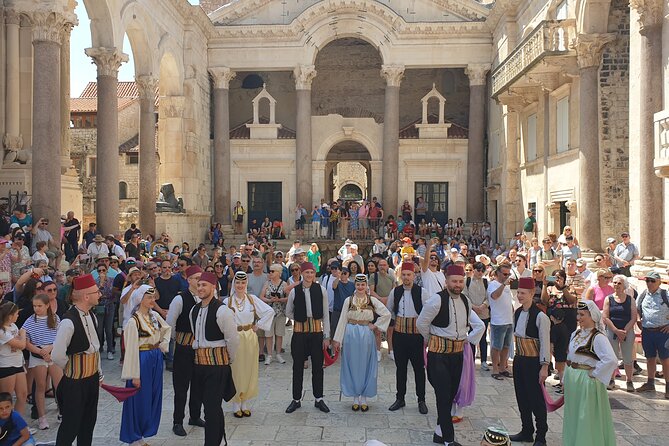
Starting at the Peristyle, Split’s Roman stage
Meet at Peristil ulica, at the Peristyle of Diocletian’s Palace. This is the right place to begin because the square acts as the palace’s central crossroads. From here, you can reach many of the other major areas, and your guide can explain how the original Roman plan still shapes the city you see today.
The Peristyle is more than a photo stop. It helps you understand that Diocletian’s Palace was designed as an imperial residence with a practical street system, formal courtyards, and controlled entrances. Give yourself a moment to look around before the group moves on. The value of a guide here is not simply naming the stones, but showing how the palace’s parts fit together.
The scheduled stop lasts about 15 minutes. That is enough for an introduction and some photos, but not enough for a long architectural lecture. If you enjoy taking many pictures, you may want to return later on your own.
More ways to see Diocletian's Palace:
- Split: Old Town and Diocletian Palace Walking Tour
★ 4.9 · 4,727 reviews - Walking Tour of Split and Diocletian’s Palace
★ 5.0 · 2,588 reviews - Split & Diocletian’s Palace Walking Tour
★ 5.0 · 1,125 reviews
Below ground in the palace substructures
The next stop enters the substructures of Diocletian’s Palace. You see the central hallway and hear how these lower rooms supported the palace above. The guide also explains how the substructures were built and how their purpose changed over time.
This section gives you one of the clearest ways to picture the original palace. Above ground, later building has altered the Roman setting. Below ground, the layout can make the size and planning of the imperial complex easier to grasp.
There is an important limit. The tour goes through the substructures but does not include the museum section. You can visit that museum after the walk, but its admission is not part of this experience. If the underground rooms are your main reason for coming, check the separate museum arrangements before booking.
The visit here lasts about 10 minutes, so expect a focused explanation rather than an extended archaeological visit. That short format may suit you if you want orientation without spending half a day underground.
Riva Harbor and the palace’s south wall
The walk continues to Riva Harbor, Split’s waterfront promenade. Here, the guide discusses the south wall of the palace and explains how the waterfront relates to the imperial complex.
This is a useful change of view. The Peristyle shows the palace from inside, while Riva helps you understand its outer edge and its relationship with the sea. You also see a bronze model of Diocletian’s Palace and learn about the history of the Riva promenade.
Two Riva stops appear in the route, one early and one near the end. That makes sense as a walking route because the waterfront connects naturally with the palace’s southern side, but the schedule may feel slightly repetitive if you expect eight completely different areas. The final Riva stop is listed at about 15 minutes, giving you more time for the promenade and the palace model.
The listed admission status for Riva is not included. Since this is a public waterfront area, the note may relate to a specific access point or included entry rather than the promenade itself. Ask your guide what, if anything, requires separate payment on the day.
Fruit’s Square and Split’s Venetian layer
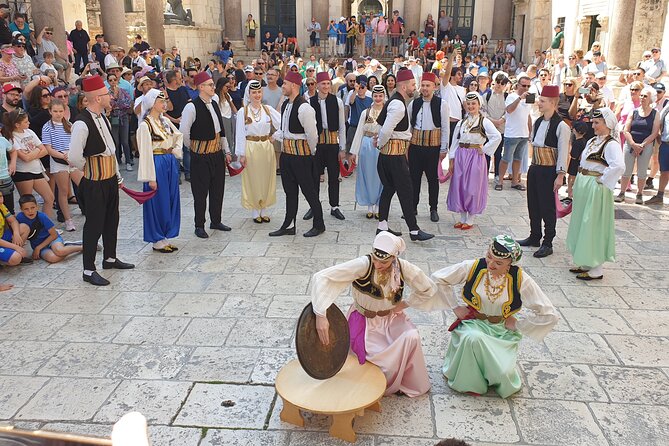
Fruit’s Square, or Trg Brace Radic, brings you into a later chapter of Split’s story. You see an old Venetian citadel and the sculpture of Marko Marulić. The stop is scheduled for about five minutes, so this is a quick look rather than a full discussion of the square.
That short visit still adds value. Without it, you could leave Split thinking only about Roman remains. This square points to the city’s Venetian period and shows how later powers and styles were fitted into the old palace core.
The sculpture of Marko Marulić provides a local cultural reference. The tour information identifies him with the square, but it does not promise a long literary presentation. If you want detailed context about the statue or Venetian architecture, take note of the location and return after the tour.
More walks through the old quarter in Split:
- Krka Waterfalls tour with Trogir Walking tour and Krka panoramic boat cruise
★ 5.0 · 1,659 reviews - Walking Tour of Split with a ‘Magister’ of History
★ 5.0 · 1,122 reviews - Split Walking Tour with Professor of History
★ 5.0 · 926 reviews - Split: Diocletian Palace & Old Town Guided Walking Tour
★ 4.7 · 882 reviews
The last ancient Roman temple
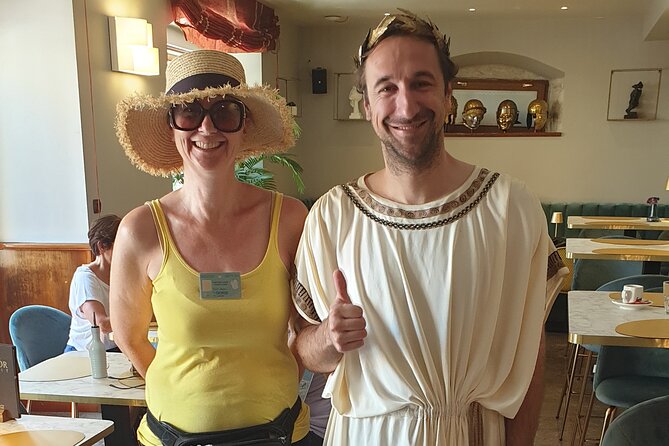
The route also includes the last remaining ancient Roman temple within the palace. The name of the temple is not specified in the supplied tour details, so you should treat this as a guided exterior or site explanation rather than assume a particular interior visit.
This stop matters because it connects the palace’s political and residential spaces with Roman religious practice. It also gives the guide a chance to explain how an ancient temple survived within a city that changed repeatedly over the centuries.
Because the stop is not assigned a separate time in the schedule, the guide may fold it into the nearby palace walk. If you want to linger for photographs, keep your camera ready and ask when the group will move on.
The Vestibulum and Diocletian’s private quarters
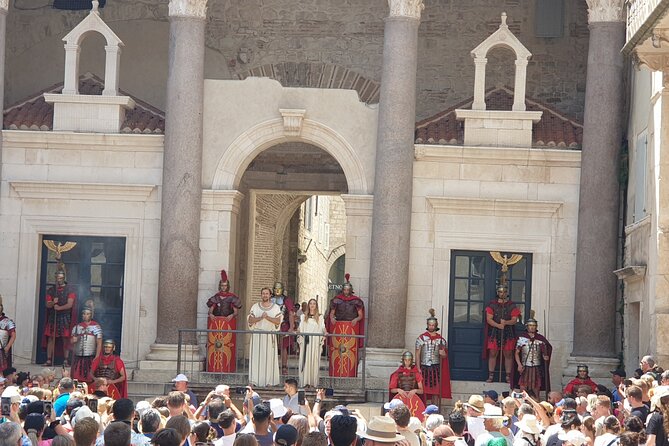
The Vestibulum was the entrance hall to Diocletian’s personal quarters. The guide explains its past and how it worked as a transition between the formal palace and the emperor’s private area.
This is one of the more atmospheric stops. The rounded entry space gives you a sense of arrival, and the tour information notes that you may hear traditional Dalmatian singing there. That possibility depends on circumstances, so do not book the tour solely for a performance, but it adds a memorable local touch when it happens.
The stop lasts about five minutes. That is enough to understand the role of the Vestibulum and take a few pictures, but not enough to explore every detail. Stay close to the guide, since a group can move quickly through a compact historic space.
Triklinij, dining, and the emperor’s private route
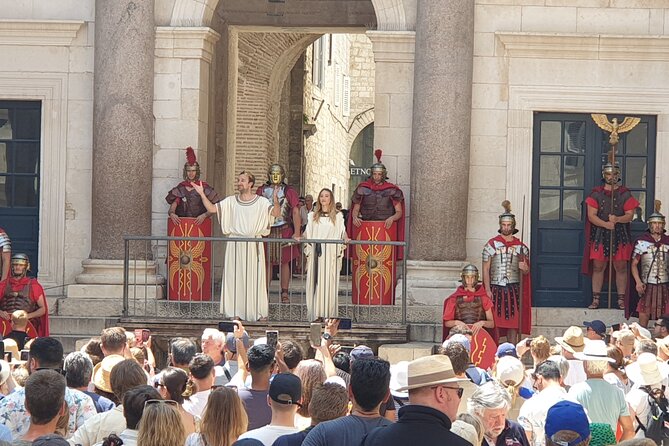
At Triklinij, you see remains and a partial reconstruction of Diocletian’s personal walkway and dining hall. The stop helps shift the palace from an abstract Roman monument to a place designed for daily imperial life.
The idea of a private walkway and dining space adds a human scale to the tour. You are not only looking at walls and gates. You are being shown how the emperor moved through his residence and where formal meals took place.
Again, the scheduled time is about five minutes. That works well as part of a fast orientation tour, but it will feel brief if you are interested in reconstruction details. Write down the name if you want to read more later, since the guide’s spoken explanation is unlikely to cover every question in a compact group walk.
Venetian Split, the city museum, and the cathedral
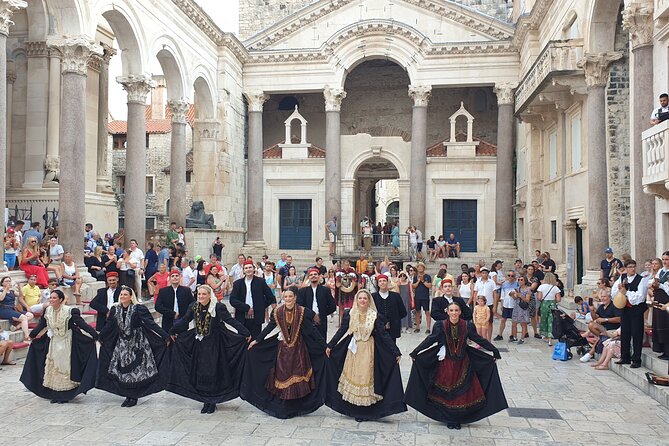
The route points out a 15th-century Venetian palace that now houses the Museum of the City. It also includes the cathedral located in Diocletian’s mausoleum. These stops show how Roman and later buildings were reused rather than preserved as a sealed archaeological park.
The cathedral is especially important to the story of the palace because it occupies the former mausoleum of Emperor Diocletian. That change in function gives you a direct example of Split’s long religious and civic transformation.
The tour details do not assign separate stop times or promise admission to either the city museum or the cathedral. Plan on hearing about them and seeing them as part of the walk, then confirm separately if you want to go inside. This is one reason the tour works best as an introduction, not as a complete visit to every major interior.
Grgur Ninski and the northern approach
Near the north gate, the group stops at the Grgur Ninski statue, made by the Croatian sculptor Ivan Meštrović. The statue represents Grgur Ninski, described here as a father of the Croatian language, and the guide explains his importance to Croatian history and language.
The stop lasts about 15 minutes, making it one of the longer pauses on the route. You have time to take photographs and hear why this figure matters, rather than simply passing the statue on the way to the gate.
This is a good example of the tour’s wider value. The walk is not limited to Roman architecture. It also introduces people and symbols that help you read modern Croatian identity. If you are taking photos, note that the statue is positioned in front of the north gate, so the two sights can be understood together.
The Golden Gate and the city’s northern entrance
The Golden Gate was the main entrance to Diocletian’s Palace. Here, the guide explains the gate’s role and returns to the story of Gregory of Nin and his importance to Croatian language and national history.
The gate is one of the best places to see how the palace controlled movement. It was not simply a decorative doorway. It marked a formal approach into the imperial complex, and its location helps you understand the palace’s north-south organization.
Admission is listed as not included. The tour does not clarify whether this refers to entering a particular section or to a separate site nearby, so ask before paying for anything. The stop lasts about 10 minutes, which should be enough for the main explanation and photos.
The final waterfront walk
The tour ends back at the meeting point after returning to Riva Harbor. This final section covers the bronze model of Diocletian’s Palace and more of the Riva promenade’s history.
Ending near the waterfront is practical. You can continue along the promenade, return to a palace site you want to see more slowly, or use the central meeting point as a base for your next stop. The tour does not provide transport, but none is needed for this walking route, and the meeting point is near public transportation.
The activity lasts about one hour and 30 minutes. That makes it easy to fit around a morning arrival, an afternoon departure, or another Split visit. It also means the guide must keep a steady pace. Wear shoes suited to walking on old streets, and do not expect long breaks at each monument.
Small group, regular group, and guide quality
You can select a small group capped at five people or a regular group with up to 20. The smaller option is the better choice if you want to ask questions, take photographs without holding up a large crowd, or make sure you can hear the explanation.
The regular group may offer better value if the price difference is significant, but the supplied price of $156.17 per person is high for a 90-minute walk. At that rate, I would choose the five-person option if available and make sure the booking clearly identifies the group size and what admissions are included.
Guide delivery is important here. One past participant found that the guide spoke too quietly and often turned away from the group, making the explanation hard to follow. That is a real concern in busy stone courtyards and open waterfront spaces. If you cannot hear, politely ask the guide to face the group and repeat the point.
The tour is offered in English. No guide names are provided, so you cannot choose a particular person in advance. The guide is described as educated and is expected to explain the palace, its construction, and its later use.
Is $156.17 a fair price?
For a short walking tour, $156.17 per person is a serious price. The value depends on what you want from the experience. You are paying for an English-speaking guide, a structured route through several important parts of Split, and the option of a very small group. You are not paying for a long museum visit or a full set of admissions.
The tour can make sense if you have limited time and want a fast, organized introduction before exploring alone. It is less convincing if you are comfortable reading signs, walking through the palace independently, or returning to the same sites at your own pace.
Some stop descriptions list admission as free, while the Golden Gate and Riva sections list admission as not included. The underground museum is also excluded. Before booking, confirm exactly what entry costs are covered, since the difference between a guided walk and a guided walk with admissions can affect the total price.
A major positive is the 93 percent recommendation rate and a 4.9 rating from 29 reviews. Those figures suggest strong overall approval, but the specific complaint about low volume shows why the small group option may be worth considering.
Who should book this Split walk?
I would recommend it most strongly to first-time visitors who want a clear introduction to Diocletian’s Palace and Split’s central sights. It also suits anyone who prefers a guide to connect Roman, Venetian, medieval, and modern details in one short outing.
The tour is a good fit if you want:
- A compact 90-minute orientation
- A choice of morning or afternoon timing
- A five-person option for closer contact with the guide
- A route that includes both palace interiors and Riva Harbor
- Context for the Grgur Ninski statue and Croatian language
I would be more cautious if your main goal is museum access, long archaeological explanations, or maximum value per dollar. You will need extra time and possibly separate admission for the museum, cathedral, city museum, or other interiors.
Free cancellation is available until 24 hours before the start time. Changes made inside that period are not accepted, and the tour may be canceled if its minimum number is not reached. Most people can participate, service animals are allowed, and the meeting point is near public transportation.
My booking advice
Book this tour if you want a guided first look at Split and are willing to pay a premium for structure and a small-group option. I would choose the five-person version, especially because hearing the guide clearly can make or break a walk through open courtyards and crowded streets.
Skip it if you want a slow, admission-heavy visit to the palace. In that case, use the route as a planning guide and spend your budget on the specific museums or interiors that interest you. For a quick first orientation, though, the combination of the Peristyle, substructures, Golden Gate, Grgur Ninski statue, and Riva Harbor gives you a useful framework for exploring Split on your own.
FAQ
Where does the Split and Diocletian Palace walking tour begin?
The tour begins at Peristil ulica, at the Peristyle of Diocletian’s Palace in Split, Croatia.
Where does the tour end?
The activity ends back at the meeting point.
How long does the tour last?
The tour lasts approximately one hour and 30 minutes.
Is the tour offered in English?
Yes. The tour is offered in English.
How many people can join the tour?
You can select a small group with a maximum of five people or a regular group with a maximum of 20. The activity has an overall maximum of 20 participants.
Does the tour visit the museum section of the palace substructures?
No. The tour visits the palace substructures but does not include the museum section. You can visit that museum after the tour.
Are morning and afternoon departures available?
Yes. Morning and afternoon tour times are available.
Are admission tickets included?
Several stops are listed with free admission. Admission is listed as not included for the Golden Gate and Riva Harbor sections, and the substructures museum is not part of the tour. Confirm any separate entry costs before booking.
What is the cancellation policy?
You can cancel up to 24 hours before the experience starts for a full refund. Cancellations or changes made less than 24 hours before the start time are not accepted for a refund.
More History Walks in Split
- Split: History and Heritage Walking Tour
★ 4.9 · 650 reviews - Split History and Gastro Small-Group Tour with Food and Drinks
★ 5.0 · 375 reviews - SPLIT-PREMIUM Emperor’s Walking Tour for History Lovers + Museum
★ 5.0 · 333 reviews - Split: Local History and Culture 90-Minute Walking Tour
★ 5.0 · 194 reviews
Just added around Split
- From Makarska : Wine Tasting Grabovac Tour★ 4.5 · 30 reviews
- Walking Tour Split★ 4.7 · 61 reviews
- Essential Diocletian’s Palace Tour for First-Time Visitors★ 4.8 · 19 reviews
- Unique vintage Tomos moped tour Split – Back to the ’80s★ 4.8 · 17 reviews
- Trogir; Private walking tour of higlights of Trogir★ 4.7 · 3 reviews
- Trogir: White Lagoon, Maslinica & Blue Lagoon Speedboat Tour★ 4.8 · 11 reviews
- Trogir 1.5-Hour City Tour★ 4.4 · 37 reviews
- Split: Trogir Open Top Bus Trip + Free Split Walking Tour★ 4.1 · 17 reviews
Diocletian's Palace Tours, compared.
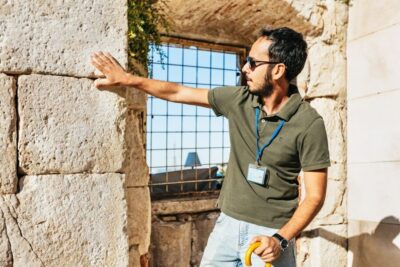
Split: Old Town and Diocletian Palace Walking Tour
Read our review →
Walking Tour of Split and Diocletian’s Palace
Read our review →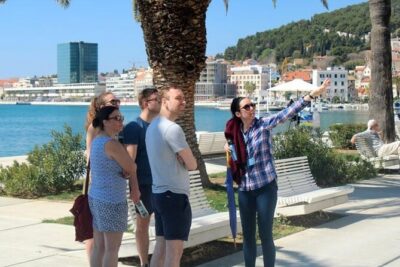
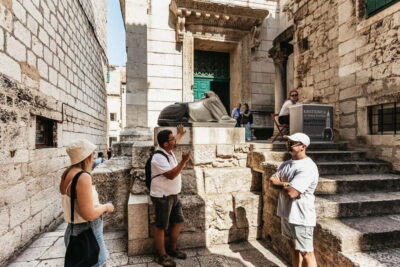
Split: Diocletian Palace & Old Town Guided Walking Tour
Read our review →
Split: Game of Thrones Tour with Diocletian’s Palace Cellar
Read our review →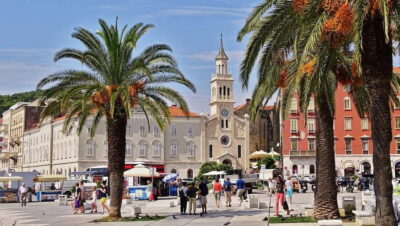
Diocletian’s Palace and Old Town SMALL GROUP Walking Tour
Read our review →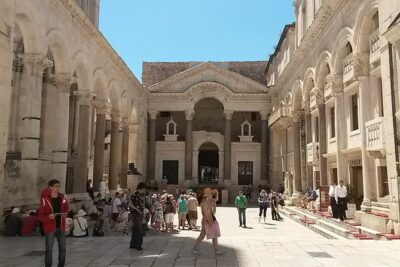
SPLIT-PRIVATE Walking Tour of Diocletian’s Palace & Old Town
Read our review →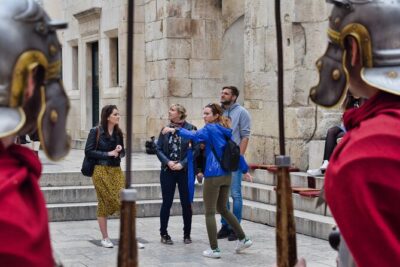
Browse the lists this tour appears in