
Reviewed · SPLIT HISTORY WALKING TOURS
Split: Historical & Gastro Treasures Tour with Green Market
Split’s best introduction may be the one that puts food in your hands while explaining the stones under your feet. This three-hour tour moves from the Green Market to Diocletian’s Palace, then into a konoba for seafood, pasta, black risotto, and local wine.
I like the generous tasting menu, which lets you try items you might not order alone, such as soparnik, octopus dishes, or cuttlefish risotto. I also like the local focus: guides such as Hani, Olga, Christina, Vicky, and Lucija bring personal knowledge of Split’s food, customs, and daily life.
The main drawback is the price, $135 per person, especially for anyone who does not drink wine. Portions are substantial, though, so this is closer to a full meal with a guided city walk than a light tasting stroll.
Key Points at a Glance
- Green Market breakfast: Start with prosciutto, cheese, peka bread, soparnik pie, and grappa among Split’s local produce stalls.
- Diocletian’s Palace walk: See Peristil Square, the Golden Gate, and medieval Pjaca while learning how the old palace is used today.
- A proper Dalmatian meal: Sit down for seafood, two pasta dishes, black risotto, and wine from Brač.
- Guides make the difference: Hani, Olga, Christina, Vicky, Lucija, and other English-speaking guides are praised for warmth, humor, and local insight.
- Come hungry: The portions are generous, and dessert or gelato follows the main meal.
- Morning and afternoon options differ: The afternoon departure does not visit the Green Market, since it is closed later in the day.
Why This Tour Works as a First Day in Split
Split can be confusing at first. Ancient Roman walls, medieval lanes, Venetian squares, cafés, apartments, and shops all share the same compact center. A food-and-history tour gives you a useful map of the city without treating it like a museum display.
You begin with local food, then see the major historic sights, and finish at a tavern-style restaurant. That order matters. By the time you sit down for lunch, you have some sense of where you are and how Dalmatian cooking fits the place.
I would book this early in a Split stay. Your guide can point out foods you may want to seek out again, explain local customs, and help you get your bearings around the palace. Several guides also give practical tips about where to eat later.
The pace is relaxed rather than rushed. You walk through the market and old center, stop for food, and spend time sitting down for a proper meal. This suits you if you want conversation and context, not just a series of quick samples.
More food tours in Split:
- From Split: Krka Waterfalls, Food & Wine Tasting Tour
★ 5.0 · 9,326 reviews - From Split: Krka Waterfalls, Food & Wine Tasting Tour
★ 4.9 · 6,598 reviews - Split: Blue Lagoon and 3 Island Cruise with Food and Drinks
★ 4.8 · 1,969 reviews
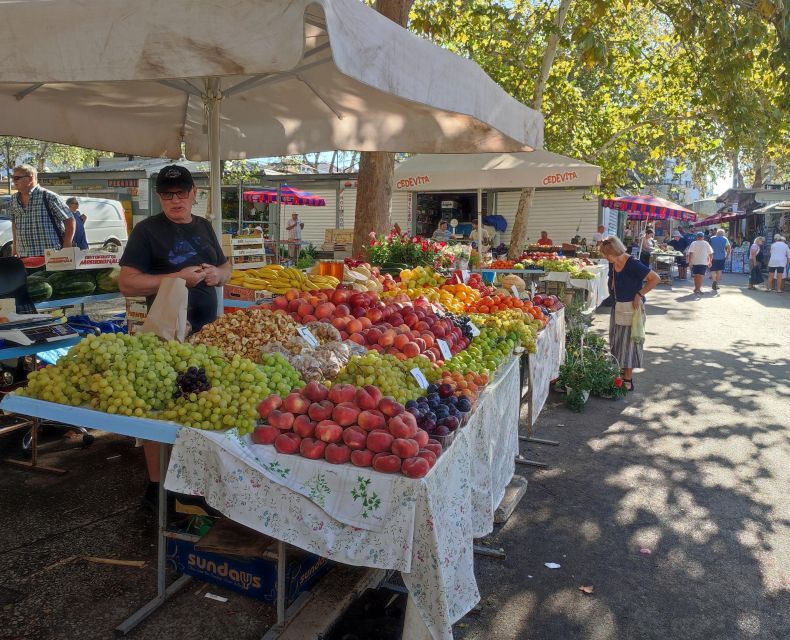
Starting at Split’s Green Market
The morning version begins at the Green Market, close to the meeting point on Hrvojeva 1, though the exact meeting location can vary with the option you book. This is one of the strongest parts of the experience because it connects the food on your plate with the people who buy and sell it.
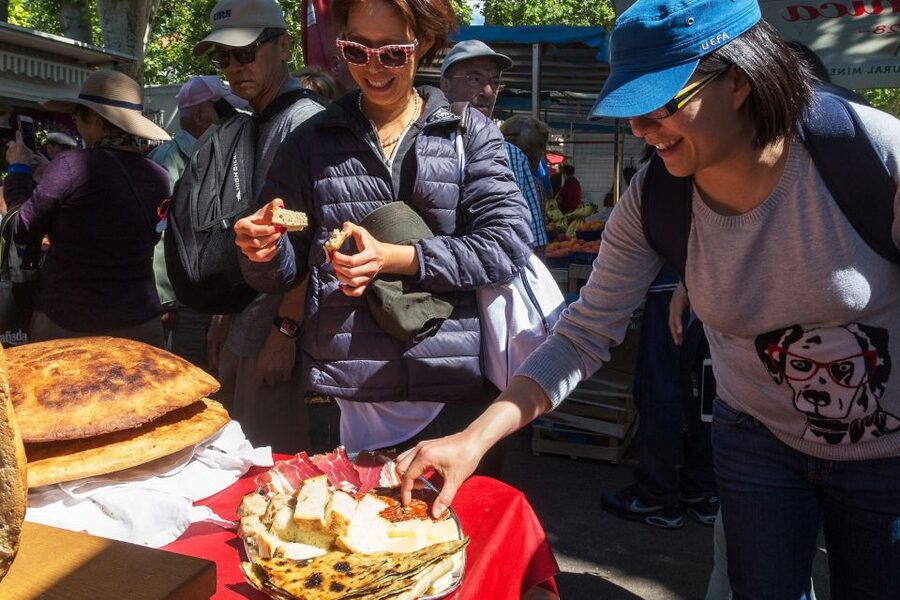
Your local Mediterranean brunch includes prosciutto, cheese, traditional peka bread, soparnik pie, and grappa. The food is served as a generous tasting rather than a tiny decorative bite. Come with a real appetite.
The market setting adds something a restaurant cannot. You see the produce stalls and get a feel for the ingredients used in everyday Dalmatian cooking. Guides explain the differences among Croatian foods, discuss tasting notes, and describe how certain items are prepared.
Soparnik is a particularly useful introduction. This traditional savory pie is associated with the Dalmatian region and gives you a taste of local cooking that is easy to miss on a standard restaurant menu. Peka bread adds another regional touch, while prosciutto, cheese, and grappa make the opening spread feel more like a social meal than a formal lesson.
The market can be busy, and you may spend part of the stop moving through crowded aisles. That is part of its character, but it may be less comfortable for anyone who prefers quiet, spacious stops. The reward is a more ordinary view of Split, away from the polished restaurant tables.
If you choose the afternoon departure, the Green Market is not included because it does not operate at those hours. Similar foods are served at a local tavern instead. That keeps the food component intact, but you lose the market atmosphere, so choose the morning option if the market is a priority.
Walking Through Diocletian’s Palace
After the first food stop, the tour turns to Split’s historic center. The main sights include Peristil Square, the Golden Gate, and Pjaca, a medieval Venetian square.
The palace is not a separate archaeological site sitting apart from modern life. It forms the core of the city, with homes, cafés, shops, and narrow lanes built into and around its old structure. A local guide helps you notice how the ancient complex has changed and how people still use it today.
Peristil is one of the essential stops. The square gives you a strong sense of the palace’s original scale and ceremonial purpose. Your guide will explain its place in the complex and point out details that can be easy to overlook when you are simply walking through.
The Golden Gate offers another clear connection to the city’s Roman past. Pjaca then shifts the mood, showing how later Venetian influence shaped Split’s public spaces. The tour does not only list dates and rulers. The best guides, including Hani, Olga, Christina, and Vicky, explain how the city developed and how the old center functions now.
That personal approach is a major strength. Hani is praised for combining humor with historical detail. Olga is noted for answering questions and linking the city’s past to its food. Christina is described as energetic and attentive to the group. Guide assignments change, so you cannot select one of these individuals unless the operator confirms it, but the overall guiding style is clearly an important part of the experience.
The walk is also a good balance to the eating. You are not parked at a table for three hours, and you are not expected to absorb a long history lecture on an empty stomach. Food breaks keep the tour social and give the historical material a natural rhythm.
Sitting Down in a Dalmatian Konoba
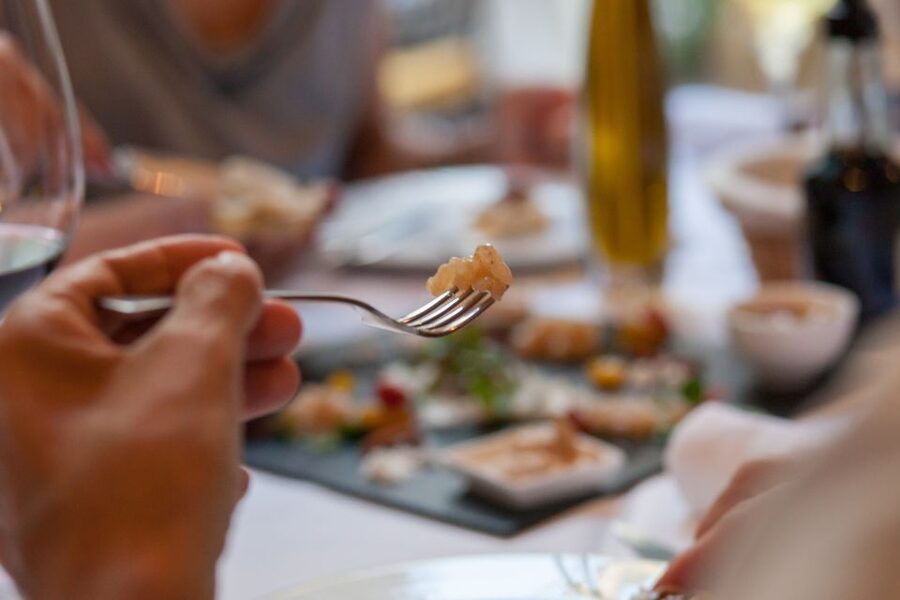
The final major stop is a konoba, a traditional tavern-style restaurant. Here the experience shifts from market tasting to a more complete meal.
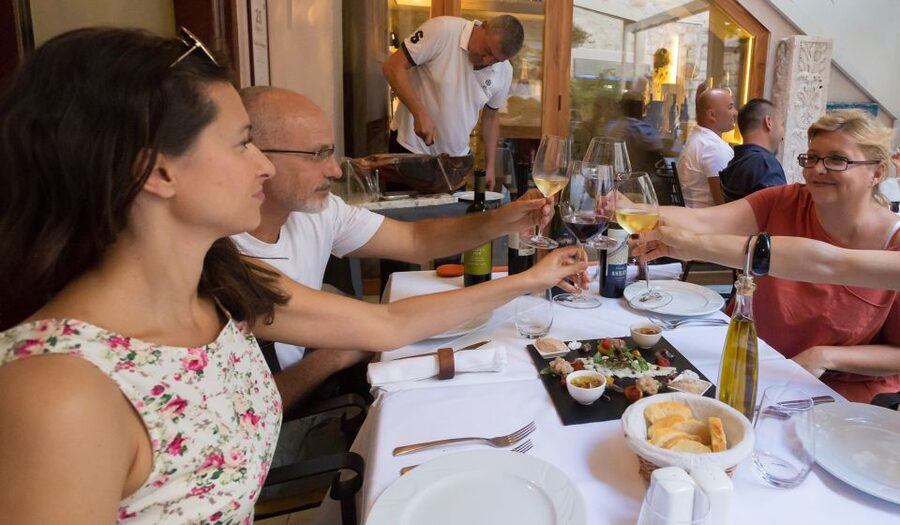
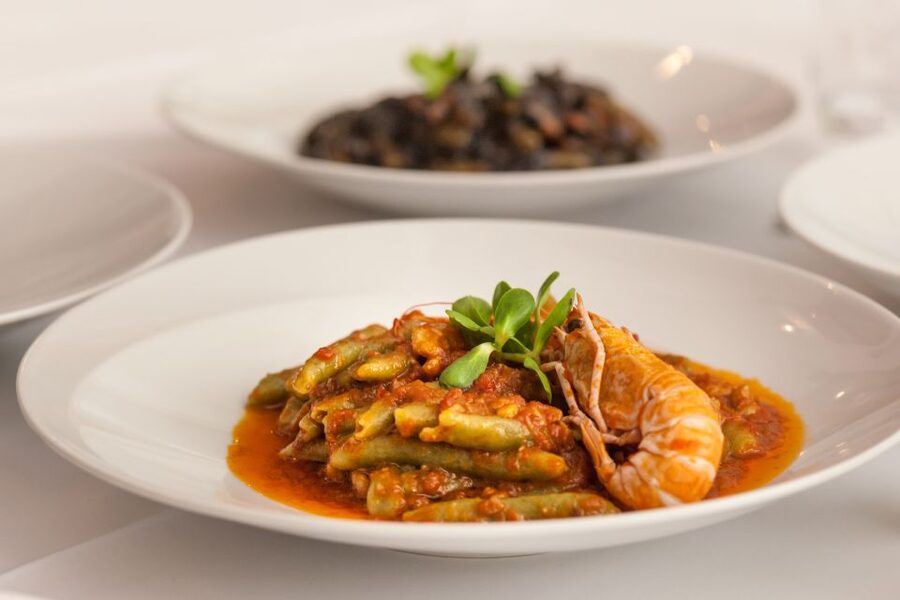
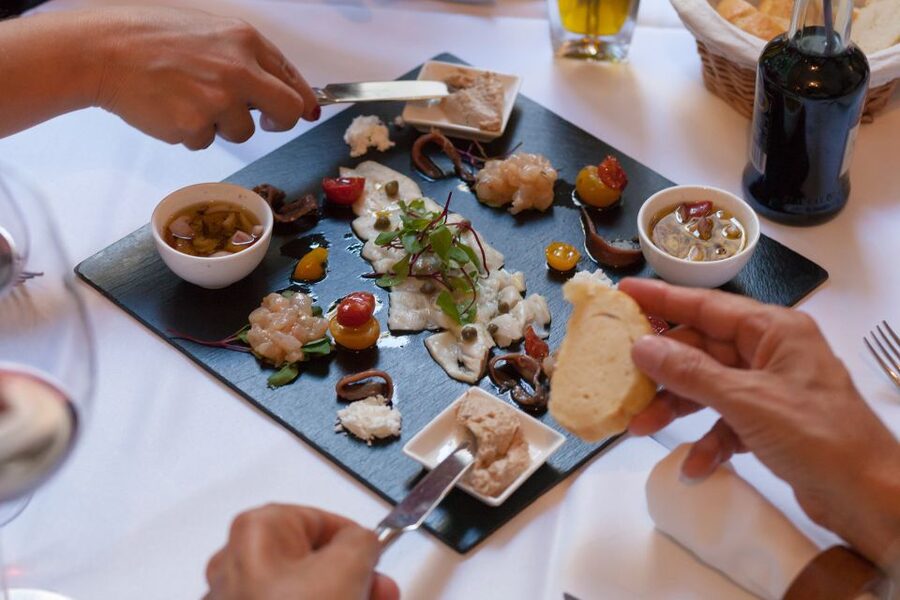
You begin with a seafood starter and white wine. The exact seafood can vary, but the goal is to show you the coastal side of Dalmatian cooking. The main courses include two types of traditional pasta and famous black risotto, paired with local red wine from Brač Island.
Black risotto is usually colored with cuttlefish ink, giving the dish its dark appearance and a strong connection to Adriatic seafood cooking. It is the kind of food many people might skip when ordering for themselves, which is one reason the guided format helps. You can try something unfamiliar without committing to an entire meal on your own.
Pasta dishes provide a gentler counterpoint to the risotto. Together, the courses give you more range than a single signature dish would. You get seafood, pasta, rice, white wine, and red wine in one sitting.
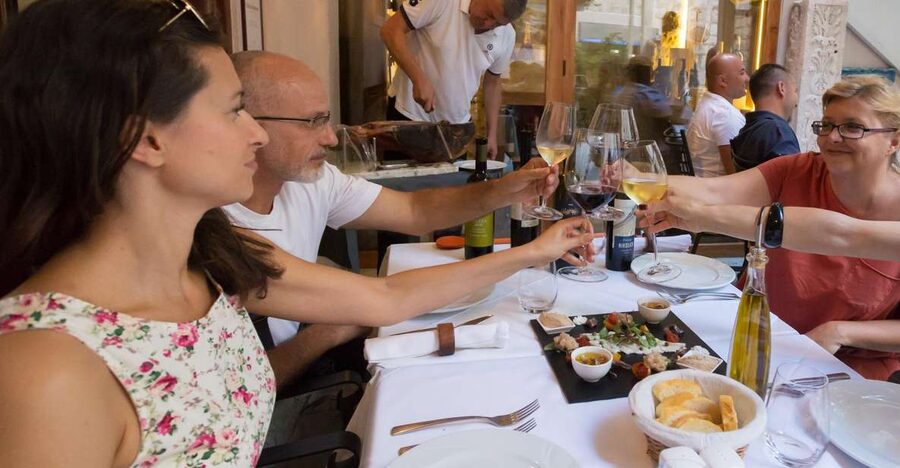
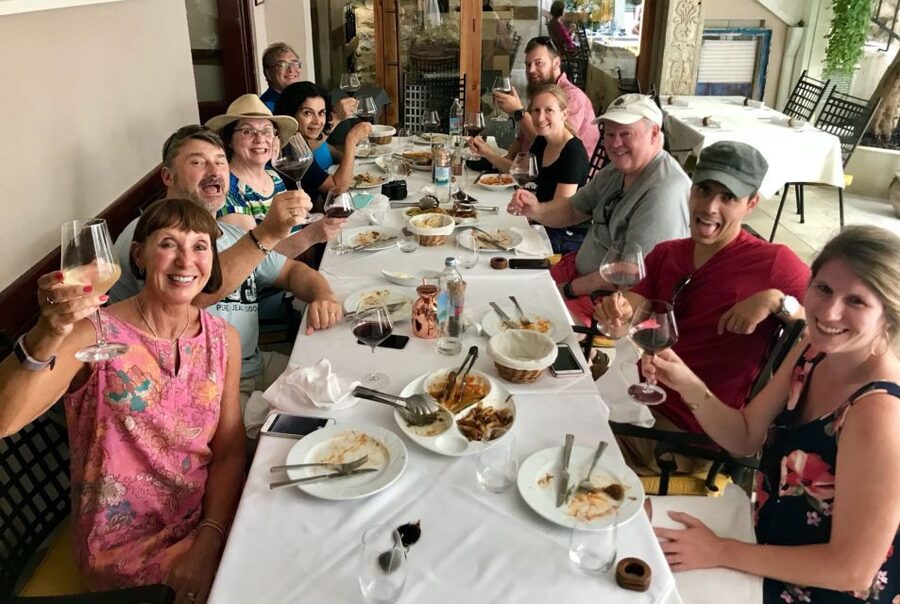
The restaurant stop is not a rushed add-on. The meal is served at a relaxed pace, with the guide explaining preparation and answering questions. This also creates the social side of the tour. You sit with the group, talk over the food, and get a less formal view of Croatian dining.
The food portions are a real consideration. Many people find the meal generous enough to carry them well beyond the tour. If you are hoping for only a few small samples before dinner, this experience may be too filling. If you enjoy replacing lunch with a long series of tastings, the quantity is part of the value.
Vegetarian guests should state their needs when booking. The operator asks for allergies and dietary restrictions in advance, and one guide adjusted food for guests with restrictions. Still, you should provide clear information before the tour rather than expect changes at the table.
More history walks in Split:
- Walking Tour of Split with a ‘Magister’ of History
★ 5.0 · 1,122 reviews - Split Walking Tour with Professor of History
★ 5.0 · 926 reviews - Split: History and Heritage Walking Tour
★ 4.9 · 650 reviews - Split History and Gastro Small-Group Tour with Food and Drinks
★ 5.0 · 375 reviews
Wine, Grappa, and the Final Sweet Course
Alcohol is included in the price, beginning with grappa at the market and continuing with white and red wine at the restaurant. The wine pairings help explain how drinks fit with the food rather than treating them as separate samples.
If you do not drink alcohol, the tour may feel expensive at $135 because much of the standard menu includes wine and grappa. You should still receive the included food, but the price is designed around the full food-and-wine experience. This is worth considering before booking.
The tour ends with a light gelato or a traditional dessert, depending on the season. The exact sweet is not fixed, so you should not book expecting one particular cake or pastry. One food-loving participant preferred the traditional dessert to gelato, noting that gelato is easy to find elsewhere in Split.
That is fair advice. If the group is offered a choice, say clearly what you want. A small seasonal dessert can be a more distinctive ending than gelato, though gelato may be the lighter choice after a large meal.
What $135 Includes
At $135 per person, this is not a budget walk with one snack. The price covers all food and wine, the licensed English-speaking guide, the Green Market brunch on the morning option, the palace walk, the restaurant meal, and the final sweet course.
The value depends on how you use it. You are paying for:
- A three-hour guided experience
- Several substantial food stops
- Wine and grappa
- A full restaurant meal
- A licensed local guide
- Historical interpretation in the old center
- Help understanding Dalmatian food and customs
I consider the price reasonable for someone who wants a full lunch, several tastings, and a city orientation in one booking. It is less attractive if you eat very little, avoid alcohol, or mainly want a short palace tour.
There is no hotel pickup or drop-off. You need to reach the meeting point yourself, and the tour ends back at the meeting point. Since the activity stays in central Split, the lack of transport is not a major issue for most people staying near the old town, but it matters if you are based farther away.
You can reserve now and pay later, and cancellation is available up to 24 hours before departure for a full refund. These terms are useful if your Split plans may shift.
Who Should Book This Food and History Walk

I would recommend this tour to first-time visitors who want an easy introduction to Split’s center and cuisine. It is also a good match for couples, families with older children, and solo visitors who enjoy eating with a group.
Food lovers will get the most from it, especially if you like trying dishes that do not often appear on familiar international menus. The black risotto, soparnik, grappa, local cheeses, and seafood offer a broad look at Dalmatian cooking in one morning or afternoon.
It suits people who prefer local stories to formal lectures. The guides are praised for being friendly, funny, and attentive, with several making a point of including everyone at the table. That matters on a food tour because a good explanation can turn an unfamiliar dish into a memorable one.
I would hesitate to recommend it to anyone seeking a very small tasting menu, a private luxury meal, or a quiet experience with no group interaction. The portions are large, the format is social, and the food may be shared around a table.
Practical Tips for a Better Visit
Book the morning departure if seeing the Green Market is important to you. The afternoon option replaces the market with similar foods at a local tavern.
Tell the operator about allergies and diet restrictions when booking. Do not assume that a general vegetarian or seafood-free request will be understood without detail.
Wear comfortable shoes for the old-town walk. The route includes historic squares and palace streets, followed by a sit-down meal, so you want footwear that works for both.
Do not eat a large meal beforehand. The opening brunch is followed by seafood, pasta, black risotto, wine, and dessert. The advice to come hungry is not a throwaway line.
If you are not drinking, factor that into your value calculation. The tour can still provide a lot of food and history, but the standard price includes alcoholic drinks.
Try to book this near the start of your stay. You will leave with a better idea of what you are eating and where you might return for another meal.
Should You Book the Split Historical and Gastro Treasures Tour?

Book it if you want a full, food-heavy introduction to Split, with the old town and local cooking explained together. The Green Market opening, palace walk, and konoba meal make a sensible three-hour package, and the guides are the heart of it.
Choose the morning option for the market. Choose the afternoon only if the timing suits you and you are content with similar tastings in a tavern. At $135, it is best value for people who eat generously, enjoy wine, and want both a meal and a guided city orientation.
Skip it if you want a cheap snack crawl, avoid alcohol, or prefer to explore Split’s restaurants independently. For everyone else, this is a practical first look at the city, with enough food to make lunch unnecessary afterward.
FAQ
How long does the tour last?
The tour lasts three hours.
Where does the tour begin?
The listed meeting point is on Hrvojeva 1 street, but the exact meeting point may vary depending on the option booked.
Where does the tour end?
The activity ends back at the meeting point.
Is the Green Market included?
The Green Market is included in the morning option. The afternoon option does not visit the market because it is closed later in the day.
What food is served at the Green Market?
The morning tasting includes prosciutto, cheese, traditional peka bread, soparnik pie, and grappa.
What sights are visited in Diocletian’s Palace?
The tour includes Peristil Square, the Golden Gate, and Pjaca, a medieval Venetian square.
What is served at the restaurant?
The meal includes a seafood starter with white wine, two types of traditional pasta, black risotto, and local red wine from Brač Island.
Is dessert included?
Yes. The tour ends with either light gelato or a traditional dessert, depending on the season.
Are food and wine included in the price?
Yes. The cost of all food and wine is included, along with the licensed local guide.
Is hotel pickup included?
No. Hotel pickup and drop-off are not included.
What language is the tour conducted in?
The tour is conducted in English.
Should I mention food allergies or dietary restrictions?
Yes. You should provide details about allergies and dietary restrictions when booking.
Just added around Split
- From Makarska : Wine Tasting Grabovac Tour★ 4.5 · 30 reviews
- Essential Diocletian’s Palace Tour for First-Time Visitors★ 4.8 · 19 reviews
- Unique vintage Tomos moped tour Split – Back to the ’80s★ 4.8 · 17 reviews
- Walking Tour Split★ 4.7 · 61 reviews
- Trogir; Private walking tour of higlights of Trogir★ 4.7 · 3 reviews
- Trogir: White Lagoon, Maslinica & Blue Lagoon Speedboat Tour★ 4.8 · 11 reviews
- Trogir 1.5-Hour City Tour★ 4.4 · 37 reviews
- Split: Trogir Open Top Bus Trip + Free Split Walking Tour★ 4.1 · 17 reviews
Split History Walking Tours, compared.

Walking Tour of Split with a ‘Magister’ of History
Read our review →
Split History and Gastro Small-Group Tour with Food and Drinks
Read our review →
SPLIT-PREMIUM Emperor’s Walking Tour for History Lovers + Museum
Read our review →
Split: Local History and Culture 90-Minute Walking Tour
Read our review →
Split: Walking tour of Split with a ‘Magister’ of History
Read our review →
Split: Historical Tour of Salona, Klis Fortress and Trogir
Read our review →Browse the lists this tour appears in