
Reviewed · SPLIT HISTORY WALKING TOURS
Split: Private Roman History & Market Tour
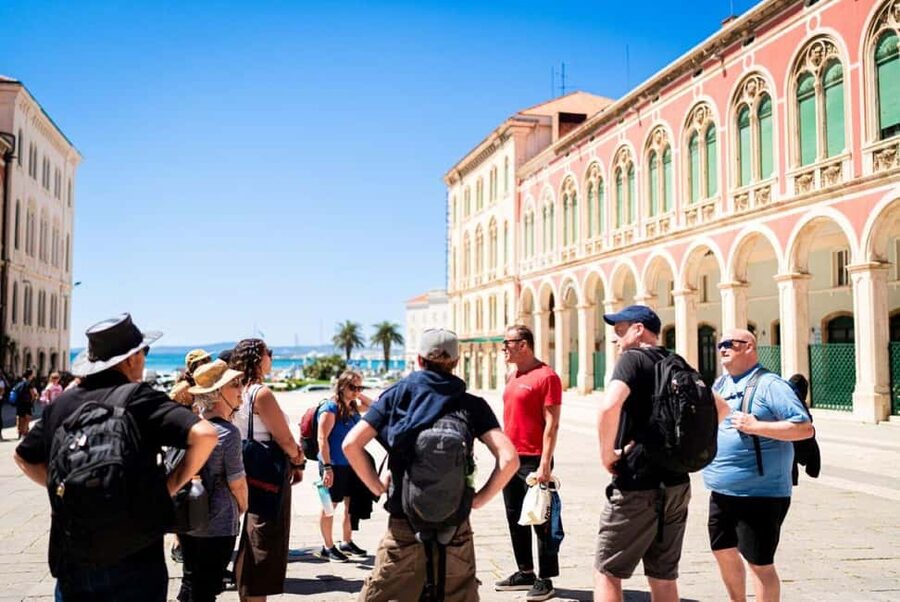
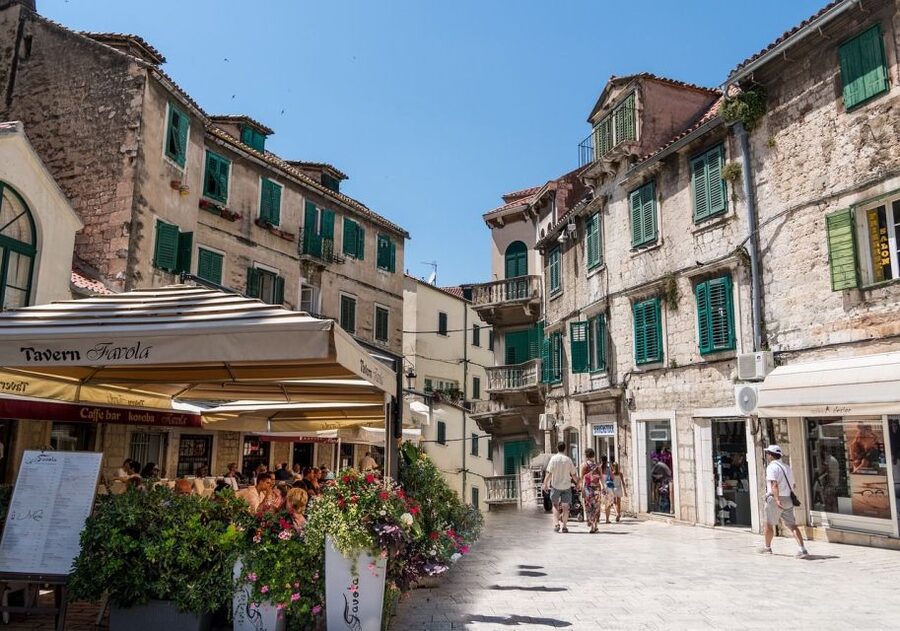
Split’s Roman palace is not a museum sealed behind glass. It is the old town, a living neighborhood where people pass through ancient gates, shop for vegetables, and meet for coffee. This private two-hour tour connects Diocletian’s world with everyday Split, including a Green Market tasting and stories about local customs.
I especially like the market stop, which gives you a practical feel for how people in Split buy food, and the small-group format, which lets a local guide adjust the pace. Guides such as Ted and Ivan earned strong praise for clear, engaging storytelling. The main drawback is the price: at $280 per person for two hours, this is a costly introduction unless you value a private guide and food sampling.
Key points to know before booking
- Diocletian’s Palace is still a living city: You walk through Roman walls, medieval lanes, and modern homes rather than a quiet archaeological site.
- The Green Market adds a taste of daily Split: Seasonal fruit, vegetables, olive oil, cheese, dry figs, and rakija may be included in the tasting.
- Local guides shape the experience: English-speaking guides born and raised in Split explain customs, food, Hajduk football, and palace life.
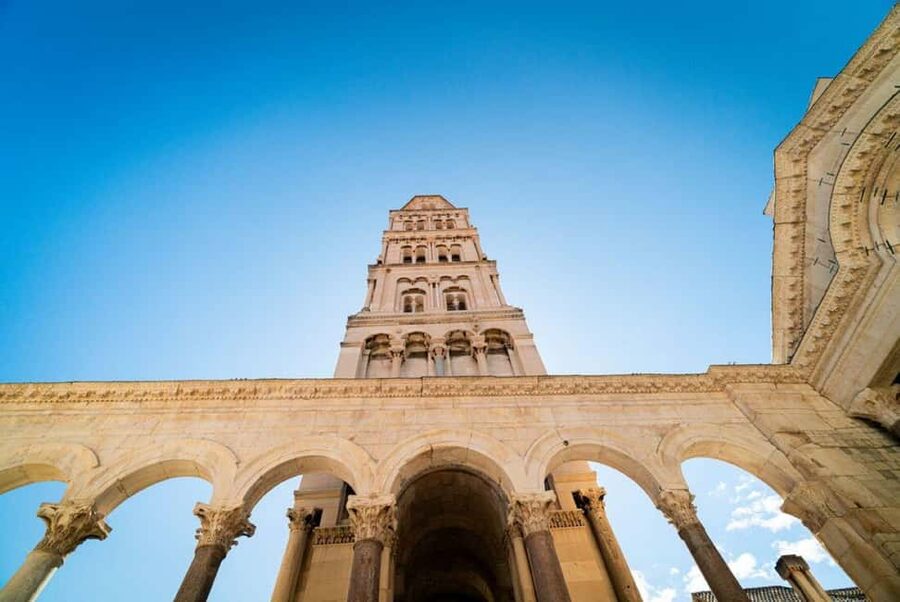
- Several famous palace sights are viewed from outside: Cathedral, mausoleum, underground cellars, Bell Tower, museums, and Temple of Jupiter require separate entrance fees.
- The tour is private and carbon neutral: It suits families and couples who want a focused introduction with an eco-certified operator.
- Two hours goes quickly: You get a useful overview, but not a full museum visit or a long food crawl.
Why this tour works as a first look at Split
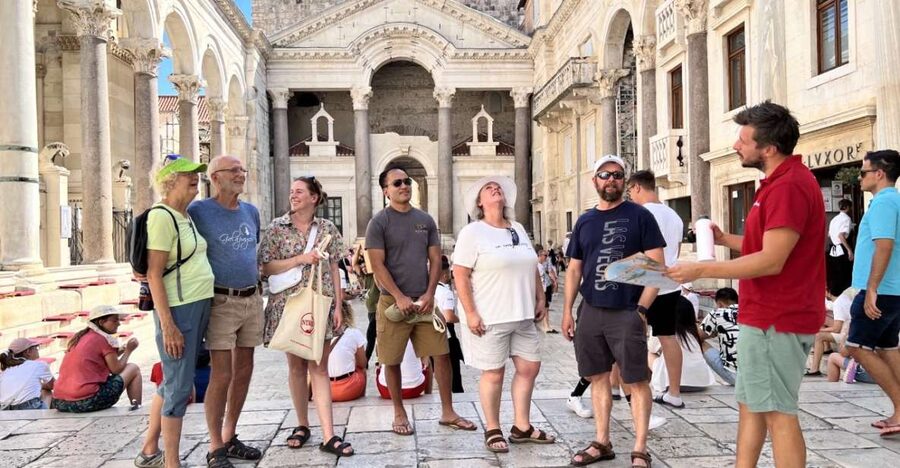
Split makes an unusual first impression. The center grew inside and around the palace built for the Roman emperor Diocletian, so the old town does not feel like a separate historic quarter placed beside modern life. Ancient stone, laundry, cafés, shops, homes, and busy passageways all share the same small area.
That is the central strength of this tour. You are not only told that Split is old. You see how old stone remains part of the city’s daily routine. A local guide can point out details that are easy to miss when you walk alone, then explain why a particular custom or food still matters.
The tour is conducted in English and is limited to your private group. That matters in narrow palace lanes, where a large group can turn a simple stop into a traffic problem. It also gives you a better chance to ask about restaurants, coffee shops, local celebrations, or anything else you notice along the way.
The two-hour length is useful for a first orientation, especially if you are arriving in Split for a short stay. It is long enough to cover the market, main palace sights, and Riva promenade without taking over your entire day. At the same time, the pace is necessarily brisk. If you want extensive museum time or a slow meal, plan those separately.
More history walks in Split:
- Walking Tour of Split with a ‘Magister’ of History
★ 5.0 · 1,122 reviews - Split Walking Tour with Professor of History
★ 5.0 · 926 reviews - Split: History and Heritage Walking Tour
★ 4.9 · 650 reviews
Starting at the Riva and finding the city model
The meeting point is at the beginning of the Riva promenade, beside the iron map model of Split. This is a sensible place to start because the Riva gives you an immediate view of the city’s layout and places you close to the palace entrance.
Your guide uses the model to help you understand where you are going before the walking begins. That small bit of orientation can save time later. Split’s old center has many turns and overlapping layers, and it is easier to follow the story once you know how the waterfront, palace walls, gates, and market relate to one another.
The Riva is also where the tour ends. Your guide can point out favorite coffee shops and areas suited to an evening of Dalmatian food and entertainment. These suggestions are one of the practical benefits of taking the tour early in your visit. You can use them for the rest of your stay instead of trying to judge every restaurant or café on your own.
Meeting Split at the Green Market
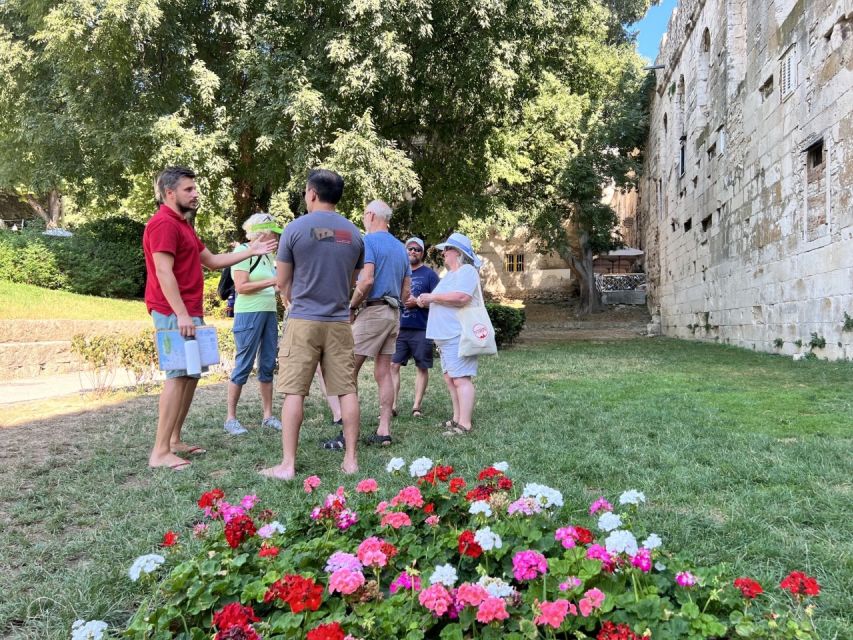
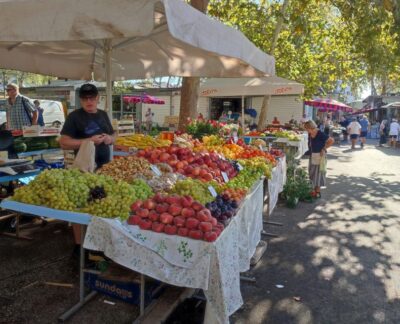
The Green Market is the tour’s most down-to-earth stop. Rather than treating food as a quick sample added to a history walk, the guide explains how local people shop and what makes certain products important in Dalmatia.
The tasting can include seasonal fruit and vegetables, olive oil, cheese, dry figs, or rakija. The exact selection can change with the season and market supply, so you should think of it as a local sampling stop rather than a fixed menu. Additional food and drinks are not included.
This is where the tour’s phrase about reaching a Dalmatian’s heart through the stomach becomes useful rather than merely charming. Food provides a way into local habits. You learn what people look for at the market, how traditional ingredients fit into daily meals, and why certain products carry more meaning than their simple appearance suggests.
I like this part because it gives you something practical to take away. After the tour, you can return to the market with a better idea of what you are seeing. You may also feel more comfortable ordering Dalmatian specialties or choosing a local product as a snack.
The market is not a formal tasting room. It is a working food market, and that means the experience may feel less polished than a dedicated culinary tour. The reward is the setting itself. You are seeing the food where local shopping happens, not only hearing about it in a controlled presentation.
Walking through Diocletian’s Palace
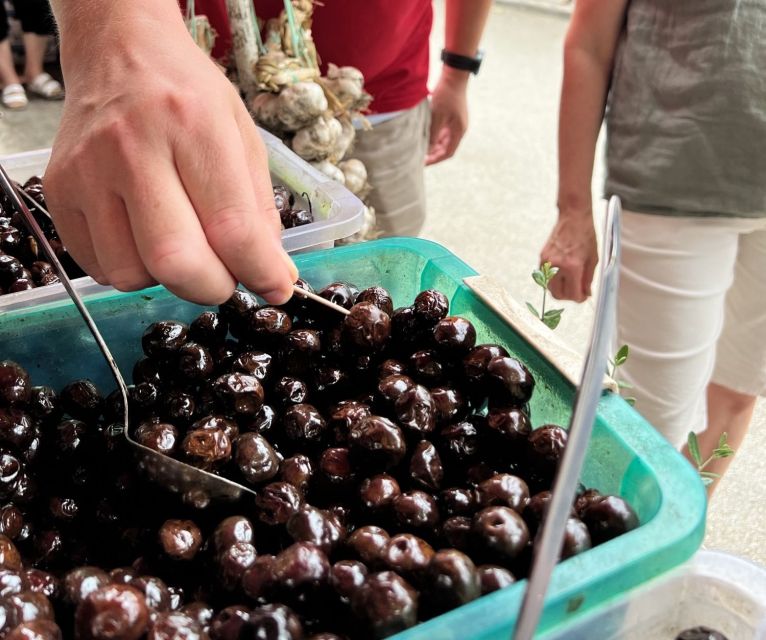
From the market, the tour moves into the palace area. Diocletian’s Palace was built by the Roman emperor Diocletian and now forms the core of Split’s old town. Its importance comes from both its age and its continued use.
You will visit the main square within the palace walls, the Vestibule, the Golden Gates, and a private section of the palace. These stops help show how the imperial residence was organized and how later generations adapted it.
The Golden Gates are a natural place to consider the palace as a defensive and ceremonial structure. The Vestibule gives you a sense of the grand route into the emperor’s quarters. The main square, Peristil, brings the Roman setting into sharper focus, with monumental stone and an open space that has remained central to Split’s public life.
Your guide also tells stories about Diocletian’s personal habits. One detail concerns his fondness for salad, a small human fact that makes the emperor feel less like a statue and more like a person with ordinary preferences. Another story involves the mythical White Stone and the belief that a piece can bring happiness.
These details are not a substitute for a full Roman history lecture. They are useful because they make the palace easier to remember. You leave with a handful of stories tied to real places, rather than a list of dates that may vanish by dinner.
More history and heritage trips in Split:
- Split History and Gastro Small-Group Tour with Food and Drinks
★ 5.0 · 375 reviews - SPLIT-PREMIUM Emperor’s Walking Tour for History Lovers + Museum
★ 5.0 · 333 reviews - Split: Local History and Culture 90-Minute Walking Tour
★ 5.0 · 194 reviews - Private History Split Walking Tour in English
★ 5.0 · 159 reviews
Roman, medieval, and modern life in one walk
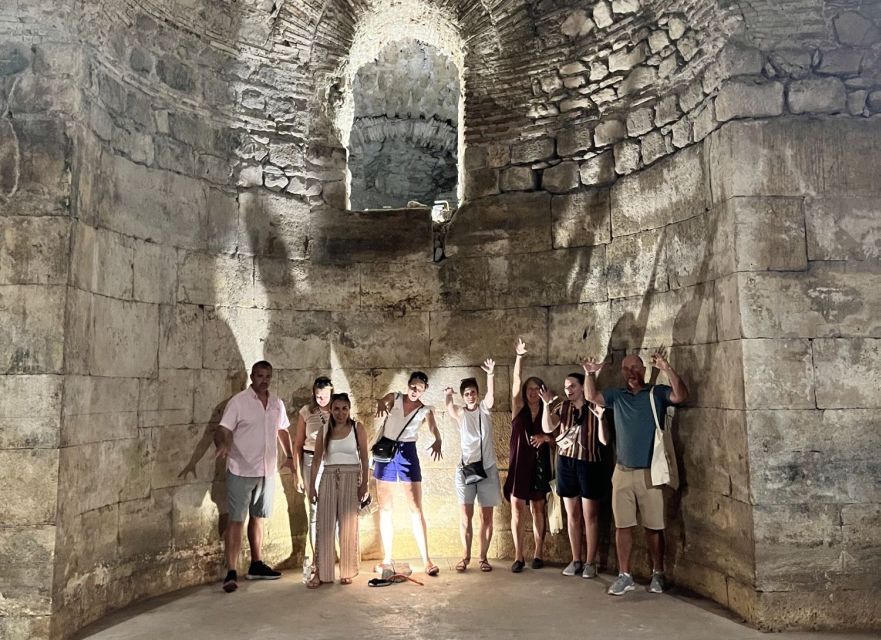
The palace has changed over many centuries. Roman construction, medieval additions, and modern homes now sit together within the same walls. Families have lived in the palace area for more than 1,000 years, and the tour explains how that long continuity shaped local customs.
This is also where the experience differs from a standard monument visit. You are not simply moving from one preserved room to the next. The streets are part of the city’s present life, and residents still use them. Walking in a small group is important, both for comfort and courtesy.
The guide discusses rituals that Dalmatians respect from Illyrian times, along with customs that have been carried forward through later periods. The details give you a better sense of why local identity in Split can feel so strong. The city’s pride is not only about Roman stones. It is also about habits, family memory, food, football, and a firm affection for home.
You will hear about Hajduk, Split’s famous football club, whose name appears throughout the city. The club is woven into local identity, and the guide can help explain why its presence reaches from the suburbs into the old town. This is a valuable addition because it connects the ancient palace to modern civic life.
Peristil, the golden toe, and local legends
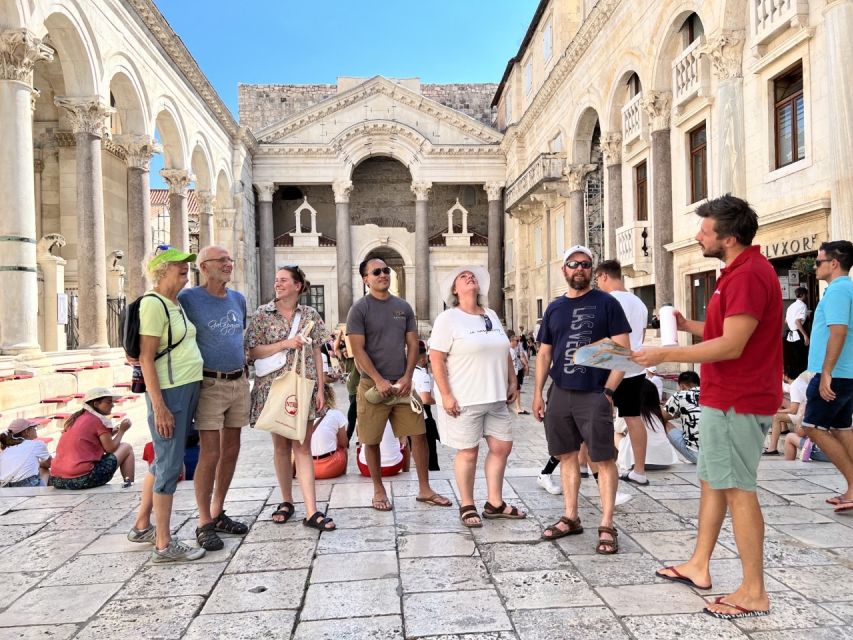
Peristil is the palace’s central square and one of the key places on the route. It is where the Roman setting feels most dramatic, but the guide also uses it to tell smaller stories that make the square approachable.
You can make a wish at the golden toe of Gregory of Nin, or Grgur Ninski. The statue is a familiar Split landmark, and the tradition gives you a simple way to take part rather than only look at it. Your guide explains the custom and helps place Gregory within the city’s story.
The tour also returns to Diocletian’s personal world here, including his love of salad and the White Stone legend. These are entertaining details, but they also show the tour’s method. It mixes major landmarks with local beliefs, humor, and food rather than presenting the palace as a single, solemn Roman monument.
You should not expect every major palace attraction to be entered. Cathedral and former mausoleum admission, the underground palace area, Bell Tower, museums, and Temple of Jupiter cost extra and are not part of the tour. If one of these is a priority, ask your guide for advice or schedule it separately.
That limitation is worth noting before you book. The tour provides context for the palace, but it is not a ticket bundle for every paid site inside it.
Ending on the Riva with useful local advice
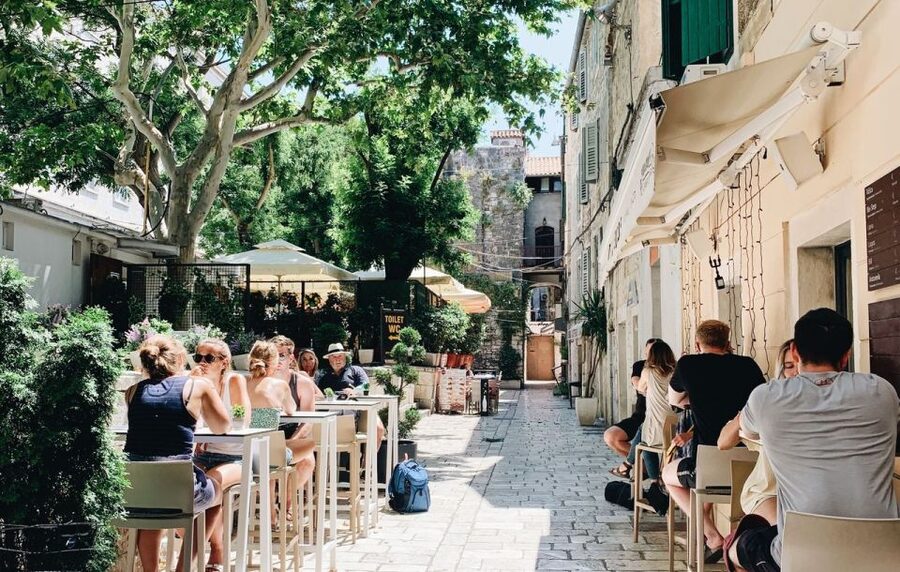
The walk finishes back on the Riva promenade. Ending beside the water gives the tour a relaxed final stop and puts you in a convenient place to continue exploring.
Your guide can recommend coffee shops and places for evening Dalmatian food and entertainment. Since the tour is private, this is a good moment to ask specific questions: where to eat near your hotel, which areas suit a quieter evening, or what local dish you should try next.
Some past tour experiences included a particularly enjoyable aperitif or lunch, but the stated inclusions for this activity are market tastings rather than a full meal. Keep that distinction in mind. You may sample several local foods, but you should not book this as a substitute for lunch or dinner.
The Riva ending also gives you a chance to compare the city’s different moods. Behind you are the palace lanes and Roman walls. Ahead is the waterfront promenade. The short distance between them explains much about Split: history here is not kept apart from ordinary life.
Price, private format, and overall value
The cost is $280 per person for two hours. That is a serious price for a short walking tour, even with tastings included. The value rests mainly in the private format, the local guide, and the way the experience joins food with palace history.
For a couple or family that wants personal attention, the price may make sense. You are paying for a guide who can respond to your interests rather than deliver a fixed speech to a large crowd. A private group is also helpful if you have children, limited time, or family members who prefer a gentler pace.
The value is weaker if you mainly want basic facts about Diocletian’s Palace. Split offers many ways to walk the old town independently, and this tour does not include the entrance fees for the cathedral, underground area, Bell Tower, museums, or Temple of Jupiter.
I would book it early in a Split visit if I wanted help getting oriented, learning where to eat, and understanding local customs. I would choose a different plan if my main goal were a long archaeological visit or a substantial food tour.
The operator identifies the tour as carbon neutral and is B Corp certified. That gives the experience an environmental and social purpose beyond the walk itself. It does not change the short duration or high price, but it may matter to you when choosing between similar tours.
Who should choose this Split experience?
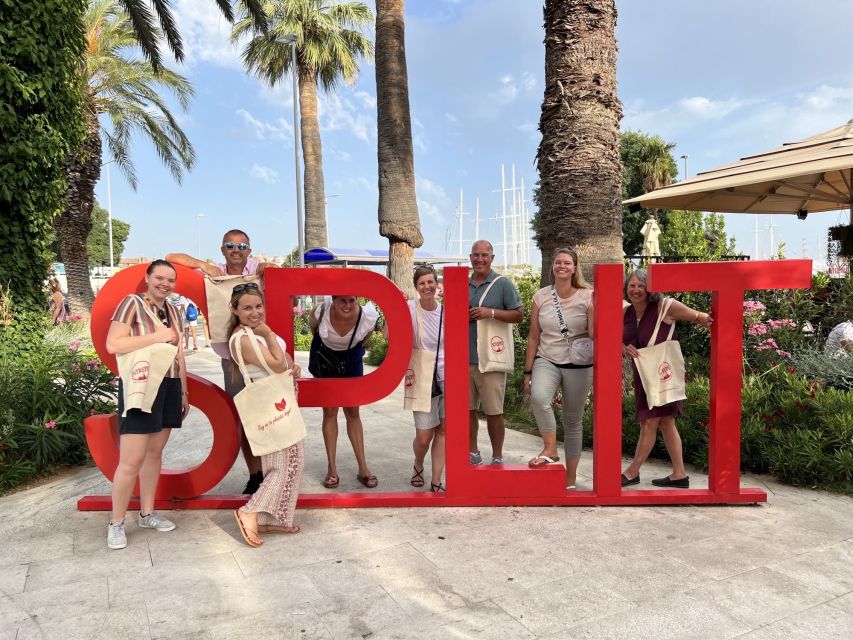
This tour suits you best if you want:
- A private introduction to Split rather than a large-group lecture
- Roman history mixed with local food and customs
- A guide who can offer personal advice for the rest of your stay
- A gentle overview before visiting paid palace attractions on your own
- A family-friendly activity with children under six joining free of charge
- An eco-conscious operator and a carbon neutral experience
It may not suit you if you want a full meal, extensive museum access, or a low-cost walking tour. The two-hour format gives you a strong first impression, but it leaves plenty of Split still to explore.
The guide quality matters greatly here. Past tours were led by people such as Ted and Ivan, and the comments about their pacing, clear English, and local anecdotes point to the human side of the experience. Since guides can vary, the private format gives you the best chance to shape the conversation around your interests.
Should you book the Roman history and market tour?
Book this tour if you want Split explained through its food, palace walls, and local identity all at once. The Green Market tasting, the golden toe tradition, Hajduk stories, and Roman palace details give you more than a basic walk through old streets.
I would especially recommend it for a first day in Split. You finish with a better map in your head, ideas for coffee and dinner, and enough palace context to make later visits to the cathedral, cellars, or museums more meaningful.
At $280 per person, it is not a bargain. You are paying for privacy and local attention, not simply for access to sights. If that is what you want, this is a focused and personable choice. If you are watching your budget, take an independent walk through the palace and spend your money on a separate meal instead.
FAQ
Where does the tour begin?
The meeting point is at the beginning of the Riva promenade, near the iron map model of the city.
How long does the tour last?
The tour lasts two hours. Starting times depend on availability.
Is the tour private?
Yes. It is offered as a private group experience with a live English-speaking guide.
What food might be included?
The Green Market tasting may include seasonal fruit, vegetables, olive oil, rakija, cheese, or dry figs. The exact selection can vary.
Are palace museums and the Bell Tower included?
No. Entrance fees for the cathedral of the former emperor’s mausoleum, the underground palace area, Bell Tower, museums, and Temple of Jupiter are not included.
Can children join the tour?
Yes. The activity is child-friendly, and children under six may join free of charge. You should inform the operator if you are bringing a child under six.
Just added around Split
- From Makarska : Wine Tasting Grabovac Tour★ 4.5 · 30 reviews
- Essential Diocletian’s Palace Tour for First-Time Visitors★ 4.8 · 19 reviews
- Unique vintage Tomos moped tour Split – Back to the ’80s★ 4.8 · 17 reviews
- Walking Tour Split★ 4.7 · 61 reviews
- Trogir: White Lagoon, Maslinica & Blue Lagoon Speedboat Tour★ 4.8 · 11 reviews
- Trogir; Private walking tour of higlights of Trogir★ 4.7 · 3 reviews
- Trogir 1.5-Hour City Tour★ 4.4 · 37 reviews
- Split: Trogir Open Top Bus Trip + Free Split Walking Tour★ 4.1 · 17 reviews
Split History Walking Tours, compared.
Walking Tour of Split with a ‘Magister’ of History
Read our review →
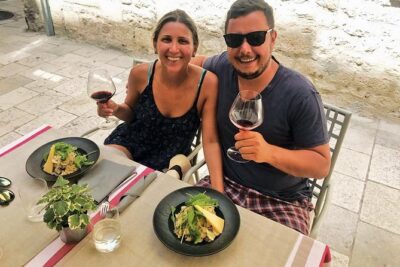
Split History and Gastro Small-Group Tour with Food and Drinks
Read our review →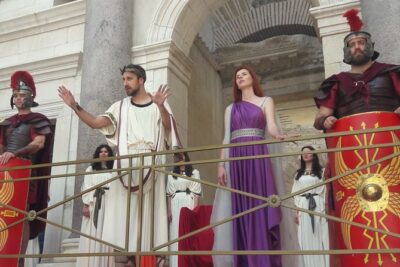
SPLIT-PREMIUM Emperor’s Walking Tour for History Lovers + Museum
Read our review →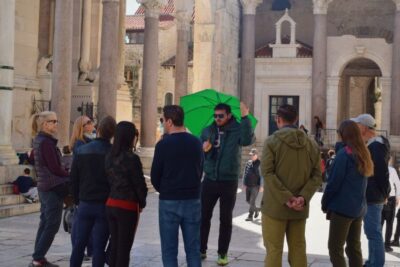
Split: Local History and Culture 90-Minute Walking Tour
Read our review →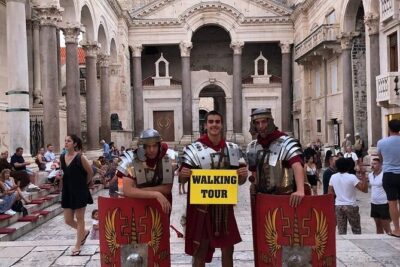
Split: Historical & Gastro Treasures Tour with Green Market
Read our review →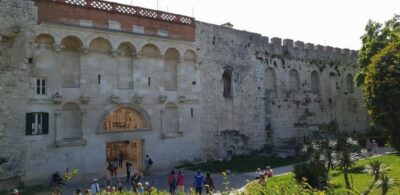
Split: Walking tour of Split with a ‘Magister’ of History
Read our review →Browse the lists this tour appears in