
Reviewed · SPLIT HISTORY WALKING TOURS
Experience Split With Local Professional Historian – Small Group
Diocletian’s Palace is not a fenced-off monument. It is the center of Split, with homes, cafés, shops, churches, and narrow lanes built into and around the old Roman complex. This tour makes that unusual city within a city easier to read, using 3D reconstructions and old pictures to show what the palace once looked like.
I like the small maximum of 12 people, which makes it easier to hear Boris and ask questions. I also like the mix of Roman, medieval, and modern Split, including personal stories about local life and useful suggestions for restaurants, coffee, ice cream, and places to visit afterward.
The main consideration is scope. Two hours gives you a strong introduction, but not a full tour of every palace interior or Split sight. Most admission tickets are not included, and some major buildings are explained from outside, so plan extra time if you want to visit the cathedral or other paid areas on your own.
Key points to know before booking
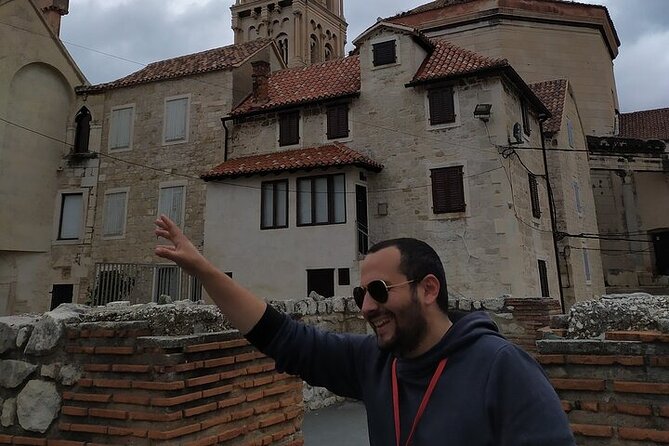
- Boris leads with a teacher’s approach: He is a Split local, a professional historian with a master’s degree, and a former history teacher who welcomes questions and sometimes uses trivia to involve children.
- The palace is explained as a living city: You see how an emperor’s retirement residence became a medieval town and then modern Split.
- Visual aids make ancient spaces clearer: A display book with photographs and 3D images helps you picture missing walls, rooms, and the original Roman design.
- The route covers more than Diocletian’s Palace: It continues to Riva Harbor, Fruit Square, and People’s Square, giving you a useful introduction to the wider old town.
- The group stays small: The cap is 12 people, though some departures may be smaller, especially outside the main season.
- The ending is practical: You finish at Pjaca, where Boris suggests additional sights and places to eat or drink.
Why the palace makes a better walking tour than a museum visit
The first useful idea is that Diocletian’s Palace is not simply one building. It was an enormous Roman complex, and modern Split grew through its remains. Streets pass through old palace walls, apartments occupy ancient structures, and later churches and civic buildings sit where Roman rooms once served the emperor.
That can be confusing if you explore alone. You may see a column, a stone doorway, or a fragment of wall without knowing its original purpose. Boris connects those pieces. His book of images and 3D views gives you a visual comparison between the palace as planned and the city you see today.
I especially like that the tour does not stop with Emperor Diocletian. It explains what happened after the Roman period, including the arrival of Christianity and the shift from imperial residence to medieval city. That change is central to understanding Split.
The experience is offered in English and lasts about two hours, though it can run longer when the group is engaged and asking questions. That flexibility is useful, but do not schedule a tightly timed activity immediately afterward.
More history walks in Split:
- Walking Tour of Split with a ‘Magister’ of History
★ 5.0 · 1,122 reviews - Split Walking Tour with Professor of History
★ 5.0 · 926 reviews - Split: History and Heritage Walking Tour
★ 4.9 · 650 reviews
Meeting at the Golden Gate and Gregory of Nin
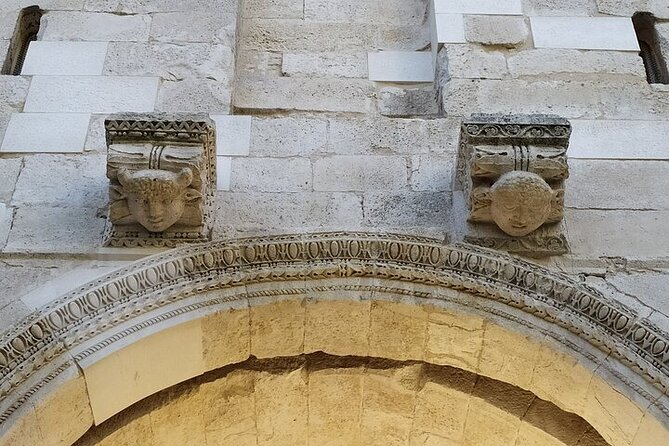
The walk begins at the Golden Gate, the northern entrance to Diocletian’s Palace. The name is more grand than the material: the gate is made of stone, not gold. It is one of the most recognizable entrances to the old city and a sensible place to begin because it introduces both the Roman plan and modern Split.
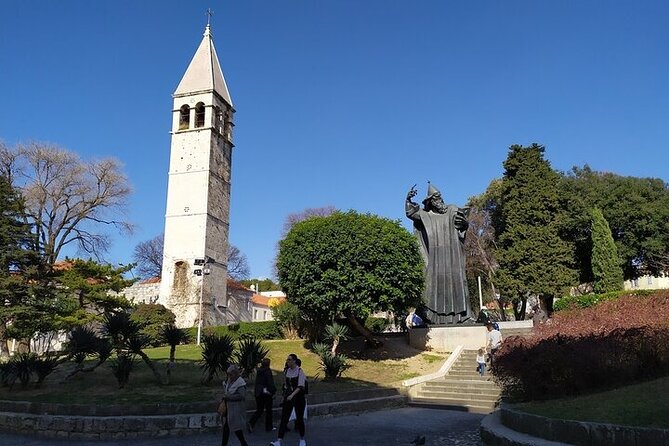
Across from the gate is the large statue of Gregory of Nin, known locally as Grgur Ninski. Boris explains the historical figure, the importance of the monument, and the sculptor who created it. This is a brief stop, but it gives you an early example of how Split layers public memory onto its ancient streets.
The meeting point is listed at Dioklecijanova 7. Arrive ready to walk and look for the guide at the Golden Gate rather than expecting a conventional ticket booth or tour office.
Inside the palace: Peristyle, temples, and the emperor’s world
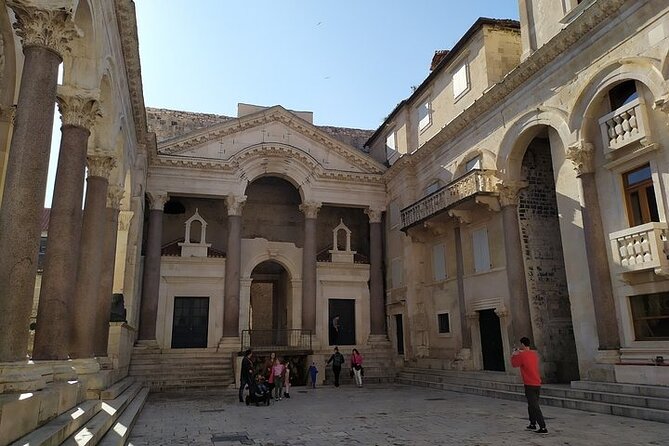
From the Golden Gate, the route moves through the main parts of Diocletian’s Palace. The Peristyle is the key stop. This broad central space once helped separate the emperor from ordinary people while also serving as a major point of connection within the complex.
Boris explains how people would have moved through the palace and how the space functioned in relation to imperial power. His visual material is particularly useful here because the surviving stonework gives only part of the picture. You can better imagine the original arrangement when you see reconstructed views alongside the present-day setting.
The tour also discusses the palace’s central substructure, commonly called the Diocletian’s Cellars. The lower rooms are important because they preserve the outline and arrangement of spaces above them. Boris explains how these areas were used over time and why they matter to Split’s development.
The itinerary includes the Triclinium, the emperor’s dining room. This stop brings everyday Roman habits into the story. Instead of hearing only about dates and rulers, you get an explanation of how imperial meals were organized and what dining meant in Roman society.
One point to keep clear: the experience price is $38.62 per person, but admission tickets are not included. The listed stops do not charge separate admission, and the tour covers some major structures from outside or by explanation. If you want to enter paid sections after the walk, budget separately.
Jupiter’s Temple and the Cathedral of Saint Domnius
The Temple of Jupiter is viewed from outside. Boris uses it to explain how important religion was in Roman public and private life. The stop is short, but it fits neatly with the wider palace story because Diocletian’s residence was not only a home. It was also an imperial setting built around ceremony, authority, and worship.
Nearby, the Cathedral of Saint Domnius shows how the palace changed after the Roman period. The cathedral occupies the former mausoleum of Diocletian, a striking example of one era being reshaped by another. Boris points out significant exterior details and explains what to watch for if you decide to enter later.
This is a good example of the tour’s practical value. You get enough background to make your own later visit more meaningful, but you are not paying for an interior visit as part of the walk. If seeing the cathedral inside matters to you, ask Boris about the features to notice and leave time in your schedule afterward.
Same coastline, a completely different kind of day:
- Split: Krka Waterfalls Trip with Boat Cruise and Swimming
★ 4.8 · 10,519 reviews - From Split: Krka Waterfalls, Food & Wine Tasting Tour
★ 5.0 · 9,326 reviews - Blue cave, Mamma Mia and Hvar, 5 islands speedboat tour
★ 5.0 · 7,150 reviews - From Split: Krka Waterfalls, Food & Wine Tasting Tour
★ 4.9 · 6,598 reviews
Vestibule and the palace’s private side
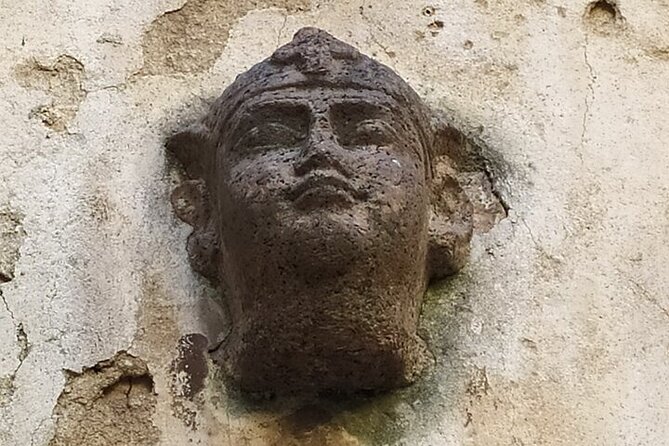
The Vestibule was the entrance to Diocletian’s private chambers. Its design reflected the importance of the rooms beyond it, and Boris explains how the space functioned and what it once looked like.
For me, this kind of stop is more useful than simply ticking off a famous doorway. You learn how the palace was organized around access and status. The route helps you picture the difference between public ceremonial areas and spaces reserved for the emperor.
The itinerary is compact, so explanations move at a good pace. You should expect focused stops rather than long periods to sit and study every detail. People who want a very slow archaeological examination may prefer a specialist visit with more time at individual sites.
Riva Harbor and the daily life of Split
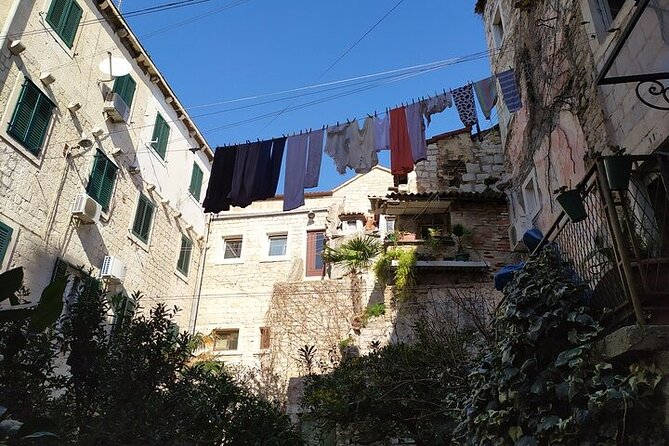
After the palace, the walk heads to Riva, Split’s main waterfront promenade. This shift matters. You are no longer looking only at Roman stonework, but at the public space used by modern residents.
Boris explains how Riva developed over the centuries and why it became so important to local life. The stop is short, yet it helps connect the old palace to the city around it. You see that Split is not just an archaeological site preserved for visitors. It is a working city with a social center along the harbor.
The tour’s local angle is strongest in moments like this. Boris has lived in Split for decades and has shared personal stories about the city and his family. Those details add a present-day layer without taking the focus away from the historic sites.
Fruit Square and the city’s smaller stories

Fruit Square, or Trg Braće Radić, is a small, attractive square with its own name, monument, and surrounding buildings. Boris explains why it is called Fruit Square and points out the notable features around it.
This stop shows why a guided walk can be useful even in a compact old town. The important details are not always large or dramatic. A square’s name, a monument, or the shape of a building can reveal how the city was used over time.
You may also hear about locations connected with filming in Split, including places associated with Game of Thrones. That is not the central purpose of the experience, but it can be a pleasant extra for fans. The focus remains on the city’s history and local culture.
People’s Square and useful advice for the rest of your stay
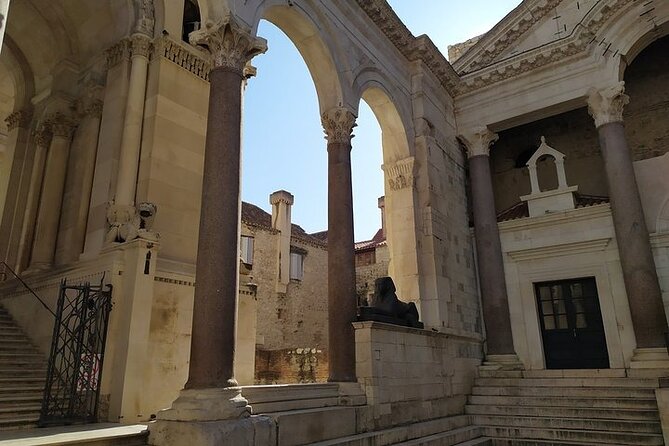
The walk ends at People’s Square, known locally as Pjaca. From the medieval period to today, it has been a central place for city life. Boris discusses the square, the old City Hall, and surrounding buildings before suggesting other places to see in Split.
Ending at Pjaca is convenient. You are left in the old town rather than returned to the starting point, and you can continue exploring on foot. Boris also gives practical recommendations for restaurants, cafés, ice cream, shops, and sights beyond the route.
Those suggestions may be one of the most useful parts of the experience if Split is your first stop in Croatia. Several past participants followed his food and activity recommendations later in their visit. Still, remember that personal recommendations are not guarantees, and you should treat them as starting points rather than a fixed dining plan.
What makes Boris an effective guide
Boris’s background shapes the tone of the walk. He is a licensed local guide with a master’s degree in history and experience as a teacher. He explains complicated changes in a clear way, invites questions, and uses a conversational style rather than delivering a nonstop lecture.
That matters for families. Children can lose interest quickly when a tour is built only around dates and architectural terms. Boris sometimes asks trivia questions and includes younger members of the group, while adults can ask broader questions about Croatia, regional differences, politics, and cultural change.
His English is described as fluent, which is important for a tour built around explanation. The small group also helps. With a maximum of 12 people, you have a better chance of hearing clearly and getting an answer without interrupting a large crowd.
A smaller group does not guarantee a private experience. Group size depends on bookings, and the tour can still include other people. In quieter periods, such as December, the group may be very small or even private, but that should not be assumed when booking.
Is $38.62 a fair price?
At $38.62 per person, this is not the cheapest way to walk through Split. You can enter the old town and see much of the palace without paying for a guide. The value comes from interpretation, structure, visual aids, and the chance to ask a local historian questions.
I think the price is fair for a first visit, especially if you want the palace to make sense quickly. A self-guided walk can show you the same streets, but it may not explain why the cathedral occupies a Roman mausoleum, how the palace became a medieval city, or what the lower structures reveal about the original plan.
The value is also stronger for families and people who enjoy history but do not want a dry lecture. The guide’s use of pictures, 3D reconstructions, personal stories, and questions gives the walk several ways to hold your attention.
If you have already studied Diocletian’s Palace or prefer to explore at your own pace, the price may feel less necessary. You will also need to pay separately for any admission tickets you choose to purchase after or during the visit.
Timing, walking comfort, and booking details
The experience lasts about two hours and begins at the Golden Gate. It ends at People’s Square, so plan your day around a one-way route through the old town.
Wear comfortable shoes. The route passes through historic streets and palace areas, and you will spend most of the time standing or walking. The activity is near public transportation, service animals are allowed, and most people can participate, but the information provided does not give detailed step-free access notes.
The tour is offered in English and confirmed at booking. It requires good weather and a minimum number of participants. If poor weather or insufficient bookings forces a cancellation, you are offered another date or a full refund.
You can cancel for a full refund up to 24 hours before the start time. Changes or cancellations made less than 24 hours before the local start time are not accepted for a refund.
Who should book this Split walking tour?
I would choose this experience if you are visiting Split for the first time and want a clear framework before exploring on your own. It is especially suitable for families, history fans, cruise visitors with limited time, and anyone who wants local food and sightseeing advice along with Roman history.
It also works well at the beginning of a stay. You finish near Pjaca, receive suggestions for the rest of your visit, and understand the old town before returning to its streets independently.
I would think twice if you want long interior visits, extensive archaeological detail, or a route devoted only to Roman architecture. The tour moves through a broad range of places, and some major sights are discussed from outside. It is an introduction with strong context, not a complete archaeological examination.
Should you book Experience Split With a Local Professional Historian?
Book it if you want Diocletian’s Palace explained by someone who teaches history and lives in Split. Boris’s strongest qualities are his ability to connect Roman, medieval, and modern life, his use of visual reconstructions, and his willingness to adapt to questions.
The tour earns its price through clarity and local context rather than admission access. You will see the major palace areas, learn how the emperor’s residence became a city, visit Riva and the central squares, and finish with practical ideas for the rest of your stay.
My advice is simple: schedule it early, bring questions, and reserve extra time afterward if you want to enter the cathedral or other paid sights. If that sounds like your kind of introduction to Split, this small-group walk is a sound choice.
FAQ
How long does the experience last?
The tour lasts approximately two hours. It may run longer when the group is actively asking questions and discussing the sites.
Where does the tour begin?
It begins at the Golden Gate of Diocletian’s Palace, at Dioklecijanova 7 in Split.
Where does the tour end?
The tour ends at People’s Square, also called Pjaca Square, in the old town.
What language is the tour offered in?
The experience is offered in English.
How large is the group?
The maximum group size is 12 people. In some periods, the group may be smaller.
Is Boris the guide?
The experience is led by Boris, a local professional historian and licensed guide with a master’s degree in history. He has also worked as a history teacher.
Are admission tickets included?
No. Admission tickets are not included in the price. Several stops are viewed from outside or covered as part of the walking route.
Are children able to participate?
Most people can participate, and the guide includes children through questions and trivia during the walk. The experience does not state a specific minimum age.
Can I cancel for a full refund?
Yes. You can cancel at least 24 hours before the experience start time for a full refund. Cancellations or changes made less than 24 hours before the start time are not accepted for a refund.
Just added around Split
- From Makarska : Wine Tasting Grabovac Tour★ 4.5 · 30 reviews
- Essential Diocletian’s Palace Tour for First-Time Visitors★ 4.8 · 19 reviews
- Unique vintage Tomos moped tour Split – Back to the ’80s★ 4.8 · 17 reviews
- Walking Tour Split★ 4.7 · 61 reviews
- Trogir; Private walking tour of higlights of Trogir★ 4.7 · 3 reviews
- Trogir: White Lagoon, Maslinica & Blue Lagoon Speedboat Tour★ 4.8 · 11 reviews
- Trogir 1.5-Hour City Tour★ 4.4 · 37 reviews
- Split: Trogir Open Top Bus Trip + Free Split Walking Tour★ 4.1 · 17 reviews
Split History Walking Tours, compared.

Walking Tour of Split with a ‘Magister’ of History
Read our review →
Split History and Gastro Small-Group Tour with Food and Drinks
Read our review →
SPLIT-PREMIUM Emperor’s Walking Tour for History Lovers + Museum
Read our review →
Split: Local History and Culture 90-Minute Walking Tour
Read our review →
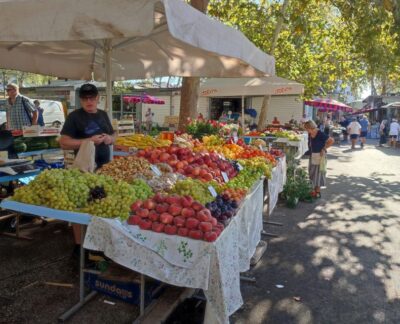
Split: Historical & Gastro Treasures Tour with Green Market
Read our review →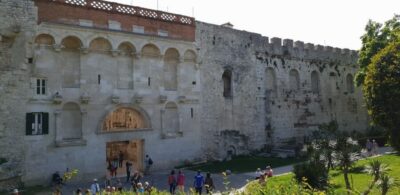
Split: Walking tour of Split with a ‘Magister’ of History
Read our review →Browse the lists this tour appears in