
Reviewed · SPLIT HISTORY WALKING TOURS
Experience Split With Local Professional Historian – Private
Split’s old town makes most sense when you understand that it grew inside a Roman emperor’s retirement palace. This private walk with Boris, a local guide with a master’s degree in history, connects the Golden Gate, Peristyle, cellars, and waterfront into one clear story.
I like the flexible start time, which helps if your ferry, flight, or dinner plans shift. I also like the personal format: your group alone can ask questions, set the pace, and spend more time on Roman details or medieval Split. The main drawback is that the tour lasts only about two hours, so the Cathedral and Jupiter’s Temple are viewed from outside, and admission tickets are not included.
Key points before you book
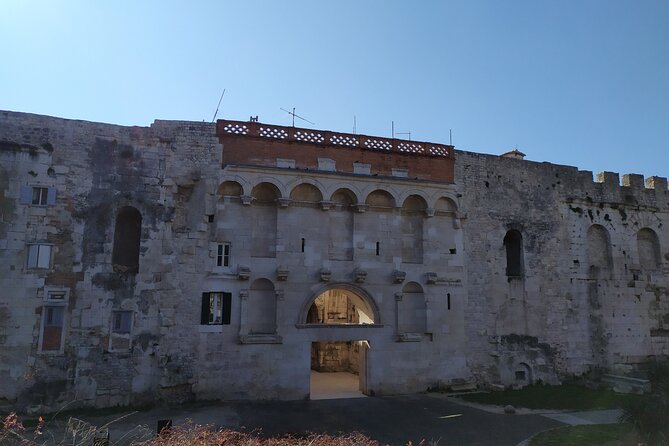
- The tour begins at the Golden Gate: You start at Diocletian’s Palace’s northern entrance, beside the famous statue of Gregory of Nin.
- Boris brings an academic background: The guide holds a master’s degree in history and uses 3D reconstruction images and pictures in a display book.
- The route covers Split’s main historic core: You visit the Peristyle, Palace cellars, Temple of Jupiter, Cathedral of Saint Domnius, Vestibulum, Riva, Fruit’s Square, and Pjaca.
- Your group stays private: The booking covers up to 15 people, with no unrelated participants joining.
- The pace can be adjusted: Boris has adapted tours around flight delays, dinner reservations, and a guest who needed regular places to sit.
- Admission is separate: The walking tour itself lists no entrance tickets, and the Cathedral and Jupiter’s Temple are explained from outside.
Why this walk works well in Split
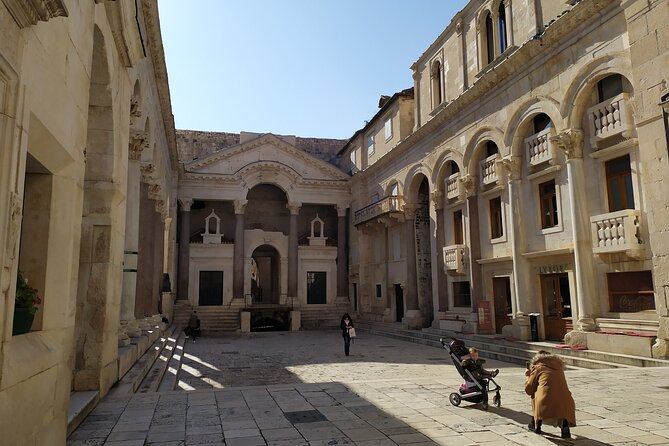
Split is easy to underestimate. At first glance, the old town can feel like a maze of pale stone lanes, cafés, shops, and apartment doors. Underneath that modern life is the enormous palace built for Roman Emperor Diocletian, and the unusual part is that people still live and work inside it.
That makes a guide especially useful. You are not just looking at an old gate or a column. You are learning how an imperial residence became a medieval town and then the active center of modern Split.
This tour is designed as a compact introduction rather than a long archaeological visit. It covers the main sights in about two hours, with roughly 120 minutes divided among ten stops. You get a broad view of Roman, Christian, medieval, and modern Split without spending half a day on one monument.
The private setup matters. A group of two can ask questions freely, while a larger family or group of friends can stay together without being merged into a public tour. The stated price is $156.21 per group of up to 15, so the value improves sharply as your group gets larger. For one or two people, it is a more expensive choice than joining a shared walk, but you are paying for privacy, a flexible start, and direct attention from the guide.
More history walks in Split:
- Walking Tour of Split with a ‘Magister’ of History
★ 5.0 · 1,122 reviews - Split Walking Tour with Professor of History
★ 5.0 · 926 reviews - Split: History and Heritage Walking Tour
★ 4.9 · 650 reviews
Starting at the Golden Gate and Gregory of Nin
The tour begins at the Golden Gate, the northern entrance to Diocletian’s Palace. It is made of stone, not gold, but it is still one of Split’s most recognizable starting points.
This is a smart place to begin because it gives you an immediate sense of scale. The palace was not a single isolated building. Its gates, walls, courtyards, private chambers, religious buildings, and service areas formed a large complex that later became the heart of the city.
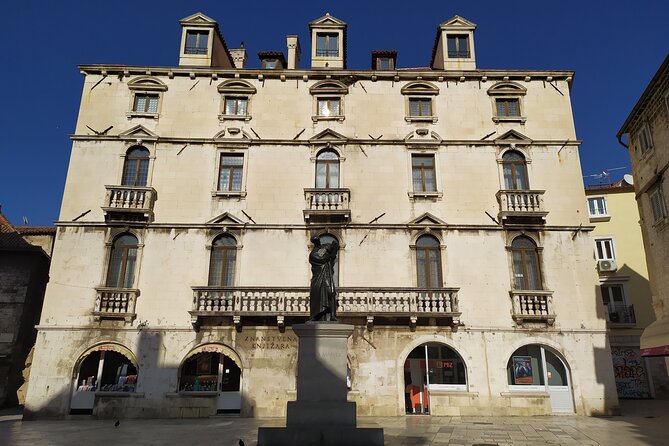
Across from the gate is the statue of Gregory of Nin, known locally as Grgur Ninski. You hear about Gregory, the historical figure represented by the statue, and Ivan Meštrović, the sculptor who created the monument.
The stop is short, only about 10 minutes after the Golden Gate introduction. That is enough for a useful orientation, though anyone hoping for a long art-history talk about Meštrović may find the treatment brief. The statue is also a practical meeting landmark, so you should have little trouble identifying the start point at Dioklecijanova 7.
Inside Diocletian’s Palace
From the Golden Gate, Boris leads you through the palace’s central sights. The palace is described as one of the best-preserved monuments of its type, but the important point is how much of it remains part of daily city life.
You learn about Diocletian, one of the most successful emperors of the Roman Empire, and about the palace’s original purpose. The route also explains how the imperial residence changed as the Roman period ended and a medieval city took shape inside its walls.
The use of 3D reconstruction images and pictures in a display book adds real value here. Ruins and altered buildings can be hard to picture. Visual material helps you compare what you are seeing now with how the palace may have looked in the Roman period.
This section includes the Peristyle, the Temple of Jupiter, the central substructure known as the cellars, the Triclinium, and the former mausoleum that is now associated with the Cathedral. Several of these are viewed from outside or explained as part of the route, so keep your expectations clear: this is not an admission-based tour of every interior.
The Peristyle, where the palace opens up
The Peristyle is the architectural center of the palace and one of the most important stops on the walk. Here, the guide explains its role as a place that connected people with the emperor while also separating the emperor from everyone else.
That distinction is useful. The square was not simply an open meeting place. It was part of an imperial setting designed around status, ceremony, and controlled access. From the Peristyle, you can look around and begin to understand how movement through the palace was organized.
The tour also explains changes brought by the spread of Christianity. Buildings were reused, functions shifted, and Roman structures took on new religious and civic roles. This is one of the strongest parts of the route because you can see several periods occupying the same space.
From the Peristyle, you enter the central part of the palace cellars. These underground spaces are important for two reasons. They help show how the Roman palace was built, and they preserve the layout of rooms above that were altered over time.
The cellars also played a role in Split’s later history. You hear how they were used through the centuries and why they matter to the city today. The stop lasts about 20 minutes alongside the Peristyle and Triclinium discussion, so Boris has time to explain the setting rather than simply point out stones.
A few more Split days out worth weighing up
- SPLIT-PRIVATE Walking Tour of Diocletian’s Palace & Old Town
★ 5.0 · 467 reviews - Private Krka Waterfalls tour with 30min Boat Cruse
★ 4.0 · 458 reviews - Split by Private Electric Rickshaw – Palace & Hidden Gems
★ 5.0 · 412 reviews - Private Blue cave, Mamma Mia and Hvar, 5 islands tour from Split
★ 5.0 · 387 reviews
Roman dining at the Triclinium
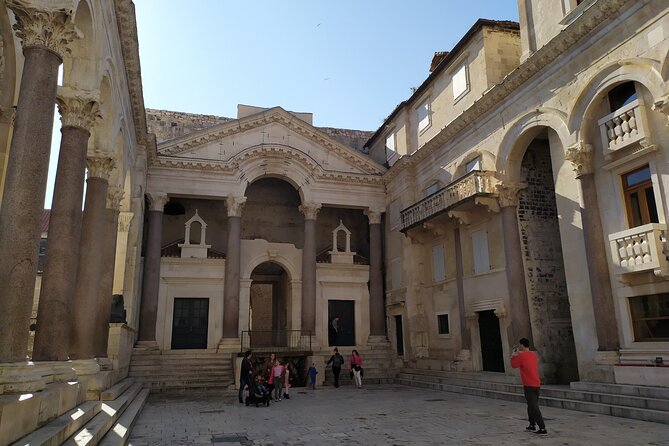
The Triclinium gives the tour a more human angle. Here you learn about Roman eating habits and the organization of the emperor’s dining room.
This is the kind of detail that can make the palace easier to picture. Grand titles and construction dates can feel distant, while the layout of a dining room connects the building to ordinary actions such as sitting, eating, and hosting guests.
The explanation is brief, but it adds variety to the tour. Instead of focusing only on walls and rulers, the walk considers how rooms were used and how the emperor’s private world functioned.
Jupiter’s Temple and the Cathedral of Saint Domnius
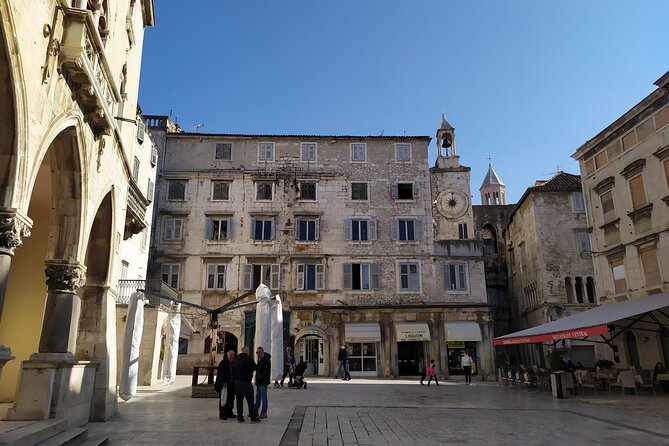
The Temple of Jupiter is viewed from outside during a 10-minute stop. Boris explains the importance of religion in the Roman Empire and why temples were a necessary part of an imperial residence.
Because the visit is exterior, you should not book this experience expecting a detailed interior examination of the temple. Its value here is its place in the larger palace plan and the chance to connect Roman religious life with the buildings that followed.
The next stop is the Cathedral of Saint Domnius, also viewed from outside. The cathedral occupies the former mausoleum of Diocletian, which gives this site a particularly clear example of change over time. A building linked to a Roman emperor became part of Christian Split.
Boris points out important features and explains the story behind the cathedral. He also tells you what to look for inside if you decide to enter on your own afterward. That is a useful arrangement for a short walking tour, since it gives you orientation without adding an admission stop that could push the schedule beyond two hours.
The Vestibulum and the emperor’s private quarters
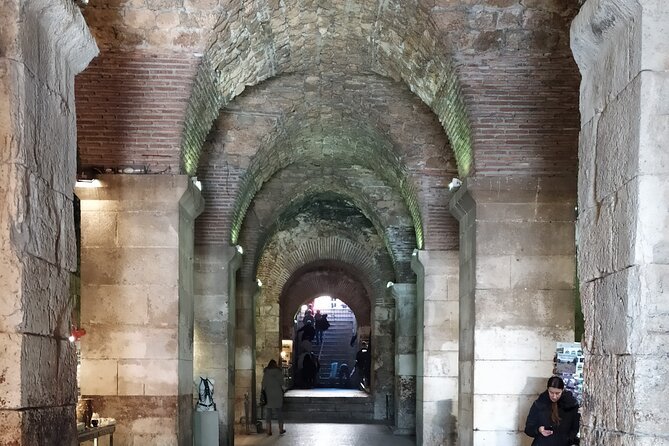
The Vestibulum was the entrance area leading toward Diocletian’s private chambers. Its decoration reflected the importance of the space, and the tour explains its function and appearance.
This is a small but worthwhile stop because it helps you distinguish public ceremonial areas from the emperor’s private world. The palace was not only a fortified residence or a collection of temples. It also had carefully arranged entrances and rooms that controlled access to the ruler.
The stop lasts about 10 minutes. If you like architecture and palace planning, you will probably appreciate this detail. If your main interest is modern Split, it may feel more technical, but the guide’s historical explanation gives it a clear purpose.
From the palace to Riva Harbor
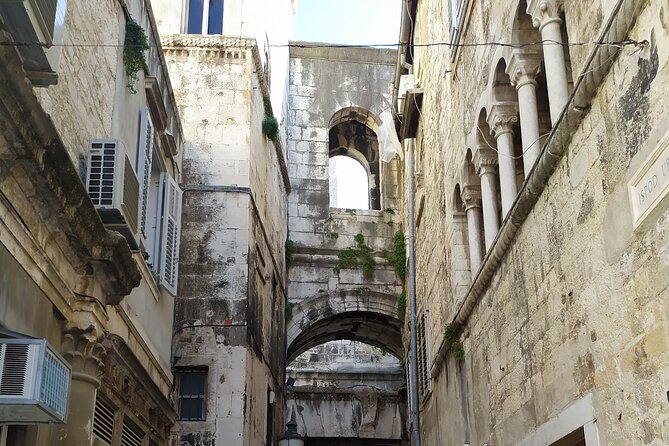
After the Roman and Christian core, the route moves toward Riva, Split’s main promenade. This transition helps show that the story of the city does not stop at the palace walls.
You learn how Riva developed over the centuries and why it became such an important place for local life. The stop is only about five minutes, so it is more of a concise explanation than a long waterfront pause.
That short timing is reasonable. Riva is best understood as part of Split’s wider civic life, not as a separate monument requiring a long lecture. You can also use the guide’s advice about other places to see after the tour when deciding how much time to spend here on your own.
Fruit’s Square and Pjaca
Fruit’s Square, officially Trg Braće Radić, is a small, attractive square with its own story. Boris explains why it received its fruit-related name and points out the notable monument in the middle as well as the surrounding buildings.
This is a good example of the tour’s wider approach. You are not confined to the most famous Roman remains. You also see the smaller urban spaces that help explain how Split works as a city.
The final stop is People’s Square, commonly called Pjaca or Piazza. It has served as a center of city activity from medieval times to the present. Boris discusses the square, its character, and nearby buildings such as the old City Hall.
The tour ends at Narodni trg 16. Ending here is practical because you finish in an active central square rather than being returned to the original meeting point. Boris also offers suggestions for other places to see afterward, which is helpful if this is your first orientation to Split.
Timing, private format, and the human touch
The listed duration is approximately two hours, and the stop timings add up to about that amount. Expect a steady walking tour with frequent pauses for explanations, not a long sit-down talk or a full museum visit.
The guide offers flexible starting times, but you need to contact the provider before the tour to arrange one. The stated operating schedule is Monday through Friday from 5:00 PM to 7:00 PM for the listed date range, so confirm the exact time when booking.
Boris has shown useful flexibility with real travel problems. He adjusted one tour after a flight delay and kept the group on schedule for a dinner reservation. He also adapted the pace for a guest recovering from a fall, making sure she could find somewhere to sit during parts of the walk.
That does not make the tour fully accessible in every possible sense, and no detailed accessibility specification is provided. Still, the private format gives you a better chance to request a slower pace or brief rests than a fixed public group would. Service animals are allowed, public transportation is nearby, and most people can participate.
Who gets the best value
This tour suits first-time visitors who want a clear introduction to Split’s core sights. It also works well for people who enjoy history but do not want an all-day archaeological lecture.
Families and mixed-interest groups may find the private format especially useful. Boris has been able to explain the palace in a way that works for a serious history fan and a companion who has little interest in archaeology. That ability to adjust the level of detail is one of the strongest reasons to choose a private tour.
The price requires a closer look. At $156.21 for up to 15 people, the per-person cost can be reasonable for a larger group. For two people, the price is harder to justify unless you place a high value on private attention, flexible scheduling, and the guide’s academic background.
You should also budget for any admission fees separately. The walking experience lists no included entry tickets, and the Cathedral and Temple of Jupiter are covered from outside. If you want to go inside sites after the walk, you will handle those visits independently.
Should you book it?
Book this tour if you want a focused, private introduction to Split with a guide who can explain how Roman, Christian, medieval, and modern life overlap in the same streets. The flexible timing and practical adjustments are especially useful when your schedule depends on flights, ferries, or dinner plans.
Skip it if you want a long interior tour of the Cathedral, extensive time in the cellars, or a full-day archaeological study. For most visitors, though, this is a sensible first walk: compact, personal, and broad enough to help you make better use of the rest of your time in Split.
FAQ
Where does the tour start?
The tour starts at the Golden Gate of Diocletian’s Palace, at Dioklecijanova 7 in Split.
Where does the tour end?
It generally ends at People’s Square, also called Pjaca Square, at Narodni trg 16.
How long does the experience last?
The tour lasts approximately two hours.
Is the tour private?
Yes. Only your group participates, with space for up to 15 people.
What language is offered?
The tour is offered in English.
Who leads the tour?
The guide is Boris, a local professional guide with a master’s degree in history.
Are entrance tickets included?
No. Admission tickets are not included.
Is the Cathedral of Saint Domnius visited inside?
The scheduled stop is outside the Cathedral. The guide explains important features and tells you what to look for if you visit the interior independently.
Is the Temple of Jupiter visited inside?
No. The Temple of Jupiter is viewed from outside during the tour.
Can the starting time be adjusted?
The experience offers a flexible starting time, but you need to contact the provider before the tour to arrange it.
Just added around Split
- From Makarska : Wine Tasting Grabovac Tour★ 4.5 · 30 reviews
- Essential Diocletian’s Palace Tour for First-Time Visitors★ 4.8 · 19 reviews
- Unique vintage Tomos moped tour Split – Back to the ’80s★ 4.8 · 17 reviews
- Walking Tour Split★ 4.7 · 61 reviews
- Trogir; Private walking tour of higlights of Trogir★ 4.7 · 3 reviews
- Trogir: White Lagoon, Maslinica & Blue Lagoon Speedboat Tour★ 4.8 · 11 reviews
- Trogir 1.5-Hour City Tour★ 4.4 · 37 reviews
- Split: Trogir Open Top Bus Trip + Free Split Walking Tour★ 4.1 · 17 reviews
Split History Walking Tours, compared.
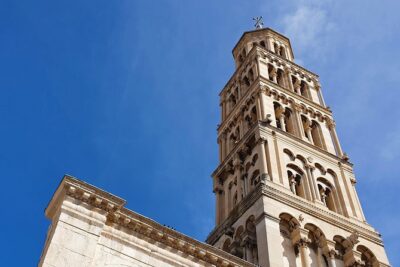
Walking Tour of Split with a ‘Magister’ of History
Read our review →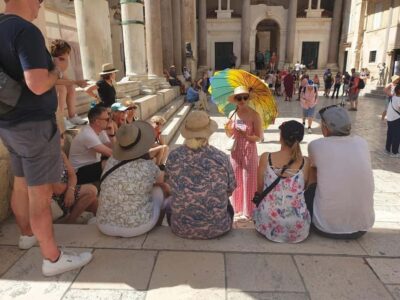
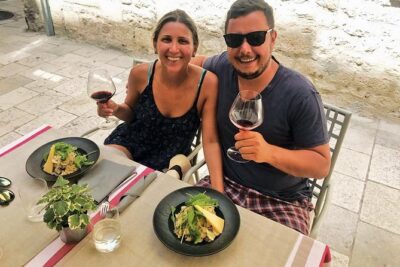
Split History and Gastro Small-Group Tour with Food and Drinks
Read our review →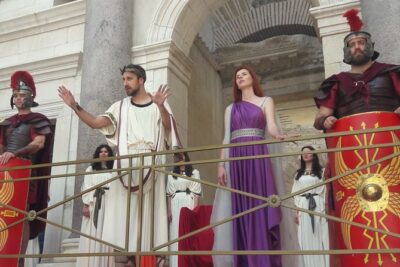
SPLIT-PREMIUM Emperor’s Walking Tour for History Lovers + Museum
Read our review →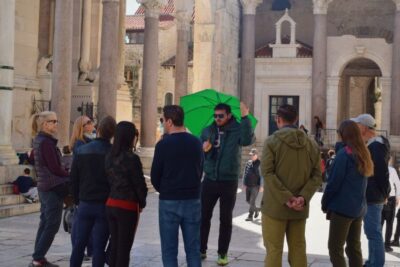
Split: Local History and Culture 90-Minute Walking Tour
Read our review →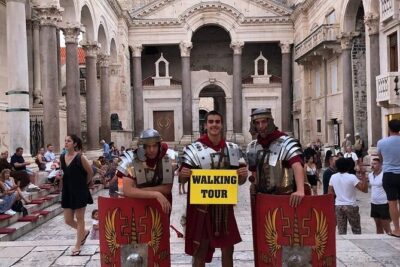
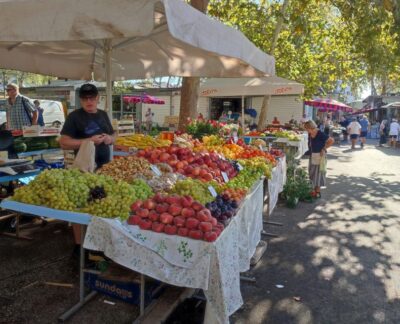
Split: Historical & Gastro Treasures Tour with Green Market
Read our review →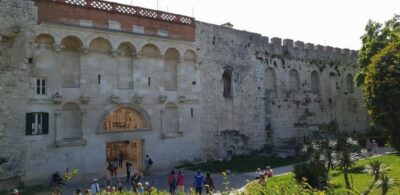
Split: Walking tour of Split with a ‘Magister’ of History
Read our review →Browse the lists this tour appears in