
Reviewed · SPLIT HISTORY WALKING TOURS
Walk through 1700 Years of History in Split – Private Tour
Split’s story begins inside a Roman retirement palace that never retired. Diocletian built this enormous seaside residence 1,700 years ago, and modern Split grew into and around it. On this private walk, you follow those layers with a local guide, rather than simply ticking off old stones.
I like the one-to-one format, which lets you ask questions and set the pace. I also like the practical route: the palace, Riva harbor, Marmontova Street, fish market area, and the best-preserved palace cellars all fit into one first look at the city.
The main consideration is timing. The tour is sold as about two hours, while the listed stop times add up to longer, so ask for the exact plan when you meet. This is also an introduction, not a full archaeological study of every corner of Diocletian’s Palace.
Key points to know before booking
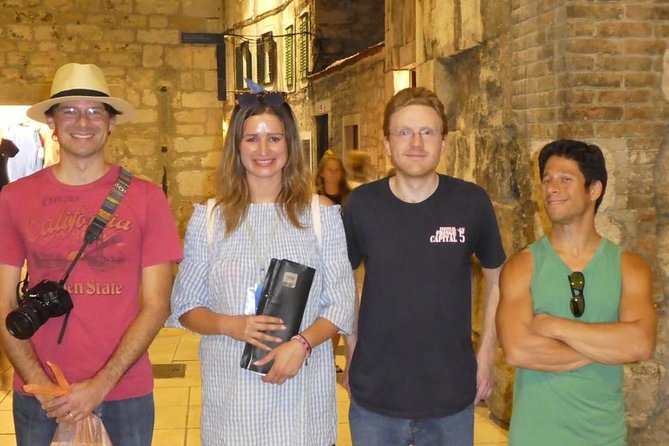
- A private walk through a living Roman palace: Split’s old center is not a museum set apart from daily life. People live, shop, eat, and work inside the palace walls.
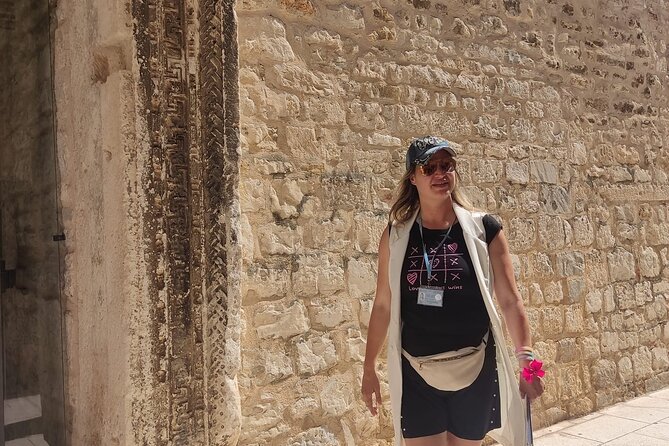
- Guides with a teaching gift: Katarina Jakšić leads the experience, and Ted may guide some departures. Ted is a history teacher, while Katarina is praised for clear explanations and a warm manner.
- The palace cellars are the visual highlight: The basement is the best-preserved section of Diocletian’s Palace and is also known to Game of Thrones fans as Dragon’s Dungeon.
- Useful city orientation: Riva harbor and Marmontova Street show you where to return for coffee, shopping, and the fish market.
- A good private-tour price: At $66.01 per person, the value improves as your group grows, since the guide’s attention is reserved for your party.
- Easy planning: You can choose among several start times, use a mobile ticket, and finish where you began at the Gregory of Nin Statue.
Why Split makes such a good history walk
Split is unusually easy to understand once you see its central idea: the old city grew from an imperial palace. Diocletian, a Roman emperor, built the complex as a retirement home. Over centuries, the palace changed purpose, but its walls, streets, courtyards, and underground spaces remained useful.
That is what makes this walk more than a standard old-town stroll. You are not looking at one period in isolation. Roman construction, later medieval changes, Venetian influence, Napoleonic connections, and modern Croatian life all appear in the same compact area.
I like this kind of introduction because the city can otherwise feel confusing. A weathered column may sit beside a cafe. A Roman wall may form the side of an apartment building. A narrow passage may lead from an ancient structure into a modern shopping street. Your guide’s job is to connect those details.
The private format matters here. In a large group, you may hear the basic date and move on. With your own guide, you can stop over a small architectural detail, ask how the palace became a city, or request more background on Croatia and Split. Several departures are led by Katarina or Ted, both of whom bring a teaching approach rather than only a list of dates.
More history walks in Split:
- Walking Tour of Split with a ‘Magister’ of History
★ 5.0 · 1,122 reviews - Split Walking Tour with Professor of History
★ 5.0 · 926 reviews - Split: History and Heritage Walking Tour
★ 4.9 · 650 reviews
Meeting the guide at the Gregory of Nin Statue
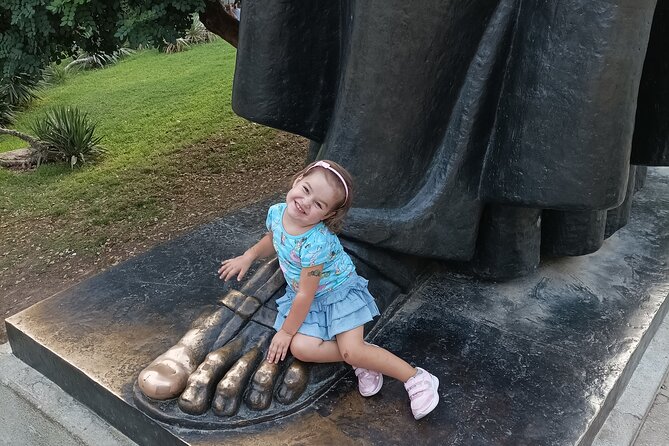
The tour begins at the Gregory of Nin Statue on Ul. kralja Tomislava 12. This gives you a clear central meeting point near the old town and the palace area.
The statue is a practical place to start because it helps you orient yourself before entering the maze of old Split. You return to the same meeting point at the end, so you do not need to learn a second finish location or arrange transport from an unfamiliar part of town.
Your confirmation arrives at booking, and the experience uses a mobile ticket. It is worth arriving ready to walk, since the main value comes from moving through the city rather than sitting in one place.
The tour is listed for approximately two hours. The published schedule gives about 90 minutes around Diocletian’s Palace, 15 minutes at Riva, 10 minutes on Marmontova Street, and 30 minutes in the palace basement. Those figures total more than two hours, so treat them as approximate stop lengths rather than a strict timetable. If you have a ferry, meal reservation, or museum booking afterward, confirm the expected finish time at the start.
Entering Diocletian’s Palace and the Roman city
The longest part of the experience takes place at Diocletian’s Palace. This is the heart of the walk and the section where the guide’s storytelling matters most.
The palace is often described as an ancient monument, but that description can make it sound empty and formal. It is better understood as a living part of Split. The old Roman plan still shapes the center, yet the spaces have been adapted over time for ordinary city life.
You will learn to separate the different influences visible in Split. The point is not just to hear that something is Roman or later. It is to understand how one period altered, reused, or built around another.
That approach helps you read the city after the tour. A doorway, stone block, courtyard, or wall becomes a clue. You may notice details that would be easy to pass without context, especially where newer buildings touch the old palace structure.
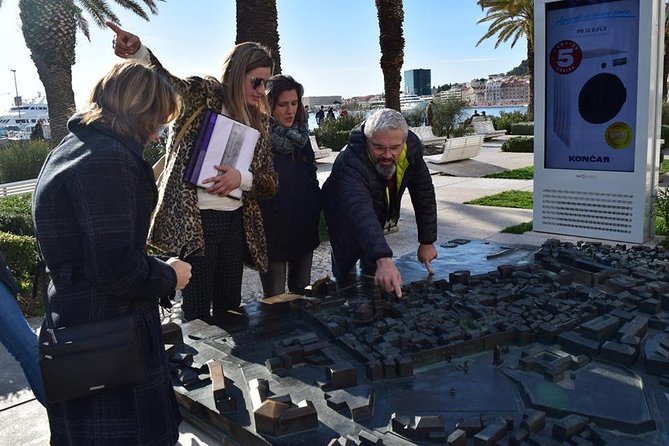
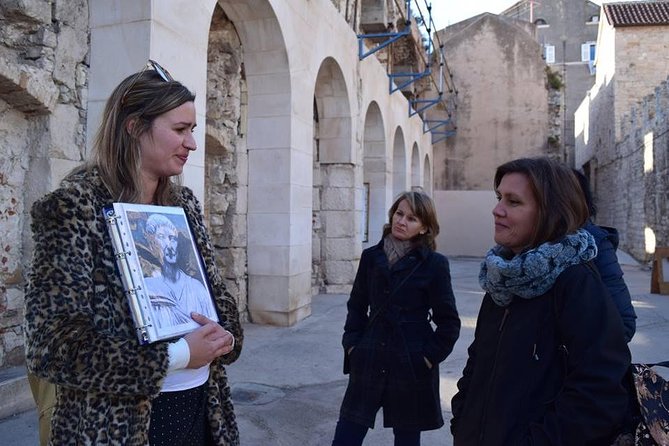
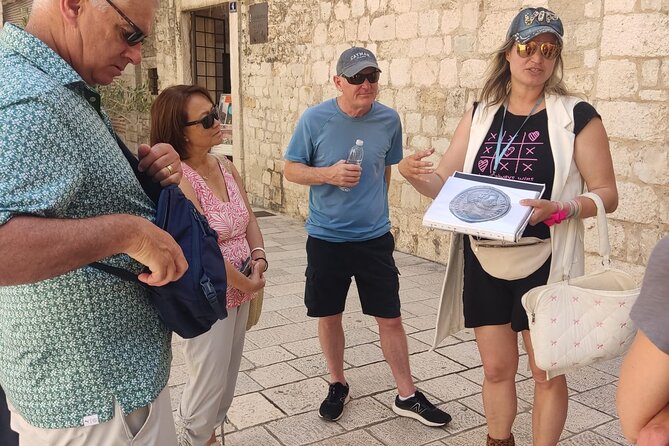
Ted is described as a history teacher, and that background suits this part of the tour. His explanations use stories and historical context to make the subject easier to follow. He has also used pictures and maps during the walk, which can help you picture how the palace and city changed over time.
Katarina’s style is useful if you want a clear introduction without a rushed lecture. Her explanations are described as friendly and easy to follow, including for people who prefer slower English. Since this is a private activity, you can ask the guide to explain a point again rather than lose it in a moving group.
Do not expect to see every room or every major sight in Split during this portion. The palace is too large and layered for that in a short walk. Instead, you get a framework that makes later independent wandering much easier.
Seeing Split’s Riva, the city’s outdoor living room
The route continues to Riva Harbor, described locally as Split’s living room. This is less about a single monument and more about understanding how the city uses its waterfront.
The Riva is a place for coffee, people-watching, and a slower look at daily life. After the stone corridors of the palace, the open harbor gives you a change of pace. It also shows that Split is not only an archaeological destination. It is a working, social city with a strong outdoor rhythm.
The stop lasts about 15 minutes, enough for your guide to explain its role and point you toward a useful place to return later. You may want to linger longer after the official walk, especially if you enjoy sitting with a drink and watching the city pass by.
This stop is a good example of why I prefer a route that mixes famous sights with ordinary urban spaces. You learn where people actually spend time, not just where a historic event happened.
More history and heritage trips in Split:
- Split History and Gastro Small-Group Tour with Food and Drinks
★ 5.0 · 375 reviews - SPLIT-PREMIUM Emperor’s Walking Tour for History Lovers + Museum
★ 5.0 · 333 reviews - Split: Local History and Culture 90-Minute Walking Tour
★ 5.0 · 194 reviews - Private History Split Walking Tour in English
★ 5.0 · 159 reviews
Walking Marmontova Street and the fish market area
Marmontova Ulica brings you into one of Split’s main shopping streets. Its name comes from August Marmont, a general connected with Napoleon. That detail gives the street a direct link to another period of Split’s past.
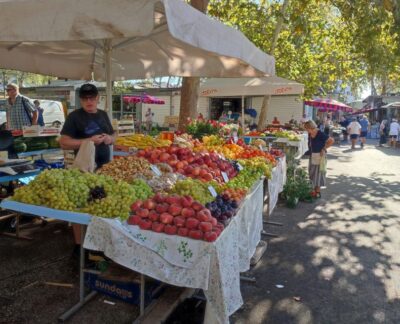
The street also brings you closer to the fish market area. The tour description points out the hectic fish market, where you can buy fresh fish. Even if you are not shopping, the market adds a practical, local note to the walk.
This is a short stop of about 10 minutes, so you should not expect a full market tour or a long shopping break. Think of it as an orientation point. Your guide can show you where the street fits into the old center and where to return if you want to explore shops or the market on your own.
I like this part because it keeps the experience from becoming only a Roman-history lesson. You see how the old center functions now, with shopping and food alongside ancient walls.
Going below ground in the palace cellars
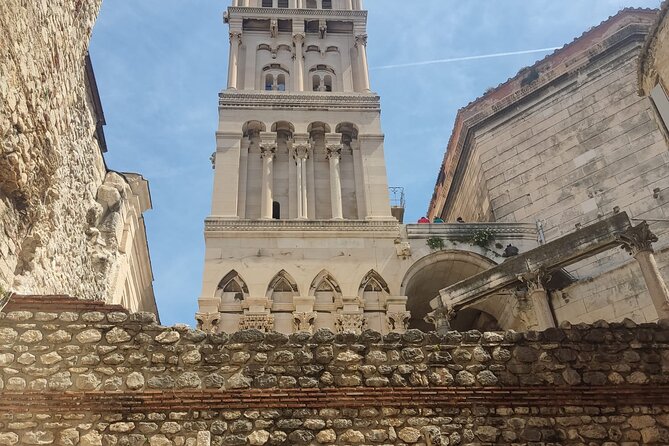
The palace basement is the final major stop and one of the strongest reasons to choose this walk. It is described as the best-preserved part of Diocletian’s Palace.
The cellars give you a clearer sense of the original palace plan than many upper-level areas, which have been changed by later building. The spaces also have a modern pop-culture connection: Game of Thrones fans may recognize them as Dragon’s Dungeon.
That reference may help you decide how much this stop matters to you. If you know the show, the connection adds a fun visual layer. If you do not, the cellars still matter because they show the scale and construction of the Roman complex.
Admission to the basement is included. Other palace areas listed on the route do not require a separate admission ticket, so there is no complicated ticket strategy for the basic walk.
Allow yourself to listen closely here. Underground spaces can be visually impressive, but without explanation they may blur into a series of stone rooms. The guide’s job is to show how the basement relates to the palace above and why it survived so well.
The unnamed 19th-century square and Split’s Venetian influence
The route also includes a vivid 19th-century square modeled after St. Mark’s Square in Venice. The supplied details do not identify the square by name, so you should ask your guide to point it out clearly during the walk.
This stop is useful because it shifts the focus beyond Roman Split. The square reflects later European influence and shows how the city looked toward Venice and the wider Adriatic world.
For a first visit, these transitions are valuable. You can begin with imperial Rome, move through later urban changes, and finish by seeing how Split’s identity formed across centuries. The tour does not treat the city as a single frozen moment.
What the private format adds at $66.01 per person
The listed price is $66.01 per person. That is not the cheapest way to get a quick orientation, but the price needs to be measured against what you receive: a private guide, a roughly two-hour walking route, palace interpretation, the included basement admission, and the freedom to ask questions.
The value is strongest for two or more people who want a custom pace. A solo visitor pays the full per-person rate but receives the same private attention. A couple or small family can split the experience without being tied to a large group’s speed or interests.
Private touring also helps if your group has a particular need. One person may want more Roman history, another may care about local markets, and another may need a slower walking pace. One of the strongest practical points from the feedback is that the private setup allowed a pregnant participant to take the tour at a suitable pace.
The walk is still on foot, so private does not mean effortless. You should be comfortable moving through old city streets and standing during explanations. The information does not specify the exact number of stairs or the full route surface, so ask the provider if mobility is a concern.
The tour is generally open to most people, and service animals are allowed. It is also near public transportation, which makes it easy to connect with the rest of your Split plans.
Who will get the most from this Split tour
I would choose this experience if you are visiting Split for the first time and want a strong mental map before exploring alone. It gives you the basic story, shows you the main central areas, and points you toward places to revisit.
It also suits history-minded visitors who prefer explanation over a quick photo stop. Ted’s background as a history teacher and the use of maps and images can make the long timeline easier to grasp. Katarina is a good fit if you value a friendly, measured style and clear English.
Families and small groups may appreciate the private pace. You can pause, ask questions, and avoid being pulled along when someone needs a break. The same applies to solo visitors who want conversation and context rather than wandering silently with an audio guide.
This may be less suitable if you want a lengthy archaeological examination, extensive time inside every palace section, or a food-focused market tour. The route gives you a broad introduction to several places, not a specialist study of one site.
I would also be careful about scheduling it immediately before a hard departure deadline. The tour is approximately two hours, and the listed stop times are not perfectly aligned with that total. Build in extra time or confirm the finish before booking a tight connection.
Practical timing, booking, and cancellation
The experience offers several start times, which is useful if you are fitting it around a morning arrival, an afternoon outing, or an evening meal. It is commonly booked about 23 days ahead, so reserve earlier if your dates are fixed, especially during a busy season.
You receive confirmation at the time of booking, and a mobile ticket is accepted. The activity begins and ends at the Gregory of Nin Statue.
Free cancellation applies if you cancel at least 24 hours before the local start time. A cancellation within 24 hours is not refunded, and changes within that window are not accepted. Keep the local time in mind if you are booking from another country.
Should you book Walk through 1700 Years of History in Split?
I would book it if you want a private, history-focused introduction to Split, especially before spending the rest of your visit wandering the palace on your own. The strongest reasons are the personal pace, the clear route through several parts of the city, the well-preserved cellars, and guides such as Katarina and Ted who explain rather than simply point.
At $66.01 per person, it offers solid value for a couple or small group that wants direct access to a local guide. For a solo visitor, the cost is harder to justify unless personal questions, flexibility, and historical context matter to you.
Confirm the timing if your schedule is tight, and do not expect a full tour of every palace space. If you want to understand why Split feels both Roman and modern at the same time, this is a smart first walk.
FAQ
How long does the private Split tour last?
The tour is listed as approximately two hours. The individual stop times provided for the palace, Riva, Marmontova Street, and the basement add up to longer, so confirm the exact timing with the guide if you have a strict schedule.
How much does the experience cost?
The listed price is $66.01 per person.
Where does the tour begin and end?
It begins at the Gregory of Nin Statue, Ul. kralja Tomislava 12, 21000 Split, Croatia, and ends back at the meeting point.
Is admission to Diocletian’s Palace included?
The listed palace stops do not require an admission ticket. Admission to the basement of Diocletian’s Palace is included.
Is this a private tour?
Yes. Only your group participates in the activity.
What is the cancellation policy?
You can cancel at least 24 hours before the local start time for a full refund. Cancellations or changes made less than 24 hours before the start are not accepted, and the amount paid is not refunded.
Just added around Split
- From Makarska : Wine Tasting Grabovac Tour★ 4.5 · 30 reviews
- Essential Diocletian’s Palace Tour for First-Time Visitors★ 4.8 · 19 reviews
- Unique vintage Tomos moped tour Split – Back to the ’80s★ 4.8 · 17 reviews
- Walking Tour Split★ 4.7 · 61 reviews
- Trogir; Private walking tour of higlights of Trogir★ 4.7 · 3 reviews
- Trogir: White Lagoon, Maslinica & Blue Lagoon Speedboat Tour★ 4.8 · 11 reviews
- Trogir 1.5-Hour City Tour★ 4.4 · 37 reviews
- Split: Trogir Open Top Bus Trip + Free Split Walking Tour★ 4.1 · 17 reviews
Split History Walking Tours, compared.

Walking Tour of Split with a ‘Magister’ of History
Read our review →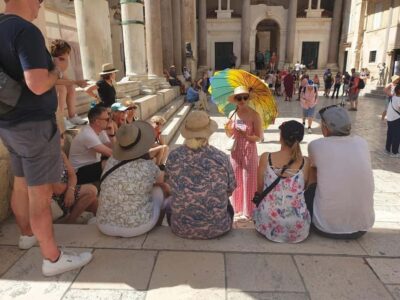
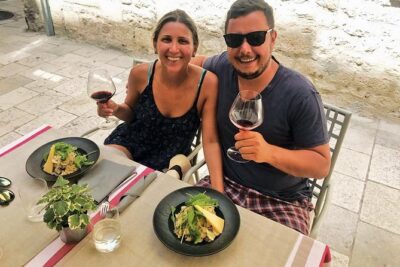
Split History and Gastro Small-Group Tour with Food and Drinks
Read our review →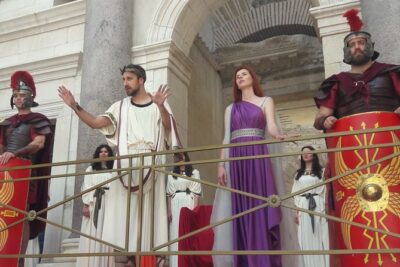
SPLIT-PREMIUM Emperor’s Walking Tour for History Lovers + Museum
Read our review →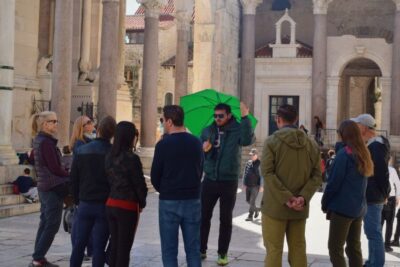
Split: Local History and Culture 90-Minute Walking Tour
Read our review →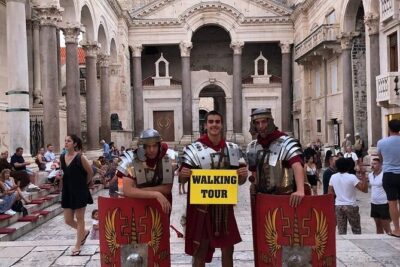
Split: Historical & Gastro Treasures Tour with Green Market
Read our review →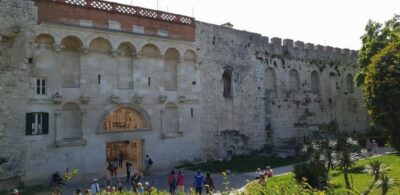
Split: Walking tour of Split with a ‘Magister’ of History
Read our review →Browse the lists this tour appears in